
















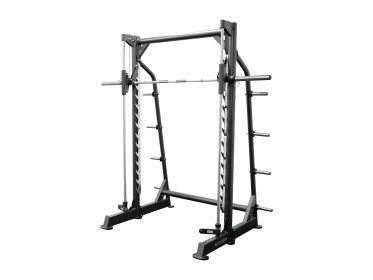

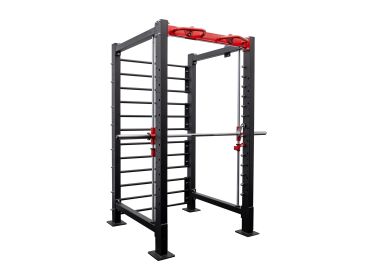


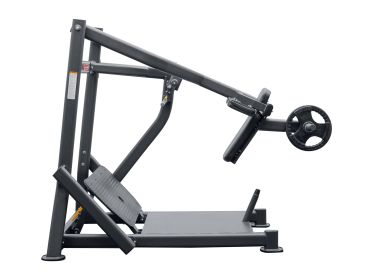
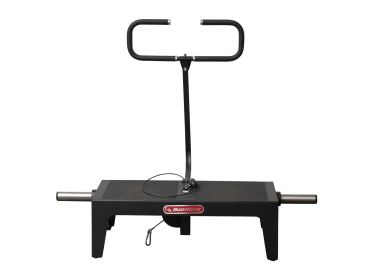



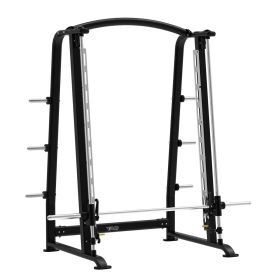

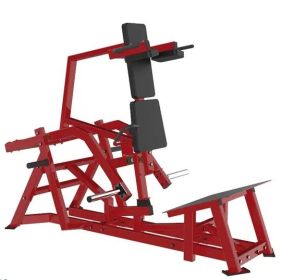


Plate Loaded Squat Machines Built for Heavy Leg Training
A plate-loaded squat machine is a strength station that loads resistance with the Olympic plates you already own, giving you a guided squat path you can progress on for years. It removes the balance problem of a barbell squat, locks in a repeatable groove, and lets you push closer to your true working weight without a spotter. For home gyms in tight spaces and commercial floors with heavy traffic, this category solves a single problem extremely well: train hard, train safely, train consistently — set after set, week after week.
This collection brings together hack squats, V-squats, pendulum-style squats, and leg press / hack squat combos from trusted strength brands, all engineered for serious quad, glute, and hamstring development.
What Is a Plate Loaded Squat Machine?
A plate loaded squat machine uses externally loaded weight plates on welded horns — no internal stack, cables, andes, no pin selection. You add or remove plates yourself, which gives you unlimited progression headroom and the option to micro-load with fractional plates when normal jumps stall you out.
That simplicity is the strategic advantage. You get fewer moving parts to service, the same plates can feed multiple stations across the gym, and the lifting feel stays closer to a true barbell pattern than a stack-driven cable feels.
What does "plate loaded" mean? It means resistance is supplied by Olympic plates you load onto the machine's weight horns, not a built-in selectorized stack — so you control the total load with the plates on hand.
Types of Plate Loaded Squat Machines
The category is broader than most buyers realize. Each variant rewards a slightly different goal, joint profile, and floor plan. Here is a clean comparison of what you will see across this collection:
| Machine Type | Primary Focus | Squat Path | Best For |
|---|---|---|---|
| Hack Squat (linear) | Quads, glutes | Angled linear sled | Heavy quad loading with high stability |
| V-Squat / Leverage Squat | Quads, glutes, posterior chain | Curved arc | Natural squat feel with reduced knee shear |
| Pendulum Squat | Quads, glutes | Swinging arc, deep ROM | Hypertrophy and joint-friendly depth |
| Leg Press / Hack Squat Combo | Quads, glutes, hams, calves | Two stations in one | Space efficiency and movement variety |
| Belt Squat | Quads, glutes, posterior chain | Hip-loaded squat | Spine-friendly training and rehab phases |
Hack Squat Machines
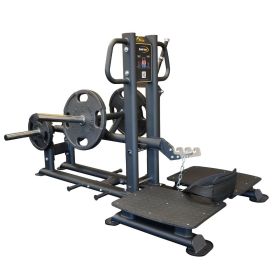
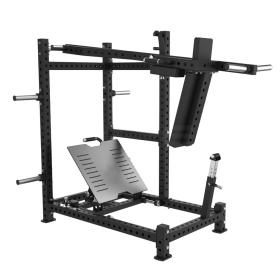
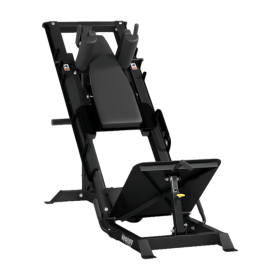
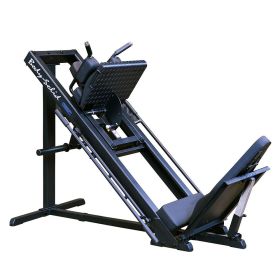
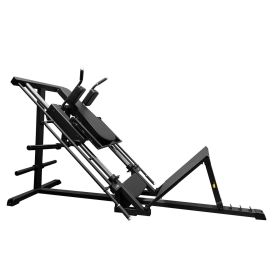
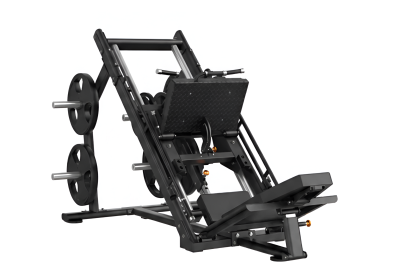
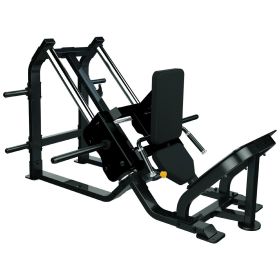
Hack squats place the load on the shoulder pads and run a linear sled at roughly a 35–45 degree angle. They reward heavy loading, isolate the quads cleanly, and reduce spinal demand compared to a barbell back squat. Models like the Tag Fitness Plate Loaded Leg Press / Hack Squat Combo also flip into a leg press, which is why the combo style is one of the most popular plate loaded squat machine options for home and light-commercial buyers.
V-Squat and Leverage Squat Machines
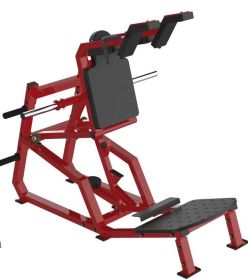
V-squats follow a curved arc rather than a straight track, mimicking a more natural squat pattern while still guiding the bar path. The curve trims excessive shear at the knee and compression at the lower back, letting you push higher loads with more confidence. Leverage squats use a pivoting arm system that takes very little floor space, which makes them an excellent fit for premium home gyms.
Pendulum Squat Machines
Pendulum designs swing through an arc, allow a deeper range of motion than most linear hack squats, and keep tension on the working muscles through the entire rep. They are the connoisseur's pick for hypertrophy-focused lifters who want maximum time under tension with minimum joint stress.
Combo Stations and Multi-Pattern Builds
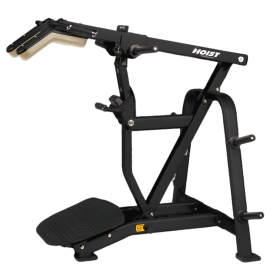
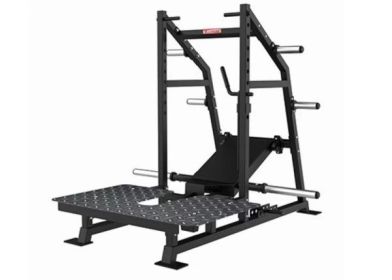
Combination machines stack two or three patterns into one footprint. The Hoist Fitness Roc-It Hack Squat / Dead Lift / Shrug is a strong example: one station handles hack squats, plate-loaded deadlift work, and shrugs, which trims equipment overlap on busy floors.
How to Choose the Right Plate Loaded Squat Machine
The right machine fits your body first and your floor plan second. Use the framework below before you compare price tags.
Start Position and Joint Comfort
If the first rep feels cramped, pinched, or forces the knees inside the toes, you will avoid the machine or compensate for it. Look for adjustable shoulder pads, multiple foot plate positions, and a pain-free starting range. A machine you will actually use beats a "better" machine you avoid.
Resistance Curve and Leverage Geometry
Leverage matters because the moment arm changes as the carriage moves. Strong designs place the pivot and the loading point so the resistance curve feels challenging through the full range — not impossibly heavy at the bottom and weightless at the top. Curved arcs (V-squat, pendulum) tend to feel smoother than rigid linear tracks for many lifters.
Footprint, Capacity, and Plate Workflow
Plan past the unit's footprint. You need:
- Side clearance for plate loading and unloading
- A safe entry and exit path without stepping over plates
- Load capacity well above your projected working weight (look for 700 lb+ on hack squats; 1,000 lb+ for leg press / hack squat combos)
- Nearby plate storage so walkways stay clear in a busy session
Key Selection Criteria
Use these standards to vet any plate loaded squat machine before you check out:
- ✅ Olympic plate compatibility
- ✅ High working load capacity
- ✅ Stable base with no rocking
- ✅ Adjustable shoulder pads
- ✅ Multiple foot plate angles
- ✅ Safety catches or range limiters
- ✅ Smooth pivots and clean welds
- ✅ Dense, durable upholstery
- ✅ Non-slip foot platform
- ✅ On-board or adjacent plate storage
- ✅ Microloading-friendly progression
- ✅ Commercial-grade frame steel
Plate Loaded vs Selectorized vs Free Weights
Are plate-loaded machines better than selectorized ones? Plate loaded wins when you want heavy loading, long-term progression, and a more lift-like feel; selectorized stacks win for rapid weight changes and circuit-style training. Most serious lifters end up with both, but if you can only choose one squat station, plate loaded usually scales further over the years.
Do plate-loaded machines build muscle like free weights? Yes. When training intensity, technique, and progression are matched, plate loaded squat machines drive strength and muscle growth on par with barbell squats. The tool matters less than the consistency you apply to it.
Free weights still win for sport transfer, athletic carryover, and overall pattern freedom — but they demand more skill, more spotting, and more floor space. The smart play is treating the plate loaded squat machine as the workhorse of leg day and using the barbell where the pattern truly calls for it.
Pair Your Machine With the Right Plates and Platform
A plate loaded station is only as good as the ecosystem around it. Pair your purchase with quality Olympic plates — explore our curated Olympic bumper plates collection to load with weight that protects your floor and your machine. If you train with both a barbell and machine work, anchor the room with a serious cage from our power racks and cages selection. Looking to add horizontal pressing alongside vertical squat work? The companion plate loaded leg press collection covers it.
Programming a Plate Loaded Squat Machine
Plate loaded squat machines shine as precision tools for progressive overload. Keep technique stable, train close to your working limit, then add reps or load over time. A clean template most lifters can run:
- Main squat pattern: 3 to 5 hard sets of 4 to 10 reps
- Secondary or unilateral work: 2 to 4 sets of 8 to 15 reps
- Finisher or pump set: 1 to 2 sets of 15 to 25 reps
How do I pick the right plate-loaded machine for my body? Test the start position, grip and shoulder pad spacing, foot plate angles, and whether you can hit a full pain-free range with the carriage tracking smoothly. If any of those four cues feels off, keep looking — the right unit will feel locked-in from the first warm-up set.
Who This Category Serves Best
This collection is built for buyers who treat squat day as the cornerstone of their training week:
- Home gym owners scaling from intermediate to advanced loading
- Commercial gyms and studios needing low-maintenance, high-traffic equipment
- Strength coaches and small training facilities
- Faith-based and corporate wellness setups serving mixed user populations
- Rehab and recovery-focused users (with provider guidance) who benefit from stable, repeatable paths
- Seniors and returning lifters who prefer a guided pattern over a barbell
If you are unsure which configuration fits your space and member profile, our team can walk you through it — book a complimentary gym design consultation and we will plan the floor with you.
Shop Plate Loaded Squat Machines With Confidence
From our Tennessee headquarters, Hamilton Home Fitness ships plate loaded strength equipment to every state in the USA. You get curated builds from trusted manufacturers, honest guidance on what fits your space and goals, and a buying path that respects your investment. Browse the collection above, compare the configurations side by side, and reach out when you are ready — we will help you load your first set with the right machine under it.