











Best Belt Squat Machine: BodyKore FL1834
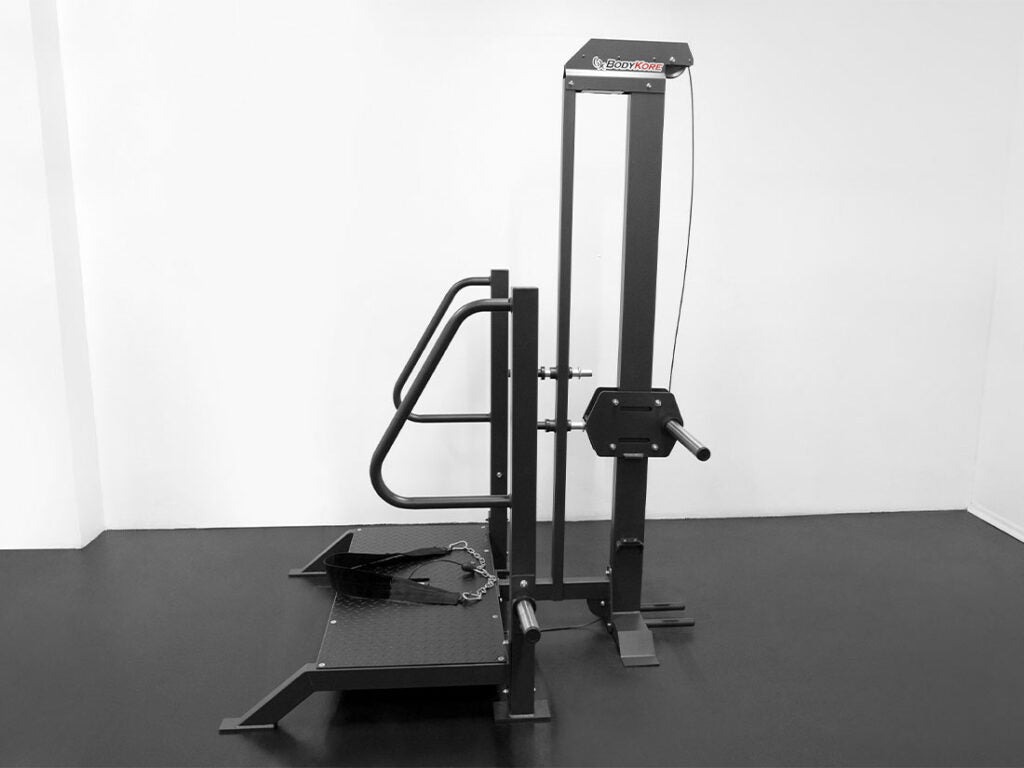
If you want uncompromising leg strength without turning every squat session into a shoulder-and-spine grind, a belt squat machine is the clean answer: load the hips, keep the torso freer, and let the legs do what they’re built to do. The BodyKore FL1834 Belt Squat is built for lifters and facilities that want heavy, repeatable squats—without making bar position the gatekeeper.
The one problem this page solves
You want a “hard leg day” that doesn’t punish your upper body—so you can train more often, recover better, and keep progress moving.
FL1834 specs and footprint (do not guess)
Dimensions: 66" x 68" x 87"
Machine Weight: 288 lbs
Platform Size: 47.24" x 23.62"
The platform gives you stance freedom (narrow, moderate, or wide) while keeping your feet planted and secure when fatigue hits.
Why a belt squat machine keeps progress moving
A belt squat machine shifts resistance to the pelvis through a loading belt. In controlled testing, belt squat setups can maintain high lower-body loading while reducing external spinal loading compared with back-loaded squats. Translation: you can push legs hard without making the spine the limiter every week.
High muscle demand, less setup friction
EMG research on hip-belt squat variations shows strong activation in key lower-body muscles. You still earn the stimulus—quads, glutes, and hamstrings—without needing perfect bar placement, shoulder mobility, or a rack setup. Many coaches treat belt squats as a “spinal fatigue budget” tool: spend effort on legs, not on surviving the setup.
Built for heavy cycles, not light expectations
This is a commercial-grade belt squat machine built from 11-gauge steel and rated for 1000+ lbs—so you can run real strength blocks and high-volume leg work with confidence.
Stability that keeps reps honest
- Dual rubber handles for consistent bracing
- Non-slip footplate for locked-in stance
- Two plate-loading pegs for fast changes
- Two storage/counterbalance posts for calm loading and plate organization
What advanced lifters do with it
If you’re choosing a Best Belt Squat Machine, you’re usually chasing one of three outcomes: heavier top sets, more weekly volume, or better recovery. The FL1834 supports all three with programming that stays simple:
- Strength focus: 5–6 sets of 3–5 reps, 2–3 minutes rest.
- Hypertrophy focus: 4–5 sets of 8–15 reps, last set near technical failure.
- Athlete focus: 3–4 sets of 6–10 reps, then explosive work after.
- Deload weeks: drop load 10–20%, keep speed crisp.
Belt included (and it matters)
A heavy-duty belt comes with the machine. Lifting belt research suggests belts can support trunk stabilization during heavy tasks; here, the bigger win is simple: the load sits across the hips, so the legs take the hit—not your shoulders.
Who gets the most value from the FL1834
- Home gyms & families: big leg training without turning it into a back day, plus a stable setup for mixed training ages.
- Commercial gyms & teams: higher utilization because more bodies can squat hard—even with shoulder limits, bar discomfort, or back sensitivity.
- Recovery-minded training: a squat pattern option that can help manage torso stress (guided by a qualified pro when symptoms exist).
Setup and progression (fast, measurable, repeatable)
Step 1: Stand centered and attach the belt so the load hangs evenly.
Step 2: Grip the handles, stand tall, and take tension before rep one.
Step 3: Squat with control, then drive up through the midfoot.
Quick form cues that fix most issues
- Keep the belt centered so the load hangs evenly.
- Let knees track over toes; don’t collapse inward.
- Use a controlled descent for cleaner depth.
A simple progression model
- Build skill: 3–4 sets of 8–12, controlled tempo.
- Build volume: add reps or add a set weekly.
- Build intensity: shift to 4–6 s or 3 s; keep technique strict.
Track load and reps. Consistency plus progressive overload is the system.
People Also Ask
Belt squat machine: What muscles does it work?
Mostly quads, glutes, and hamstrings. Stance and depth shift emphasis.
Belt squat machine: Is it better for my lower back?
It removes shoulder loading and can reduce external spinal loading versus back-loaded squat testing, but pain is personal—get clinical advice if needed.
Belt squat machine: Does it replace back squats?
For many lifters it can. For athletes, it’s a smart partner lift that adds leg work with less spinal fatigue.
Belt squat machine: How much weight can it handle?
The FL1834 is rated for 1000+ lbs.
Downloads and next steps
Need setup and maintenance guidance? Use: Manuals Belt Squat FL1834.
Want technical documentation? Use: Data Sheets Belt Squat FL1834.
Hamilton Home Fitness is headquartered in Tennessee and ships to all U.S. states. If you’re ready to claim your floor space and upgrade leg training with hip-loaded power, order the FL1834 through the Hamilton Home Fitness team today.
Key features (luxury-driven)
✅ 11-gauge commercial steel frame
✅ 1000+ lb load rating
✅ Dual rubber bracing handles
✅ Wide, non-slip footplate
✅ Two fast plate-loading pegs
✅ Two storage/counterbalance posts
✅ Heavy-duty belt included
✅ Torso-friendly hip-loaded design
✅ Stable footprint for heavy cycles
✅ Quick transitions for busy gyms
✅ Built for home & commercial use