










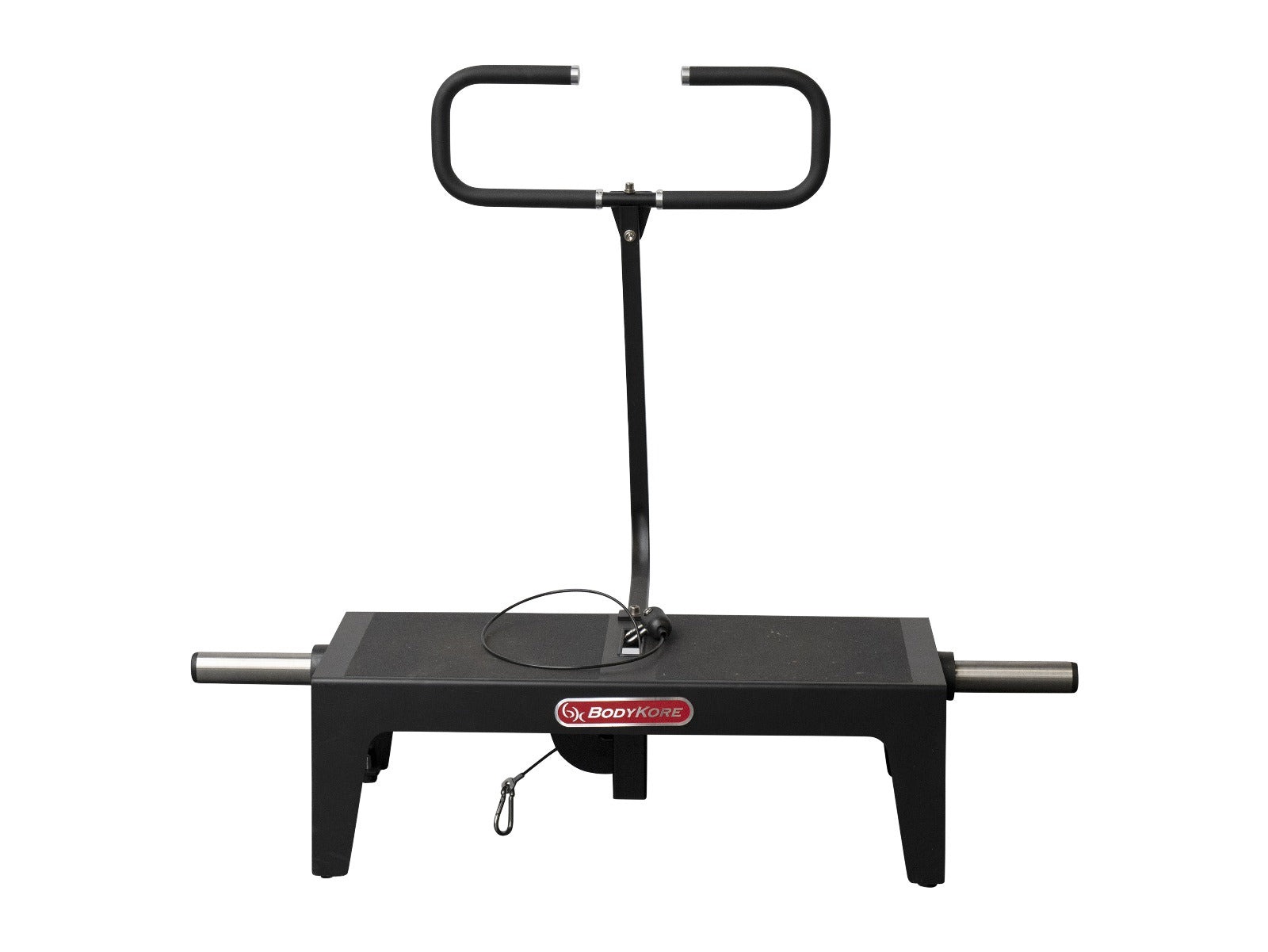

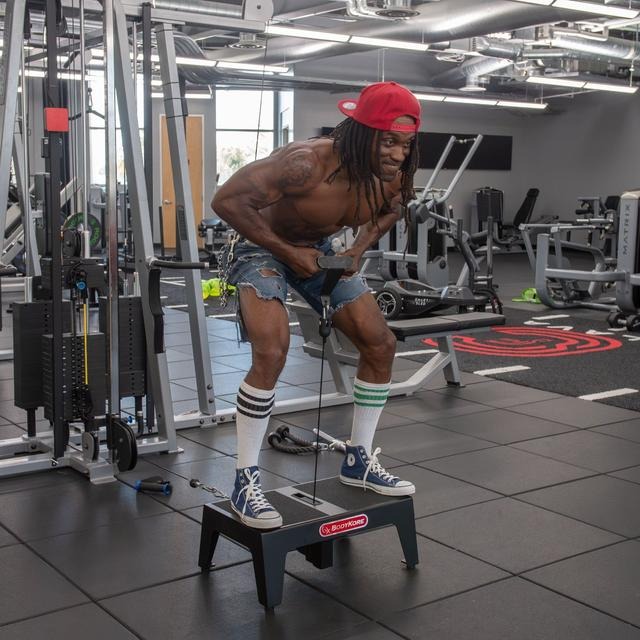
BodyKore MX1182XL Squat Box Pro Belt Squat Machine
Modifier: Portable, plate-loaded belt squat platform (1:1)
The fastest way to build powerful legs is consistent loading without getting beat up. This belt squat machine delivers the feel of a full-size belt squat in a compact, portable station, so you can push quads, glutes, and hips hard while keeping your shoulders free and your spine out of the loading equation. Research comparing hip belt squat patterns with barbell squats shows meaningful lower-body muscle activation, and further work shows the design of belt squat systems changes activation and feel, so platform stability and cable path matter.
The one problem this belt squat machine solves
Direct answer: Heavy leg training, minimal “back and rack” hassle, and no space-hog machine.
A traditional squat is effective, but it also requires substantial trunk effort and upper-body positioning demands. The Squat Box Pro is built for the days (and people) when you want lower-body overload with less upper-body constraint, including:
- Home gyms that need elite performance in tight spaces
- Studios and teams that want fast athlete throughput
- Lifters managing fatigue, shoulder limits, or back-sensitive weeks
Squat Box PRO FEATURES

Construction and resistance feel
Direct answer: Commercial-grade build, smooth pull, and honest loading.
BodyKore uses heavy sheet metal with a black matte powder-coated finish for durability and a clean, premium look. The station runs a single-pulley, 1:1 weight ratio, so the plates you load are the resistance you feel, simple for progressive overload and easy to coach.
Cable, pulley, and stability details
Direct answer: Built to keep tension consistent set after set.
- Cable: 2000 lbs tested, nylon-coated high-tensile aircraft cable
- Pulley: fiberglass-strengthened nylon, sealed ball bearings
- Safety: anti-slip grips and rubber footing
What’s included
Direct answer: A complete kit for belt squats plus cable-based accessories.
- Squat Box Pro base unit
- Custom belt squat belt
- Extended cables (12" and 18")
- Rotating straight bar
- Removable weight horns (plate loading)
- Stabilizing handlebar attachment
Exercise versatility: one footprint, many programs
Direct answer: Train lower body hard, then layer in accessories without changing stations.
Lower-body strength and muscle
- Belt squats: standard, sumo, split, pause
- Lunges: forward, reverse, lateral
- Deadlift patterns: RDL, stiff-leg, sumo
Upper-body, core, and controlled rehab work
- Rows, presses, curls, and extensions (cable + rotating bar)
- Cable crunches and oblique twists for bracing endurance
- Slow, controlled knee and hip strengthening patterns
- Platform-only work like step-ups or jump squats (bodyweight)
Real-world examples: Many coaches run this station as a “lower-body hub” in small-group training: one athlete belts in for squats, another hits rows or curls on the cable, and a third cycles lunges. In rehab-adjacent settings, trainers often prefer belt squats for controlled loading when bar positioning or spinal compression is not the priority that day.
Squat box original or pro? see the key differences
Take me to the original squat box------------------------------------------------------------Take me to the squat box pro

How to program it like a pro
Direct answer: Use it as a primary leg lift or as high-volume work after your main strength movement.
Quick technique checklist (keeps reps clean)
- Place the belt snug on the hips, not the waist
- Start tall, ribs down, and keep pressure through the mid-foot.
- Let knees track with toes; control the descent
- Stop sets when you lose depth or start toe tipping
Your simplest 3-option setup
Strength (low reps, high intent)
4–6 sets of 4–8 reps, 2–3 minutes rest, crisp depth, and drive.
Hypertrophy (size and shape)
3–5 sets of 8–15 reps, 60–90 seconds rest, add a 1–2 second pause on the last set.
Back-friendly volume (quality reps)
2–4 sets of 12–20 reps, slower tempo, no grinding; use the handlebar for extra stability.
Key features (luxury-grade clarity)
✅ Heavy sheet-metal frame
✅ Matte black powder coat
✅ True 1:1 pulley ratio
✅ 2000 lbs tested cable
✅ Sealed ball-bearing pulley
✅ Nylon-coated aircraft cable
✅ Anti-slip grips
✅ Rubber footing stability
✅ Removable weight horns
✅ Handlebar + bar + cables
People Also Ask
Is a belt squat machine safer for my back than back squats?
It can be, because the load hangs from the hips instead of sitting on the spine. Train within comfort, keep technique strict, and follow clinician advice if you are rehabbing.
Does a 1:1 pulley ratio feel different in real training?
Yes. It feels direct and predictable: load plates, feel that load. This makes progression and coaching cues straightforward.
Can I replace barbell squats with this platform?
For many goals, yes. Belt squats and split squats can drive strength and hypertrophy while reducing upper-body constraints. Keep at least some trunk work elsewhere in your program.
What’s the best first workout on this belt squat machine?
Start with 4 sets of 10 belt squats at a moderate load, then 3 sets of lunges. Focus on depth, knee tracking, and smooth tension.
Order today: compact power, nationwide delivery
Direct answer: If you want elite lower-body loading without a giant machine, this is the move.
Buy through Hamilton Home Fitness for nationwide USA shipping supported from our Tennessee headquarters, and turn one compact station into years of serious leg training. Add it to your gym now and make your next leg day the one you actually look forward to.