Authorized:











Book a Gym Design

Book a Gym Design
Need a fitness space that actually works when real people use it at peak hour? Book a gym design with Hamilton Home Fitness and turn raw square footage into a layout engineered for movement, supervision, safety, and long-term member appeal. From Tennessee to projects across all fifty states, this category brings design clarity and equipment planning together in one premium service for home, commercial, multifamily, hospitality, rehab, and athletic facilities.
Book a Gym Design That Performs
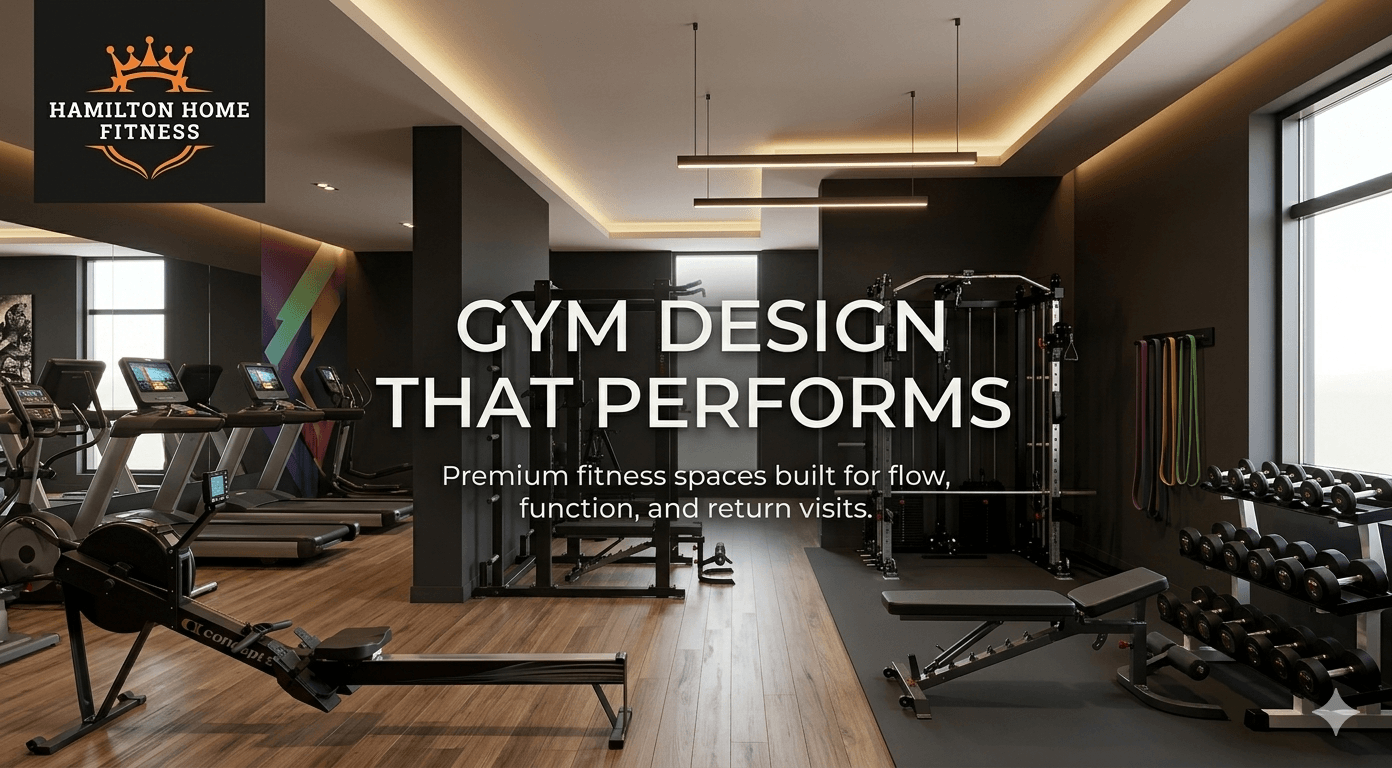
A premium gym design solves one core problem: it converts your footprint into a training experience members can read, enjoy, and return to. That outcome matters whether you are planning a boutique studio, a corporate wellness suite, a resident amenity room, a sports performance space, or a luxury home gym that needs to feel intentional on day one. Pretty renderings fall apart at 6 p.m. Real plans hold up because they account for traffic, sightlines, noise, recovery, and reset behavior before the first piece of equipment lands.
Who Should Book a Gym Design
This service is built for buyers who care how the room feels in motion, not just how it photographs in a brochure.
- Commercial gyms, boutique studios, and training centers
- Multifamily and multi-unit fitness rooms in apartments and condos
- Hotel and resort fitness amenities
- Corporate wellness and community workout rooms
- Sports teams, schools, and athletic performance facilities
- Rehab clinics, physical therapy spaces, and active-aging rooms
- Premium home gyms that need planning, not guesswork
- Creator studios and hybrid training environments
It also suits decision-makers who want smart tradeoffs: luxury where it earns the spend, practical choices where they protect the budget, and flexible layouts that work for trainers, residents, members, families, and remote-friendly fitness creators alike.
What Your Gym Design Package Covers
You are not paying for fantasy dimensions or copy-paste room templates. You are paying for a plan built around your real users, your real footprint, and the way people will actually train in the space.
What is included in a fitness facility design? Your package can include programming, zoning, equipment strategy, traffic flow logic, and buildout guidance—so spacing, safety, and user experience stop being guesses. A typical scope spans the following:
- Programming and zoning for strength, cardio, functional work, and recovery
- Peak-hour traffic flow and circulation planning
- Equipment mix, adjacencies, and brand selection support
- Storage strategy and reset-friendly layout
- Flooring assemblies and acoustic priorities
- ADA-aware circulation and accessibility planning
- Tech, power, AV, and connectivity intent
- Shipping, staging, and install sequencing when needed
Pair the design with the right hardware from the commercial fitness equipment catalog, and the plan moves from paper to performance without friction.
Key Selection Criteria for a Strong Layout
A great gym design is judged by what it removes — friction, noise, dead zones, and supervision blind spots — long before it is judged by what it adds. Use these criteria when evaluating any design partner or layout proposal:
✅ Purpose-built zoning plan
✅ Peak-hour flow protection
✅ Clear coaching sightlines
✅ Storage and reset strategy
✅ Flooring and noise mapping
✅ Recovery zone planning
✅ Tech-ready power intent
✅ ADA-aware circulation
✅ Scalable equipment roadmap
✅ Easy-care material choices
✅ Brand-fit visual language
✅ Future-proof flex zones
Gym Design Solutions by Facility Type
A small home gym, a 50-unit apartment amenity, and a full commercial training center share fundamentals but live by different rules. The table below shows how priorities shift across the most common project types.
| Facility Type | Primary Goal | Layout Priority | Equipment Anchor |
|---|---|---|---|
| Home Gym | Daily-use enjoyment | Intentional zoning in a tight space | Power racks, cages, benches, cardio |
| Commercial Gym | Member retention and revenue | Peak-hour flow and supervision | Mixed strength, cardio rows, functional zone |
| Multifamily Amenity | Durable, intuitive, quiet | Reset-ready, low-touch design | Compact cardio, cable, and free weights |
| Hotel Fitness Room | Brand-aligned guest experience | Calm aesthetic, quick wins | Premium cardio, kettlebells, mirrors |
| Rehab and Therapy | Safe, supervised recovery | ADA-first circulation | Rehab equipment, mats, low-impact tools |
| Sports Performance | Athletic output | Open turf, platform, and rack lanes | Platforms, sleds, plyo, racks |
Can you design a small multifamily fitness center? Yes. Small amenity rooms often perform best when the equipment mix is intentional, storage is built in, and every circulation path stays unobstructed. A 600- to 1,500-square-foot space can feel premium when zoning, noise, and reset behavior are planned from the start.
Why Better Layouts Win Long-Term
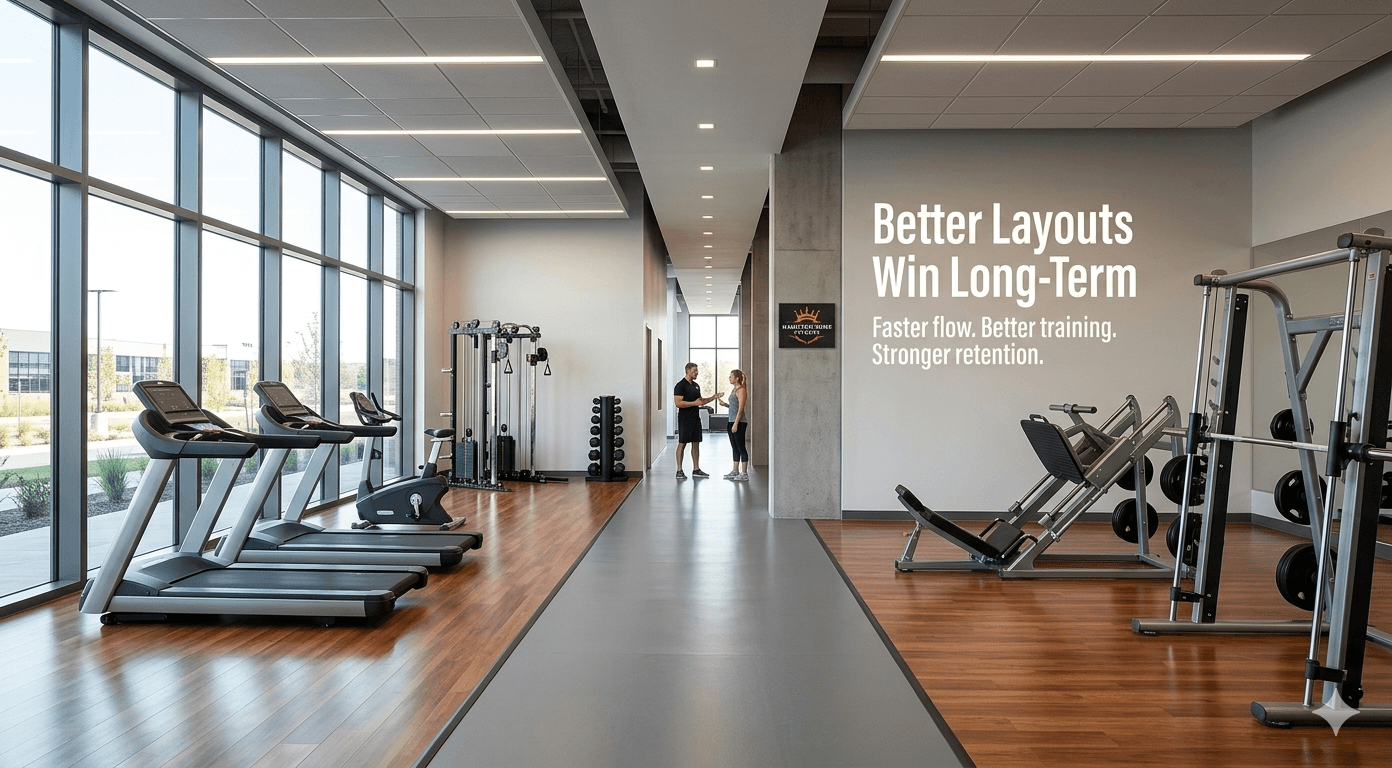
A better layout wins because members feel it immediately. The room is read faster. Trainers see what matters. Traffic moves cleanly. Noise gets handled before complaints arrive. And the entire space feels more premium because it works without friction—which protects retention, reviews, and resale value.
Flow, Sightlines, and Member Behavior
Peak-hour flow is where weak design gets exposed. Wide circulation paths from entry to cardio to strength matter. Dead-end aisles in free-weight areas create tension fast. Benches, mats, and linger zones do not belong in main traffic lanes. Coaching sightlines matter too, because supervision gets harder when racks, storage, and functional tools fight for visual control.
How do I avoid a crowded workout room at peak time? Protect the functional zone, hold clear lanes, and never let benches, mats, or storage spill into primary routes. That is almost always where congestion starts. Hamilton Home Fitness also publishes a deeper walkthrough in the commercial gym layout guide if you want to see how zone separation plays out in real rooms.
Noise, Acoustics, and Shared Buildings
Noise matters as much as flow in mixed-use projects, hotels, apartments, upstairs suites, and shared facilities. Impact training generates vibration and secondary noise that travels through floors and walls when the assembly is not planned for it. Quiet zones, flooring layers, drop-protection mats, and placement buffers belong in the early design phase, not in a complaint ticket six months after opening.
Do commercial gyms need to think about ADA during layout? Yes. Accessibility is not a late-stage patch. It should shape movement paths, equipment spacing, and usability from the first concept sketch because retrofitting a tight room to meet accessibility standards usually costs more than designing for them upfront.
Flexibility for Modern Training
The old "machines in rows" approach feels dated because people no longer train that way. Modern utilization comes from arranging strength by training logic, protecting a real functional zone, and keeping cardio visible without making users feel on display. In many rooms, an oversized cardio bank silently steals the flexible center that could support small-group coaching, mobility, cross-training, or recovery. Boutique studios and creator-led spaces in particular need quick-change layouts, camera-friendly angles, and hybrid training support inside a single disciplined footprint.
How the Design Process Works
The process is structured to remove guesswork at every stage and keep the plan tied to how the room will actually be used.
- Discovery: users, goals, limits, budget, and brand feel
- Programming: what must fit, and why
- Concept layout: zones, flow, and supervision
- Refinement: storage, recovery, acoustics, and tech
- Final plan: ready for buildout and equipment decisions
Book Your Gym Design Today
If you want a room that performs in real life — not just in a rendering — the next move is simple: book your gym design and start with the users, goals, constraints, and training experience you want to deliver. From there, the layout, equipment plan, and rollout sequence get built around your reality.
How do I book a gym design consultation? Use the booking link from the live category page, share your facility type, and outline how you want people to train in the space. That gives the design process a real starting point instead of a vague wish list, and it lets the HHF Commercial Fitness team line up the right equipment partners from day one.
Secure Payments