











Power Racks & Cages



Find the Best Power Rack for Your Home Gym
The best power rack for a home gym is the one that matches your ceiling height, floor space, and lifting goals — not the heaviest one you can afford. Full cages give you the safest solo lifting. Half racks and squat stands save floor space. Wall-mount rigs fold away entirely.
Is a power rack worth it for a home gym? For anyone lifting alone, it is the one piece that makes heavy barbell work possible. The safeties do the job a training partner would, and a single frame covers squats, presses, rack pulls, pull-ups, and — with attachments — most of a full-body program.
Which Rack Type Fits Your Space?
Four rack styles cover almost every home gym, and they differ mainly in where you stand when you lift.
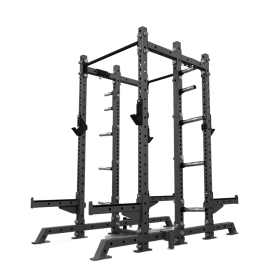
A full power cage surrounds you with four or more uprights. You lift inside the frame, and adjustable safety bars catch the bar if a rep fails. That enclosure is why solo lifters keep coming back to it.
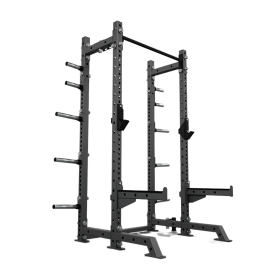
A half rack keeps the uprights but moves you out front. You get spotter arms instead of full-length safeties, plus rear posts that double as plate storage. Walk-in access is easier, and the open feel suits lifters who dislike training inside a cage.
A squat rack strips it back to two uprights and J-cups. It is the smallest freestanding option and the simplest way to get a loaded bar off the floor, though it does the least.
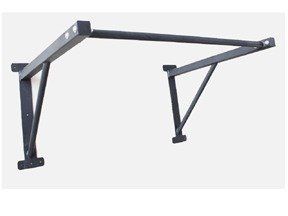
A wall-mount or folding rig bolts to structure and folds flat when you finish. Your floor comes back. The trade-off is honest: you give up the deepest attachment ecosystems, and you need a wall that can take the load.
| Rack Type | Where You Lift | Footprint | Best For |
|---|---|---|---|
| Full power cage | Inside the frame | Largest | Solo heavy lifting, maximum safety |
| Half rack | In front of the uprights | Medium | Open access plus plate storage |
| Squat rack / stand | In front, fully open | Smallest freestanding | Squats and presses in tight rooms |
| Wall-mount / folding rig | In front, folds flat | Near zero when folded | Shared garages, multi-use rooms |
What is the difference between a power rack and a squat rack? A power rack encloses you inside four or more uprights with catch bars on both sides. A squat rack holds the barbell on two open uprights and leaves you lifting in front of it. The cage buys safety; the stand buys floor space.
Browse Racks and Packages for full cages and half racks, squat racks and stands for compact builds, or wall-mount rigs if your gym has to disappear between sessions.
Measure These Four Numbers First
Most racks that get returned were never the wrong rack — they were the wrong size for the room. Take these four measurements before you compare a single model.
- Working ceiling height. Measure floor to ceiling, then subtract your flooring. Rubber tiles, stall mats, or a plywood platform take an inch or two off. Compare what's left to the rack's listed height, and leave headroom above the pull-up bar if you intend to use it.
- Barbell lane. A 7-ft Olympic bar runs roughly 86 in end to end. Your rack may be 48 in wide — the bar is not. Measure wall to wall and add loading room on both sides.
- Walkout depth. Cage lifters need clearance in front to walk the bar out. Half-rack and stand users lift entirely outside the frame, so their depth requirement sits on the near side, not behind.
- Obstruction sweep. Garage door tracks, openers, joists, and light fixtures decide where the rack can physically go. Ceilings often slope near a garage door. Mark all of it before you order.
How much ceiling height do I need for a power rack? Enough to clear the top of the frame and still stand under the pull-up bar. Shorter racks suit low basements and 8-ft garages; taller cages want more overhead. Match the rack's height to your working ceiling height, not the raw number.
If the measurements come back tight, you still have moves: a shorter rack, a shallower cage, or a folding wall rig. Rather not guess? Book a Gym Design and have the layout built around your actual room.
What Makes the Best Power Rack Last
Four build details separate a rack you keep for fifteen years from one you replace in three.
Steel gauge and upright size. Gauge measures wall thickness, and lower numbers mean thicker steel. Eleven-gauge (about 0.120 in) is the accepted floor for serious barbell work; commercial frames go heavier. Upright profile counts too—a 3x3 in resists flex under load better than 2x3 in.
Hole spacing. Tighter spacing through the bench-press zone lets you set safeties at the exact height that catches a failed rep without blocking lockout. Wider spacing is cheaper to build and less forgiving to use.
Safety system. Pin-and-pipe safeties, straps, and flip-down bars all work. What matters is that they are rated for what you actually lift and sit where you need them.
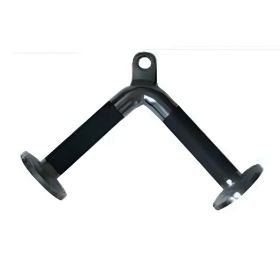
Attachment ecosystem. This is the spec buyers underrate most. The rack you choose today decides which lat pulldowns, dip bars, landmines, and cable towers you can add in three years. A deep accessory line grows with you; a shallow one becomes a ceiling.
Every product page here carries the manufacturer's own specifications — capacity, dimensions, gauge, and hole pattern. Check those against your four numbers, then plan for the power rack accessories you expect to grow into.
Do I need to bolt my power rack to the floor? Not always. Many freestanding racks are stable within their rated limits when properly assembled, particularly with loaded plate storage on the rear posts. Wall-mount and folding rigs are different — they must be anchored into structure. Follow the manual for your specific model.
Key Selection Criteria
Run any rack you're considering against this list before it goes in the cart.
✅ Fits your working ceiling height
✅ Leaves 86+ in of barbell lane
✅ Rated well above your heaviest lift
✅ 11-gauge steel or heavier for barbell work
✅ 3x3 in uprights for maximum rigidity
✅ Tight hole spacing in the bench zone
✅ Safeties rated for real failed reps
✅ Deep attachment line for future upgrades
✅ Plate storage built into the frame
✅ Pull-up bar height you can actually use
✅ Assembly you can manage or schedule
✅ Backed by a manufacturer warranty
Why Buy Your Power Rack Here
We sell racks we are authorized to sell, and we stand behind them after the truck leaves.
Hamilton Home Fitness is an authorized dealer for Body-Solid — including the Pro ClubLine and Powerline ranges — along with Hoist Fitness, TAG Fitness, York Barbell, Ape, and BodyKore. That has one practical consequence: an authorized purchase keeps the manufacturer's warranty intact. Grey-market racks frequently do not.
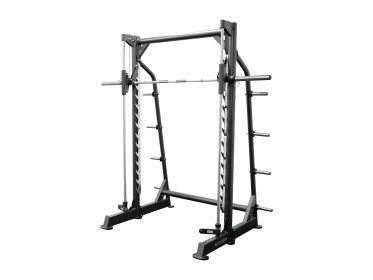
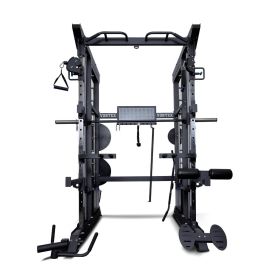
Operating from Tennessee and shipping to all 50 states, our catalog runs from a first garage cage to a commercial half rack, a Smith machine, or a full rig bay. If you are outfitting a facility rather than a spare room, the commercial range goes deeper than most dealers stock.
Add a bench and you have a complete barbell station. Most buyers pick up weight benches in the same order—check the bench width against your rack's internal clearance before you commit.
Questions first? Call 423.458.2453 and talk to someone who knows the catalog. Racks ship freight. Getting the choice right the first time costs far less than getting it wrong.
Power Rack Questions, Answered
What weight capacity should a home rack have?
Choose a capacity that clears your heaviest planned lift with real margin, not one that merely matches it. Capacity is listed per model, so compare the spec sheet on each product page rather than assuming a category-wide figure. Higher-rated frames also flex less, which changes how the rack feels under a heavy bar.
Is a half rack safe enough for heavy squats?
Yes, when it is rated for the load and the spotter arms are set correctly. The real difference is that you lift in front of the frame, so a missed rep lands on arms rather than inside a cage. Lifters chasing maximal squats generally still prefer a full cage.
Can I add cables or a lat pulldown later?
That depends entirely on the attachment line for your chosen model. Racks with a broad accessory range accept pulldowns, dip bars, landmines, and cable towers over time. Confirm compatibility on the product page first — attachments rarely cross between brands.
How long does power rack assembly take?
Plan on a few hours and a second pair of hands. Uprights and crossmembers are heavy, and squaring the frame is much easier with help. Follow the torque sequence in the manual, then re-check every bolt after your first few sessions.
Does a power rack need rubber flooring?
It isn't required, but it protects your slab and your plates and stops the frame from creeping on a smooth surface. Rubber also cuts noise, which matters when the gym shares a wall with the house.
What is the return policy on power racks?
Returns run 30 days from purchase, and equipment must be undamaged and back in its original packaging for inspection. Custom imported items are final sale, and restocking and return shipping charges can apply. Read the full 30-day return policy before ordering a freight item.
Start Building Your Rack Setup
Take your four numbers to the product grid above, filter by rack style and brand, and order the frame you will still be lifting on in ten years.
Every rack here ships nationwide from an authorized dealer, with the manufacturer's warranty intact. Add to cart when you're ready — or call 423.458.2453 and we'll size it with you.
Secure Payments