Introduction
Running hurt, lifting took too long, and the vest is by the door. Rucking with a weighted vest raises one question: ten pounds and two miles, or thirty and six?
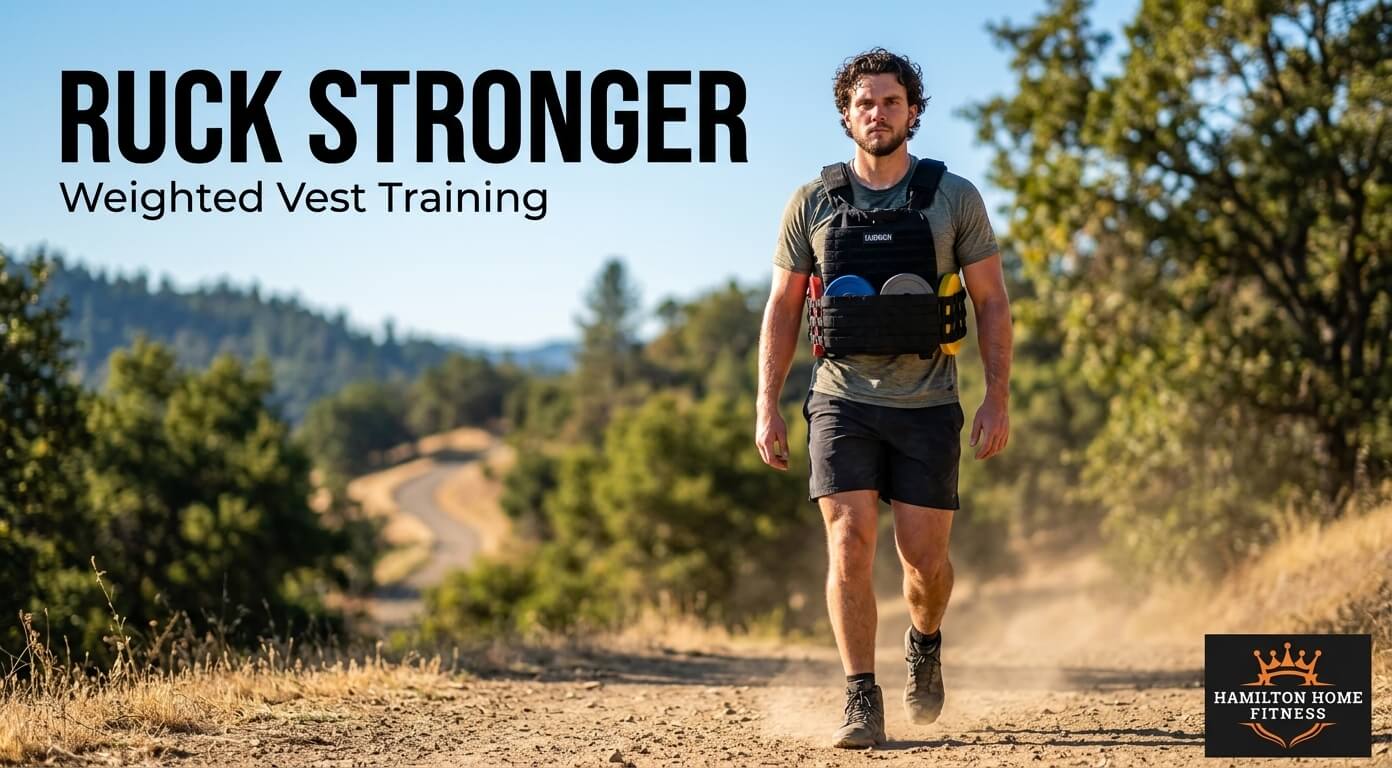
Neither. Start near 5% of bodyweight, walk 20 to 30 minutes, and keep a talking pace. Time and hills rise before weight.
Below: vest or pack, progression, a four-week block, joint and foot fixes, and weekly scheduling. Vest choice comes up only where it matters.
This isn't about what a vest can and can't do for bone density. Get clearance first for back, hip, knee or ankle problems, heart or lung conditions, balance trouble, or pregnancy.
Vest or Rucksack: What Actually Changes
Rucking with a weighted vest isn't the wrong way to ruck. A vest splits the load front and back, so you stand taller and spend slightly less energy per pound. A pack carries water, and a hip belt shifts weight to your hips. Neither changes what your knees handle.
Factor | Vest | Rucksack |
Where the load sits | Front and back | Behind you |
What shoulders feel | Even pressure | Strap pull |
Energy per pound | Slightly lower | Slightly higher |
Heat and breathing | Covers more torso | Chest stays open. |
Knee demand | Load and speed | Load and speed |
A vest holds weight near your center of mass, your body's balance point. A pack sits behind it, so you lean forward, and leaning costs effort. In testing with a heavy 66-pound load, vests used 9% less energy. That's also why torso load beats ankle weights.
Solid plates don't shift, which gives a pack's rigid feel. The Hudson plate-loaded weight vest ($199.00, September 2026) suits heavier, structured rucking later. It's the wrong first vest for one-pound steps or sharing with lighter users. Its plates don't fit sandbag vests, and Hudson sells by private invoice.
Where to Start: Weight, Distance, Pace
Start near 5% of your bodyweight, walk 20 to 30 minutes on flat ground, and hold a pace you can talk at. That's roughly 1 to 1.5 miles at a 20-minute mile, and it should feel easier than you expect.
How Much Weight to Start With
Start rucking at about 5% of your bodyweight: around 7 to 8 pounds at 150 pounds, or 10 pounds at 200.
Treat 10% as a ceiling to grow into. Only trained ruckers go past it after months of building. Here's how much weight a weighted vest should carry and when to add more.
How Far a Beginner Should Ruck
A beginner should run 20 to 30 minutes on flat ground, about 1 to 1.5 miles at a 20-minute-mile pace. That fits a lunch break.
Hills change your pace; the clock stays honest. Three and six miles come later, one lever at a time. For exact mileage, treadmills that track distance and incline count it.
The Pace and Cadence to Hold
Hold a pace where you can speak in full sentences, which for most beginners is nearer a 20-minute mile than a 15. That's zone 2: easy aerobic work, though definitions vary.
Speed up with quicker steps, not longer ones. In unloaded walkers, faster cadence didn't raise joint loading; longer strides did.
The 15-minute mile is an infantry test pace, 12 miles with 35 pounds in three hours, not a week-one target.
How to Progress One Lever at a Time
Change one thing per week: time, then hills, then pace, and weight last. Never raise weight and distance together. When weight rises, cut your run distance and rebuild it, because tendons and joints adapt slower than your heart and lungs.
Why Hills and Time Come Before Weight
Hills and pace make a ruck harder faster than added pounds, so weight comes last.
By model estimate, a 176-pound walker at 3 mph burns about 7% more calories in a 10% vest on flat ground. Unloaded, a 3% grade adds an estimated third, and 4 mph adds an estimated half. It's a military backpack equation, so vests run slightly lower and terrain varies.
Weight's job is slow conditioning for legs, trunk, and connective tissue. Trials still found a small extra fat loss when middle-aged and older adults added a vest to exercise.
Apollo's adjustable vest moves in one-pound bags, and the 40 lb version of the same vest ($61.98, September 2026) suits targets past 20 pounds. It's listed for home use, with a six-month warranty, and takes no plates.
Hills, Trails, and Treadmill Incline
Add grade before weight: start with gentle hills or a low treadmill incline, and shorten your steps on every descent.
Under load, downhill walking works your knees harder through the whole step, so descents get your slowest pace. On trails, uneven ground slows you further.
In humid Tennessee summers, a vest traps torso heat, so ruck early and carry water.
On bad-weather days or in flat neighborhoods, a treadmill supplies the grade, but body plus vest must stay under its user limit. An incline treadmill rated to 300 lb ($999.99, September 2026) covers a 260-pound walker in a 20-pound vest; keep its decline off under load.
A Four-Week Starting Block
This ruck training plan runs two or three sessions a week for four weeks. Hold load near 5% of bodyweight all month, and change one thing per week: time first, then hills. Add weight only after the block, in the smallest step your vest allows.
Week 1: about 5% of bodyweight, 20 to 30 minutes, flat
Week 2: same load, add 5 to 10 minutes per session
Week 3: same load and time, add gentle hills
Week 4: repeat week 3, or trim time if sore
In bad weather, an equal-length incline treadmill session counts.
The 20 lb adjustable vest that loads in one-pound bags ($51.15, September 2026) makes your first post-block step a single pound. Its water-bottle pocket and reflective edging suit outdoor walks. It suits targets under 20 pounds, carries a six-month warranty for home use, and takes no plates.
On a plate vest, rigid plates stay put, and the lightest Hudson vest plate sets your smallest step. Those steps run bigger than a one-pound bag, and plates don't fit sandbag vests.
Knees, Back, Shoulders, and Feet Under Load
Under a vest, knee strain follows how much you carry and how fast you walk. Back and shoulder strain follows fit and posture, and foot trouble follows friction. Fix the lever that matches the complaint, not all of them at once.
Is Rucking Bad for Your Knees?
Rucking isn't bad for healthy knees at sensible loads, but knee force climbs with every added pound and every bit of speed.
In soldiers, estimated knee contact force rose 10.1% at 33 pounds and 19.9% at 66 pounds over unloaded walking. It rose again with speed and didn't change with load design.
Stop and see a clinician for sharp pain, swelling, or pain that changes how you walk. Injured or arthritic knees need clearance before any load. On flare weeks, zone 2 recumbent bike plans keep aerobic work going without it.
Back, Shoulders, and Vest Fit
Stand tall, keep your shoulders down and back rather than shrugged, and cinch the vest so it can't bounce.
A snug, balanced vest removes the forward lean packs that cause it, while a bouncing one rubs your traps. Sore traps that ease within a day or two are normal adaptation. A lower back that aches mid-walk means cut time and load, then build strength.
Body-Solid's strap-adjusted 20 lb vest ($120.00, September 2026) loads removable sandbags and ships free with 30-day returns. Its own page steers readers who want a rigid plate carrier for rucking elsewhere.
Footwear, Socks, and Hot Spots
The trainers you already walk in are fine at starting loads, and synthetic socks matter more than boots in month one.
In one small study of 10 trained men, shin loading kept climbing in trainers from 33 to 66 pounds but leveled off in boots. Boots earn attention only at heavy loads.
Wear synthetic, moisture-wicking socks, not cotton
Break shoes in on unloaded walks first
Stop and cover any hot spot right away
Fitting Rucks Into a Training Week
Two or three racks a week fit beside lifting for most people. Keep hard leg days and long rucks on separate days, and treat this load carriage conditioning as easy aerobic work.
Can You Ruck Every Day?
You can walk daily, but loaded rucks work better two or three times a week, with easy walks between.
Military advice to space-heavy marches 10 to 14 days apart assumed heavy loads plus separate training, not light vest walks. Weekly marches beat every two-week ones in training studies.
Rest days matter: foam rollers for tight calves and hips may ease stiffness, but they don't replace one. Soreness lasting to day three means the week outran recovery.
Rucking Alongside Lifting
Strength training makes rucking easier, and a kettlebell for deadlifts and goblet squats covers the basics at home. Research found progressive strength plus aerobic work, three-plus times weekly for four-plus weeks, worked best, especially with loaded walks added.
For the back, hinges carry over, and so do Roman chair back extensions.
Busy professional: two weekday rucks, one weekend ruck
Hybrid athlete: rucks on upper-body or rest days
Former runner: rucks on off days, never jogged
FAQ
Is rucking better than running?
Neither is better. Running reaches higher peak effort and builds race fitness; rucking keeps a walking stride, so each step lands softer, and loads your legs and trunk. Don't jog under load. If knees rule out running, compare lower-impact cardio machines.
Does rucking build muscle?
Not much. It mostly builds endurance in your legs, hips, and trunk. There's no direct evidence that loading walking meaningfully builds muscle, so size and strength still come from free weights for progressive strength work.
Is rucking the same as a weighted hike?
Close. A weighted hike is rucking on trails with elevation. Training for a backpacking trip? Finish your prep in the pack you'll carry, since a vest can't teach hip-belt fit.
Final Thought
Start lighter and slower than instinct says: time and hills before weight, one change a week, and stop when pain changes how you walk. Then compare adjustable weighted vests: a sandbag for one-pound steps and a plate-loaded for structure. Orders ship nationwide from Tennessee; Body-Solid vests ship free.
For the plate route or a Hudson order, talk to the Hamilton Home Fitness team.