Introduction
Vest walks fill your feed, and a worrying DEXA result makes one tempting. Walked in or worn all day, a weighted vest for bone density has little to no evidence. Heavy, progressive strength work does, and a vest can help start it.
Vest walking boomed in 2025, as a yearlong randomized trial found daily wear during dieting didn't protect hip bone. Hamilton Home Fitness sells vests but won't sell you one as a bone treatment.
Bone health decisions belong with your physician or physical therapist. With diagnosed low bone density, get clearance before adding a load. Here's the evidence of what builds bone instead, who needs clearance, and where a vest helps.
What Bone Needs That a Vest Walk Lacks
Bone reshapes to the mechanical loading it gets, the idea behind Wolff's law, and rebuilds most when loads break from its routine in size or speed. A vest walk adds only modest weight to the most routine movement you make. Think of your thousandth daily step, slightly heavier.
The Load Signals Bone Answers To
Bone responds most to strain that is large, fast, and unfamiliar. Strain is the slight bending of bone under load. Strain magnitude and rate both count, and so does novelty:
Magnitude: a heavy squat outweighs a stroll
Rate: a landing hits faster than a step
Novelty: new movements beat repeated ones
Osteoblasts answer by building new bone, while osteoclasts clear away old bone.
Is Walking Enough for Your Bones?
Walking alone shows no benefit for spine bone density and only a small hip benefit in programs longer than six months. Keep walking for your heart, but not as bone training.
Walking with a vest has barely been studied for bone health, and the studies that exist found no bone benefit. A vest raises calorie burn. The reasoning on bone: a heavier step is still a routine step.
For a stronger bone signal, start with squat variations that skip the barbell.
What the Weighted Vest Studies Found
No good trial shows a weighted vest for bone density works when you walk in it or wear it all day. The better-designed trials tested daily wear and a vest exercise program instead, and neither found a clear bone benefit.
Vest use | Who was studied | Bone result |
Worn all day while dieting | Older adults with obesity | Hip bone loss continued. |
Loaded onto exercise | Postmenopausal women | Weak signal or no difference |
Walked in | Few trials | No benefit found |
Worn All Day While Losing Weight
In a year-long randomized trial of 150 older adults with obesity, wearing a vest about seven hours a day while dieting didn't stop hip bone loss. Hip density fell 1.2 to 1.9% in the 2025 results, including the supervised strength training group. Wearing a weighted vest all day isn't a shortcut.
Loaded Onto Jumps and Exercise Classes
Vest exercise programs show weak bone signals, and one six-month program's randomized trial found no difference against education alone.
In a five-year study of 18 postmenopausal women, those jumping in vests held hip bone better than non-exercisers. The design can't isolate the vest's bone remodeling stimulus.
That six-month program's uncontrolled report on women with osteopenia and a healed wrist fracture showed gains but had no control group, a comparison group that skips the program.
Why Bone Health Groups Urge Caution
A national osteoporosis organization's September 2025 position statement found little to no evidence that walking or daily wear in a vest raises bone density, and it called the exercise evidence very uncertain.
The caution reflects weak studies behind the weighted vest hype, not bias against vests. Many were small, and some judged bone after six to eight weeks, when bone trials need at least eight months.
What Counters Postmenopausal Bone Loss
The strongest evidence against postmenopausal bone loss comes from supervised, heavy, progressive strength training paired with impact work such as small jumps. Balance training belongs alongside both to lower the fall risk that can turn fragile bone into a fracture.
Bone loss speeds up as estrogen falls around menopause. That strength work can start at home with adjustable dumbbells.
Heavy, Progressive Strength Work
In an eight-month supervised trial, postmenopausal women with low bone mass who lifted heavy loads twice a week raised spine bone density 2.9%, while a low-intensity home group lost 1.2%. Participants averaged 65 and were screened first, so clear any heavy resistance training for bone density with your physician or physical therapist.
Guided squat machines load your legs without balancing a bar. They suit anyone a barbell intimidates, but not tight spaces, small budgets, or plans built on free weights.
A kettlebell for goblet squats loads the squat at your chest and rises bell by bell for cleared beginners. If your grip is weak or painful, a vest may suit you better.
Impact Loading, Once You're Cleared
Small jumps and landings deliver the fast, high-strain loading bone responds to, which is why the strongest trial paired impact with heavy lifts. Get clearance before your first landing. After a spine fracture, moderate intensity is preferred, so high-impact loading for bone may be off the table.
Who Needs Clearance Before Adding a Load?
Safety research on weighted vests is thin, but light loads are generally assumed low-risk for most postmenopausal women. With diagnosed low bone density, medical clearance comes first: a physician or physical therapist should approve any new load for your bone health.
A DEXA T-score between −1 and −2.5 means osteopenia, and −2.5 or lower means osteoporosis. Your clinician interprets yours.
If Your DEXA Shows Osteopenia
A weighted vest is often an option with osteopenia once your physician or physical therapist clears it, but it won't treat osteopenia. The strength work you load is the point.
On your first session, practice each move unloaded, then add light weight. Get the go-ahead before buying, since the return terms for used gear exclude a vest you've trained in.
With Osteoporosis, Get a Plan First
With osteoporosis but no spine fracture, strength and balance training is still recommended. A physical therapist or exercise physiologist experienced with osteoporosis should build the plan before a weighted vest or heavier weights join it. Every session in the heavy-lifting trial was supervised.
If your plan reaches barbell squats, a power rack for barbell lifts with safety bars catches missed reps. Dumbbells and bodyweight moves cover earlier stages.
When the Spine Is the Concern
A vest raises spinal forces most during bending and twisting, so any spine concern means seeing a physical therapist first. That includes:
A past spine fracture
A pronounced forward curve (hyperkyphosis)
Spinal arthritis or a disc injury
Back pain that worsens under load
Avoid bending forward under load, which raises spine fracture risk with a vest.
Once a therapist sets your plan, ask our team to match equipment to that plan.
Where a Weighted Vest Earns Its Place
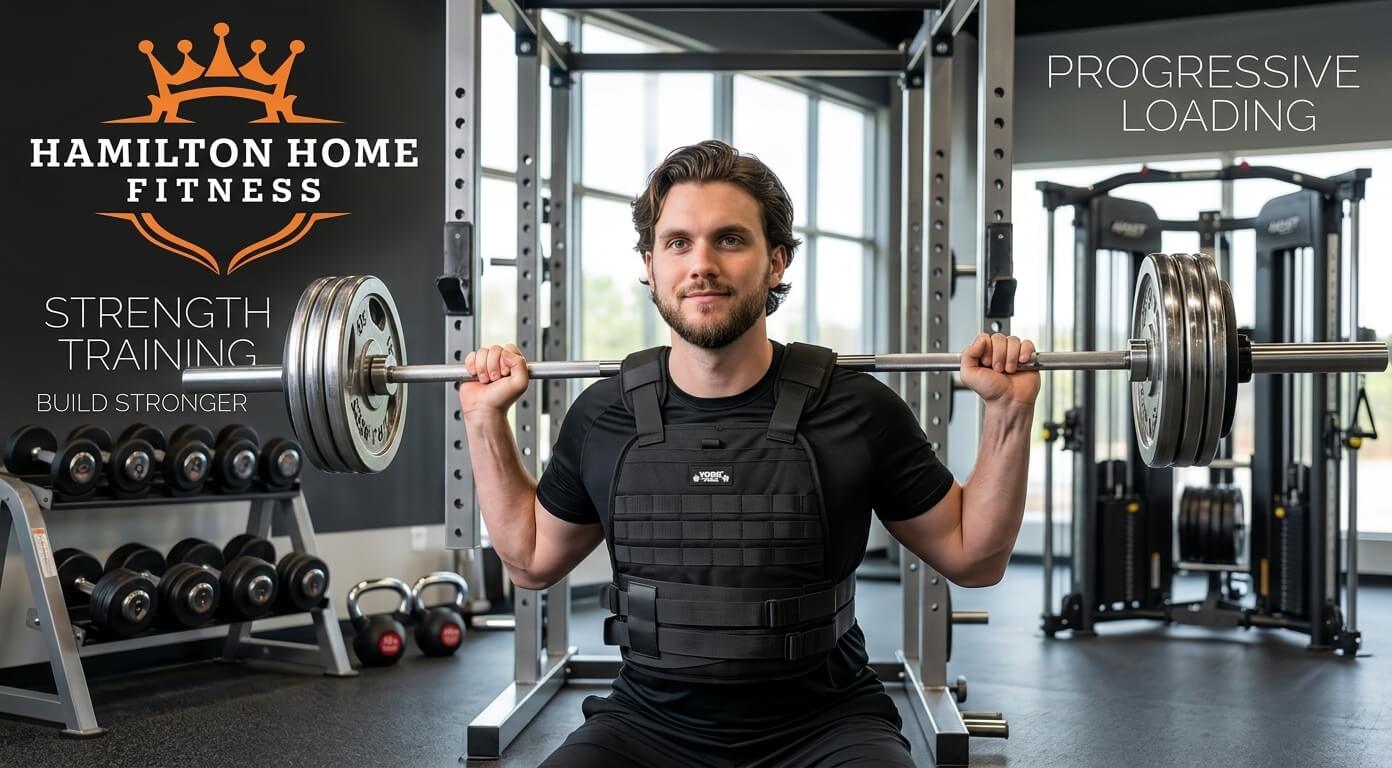
A vest earns its place as a first external load for strength moves when menopause and strength training arrive together and a barbell feels like too big a step. It isn't a walking accessory for bone but a hands-free way to make bodyweight work harder.
When you're cleared, compare adjustable weighted vests.
Squats, Lunges, and Step-Ups in a Vest
A vest adds the most useful load to squats, lunges, and step-ups, as long as you can do each move well without it first.
A 4 to 6 inch adjustable step suits early step-ups until 6 inches feels easy. Check each move unloaded first:
Squat or sit-to-stand: stand up without using your hands
Split squat or lunge: lower and rise without wobbling
Step-up: rise onto the step without pushing off your back foot
A vest can throw off your balance, so keep balance work in your week.
For loading squats and lunges with a vest, a 20 lb weighted vest with sandbag steps suits a light start after clearance. If you already train above 20 lb of added load, its fixed ceiling rules it out.
When the Vest Runs Out of Load
A vest stops working as strength training once its full load feels easy, because it can't go past its capacity, and heavier torso loads raise spinal forces. That's reasoning from the evidence, not a tested finding, and progression with vest plates still keeps the load on your torso.
Body-Solid's 40 lb sandbag vest uses the same sandbag system up to 40 lb. It suits cleared readers who have outgrown 20 lb, but not anyone with a spine concern.
Most people do better moving to a cast iron spinlock dumbbell set, where added plates keep the load climbing past any vest. Slow plate changes make it a poor fit for fast circuits.
FAQ
Is rucking good for osteoporosis?
Not as a bone treatment. Rucking is walking with a loaded pack, so it shares vest walking's thin bone evidence and adds spinal load. With osteoporosis, get clearance first and treat rucking as fitness, not bone training.
How long before a DEXA scan shows a change?
Usually not within a few months. Bone changes slowly, which is why good bone trials last eight months or more. Scan changes are small, so steady training between scans matters more than any single result.
Can a weighted vest improve your posture?
There's no good evidence it does. Posture guidance points to strengthening the back muscles that hold you upright. A resistance band kit handles rows and upper-back work at home, though bands won't supply bone-level loading.
Final Thought
A vest walk won't rebuild bone. Heavy, progressive strength work is what the evidence supports once a clinician clears it, and a vest can help you start that work.
When the vest stops feeling heavy, your progress continues with hand-held weights, not a heavier vest. Once you're cleared, explore free weights for the next stage, sold by an authorized dealer that ships from Tennessee to all 50 states.