












Power Racks & Cages
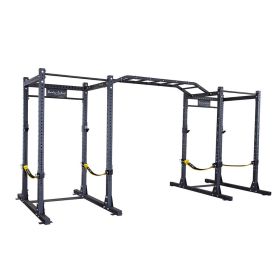
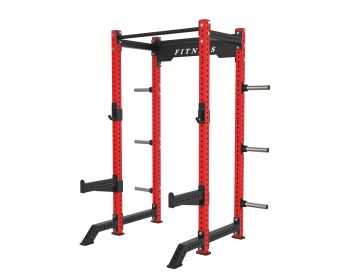

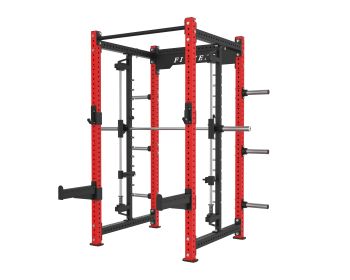

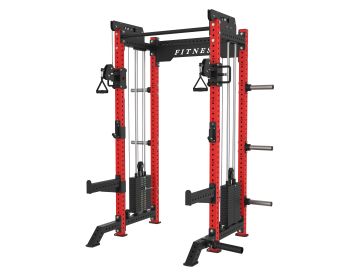


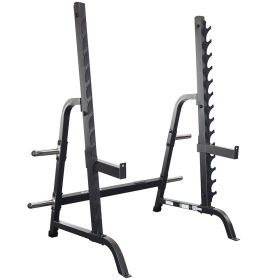
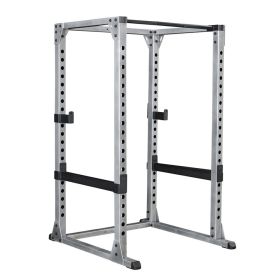

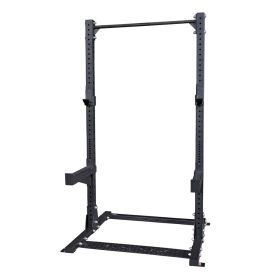
Commercial Power Rack Collection: Engineered for Elite Training
A commercial power rack is the anchor of any serious strength floor. It is the cage that lets you load heavy, fail safely, and progress without a spotter watching every rep. Every rack in this collection is built to deliver that confidence whether you are outfitting a private home gym in Nashville, a 24/7 fitness facility in Dallas, a training studio in Manhattan, or a sports performance room for a college program.
What is a commercial power rack? A commercial power rack is a four-post steel cage built with heavy-gauge tubing, adjustable J-cups, and safety arms designed to absorb a missed lift under maximum load. Unlike lighter consumer racks, commercial-grade models are engineered for daily, multi-user punishment over a decade or more of service.
Our lineup brings together full power cages, half racks, and modular rigs from vetted manufacturers, with weight capacities that comfortably handle the heaviest squats, presses, and rack pulls real lifters program. Every model is sourced for one reason: it earns its place on a commercial gym floor.
What Defines a Commercial Power Rack
A true commercial power rack is defined by steel gauge, frame geometry, and rated load capacity. The industry benchmark is 11-gauge steel with 3" x 3" uprights, paired with 5/8" or 1" hardware holes for precise J-cup and safety arm placement.
That spec sheet matters because it dictates how the rack behaves at heavy load. Thinner steel flexes under a 600-pound squat. A real commercial cage stays planted. Look for these markers when shopping:
- 11-gauge or heavier steel uprights
- 3" x 3" or 2" x 3" tubing for high-end performance
- Westside hole spacing through the bench press zone
- Laser-cut numbered uprights for repeatable setup
- Powder-coat finish that resists chalk, sweat, and chips
- Rated load capacity of 1,000 lb or higher
- Welded gussets at every load-bearing junction
How much weight can a commercial power rack hold? A well-built commercial power rack handles between 1,000 and 2,000 pounds of static load, with the strongest pro-series cages rated even higher. That headroom is what keeps the rack rigid under live lifts, not just at rest.
Full Cage vs Half Rack vs Squat Stand
The right format depends on your space, training style, and how many lifters share the rack. A full power cage gives the highest safety ceiling, a half rack offers a leaner footprint, and a squat stand suits minimal-space setups that still need real loadability.
Here is a fast comparison to help you decide:
- Full power cage: Four-post enclosure, full-length safety arms or straps, and the widest attachment ecosystem. Best for serious solo training and high-capacity facilities.
- Half rack: Two front uprights with rear stabilizers, plate storage horns, and pull-up bar. Best when floor space is tighter but capacity must stay commercial.
- Squat stand or quarter rack: Compact, two-post footprint with spotter arms. Best for group fitness rigs, modular layouts, or constrained garage gyms.
What is the difference between a power cage and a squat rack? A power cage fully surrounds the lifter and uses safety bars or straps inside the frame to catch a failed lift. A squat rack is open, lighter, and relies on external spotter arms or a spotter. Cages win on safety; stands win on space and price.
Pick the Right Rack for Your Space
Match the rack to the room first, then to the training style. A commercial power rack needs vertical clearance for the pull-up bar and overhead presses, plus walk-around space for safe loading and unloading.
Use these clearance rules as a starting point:
- Ceiling height: 8 ft minimum, 9 to 10 ft preferred
- Floor footprint: 4 ft x 6 ft for the rack itself
- Walkthrough buffer: 3 ft on every side
- Bar travel: at least 7 ft of horizontal clear space
What size power rack do I need for a home gym? Most home and garage lifters do best with a 4-post, 80 to 84-inch tall cage and 30-inch internal depth. Commercial facilities typically scale up to 90-inch uprights and 36 to 48-inch depth to accommodate band work and bigger lifters.
Key Selection Criteria
Use this checklist to vet every commercial power rack before you commit. These are the markers that separate a rack you keep for life from one you replace in three years.
✅ 11-gauge steel uprights minimum
✅ 3" x 3" tubing for top-tier rigidity
✅ Rated capacity of 1,000+ pounds
✅ Westside hole spacing at bench height
✅ Laser-cut numbered uprights
✅ Sandwich or roller J-cups included
✅ Pin-and-pipe or strap safeties
✅ Multi-grip pull-up bar built in
✅ Plate storage horns or pegs
✅ Compatible attachment ecosystem
✅ Powder-coat finish, gym-grade
✅ Bolt-down anchor points available
Attachments That Expand Your Training
The right attachments turn a commercial power rack into a full-strength system. Pick the rack, then layer in tools that match your programming.
Attachments worth planning for from day one:
- Adjustable safety straps or pin-and-pipe spotters
- Sandwich J-cups for bar protection
- Dip bar attachment and Y-dip handles
- Landmine sleeve for rotational work
- Lat pulldown and low row pulley tower
- Plate storage and barbell holders
- Band pegs for accommodating resistance
- Step-up platform and seal-row pad
Are commercial power rack attachments universal? Attachments are not universal across brands. Compatibility depends on upright tubing size, hole spacing, and pin diameter. Stay inside one rack ecosystem when possible, or confirm dimensions before ordering aftermarket accessories.
Why Buy From Hamilton Home Fitness
Hamilton Home Fitness curates a commercial power rack lineup the way a serious gym owner would build one — by spec, not by price tag. Every brand on the floor is vetted for steel quality, weld integrity, finish durability, and post-sale support. There is no filler, no rebadged import passing as commercial, and no equipment that fails the daily-use test.
Beyond the rack itself, the team backs every order with hands-on guidance. That includes layout advice for awkward ceiling heights, attachment planning for specific programming, and full gym design consultations for facilities scaling up from a single rack to a complete strength floor.
Are commercial power racks worth it for a home gym? Yes, when the goal is decades of service and confident heavy lifting. A commercial-grade rack at home costs more upfront, but it eliminates the wobble, the squeaks, and the early replacement cycle that plague residential cages. For lifters past 225 on the squat, it pays back in safety alone.
Every shipment is supported by U.S.-based service from Tennessee, with nationwide delivery and freight options sized to your build. Whether the rack is going into a residential garage or a 5,000 sq ft training facility, the buying experience stays one-to-one.
Shop the Commercial Power Rack Lineup
Strength built on the right foundation lasts. The wrong rack costs more in the long run than the right one ever will. Browse the full commercial power rack collection above, lock in the specs that match your space and your programming, and place the order while current pricing and lead times hold.
Need help picking? Reach out for a personalized layout review, or pair your rack with the supporting free weights and weight benches you will load it with. Build your floor once. Build it right.
Secure Payments