Introduction
Choosing the Best Power Rack for Home Gym is simpler when you know what to measure and what keeps you safe. This guide is for home lifters, garage gym owners, trainers, and small studios across the U.S. who want a rack that fits their space and training style without buyer’s regret. Based in Tennessee, we support buyers nationwide. Whether you need a compact power rack for a small room or a garage gym rack, the steps stay the same.
In practice, most bad buys happen for three reasons: the rack is too tall for pull-ups, the depth leaves no room to load plates, or the safeties aren’t set for solo lifting. Start by browsing options at Shop Quality Fitness Gear and Equipment - Hamilton Home Fitness so you can compare footprints and add-ons, then measure your space and do a quick “walk-around” test before you click buy. Ask it like a real buyer: Can I bench alone? Will it wobble?
After reading, you can build a confident shortlist using a fit-and-safety checklist for rack type (power rack vs squat rack), size and ceiling height, stability and load rating, and the attachments you’ll truly use (J-cups, safeties, pull-up bar, storage).
Power rack or squat rack?
Power rack vs squat rack basics
A power rack (full cage) is usually the safer choice for home lifting because it lets you set safeties inside the rack. A squat rack (open uprights) can work, but it relies more on your control and setup.
Quick decision rule (real-buyer style):
- Choose a power rack if you lift alone, bench press at home, or want safer squats.
- Choose a squat rack if space is tight and you rarely fail reps.
- If you plan to add cables or storage later, a power rack platform is often the easier “build-from-here” base.
Common mistake: People buy a squat stand for price, then realize they need spotter arms and still feel exposed on solo bench.
Half rack vs full rack choice
A full rack is best when solo safety is the top priority. A half rack is best when you want more open access and you’re managing space.
Use these home-gym checks:
- If you want to bench alone often, favor a full rack with reliable safeties.
- If your room is narrow, a half rack can feel less “boxed in,” but confirm rack depth / rackable space so your bar path stays clear.
- If you store plates on the rack, it can improve stability but also changes your usable space.
Are folding racks stable?
A folding power rack / wall mounted rack can be stable enough for heavy lifting, but only if the wall structure and anchoring are right. It depends on how it’s installed and how you load it.
Stability checklist (fast):
- Solid studs or masonry anchors (not just drywall)
- Tight hardware after the first week of use
- No rocking on uneven floors (shim if needed)
- If it wobbles: check anchor torque, floor slope, and whether the uprights are perfectly plumb
Edge case: If you do dynamic pull-ups or use bands, stability demands go up fast.
Fit check: size and ceiling height
Small gym rack dimensions
A rack “fits” only when the power rack dimensions (height, width, depth) work with your room and you still have safe moving space. For a compact power rack small space setup, measure your usable footprint first, not your room’s full size.
Fast fit method (what I use before any home install):
- Tape the rack’s width × depth on the floor with painter’s tape
- Add space to load plates and walk around (bar ends and hands need room)
- Confirm rack depth / rackable space is enough for your squat and bench setup
Proof pattern later: 2 layout examples (spare room vs garage corner) + a “red flag” checklist.
Ceiling height for pull-ups
For pull-ups, ceiling height depends on rack height plus your head clearance at the top of the rep. If your ceiling is low, the rack can still work, but you may need a shorter rack or a different pull-up bar style.
Quick reality check
“If I jump and grab the pull-up bar, can I finish a rep without my head hitting the ceiling?”
Typical rack heights may vary by brand, but many home racks land roughly in an 80–95 inch range—always confirm the exact spec on the product page. Proof pattern later: a height-range guide + low-ceiling workaround list.
Will your bar and plates fit?
Most Olympic barbells are about 7 ft (2.2 m) long, so you must confirm the rack’s inside width and how far the sleeves stick out when racked. Also check plate storage pegs: loaded plates can steal space in a tight garage gym rack area.
Compatibility checklist:
- Inside width fits your bar path on J-cups
- Enough clearance to load plates without hitting walls
- Plate storage doesn’t block your bench setup
Proof pattern later: common mismatch scenarios + a 60-second pre-buy checklist.
Safety, stability, and load ratings
How much weight capacity?
You need a rack that comfortably exceeds your heaviest planned lift with a safety buffer. A higher weight capacity rating is only meaningful if the rack is stable, correctly assembled, and used the way the rating assumes.
Here’s the simple rule I use when helping people set up a home rack:
- Take your current or near-term 1-rep max (or working weight)
- Add a buffer for growth and “real-life” movement (re-racks, small drops)
- Choose a rack that stays solid with that buffer, not one that barely meets it
Also watch for how brands describe rating: static vs dynamic can matter. Static is the load sitting still. Dynamic is the load moving, re-racking, or catching on safeties.
Bolt-down vs freestanding
You don’t always need to bolt a rack down, but you do need confidence it won’t shift when you lift. If you do pull-ups, band work, or aggressive re-racks, stability becomes more important fast.
Bolting rack to floor / stability tips:
- Concrete garage floors are usually easiest for bolting
- For renters, add stability with plate storage pegs / weight horn storage (when compatible) or a lifting platform
- If you feel wobble: re-tighten hardware, check floor slope, and confirm all uprights sit flat
Straps vs pin/pipe safeties
Both can be safe if set correctly. Strap safeties tend to be quieter and easier on the bar, while pin and pipe safeties are simple and rugged.
For solo lifting, set safeties like this:
- Bench: safeties just below chest height when arched
- Squat: safeties just below your lowest safe depth
Common mistake: setting safeties too low “for confidence,” then they fail to catch the bar when you actually need them.
Best Power Rack for Home Gym picks
Best picks by goal and space
The Best Power Rack for Home Gym is the one that matches your space, solo-safety needs, and upgrade path, not just the biggest steel you can afford. Build your shortlist by choosing the “best for your goal” bucket first.
Shortlist buckets (fast and practical):
- Best for small spaces: shorter height, smarter depth, clean rackable space
- Best for garage gyms: stable base, corrosion-aware finishes, storage options
- Best for solo barbell training: strong safeties, easy J-cup adjustments
- Best for add-ons: attachment ecosystem (dip, landmine, cables)
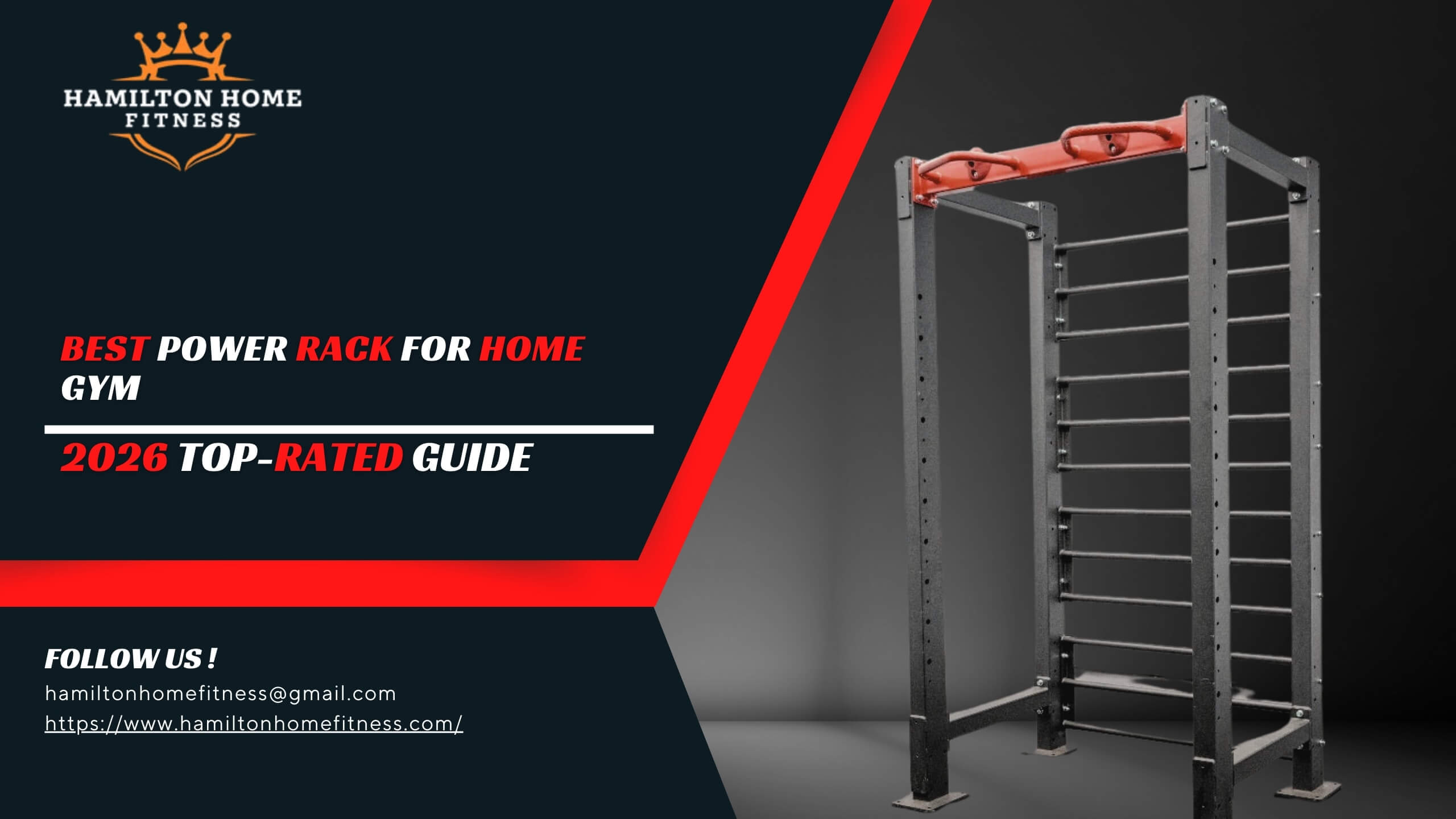
If you want a modular bay-style solution, Hamilton Home Fitness carries the BodyKore VFCR1701A Linx Rack Single Bay, and you can buy the Best Power Rack for Home Gym as a strong starting point for a clean, expandable training zone. Specs and fit details can vary by configuration, so confirm footprint, height, and any anchoring guidance before checkout.
Westside spacing and hardware choice
Westside hole spacing matters most if you bench often, because it helps you fine-tune J-cup and safety height. For hardware, 5/8” vs 1” is less about “better” and more about attachment compatibility and budget.
Decision rule: If you want the widest premium attachment ecosystem, 1-inch hardware may be attractive; if you want excellent value and plenty of options, 5/8-inch can be a great fit (always confirm compatibility).
Attachments that matter most
Start with safety and setup upgrades, then add training multipliers.
Best first attachments for most home gyms:
- Quality J-cups / sandwich J-cups + reliable safety spotter arms
- Strap safeties or pin and pipe safeties (set correctly)
- Multi-grip pull-up bar, dip, landmine, and optional lat pulldown/cable later
People Also Ask
What is the best power rack for a home gym?
The best power rack is the one that fits your room and lets you lift safely alone with properly set safeties. For example, if you bench solo, a full cage with adjustable safeties is usually the safest pick.
Is a power rack worth it for a garage gym?
Yes, a power rack is worth it for most garage gyms because it adds safety and exercise options in one footprint. It’s especially worth it if your ceiling height and floor stability support pull-ups and heavy re-racks.
What’s the difference between a power rack and a squat rack?
A power rack is a four-post cage that lets you lift inside with safeties, while a squat rack is usually open and less enclosed. If you train alone, the power rack’s safety system is often the deciding factor.
How much weight capacity do I need in a power rack?
Pick a rack rated well above your heaviest planned lift so you have a safety margin during re-racks and missed reps. A simple condition is choosing a rating that comfortably exceeds your current max by a meaningful buffer.
What size power rack fits in a small home gym?
A small-space rack fits when you can load plates and move safely around it, not just when it “technically” fits the floor area. For example, tape out the rack footprint and add clearance space before buying.
What ceiling height do I need for a power rack and pull-ups?
You need enough height for the rack plus overhead clearance for your head at the top of a pull-up. If you can’t finish a pull-up without your head nearing the ceiling, you need a shorter rack or a different pull-up setup.
Do you need to bolt a power rack to the floor?
Not always, but bolting helps if your rack is tall, narrow, or you do dynamic movements like kipping pull-ups. If you feel wobble during a re-rack, that’s a strong condition to improve stability.
Are folding power racks stable enough for heavy lifting?
They can be stable enough, but it depends on wall structure, anchoring, and installation quality. For example, a folding rack anchored into solid studs is far more stable than one mounted into weak backing.
Half rack vs full rack: which is better for home use?
A full rack is usually better for solo safety, while a half rack can be better when space and open access matter most. If you bench alone often, a full rack is usually the safer choice.
What is Westside hole spacing and why does it matter?
Westside hole spacing is tighter hole spacing in key bench zones so you can set J-cups and safeties more precisely. It matters most if small height changes affect your bench press setup.
Which is better: strap safeties or pin/pipe safeties?
Strap safeties are quieter and easier on the bar, while pin/pipe safeties are simple and rugged. If noise and bar protection matter, straps are often preferred.
What are the most useful power rack attachments for home gyms?
The most useful attachments improve safety first, then add training variety. For example, upgraded J-cups and a solid safety system usually matter more than specialty add-ons early on.
Can you bench press safely alone in a power rack?
Yes, if you set the safeties to catch the bar at a safe height for your bench setup. A key condition is testing the safety height with an empty bar before going heavy.
Should I choose 1-inch hardware or 5/8-inch hardware?
Choose based on attachment ecosystem, budget, and what your rack supports. For example, if your must-have attachments only come in one size, that’s the deciding factor.
How do I know if a power rack will fit my barbell and plates?
Check inside width, rackable space, and plate-loading clearance before buying. For example, a standard 7-foot bar needs enough side clearance so the sleeves and plates don’t hit walls.
Final Thought
The right rack choice gets easy when you keep it practical: pick the rack style that matches how you train, confirm your power rack dimensions, and prioritize safety before upgrades. In real home setups, the biggest “regret buys” come from ignoring ceiling height for pull-ups, choosing the wrong rack depth / rackable space, or skipping proper safeties.
If you want one simple next step, do this today: measure your floor space and ceiling, then tape out the rack footprint and walk your bench and squat positions through it. That 10-minute test can save you weeks of frustration.
When you’re ready to build your shortlist, start with Hamilton Home Fitness so you can compare rack options and attachments in one place, then choose what fits your goals, budget, and space. The best setup is the one you’ll use consistently, safely, and for years, with an upgrade path that makes sense for your training.