Authorized:











Plyo Boxes

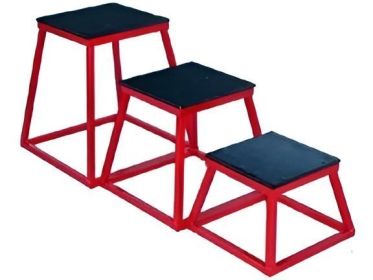


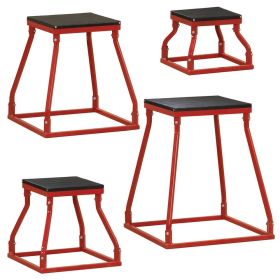


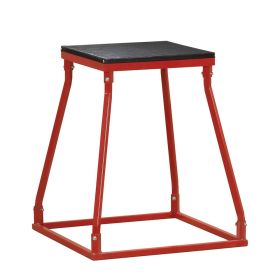


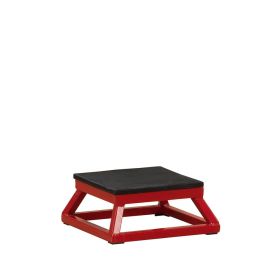


Plyometric Boxes for Sale, from 3 to 42 Inches
Plyometric boxes are stable platforms built for box jumps, step-ups, and depth jumps. Hamilton Home Fitness stocks them in soft foam, wood, and steel-frame builds from 3 to 42 inches—as single boxes, 3-in-1 rotating designs, and stackable sets—for home gyms, garage gyms, and commercial facilities.
Stocked brands include Body-Solid, TAG Fitness, York Barbell, and Sunny Health & Fitness. Single boxes start at $58.05, and a seven-piece steel-frame set runs $1,443.00. A first garage-gym purchase and a full commercial floor both fit inside this category.
Which Plyo Box Type Fits You
Material decides how forgiving the box is. Format decides how much floor space it costs you. Get those two calls right, and the rest is preference.
Is a foam or wood plyo box better? Neither wins outright. Foam absorbs a missed jump, so it suits beginners and high-rep conditioning work where fatigue makes shin contact likely. Wood and steel stay rigid at tall heights, which is what confident jumpers and coaches want under maximum effort.
| Box type | Heights stocked | Best suited for | Honest trade-off |
|---|---|---|---|
| Soft foam | 3 to 30 in., including 3-in-1 and 5-piece sets | Beginners, high-rep classes, anyone who misses jumps | Less rigid than wood or steel at the tallest settings |
| Wood | 3-in-1 rotating designs at 20 / 24 / 30 in. | Garage and home gyms, box squats, step-ups | Hard edges are unforgiving on a missed jump |
| Steel frame | 6, 12, 18, 24, 30, 36, 42 in.; sets of 3, 4, or 7 | Commercial floors, coaching mixed-ability groups | Heaviest to reposition, though sets nest to save space |
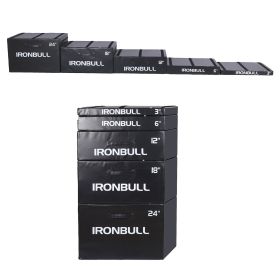
| Stackable step-up | 3, 5, 6, and 12 in. on a 24 x 24 in. top | Low step-ups, controlled progressions, tight rooms | Must be stacked to reach true jump heights |
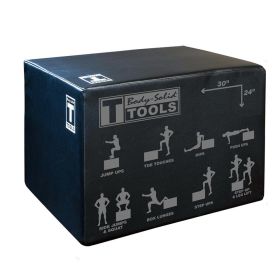
Format matters as much as material. A 3-in-1 box rotates to give you three heights from one footprint—the Tag Fitness 3-Way Plyo Box at $398.00 and the York 3-in-1 at $128.75 both work this way, and they are the practical answer for a single-user garage gym. Stackable soft boxes climb in small increments, which lets one person progress without buying four separate boxes. Fixed-height sets like the Body-Solid steel frame plyo boxes make more sense when several athletes train at different heights at once.
Compare the range and find the build that matches how you actually train.
How to Choose Your Box Height
Pick the height you can clear for 20 or more clean reps, not the height you can hit once. Box jumps train power expression and landing control, and a box you barely clear turns into a shin injury the moment you fatigue.
What size plyo box should I get? As a common starting point, many people begin around 12 to 16 inches for step-ups and low jumps, move to 20 or 24 inches as landing mechanics improve, and reserve 30 inches and above for experienced athletes. Treat these as reference points, not rules—reach, leg length, bodyweight, and training history all shift the right answer.
Two checks most buyers skip:
- Ceiling clearance. Add your standing reach, your vertical, and the box's height. A 42-inch box in a garage with an 8-foot ceiling leaves very little room, and a light fixture or beam overhead is a real hazard. Measure before you order.
- Step-up geometry. For step-ups and split squats, the box should put your thigh roughly parallel to the floor with your foot planted. Taller than that, and your hips start doing the work your quads should.
Plyometric training loads tendons and joints harder than most lifting does. Build height gradually, stop a set once landings get sloppy, and speak with a physician or physical therapist first if you are managing an injury or a joint condition.
Key Selection Criteria
Use this checklist to narrow the shortlist before you buy:
✅ Height you can clear for 20+ clean reps
✅ Landing surface wide enough for both feet
✅ Foam edges if missed jumps are likely
✅ Rigid wood or steel for max-height work
✅ Weight capacity above the heaviest user
✅ Rotating 3-in-1 design to save floor space
✅ Nesting or stacking sets for storage
✅ Non-slip top and a stable, tapered base
✅ Ceiling clearance for your tallest jump
✅ Firm, non-slip floor under the box
✅ One box, or a set for mixed abilities
✅ Authorized-dealer brand with real support
Do plyo boxes need special flooring? They need a firm, flat, non-slip surface. A box that slides on smooth concrete or a thin mat is the fastest way to miss a landing, and hard flooring punishes the drop side of the jump as much as the take-off. Most buyers pair their box with rubber gym flooring or heavy mats for exactly that reason.
Why Buy Your Plyo Box Here
Hamilton Home Fitness is an authorized dealer carrying more than 40 brands, and we ship to all 50 states from Tennessee. Free shipping applies to select brands, including Body-Solid and TAG Fitness—two of the lines stocked in this category. Warranty terms are set by each manufacturer and listed on the individual product pages.
How many plyo boxes does a gym need? One 3-in-1 box usually covers a solo home gym. A household or small studio benefits from two or three heights so nobody is stuck training at someone else's setting. Commercial floors and coaching programs typically want a full spread, which is why the steel-frame line ships as a set of 3 at $537.00, a set of 4 at $763.50, or a set of 7 at $1,443.00—all nesting for storage.
Plyo boxes sit inside our wider cross-training equipment range, alongside dip bars, pull-up bars, battle ropes, and workout sleds, so a conditioning corner can be built out in one order. If you are outfitting a full room, our team will map equipment to your square footage and budget—book a gym design and we will handle the layout.
Plyometric Box FAQs
How much weight can a plyo box hold?
Capacity varies by build and model, and each product page lists the specifics. Steel-frame boxes are generally the strongest option for multi-user commercial settings. Always confirm the rating exceeds the weight of the heaviest person who will use it, including any loaded barbell or dumbbells for box squats.
What is the most common plyo box injury?
Clipping the top edge on a missed jump and scraping the shin. It happens most often when the box is too tall or when the athlete is fatigued. Soft foam boxes compress on contact, which is why they are the safer choice for beginners and for high-rep conditioning work.
Can I use a plyo box for more than box jumps?
Yes. Step-ups, box squats, Bulgarian split squats, incline push-ups, dips, and depth jumps all use the same box. That versatility is a large part of why a single plyo box earns its floor space in a small gym.
How often should I do plyometric training?
One to two focused sessions per week is a common approach for most people, particularly alongside regular strength training. Plyometrics are demanding on tendons and the nervous system, so the quality of landing matters far more than volume. Anyone new to jump training or returning from injury should get guidance from a qualified coach or clinician.
What is the difference between a plyo box and a step-up box?
Step-up boxes are low—3 to 12 inches—with a wide 24 x 24 inch top built for controlled stepping and stacking. Plyo boxes go considerably taller and are built for jumping. Many gyms keep both, since a stack of step-up boxes gives fine height increments that a fixed plyo box cannot.
Does Hamilton Home Fitness ship plyo boxes nationwide?
Yes, we ship across all 50 states from our Tennessee base, with free shipping on select brands including Body-Solid and TAG Fitness. Delivery timelines and return terms are listed on our shipping and returns page, and our team can confirm details before you order.
Do you supply plyo boxes for commercial gyms and schools?
Yes. The steel-frame line ships in sets of 3, 4, or 7 boxes, which covers a mixed-ability floor without buying individual units piecemeal. For larger facility builds, we also offer gym design support and quotes.
Order Your Plyo Box Today
Choose the height you can land cleanly, pick the material that matches how hard you train, and get it on the floor this week. Browse the plyometric boxes above, or contact our team, and we will match the right box or set to your space, your athletes, and your budget. Hamilton Home Fitness ships nationwide as an authorized dealer, with free shipping on select brands.
Secure Payments