Authorized:











Workout Sleds


Workout Sleds for Sale: Choose the Right Sled for Your Space
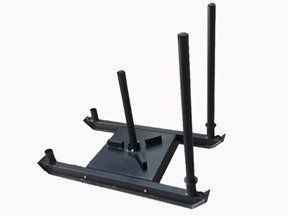
Workout sleds are steel frames you load with plates, then push, pull, or drag to build leg drive, power, and conditioning. Hamilton Home Fitness stocks workout sleds for sale from $228.80 to $4,499, including plate-loaded push-pull sleds for turf and grass, plus a magnetic-resistance sled that needs no plates.
The sled is the easy part. What decides whether it gets used every week comes down to two things most buyers skip: the surface you train on and how much straight-line room you have. Sort those first, and the rest is preference.
Workout Sled Types and Who They Suit
Four formats cover nearly every buyer. Your goal narrows the field. Your floor and your space pick the winner.
| Sled type | Best for | Surface and space | Starts at |
|---|---|---|---|
| Push-pull plate sled | Leg drive, conditioning, resisted sprints | Turf or grass, plus a straight lane | $228.80 — Apollo Sled Rack |
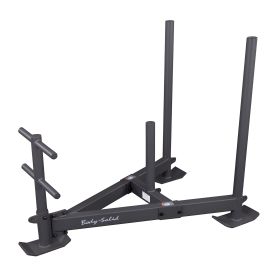
| Multi-post weight sled | Pushes, pulls, and harness drags in one unit | Turf, garage, or gym floor, plus a lane | $350 — Body-Solid GWS100 |
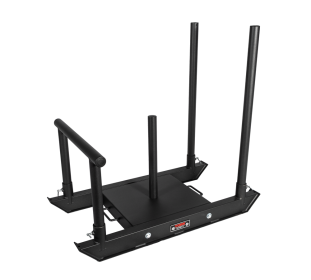
| Commercial power sled | Studios and facilities in daily use | Turf lanes and high-traffic floors | $550 — TAG Fitness Commercial Power Sled |
| Magnetic-resistance sled | Indoor training with instant load and live metrics | Compact footprint, no plates to load | $4,499 — BodyKore Smart Sled Pro |
The Apollo Sled Rack is the entry point, with a chromed loading pole rated to 500 lb, pop-out handles for fast direction changes, and harness hooks in a 49 x 26 x 40 in. frame. Body-Solid's GWS100 trades a little capacity for versatility: removable posts double as plate posts, and multiple anchors take almost any vest or belt.
At the top of the range, the BodyKore Smart Sled Pro works differently. Dual magnetic motors set resistance with a tap, so there are no plates to handle, and an app records power, distance, and stability as you train.
What is the difference between a push sled and a drag sled? A push sled has upright posts you drive against, loading the quads and glutes hard over short distances. A drag sled sits low and gets towed by rope or harness, shifting work to the hamstrings, glutes, and core. Most sleds here do both, so you rarely have to choose.
Match Your Sled to Your Surface
Surface causes more self-regret than price ever does. Match the sled to the floor first, and it stays in service for years.
Turf and grass are the ideal case. Plate-loaded steel sleds glide cleanly, the skids last, and nothing gets scratched. If you have a turf lane or a lawn, any sled on this page will work.
Concrete and asphalt are workable, with two honest trade-offs. The skids wear faster and need replacing, and the sled is loud. York Barbell's weight sled is listed as working on almost any surface, and a turf runner solves both problems cheaply.
Rubber gym flooring is the one to think hard about. Steel skids on rubber create heavy friction that can chew up the flooring and the sled together. If your space is rubber-matted end to end, plan on a turf lane over the top of it, or move to magnetic resistance.
Can you use a workout sled on concrete? Yes. Expect skid wear and noise, and check that the skids are replaceable before you buy. A short turf runner protects the driveway and the sled at the same time.
How much space do you need for sled training? Plan a clear, straight lane of roughly 10 to 20 yards — 30 to 60 ft — for pushes and drags. If you cannot clear that anywhere, the BodyKore Smart Sled Pro is the honest answer since it is built for a compact footprint.
Compare the range and match a sled to the floor you already have.
Key Selection Criteria
✅ Training surface: turf, grass, or concrete
✅ Straight lane length you can actually clear
✅ Plate posts sized for your Olympic plates
✅ Loading capacity above your working weight
✅ Push and pull handles at multiple heights
✅ Harness and strap anchor points on the frame
✅ Sled base weight before you add plates
✅ Powder-coated steel that resists rust
✅ Skid wear and replacement cost over time
✅ Home-grade or commercial-grade build
✅ Storage footprint between sessions
✅ Warranty terms and dealer support
What Else You Need to Budget For
The sled is half the purchase. Plates are the other half, and almost no sled ships with them.
- Plates. Loading posts takes standard Olympic-sized plates. The bum2-inch plates we stock are the usual choice since rubber edges survive being dropped beside a sled.
- A harness or strap. Pulls and drags need one. The Body-Solid Tools sled harness is $76.50 and fits the anchor points on most frames here.
- A surface fix. A turf runner or replacement skids, if you train on concrete.
Do workout sleds come with weight plates? No. Sleds are sold as frames with loading posts, and plates are bought separately. Budget for them up front so the sled is usable the day it lands.
Buying From an Authorized Dealer
We are an authorized dealer for over 40 brands, so the sled you order is the real thing with the manufacturer's warranty behind it.
Two of the sled brands we carry ship free. Body-Solid and TAG Fitness both qualify, so the GWS100 weight sled, the BSTSH sled harness, and the TAG Commercial Power Sled all arrive with no shipping charge.
Warranty terms vary by brand and appear on each product page. The Apollo Sled Rack carries a 120-day limited warranty, while Body-Solid publishes commercial and lifetime warranty coverage on its equipment.
Every purchase also supports the fight against human trafficking. If you are outfitting a fully functional zone rather than buying one sled, our team can map the floor for you—book a gym design, and we will size the sled fully alongside the rest of your cross-training equipment.
Workout Sled FAQs
What do you do—book work, codesign, or design work?
Pushes load the quads, glutes, and calves hardest; cross-training moves the emphasis to the hamstrings, glutes, and posterior chain, while rope pulls bring in the back, shoulders, and grip. Because there is no eccentric lowering phase, sled work builds strength with less next-day soreness than most lifts.
Are workout sleds good for bad knees?
Sled pushing and dragging are low-impact, with no landing or jarring, which is why coaches program them for athletes managing joint stress. That is not a medical claim. If you are training around pain, an injury, or a recovery plan, get clearance from a doctor or physical therapist first.
How much weight should I load on a sled?
Match the load to the goal. Heavy pushes near or above body weight build strength and power, moderate loads suit conditioning, and light loads are used for speed and acceleration work. Start well under what you think you can move, then add plates once your technique holds.
Do sleds damage rubber gym flooring?
They can. Steel skids on rubber matting create high friction that wears both surfaces, which is why most facilities run sleds on a turf lane instead. If rubber is all you have, a turf runner over the top is the standard fix.
Which workout sled suits a beginner?
A plate-loaded push-pull sled is the right start, because the movement is simple and the load is fully adjustable. The Apollo Sled Rack at $228.80 covers pushes, pulls, and harness drags without committing you to a commercial build.
Do you ship workout sleds nationwide?
Yes. We ship to all 50 states from Tennessee, with free shipping on Body-Solid and TAG Fitness sleds. Shipping and return details for each item are confirmed at checkout.
Order your workout sled today and train on the floor you already have. Body-Solid and TAG Fitness sleds ship free across the US, and our team is a phone call away if you want help sizing a lane before you buy.
Secure Payments