
Introduction
Three sessions in, the vest went in the closet: collarbones raw, the load slapping your chest each stride, a breath stopping halfway.
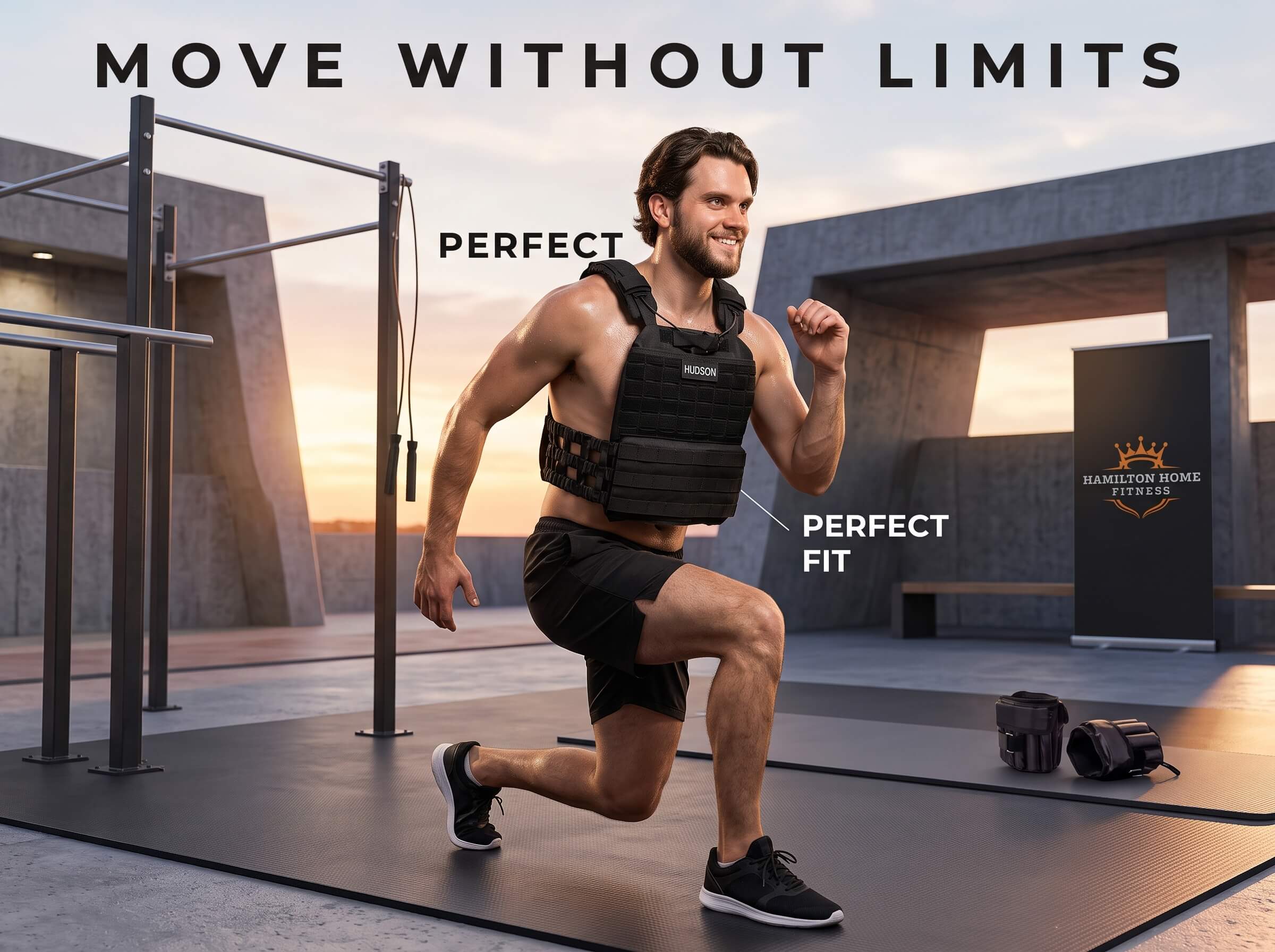
So how should a weighted vest fit? High on your rib cage. Snug enough to move with you when you hop, loose enough to finish a full breath.
Most bounce and rubbing come from the strap order, anchor point, and what you wear underneath. Not the vest. Buying one? The same checks apply.
Pregnant or managing a heart or lung condition? Get clearance first. Stop for chest pain, dizziness, or numb arms. No fit fixes an overloaded vest, so check how much weight your vest should carry too.
How Tight Should a Weighted Vest Be?
The short answer to how a weighted vest should fit: it moves with you when you hop, yet lets a full breath finish. If the straps cut your inhale short, they're too tight. If the vest slaps down on landing, it's too loose.
The Three-Move Fit Test
Load the vest, then run three checks. A vest that fits passes all three.
Breathe in fully: the breath reaches the top
Hop in place: the vest lands with you
Reach overhead and hinge: no edge digs in
A two-finger gap under a strap tests the strap, not the vest.
Body-Solid's 20 lb sandbag vest ($120.00, ships free, September 2026) tightens its two wide Velcro straps in small overlaps, so you can stop right at the breath line. It suits walkers and runners. Skip it if you need adjustable shoulders or a size chart; neither is listed.
Do Weighted Vests Make It Hard to Breathe?
A little, yes. Weight on your chest makes each breath work harder, and straps past snug add a squeeze of their own.
In backpack research, a tight fit more than doubled the lung-capacity loss of a loose one. Straps just over an inch past comfortable cost about what a 33 lb load did. In body-armor studies, the weight itself did most of the restricting. None of this research tested fitness vests.
Loosen first. Still labored with the straps eased? The load is too heavy today.
Heart or lung condition, or pregnant? Get clearance first. Stop for chest pain, dizziness, or a breath that won't settle.
Which Straps Hold the Vest in Place?
Shoulders carry a vest's weight. Side or waist straps stop it moving; a chest strap only stops the panels flaring. Good vest strap adjustment follows those jobs: load and height first, side straps anchored on your lower ribs, and chest strap last and loosest.
Where Should the Vest Sit on Your Torso?
A weighted vest should ride on your rib cage, between your collarbones and lowest rib, with the load high against your chest and upper back.
[Image: torso outline marking the anchor band on the rib cage.] Alt text: "Weighted vest anchor zone on the rib cage, below the collarbones and above the belly"
Too high, it rubs your throat. Too low, it sags onto the soft belly and rides up with every stride.
Carry-low advice comes from hydration packs. A vest needs its load near your center of mass, and how torso load compares with ankle weights shows why.
What Order Should You Tighten the Straps?
Tighten from the load outward, then re-snug once you've moved.
Load: full pockets, paired front and back
Height: set any shoulder adjusters
Side straps: snug on your lower ribs
Chest strap: last, just enough to stop flaring
Re-snug: after ten minutes, once sweat settles
The 20 lb adjustable vest with one-pound bags ($51.15, September 2026) makes step one easy for budget runners and walkers. Run its front bottle pouch empty, since a bottle there swings. It publishes no fit specs.
Why Does My Weighted Vest Bounce?
A vest bounces while you run when its load can lift off your body at the top of each stride and land back on it. Each landing taps your collarbones, so fix contact, not tension: anchor on your ribs, load high and balanced, and have pockets full.
Fit for Long Rucks and Walks
On a long run, sweat and settling loosen a vest that fits at the door. Re-snug after ten minutes and check for hot spots at each break.
Numb, tingling, or weak arms can signal strap pressure on nerves. Stop, ease off, and see a clinician if it lingers.
The Hudson plate-carrier vest ($199.00, September 2026) keeps rigid plates flat for ruckers who load in big steps, not fine ones. It lists no fit specs and sits under a private-invoice label, so call first.
Double-Unders, Box Jumps, and Burpees
Landings drive a vest down, and burpees flip its front panel. Snug the side straps before each jumping set, and re-check after floor work.
For double-unders, a lighter jump rope keeps turnover quick. Pick a weighted rope only if you want the rope itself to add load.
Pull-Ups and Overhead Work
At a dead hang, a vest slides toward your chin. Armholes must clear your shoulders at full reach, and low side straps must hold the front panel down. Vested reps belong on a wall- or rack-mounted pull-up bar, not a doorway bar.
Gloves, straps, or a grip enhancer help your hands, but none of them will stop a vest riding into your chin.
What Stops a Weighted Vest From Chafing?
Weighted vest chafing needs three things: skin, movement, and moisture. Stop the movement first. Then keep sweat off your skin with a fitted synthetic layer over every strap line. Check the vest's edges last.
Where It Rubs and What Causes It
Where a vest rubs tells you the cause: bounce at the collarbones, the armhole edge at the underarms, and sliding fabric on the chest.
Where it rubs | Usual cause | First fix |
Collarbones | Bounce, or a high top edge | Anchor lower, stop the bounce. |
Underarms | The armhole edge meets the arm swing. | Sleeves that cover the edge |
Chest and nipples | Fabric sliding on damp skin | Fitted synthetic layer |
Lower edge at hips | Vest too long or riding low | Load higher; if it persists, it's size |
A hot spot that breaks the skin means rest until it heals.
What to Wear Under a Weighted Vest
For layering under a weighted vest, pick a fitted, sweat-moving synthetic top with sleeves that cover every strap edge. Skip cotton; it holds sweat right where the straps move.
In textile lab tests, skin friction more than doubled against wet fabric. Dried salt from sweat raised it further.
That makes two more mistakes costly. A tank top leaves the strap lines bare, and unwashed straps hold that salt.
To wash, remove the sandbags or plates and follow the care label. The vests we stock publish no care instructions (September 2026).
Do Weighted Vests Fit Women Differently?
Weighted vests often fit women differently. A straight-cut vest fits the bust or the waist, not both, so it either squeezes the chest or gaps at the waist.
Walking for bone health? Read what a vest can and can't do for bone density.
Research on women wearing body armor found the same conflict in stiffer, heavier gear. Vest sizing for women starts below the bust: anchor there, and favor flexible panels over rigid plates. Nothing we stock has a women's cut or a listed size range (September 2026).
What Sports Bra Works Under a Vest?
Under a vest, wear a high-support bra with no front hardware or underwire, since the vest presses both into your skin every stride.
Encapsulating support for a medium or larger bust
No front clasps or strap adjusters
No underwire beneath a rigid front panel
In body-armor research, compression-only bras fell short for medium-to-large busts, and a front strap adjuster caused friction injuries. Underwire is considered unsuitable under armor.
The 40 lb Body-Solid vest ($150.00, September 2026) uses sandbags that Body-Solid says conform to the body, which is kinder to a curvier chest than rigid plates. It has no women's cut.
Is It the Wrong Size, Not the Straps?
It's a sizing problem when the straps run out before the vest stops moving. No adjustment fixes a vest cut for a different torso.
Returns must come within 30 days of purchase, undamaged, in original packaging, with proof of purchase (September 2026). Gear used past testing is excluded. A 25% restocking fee can apply, and you pay return shipping. Exchanges cover only defective or damaged items. Check the full return terms.
Signs No Strap Can Fix the Fit
Six signs mean the cut is wrong, and most come down to body shape:
Straps fully closed, vest still shifts
Closing it squeezes your chest at rest
Top edge sits on collarbones, no adjuster
The bottom edge digs into hips when you hinge
Armholes pinch broad shoulders overhead
Fits the bust only if the waist gaps
Studios fitting many bodies should plan a studio's vest mix rather than buy one size.
How to Size a Vest Before You Order
Size a vest with three measurements and one question, all before you order:
Chest at its widest, over your usual layer
Ribs just below the chest
Collarbone to lowest rib, standing tall
How it closes and what adjusts
No vest we stock publishes a size chart (September 2026), so send us your measurements first.
A strap range tells you more than a size label. Once you have it, compare weighted vests with your numbers in hand.
FAQ
Why does my weighted vest hurt my shoulders?
A rub or pressure spot is a fit problem: a bounce or a strap edge landing on one point. Shoulders rounding forward mean the load is too heavy today, so drop weight.
Why does my weighted vest rub my neck?
The top edge sits too high, or the vest rides up when you hinge. Anchor the side straps lower, and wear a crew-neck layer so the edge meets fabric, not skin.
Should you wear a compression shirt under a weighted vest?
Only if it's the fitted synthetic layer you'd otherwise lack; compression itself isn't required. Skip any top that already squeezes your chest, since the straps add their own.
Final Thought
A vest that fits rides on your ribs, moves when you hop, and lets a full breath finish. Fix it in order: stop the bounce, dry the skin, and check the edges. When the straps run out, it's size, not effort.
Next vest? Call with your measurements first. Hamilton Home Fitness ships vests to all 50 states from Tennessee.