










Bumper Plates



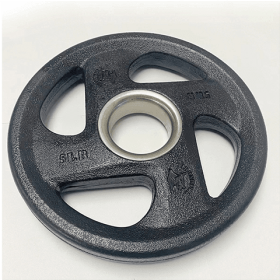


Best Bumper Plates for Your Home Gym
The best bumper plates for a home gym are durable virgin rubber plates with a steel insert, low bounce, and standard Olympic sizing. They let you drop Olympic lifts safely, protect your floor and bar, and run quieter than iron. Hamilton Home Fitness carries them from trusted USA brands.
Bumper plates are the foundation of any gym where the bar gets dropped. The rubber shell absorbs impact, so a loaded barbell can hit the floor after a clean, snatch, or heavy pull without cracking your slab or bending a sleeve. That single job — safe, repeatable drops — is why lifters pick them over cast iron.
Types of bumper plates explained
Bumper plates split into a few clear types, and the right one depends on how you train and what you'll spend.
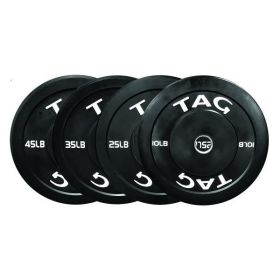
Virgin rubber training plates are the everyday choice for most home gyms. They use fresh, unrecycled rubber with a firm, low bounce and hold up to daily loading. The TAG Fitness Olympic bumper plates are a solid example — black rubber, raised color lettering for quick weight ID, and a 2-year warranty.
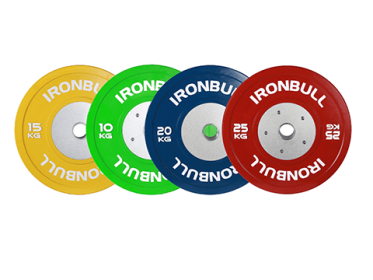
Colored training plates do the same job with color-coded rubber, so the weight reads across the room. YORK's USA training bumper plates come in solid rubber with a reinforced 2-inch steel sleeve.
Hi-temp and crumb rubber plates are built from recycled rubber and shrug off abuse, indoors or out. They run a little thicker per pound but last for years — the Body-Solid hi-temp bumper plates have held up in gyms, schools, and garages for over 15 years.
Urethane plates sit at the premium end. The denser material bounces less, resists scuffing, and keeps its color sharp — but you pay more for it.
Competition plates are the precision tier. They're calibrated to tight IWF tolerances, run thinner so you can load more, and deliver a dead bounce built for Olympic lifting platforms.
| Plate type | Best for | Bounce | Good to know |
|---|---|---|---|
| Virgin rubber training | Daily home lifting | Low (~80A) | Value workhorse; low odor |
| Colored training | Fast weight ID | Low–moderate | Color-coded rubber |
| Hi-temp / crumb rubber | Indoor + outdoor use | Low | Thicker, very durable, recycled |
| Urethane | Heavy abuse, sharp looks | Very low (~90A) | Most durable; premium price |
| Competition (IWF) | Olympic lifting, meets | Dead | Calibrated, thin, priciest |
What are bumper plates used for? Bumper plates are made for dropping. They shine in the Olympic lifts — cleans, snatches, and jerks — plus CrossFit metcons and any lift you set down hard. You can also use them for squats, presses, and deadlifts.
How to choose bumper plates
Choosing bumper plates comes down to bounce, build, sizing, and budget — not brand hype.
The durometer rating tells you how hard the rubber is and how much it bounces. A higher number — around 88 to 90 on the Shore A scale — means a firmer plate with a deader bounce, which keeps the bar from jumping back at you after a drop.
Check the insert next. A steel or stainless hub takes the wear from loading and protects both the plate and your barbell sleeve. Cheaper plates with loose rings can work the insert out over time.
Sizing matters too. Standard bumper plates share the same 450 mm (about 17.7 in) diameter, so a 10 and a 45 stack evenly on the bar. Thinner plates — competition and urethane — let you fit more weight. Most sets run 10, 15, 25, 35, and 45 lb, so start with enough to challenge your biggest lift with room to grow.
For a home gym, standard virgin rubber plates cover almost everyone. Match the plate to how you train, then shop your fit.
Do I need competition bumper plates for a home gym? Usually not. Competition plates are calibrated and thin, which matters on a meet platform but rarely at home. Standard bumpers give you the same safe drop for far less. Buy competition only if you compete or want plates that last a lifetime.
Quick checklist before you buy:
✅ Steel insert protects your barbell sleeve
✅ Low bounce for safer, controlled drops
✅ Standard Olympic 2-inch collar fit
✅ Color coding for fast weight ID
✅ Virgin rubber resists odor and wear
✅ Thinner plates load more weight per bar
✅ Quiet enough for shared or home spaces
✅ Full 10 to 45 lb weight range
✅ Real floor protection on drops
✅ Trusted USA brands, dealer-direct
✅ Warranty coverage varies by brand
✅ Sold as pairs or full sets
Bumper plates vs iron plates
Bumper plates are for dropping; iron plates are for loading heavy in less space.
If your training includes overhead work, cleans, or heavy pulls over a hard floor, bumpers are the safer pick — the rubber protects your floor and bar. Iron plates are thinner and cheaper per pound, so they load more total weight for controlled lifts like presses and grinding deadlifts. Many home gyms run both: bumpers for the dynamic lifts, iron to top up the bar. For a full breakdown, read our guide on bumper plates vs iron plates.
Are iron plates or bumper plates better for a home gym? It depends on whether you drop the bar. Drop it — bumpers. Set it down under control — iron works and saves money and space. A hybrid set covers both.
Can you drop 10 lb bumper plates? Light bumpers are the most fragile because they're thin. Many handle careful drops, but repeatedly slamming solo 10s can crack them. Add a pair of iron change plates on the ends for lighter loads to spare them.
Why buy bumper plates here
Hamilton Home Fitness curates bumper plates from more than 40 trusted brands and ships them nationwide across the USA.
You're buying from an authorized dealer, not a mystery big-box label — so the YORK, Body-Solid, and TAG plates you order are the real thing, backed by genuine support and each brand's own warranty (TAG Fitness plates, for example, carry a 2-year warranty). Need a bar to load them on? Pair your plates with an Olympic weightlifting bar, and keep them off the floor with a dedicated plate rack. Compare sets, pick your weight range, and build your setup today.
Bumper plate FAQs
How much bumper plate weight do I need to start? A common starting set is a pair each of 45s, 25s, 15s, and 10s — roughly 160 lb plus your bar. That covers most beginner and intermediate lifts, with room to add pairs as you get stronger.
Are colored bumper plates worth it over black? Color coding makes the weight readable at a glance, which helps during fast sessions or coaching. The rubber and performance are otherwise similar to black plates, so it mostly comes down to preference and budget.
Will bumper plates protect my concrete floor? Bumpers absorb most of the impact, but bare concrete can still crack under heavy repeated drops. Lift over a rubber mat, stall mat, or a lifting platform for real protection. This is general guidance — assess your own floor and subfloor.
How thick are bumper plates on the barbell? Thickness scales with weight. On a typical training plate, a 45 runs roughly 3 in and a 10 closer to 1 in, so heavy loads eat sleeve space. Competition and urethane plates are thinner, letting you load more.
Do bumper plates fit standard barbells? Bumper plates use a 2-inch (50 mm) Olympic hub, so they fit Olympic bars and sleeves. They won't fit a 1-inch standard bar. Check your bar's sleeve diameter before ordering.
Does Hamilton Home Fitness ship bumper plates nationwide? Yes. Hamilton Home Fitness is based in Tennessee and ships across all US states. Confirm delivery options and any freight details at checkout, especially on larger sets or full facility orders.
Order your bumper plates
Ready to load your bar with plates that drop safe and last? Browse the range, choose your weight, and order today — backed by trusted USA brands, real support, and nationwide US shipping.
Secure Payments