- SUNNY HEALTH AND FITNESS
Authorized:











Balance Boards

Physical Therapy Balance Equipment Explained
Physical therapy balance equipment gives your feet an unstable or moving surface, so your ankles, hips and core work to keep you upright. Balance boards are the most familiar kind. This section lists no tilt, wobble or rocker boards, only two vibration platforms and an adjustable step.
| Quick fact | Details |
|---|---|
| Listed here | Two vibration platforms, one adjustable step |
| Tilt, wobble or rocker boards | None listed |
| Brands listed | Sunny Health & Fitness, York Barbell |
| After injury or surgery | Follow your physical therapist's plan |
For the wider range of stability tools, browse the rest of the rehab section.
How Do Rocker and Wobble Boards Differ?
A rocker board tilts along one line, and a wobble board tilts in every direction. Both put you on a small, unstable base, which is the point.
| Surface | How it moves | Typical use |
|---|---|---|
| Rocker board | Tilts side to side or front to back | Gentle start for ankle work |
| Wobble board | Tilts in every direction | Ankle, knee and hip control |
| Balance pad or disc | Soft or air-filled cushion | One-leg standing and posture |
| Vibration platform | Vibrates or oscillates; not a board you tilt on | Standing poses, if your clinician agrees |
Let your therapist set the order. Programs usually move from easier surfaces to harder ones, with one-leg or eyes-closed work last and a spotter close by.
What Should You Check Before Buying?
Start with the board your therapist names, then compare six practical details:
- ✅ Something sturdy to hold within reach
- ✅ A platform that fits both feet side by side
- ✅ A grippy top and a base that does not slide
- ✅ A difficulty setting you can raise in small steps
- ✅ A listed user weight rating above your weight
- ✅ A firm, flat floor with room to step off
Start on the lowest difficulty setting if a board has one. If you feel unsteady, step off and wait for support.
What Does This Section Carry?
Two Sunny Health & Fitness vibration platforms and one York step, and no tilt board.
| Product | Type | Listed facts |
|---|---|---|
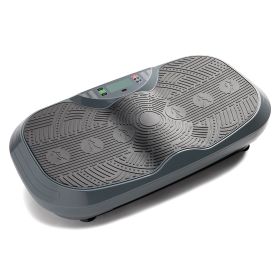
| Sunny Fitboard 3D, SF-VP822057 | Vibration platform | 3 modes, 16 speeds, remote |
| Sunny Fitboard 4D, SF-VP822058 | Vibration platform | 7 modes, 30 speeds, remote |
| York Aerobic Adjustable Step | Step | Height set to 4 or 6 in |
The Fitboard 3D moves up and down, side to side or both together, and includes detachable resistance bands.
The Fitboard 4D offers more modes and speed levels, and an LED monitor shows calories, speed and time.
Both are tagged Residential Only, and neither page lists vibration frequency or amplitude.
The York step is a fixed platform, not an unstable surface. Its listing says it helps improve coordination, balance and agility.
Are Vibration Platforms Safe for Everyone?
Not for everyone, so a clinician should decide first. Our guide on who should not use a vibration plate rules out active blood clots and untreated retinal conditions, asks for a cardiologist's approval with a pacemaker or implanted defibrillator, and notes that manufacturers advise against use in pregnancy.
Our vibration therapy section carries Power Plate models, and its pages tell you to check with a qualified healthcare professional before you start.
Neither Fitboard page lists a user weight rating or a safety warning, so confirm both with the maker and your clinician before you stand on one for balance work.
What Else Helps With Stability?
Our stability balls from TAG Fitness come in 55, 65 and 75 cm, and the page says to choose by standing height, then confirm by sitting on the ball.
For hand support, the MOVE Stability Bar pairs with the Power Plate MOVE, and its listing says the bar gives hands-on control for balance work.
Buying for a Clinic?
Start with our commercial rehab equipment, which lists Power Plate REV units, mats, pedal blocks, power shields and a stability bar.
Balance Board Questions
What is the balance board used in PT?
A tilting platform that physical therapists use to retrain balance and joint control, often after ankle sprains, knee injuries or surgery. The therapist picks the type and the exercises, then raises the difficulty as control improves.
Do balancing boards really work?
They can, as one part of a program. A large review of trials links balance and functional exercise to fewer falls in older adults, and balance training programs have been linked to fewer ankle sprains, mostly in people who have sprained before. Those results come from structured programs, not from a particular board. A board alone will not fix an injury.
Which balance board is right for physical therapy?
There is no single answer. The right board depends on your goal, your current control and the stage of your injury, so go with your therapist's pick and confirm it fits your weight and your space.
Is a balance board good for knee rehab?
Only if your therapist includes one. Balance work can be part of knee rehab, but when it starts and how hard it is depend on your injury or surgery, so follow the plan you were given and tell your therapist if a board brings on knee pain.
Are balance boards safe for seniors?
They can be, with support and a gentle start. Ask your clinician first if you have fallen before, feel dizzy or have a bone, heart or joint condition, and do not use one alone.
Ask About a Tilt Board
Your therapist names the board type and level, so bring that note when you shop. To ask whether we can look into a tilt, wobble or rocker board, call or text 423-458-2453. We cannot promise we can get one. Shipping is nationwide, from Tennessee to all 50 states, and you can browse more at Hamilton Home Fitness.
Secure Payments