Introduction
The bar keeps getting heavier, and the gear questions pile up. Do you need a belt for heavy squats and deadlifts? Are knee sleeves worth it? Are lifting straps cheating?
The honest answer: each of the essential lifting accessories solves one specific problem—bracing, knee warmth, wrist support, or grip—and plenty of what's sold as a must-have isn't, at least not yet.
This guide breaks down what every accessory does, when in your training it starts to earn its place, how to choose the right version, and what you can skip.
What Each Accessory Does
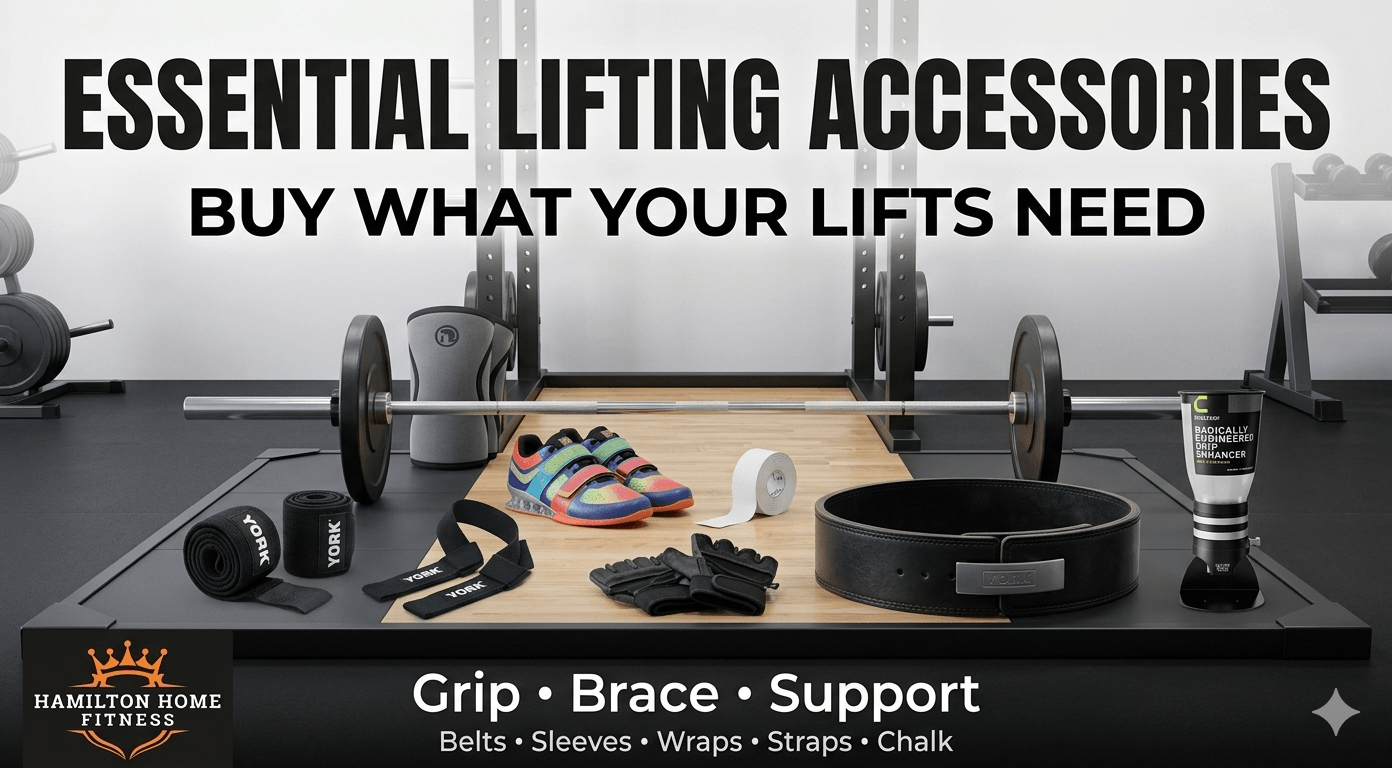
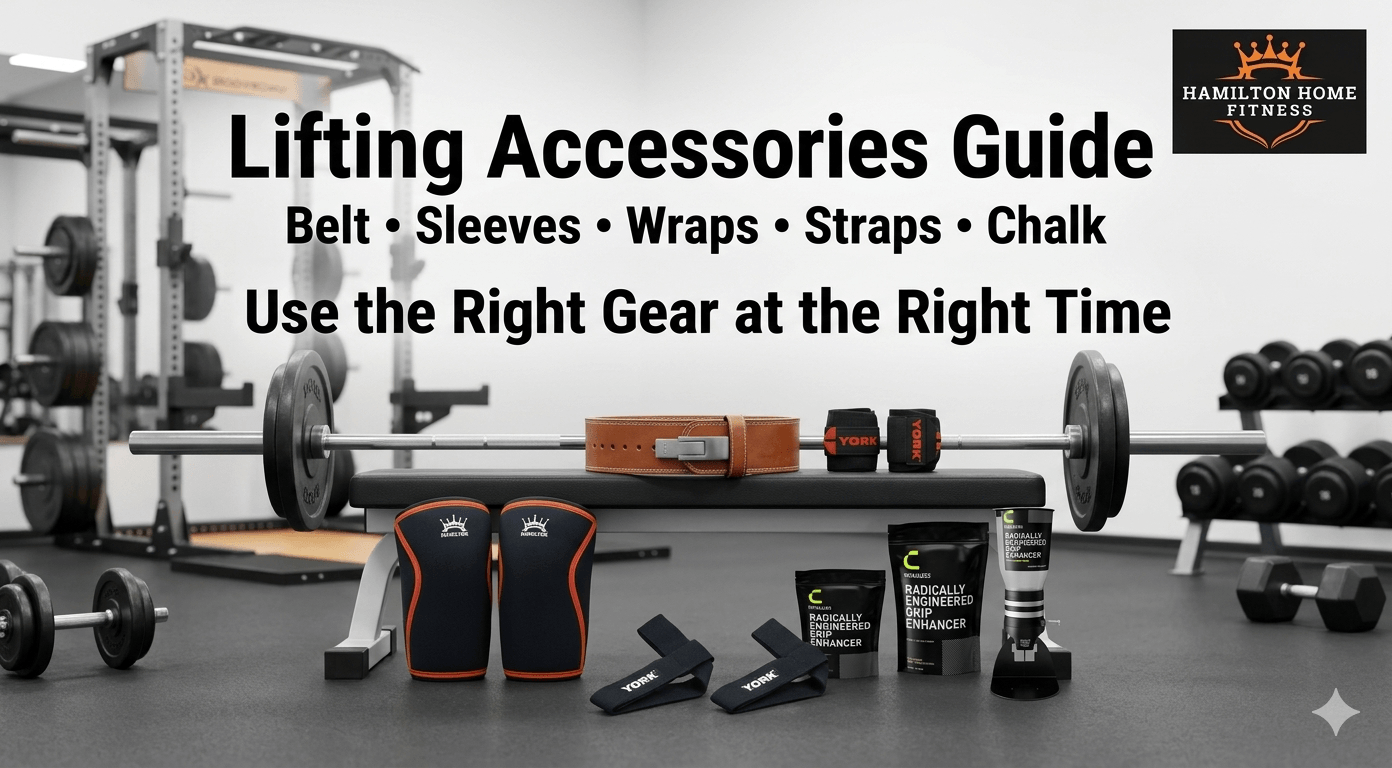
The core lifting accessories are a belt, knee sleeves, wrist wraps, lifting straps, and chalk. Each solves one specific problem—bracing your trunk, warming your knees, stabilizing your wrists, saving your grip on pulls, and drying your hands—so the real question is never "Is this good gear?" But "do I have that problem yet?"
Accessory | Main job | Best for | Essential or optional |
Belt | Gives your trunk something to brace against | Heavy squats, deadlifts, overhead work | Optional early, useful once bracing limits the lift |
Knee sleeves | Add warmth and light support to the knees | Squats and leg day, especially in cold gyms | Optional — comfort and support, not protection |
Wrist wraps | Stabilize the wrist joint under load | Heavy bench press and overhead press | Optional; helps most on heavy pressing |
Lifting straps | Anchor your hands to the bar so grip holds | Heavy back work and high-rep pulls | Optional; useful when grip fails before the muscle |
Chalk (or chalk-free grip) | Dries hands and improves friction | Almost any lift where sweat loosens your hold | The closest thing to essential—cheap and broadly useful |
Notice how much of the list is optional, especially early on. Chalk is the rare item that helps almost everyone from the start; the others earn their place only when a heavy enough lift exposes the problem they fix. The sections below cover when that happens and how to choose the right version of each.
When to Start Using Accessories
Most beginners need almost no accessories at first. Add them as your working weights get heavy, not on day one—the early returns come from consistent training and clean technique, not gear.
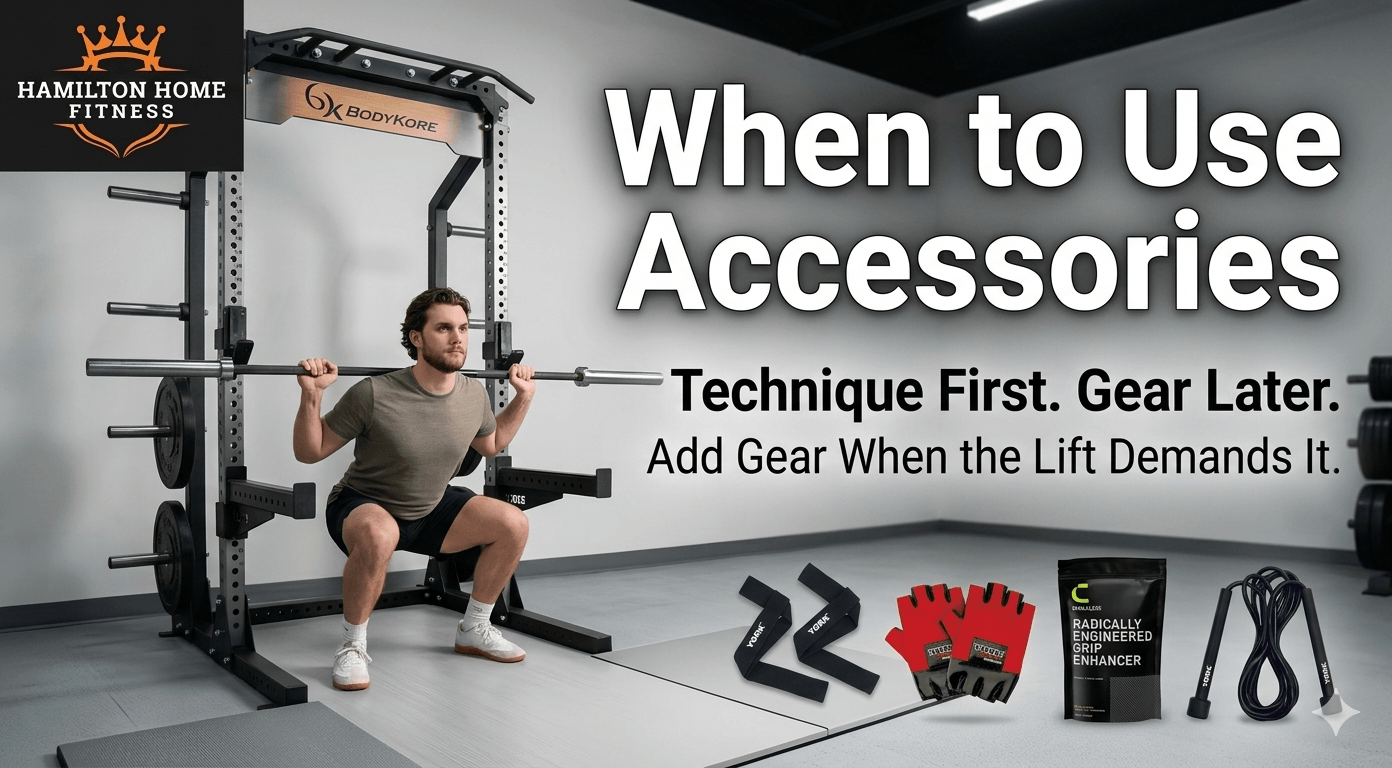
A useful rule: add an accessory when the problem it fixes becomes the thing limiting your lift. A belt earns its place once your working sets feel capped by bracing rather than by your legs or back, usually when squats and deadlifts are heavy relative to your size. Wrist wraps make sense when heavy bench or overhead pressing starts bending your wrists back. Straps help once your grip gives out before the target muscle does on pulls. Knee sleeves and chalk can be added whenever they make training more comfortable; neither needs a milestone.
Buying gear early tends to mask problems you'd be better off solving. A belt won't fix a brace you never learned, and straps used on every set quietly stall your grip. Spend the first stretch of training building the skill, then add support where a heavy lift exposes a real gap.
One thing does come before any accessory: a setup you can push hard in safely. Squatting and pressing heavy on your own is far safer inside power racks and squat cages with proper safety arms than chasing a belt or sleeves. Sort the platform and the technique first; the accessories matter only once the bar is heavy enough to need them.
Lifting Belts: Support and Types
A belt gives your trunk something to brace against, raising the intra-abdominal pressure that lets you stabilize heavier loads. It supports the lift—it is not injury insurance.
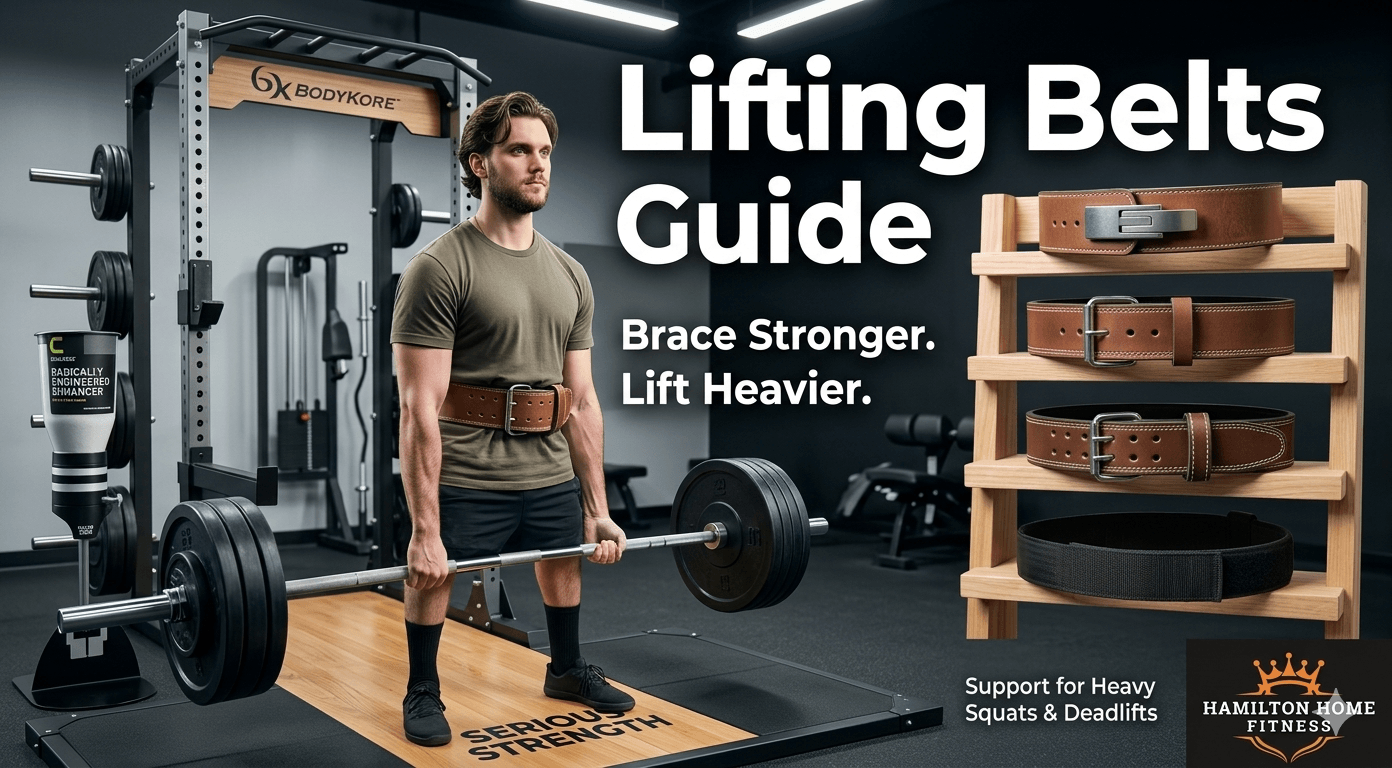
Here's the honest version. When you take a big breath and brace, a belt gives your stomach a firm surface to push out against, which stiffens your trunk under the bar (the breathing-and-bracing technique is often called the Valsalva maneuver). Strength research consistently shows belts raise that pressure and can help with stability and performance. A belt increases intra-abdominal pressure, boosting stability in lifts like squats and deadlifts. What's far less settled is injury prevention: the evidence that a belt actually stops back injuries is limited and mixed. So treat a belt as a tool that helps you brace harder, not a guarantee against getting hurt—and never as a substitute for learning to brace on your own.
Do You Need a Belt for Squats & Deadlifts?
You don't need a belt to squat or deadlift, but one can help once you're moving loads heavy enough that bracing—not your legs or back—is the limit.
A simple test: if your working sets feel capped by how well you can stay tight and stable, a belt may add something. If they're capped by raw leg or back strength, a belt won't change much. Build a solid beltless brace first so the belt amplifies a skill you already have rather than hiding one you never built. When you're ready to try one, you can compare options among the weightlifting belts at Hamilton Home Fitness.
Belt Types: Lever, Prong, Velcro
Lever belts lock to one fixed tightness instantly; prong belts adjust more easily; Velcro and nylon belts are lighter and looser for general training.
Belt type | Tightness & adjustability | Best for | Trade-off |
Lever | Locks to one preset tightness in a second | Heavy sets at a consistent setting | Changing tightness means unscrewing and repositioning the lever |
Single prong | Buckle into one hole, quick and secure | Most lifters: easy on and off | A touch slower than a lever |
Double prong | Two holes for a very locked-in feel | Lifters who want maximum security | Fussier to fasten and unfasten |
Velcro / nylon | Strap pulls to any tightness | General training, comfort, conditioning | Less rigid, not allowed in many powerlifting federations |
For most people, a single-prong leather belt is the easiest first choice: secure, simple, and versatile. Pick a lever if you train heavy at one setting and want speed; pick Velcro/nylon if you mainly want light support and comfort.
Belt Thickness: 10mm vs. 13 mm
10 mm leather belts are stiff but break in faster and stay more comfortable; 13 mm is maximally rigid for heavy powerlifting. 4 inches is the common width.
Choose by how you train. A 10mm belt suits general strength work and most raw lifters—plenty of support with a shorter, less brutal break-in period. A 13mm belt gives the most rigidity for heavy squats and deadlifts, which is why competitive powerlifters favor it, but it takes longer to soften up. In width, 4 inches (10 cm) is standard; some lifters prefer a 3-inch or tapered belt for comfort or Olympic-style work where you want more room to move.
If you might ever compete, check the rules before buying. Under the current IPF technical rules, the maximum belt width is 10 cm and the maximum thickness is 13 mm, and the belt must be non-padded and use a single prong, double prong, or lever. Federations update their technical rulebooks and approved-brand lists, so confirm the current version on the IPF, USA Powerlifting, or your own federation's site before you spend the money.
Knee Sleeves: Warmth and Support
Knee sleeves add warmth, light compression, and a sense of support for squats. They are not braces, and they won't fix knee pain or prevent injury on their own.
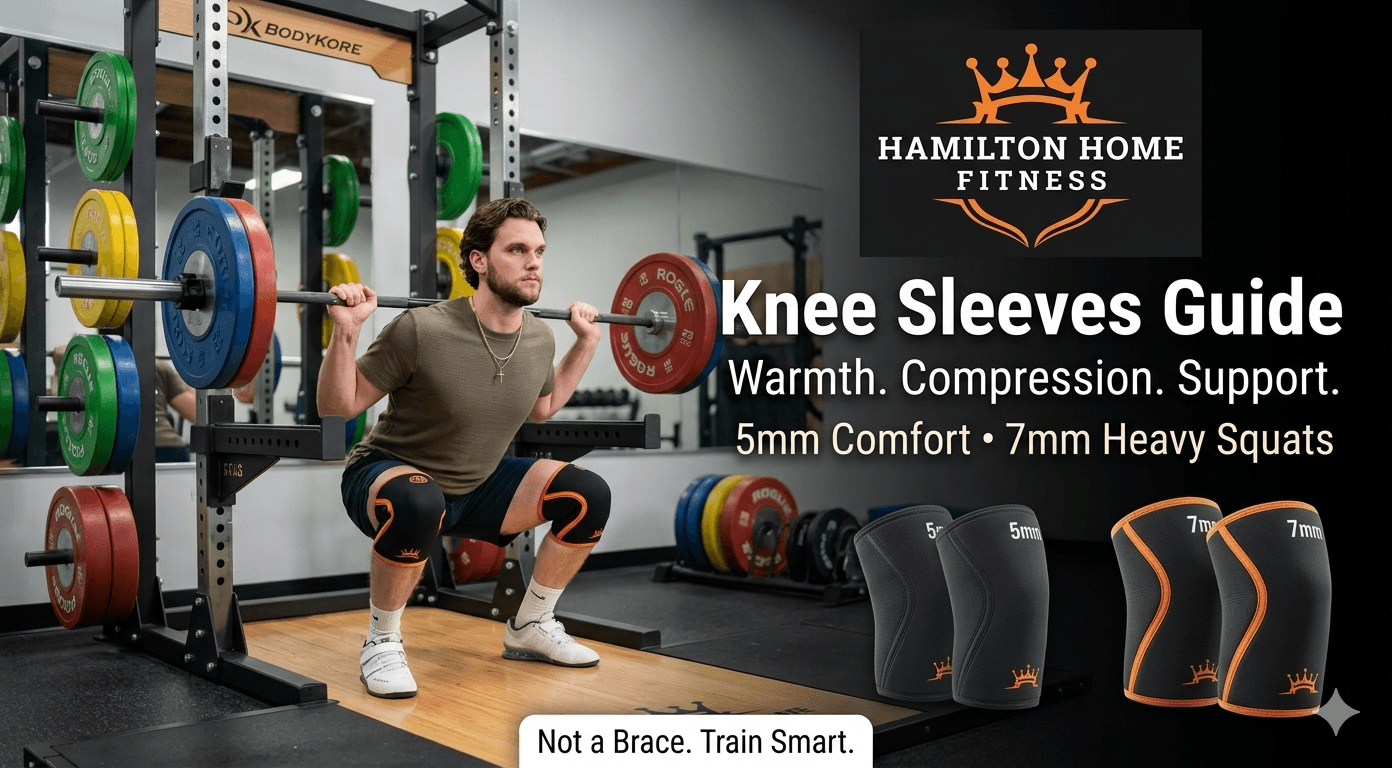
What they do well is keep the joint warm and snug. Knee sleeves compress and heat the joint, increasing blood flow and enhancing proprioception. That warmth and a bit of compression can make heavy squats feel more stable and your knees feel "ready"—especially in a cold gym or deep into a long leg day.
What they don't do is treat a problem. A sleeve is not a medical brace; it won't stabilize an injured knee or resolve ongoing pain. If your knees hurt persistently, see a doctor or physical therapist rather than leaning on crutches to push through it.
One distinction trips people up: sleeves are not knee wraps. Sleeves give light, wear-all-session support; knee wraps are tightly wound elastic that store energy for maximal squats, are far stiffer, and go on only for top sets.
5 mm vs. 7 mm: Which to Choose
Choose 5mm for general training and comfort; choose 7mm for maximal squats where you want firmer support and warmth.
5mm neoprene sleeves are thinner and more flexible — comfortable across a whole session and well suited to general lifting, higher reps, and conditioning. 7mm sleeves are thicker and stiffer, giving more compression and that supportive rebound out of the bottom of a heavy squat, which is why powerlifters tend to favor them. If you mostly train for general strength, 5mm is plenty; if heavy squats are the priority, 7mm earns its place.
If you might compete, note that federations cap sleeve size. IPF rules allow knee sleeves up to 30cm long and 7mm thick. Sleeves usually also have to be neoprene and from an approved brand, so confirm your federation's current rules and approved list before buying.
Wrist Wraps vs Lifting Straps
Wrist wraps stabilize your wrist when pressing; lifting straps anchor your hands to the bar when pulling. They solve different problems and aren't interchangeable.
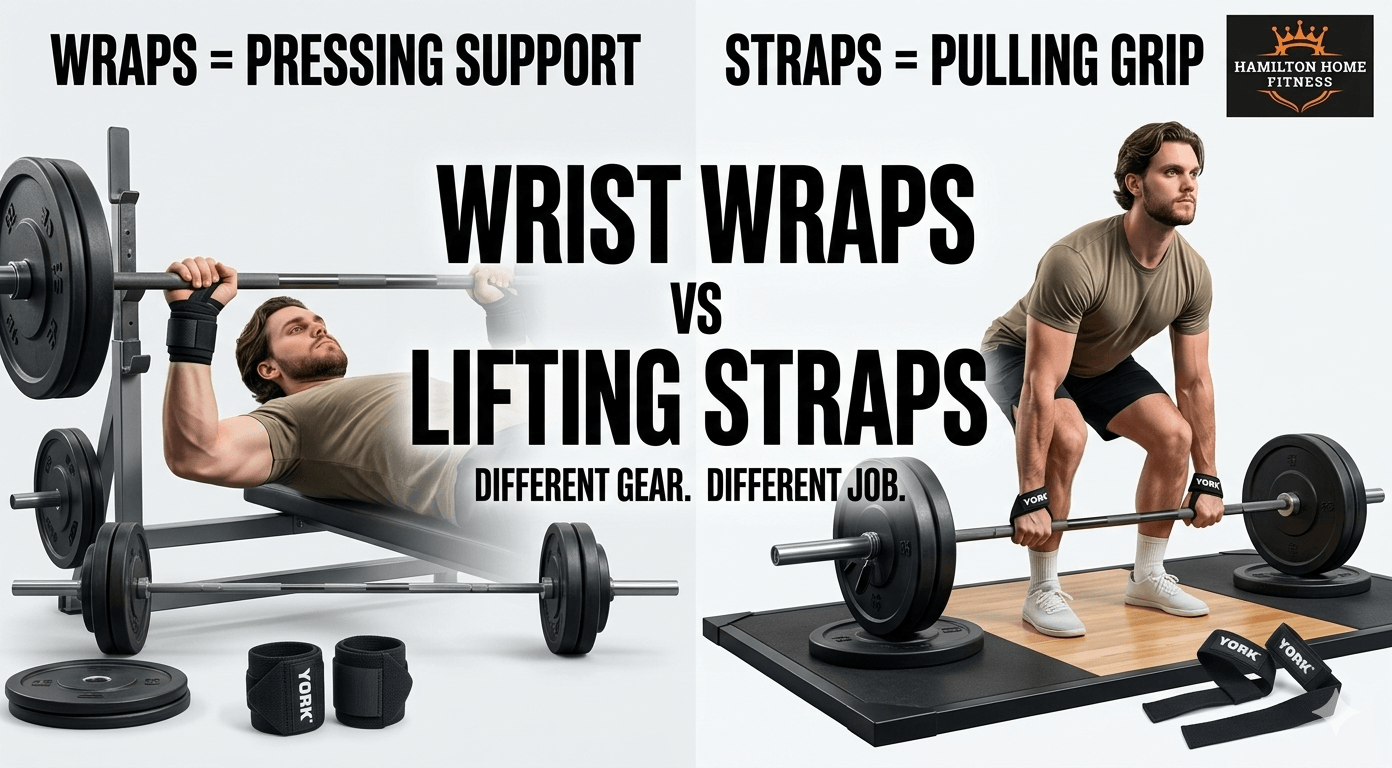
The names sound similar, so people mix them up and buy the wrong one. The simple split: wraps support a joint on pushing lifts, and straps save your grip on pulling. If your wrists bend back under a heavy bench, that's a wrap's problem. If your hands slip off a heavy deadlift before your back gives out, that's a straps problem.
Wrist Wraps: For Pressing Lifts
Use wrist wraps for heavy bench press and overhead press, where they limit painful wrist extension under load.
A wrap reinforces the wrist so it stays stacked under the bar instead of folding backward, which keeps force going up rather than getting lost in a bent joint. They help most on your heaviest pressing—bench, overhead press, and pushing movements where the weight tries to hyperextend the wrists.
The most common mistake is placement. Wrap so the support sits across the wrist joint itself—not high up the forearm, where it does little, and not low on the hand, where it just restricts movement. It should be snug and firm for the set, then loosened between sets; a wrap you can't comfortably leave on for five minutes is too tight. Longer wraps (around 18–24 inches) give stiffer support for heavy work; shorter ones (about 12 inches) stay lighter and more flexible. When you want a pair, look through the wrist support gear at Hamilton Home Fitness.
Lifting Straps: For Heavy Pulls
Lifting straps aren't cheating — they're a grip tool. Use them for heavy back work and high-rep pulls, and train some sets strapless if grip strength is a goal.
Straps loop your hands to the bar so your grip stops being the weak link, which lets you fully load your back and legs on pulling movements. That's exactly the point of rows, heavy shrugs, RDLs, and high-rep deadlifts, where a failing grip would cut the set short before the target muscles are done. Used this way, straps build muscle — they don't subtract from the work your back is doing.
The honest caveat: if you rely on straps for every pull, your grip stops getting stronger. So keep some warm-ups and lighter sets strapless, and save the straps for the heavy or high-rep work where grip is the only thing holding you back. Of types, lasso straps are the most versatile all-rounders and the easiest to learn. Figure-8 straps lock in tighter for maximal deadlifts but are harder to bail out of; cotton is grippy and forgiving, while leather is more durable. A simple, low-cost starting pair like these York lifting straps is enough to see whether straps help your pulls.
Gym Chalk vs Liquid Chalk
Both are magnesium carbonate that dries your hands and boosts your grip. Loose chalk grips a touch better but is messy; liquid chalk is cleaner, lasts longer, and is the usual workaround where chalk is banned.
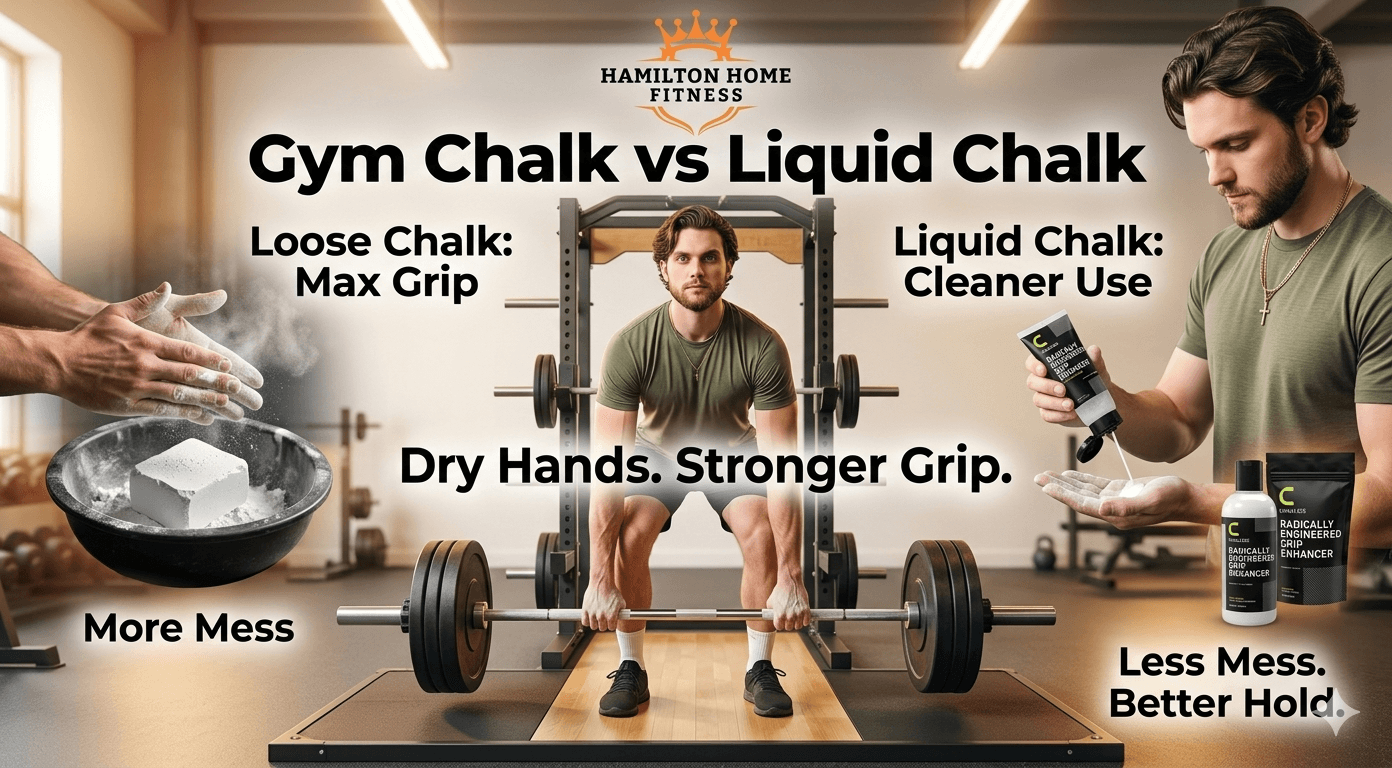
Chalk works by drying sweat and adding friction between your palm and the bar, which matters most on heavy pulls and anything with aggressive knurling. The two formats just deliver the same powder differently. Liquid chalk is magnesium carbonate in an alcohol base, which makes it less messy and easier to carry than loose chalk. REP Fitness
Loose / block chalk | Liquid chalk | |
What it is | Magnesium carbonate powder or blocks | Magnesium carbonate in an alcohol base |
Grip feel | Slightly grippier, instant | Strong, even coat once dry |
Mess | Dusty gets on the floor, bar, and clothes | Low mess once it's on |
Longevity | Reapply often | Lasts through several sets |
On the skin | Very drying with heavy use | Drying, plus alcohol, can sting small tears |
Gym rules | Often restricted | Usually allowed |
A note on hands: chalk of either kind dries the skin, so heavy daily use can leave palms rough. A quick wash afterward and a bit of hand care keeps that in check. Less is more, too — a light coat grips better than a caked-on layer that just flakes off.
Can You Use Chalk at a Gym?
Many commercial gyms restrict loose chalk because of the dust and cleanup; liquid chalk or a chalk-free grip product is usually allowed — check your gym's policy.
The issue is rarely the chalk itself; it's the mess: airborne dust, white handprints on equipment, and powder ground into the floor. That's why a lot of facilities ban blocks and loose chalk but tolerate liquid chalk, which doesn't dust. A chalk ball (powder in a porous pouch) is a middle ground that some gyms accept, but liquid is the safest bet when you're unsure. Either way, wipe down the bar when you're done—good etiquette keeps chalk allowed for everyone.
If your gym bans chalk outright, a chalk-free grip product is the other route. The Chalkless grip enhancer at Hamilton Home Fitness is one such option—a mess-free way to improve hold without the dust, worth considering if loose chalk isn't allowed where you train.
Lifting Shoes and Hand Care
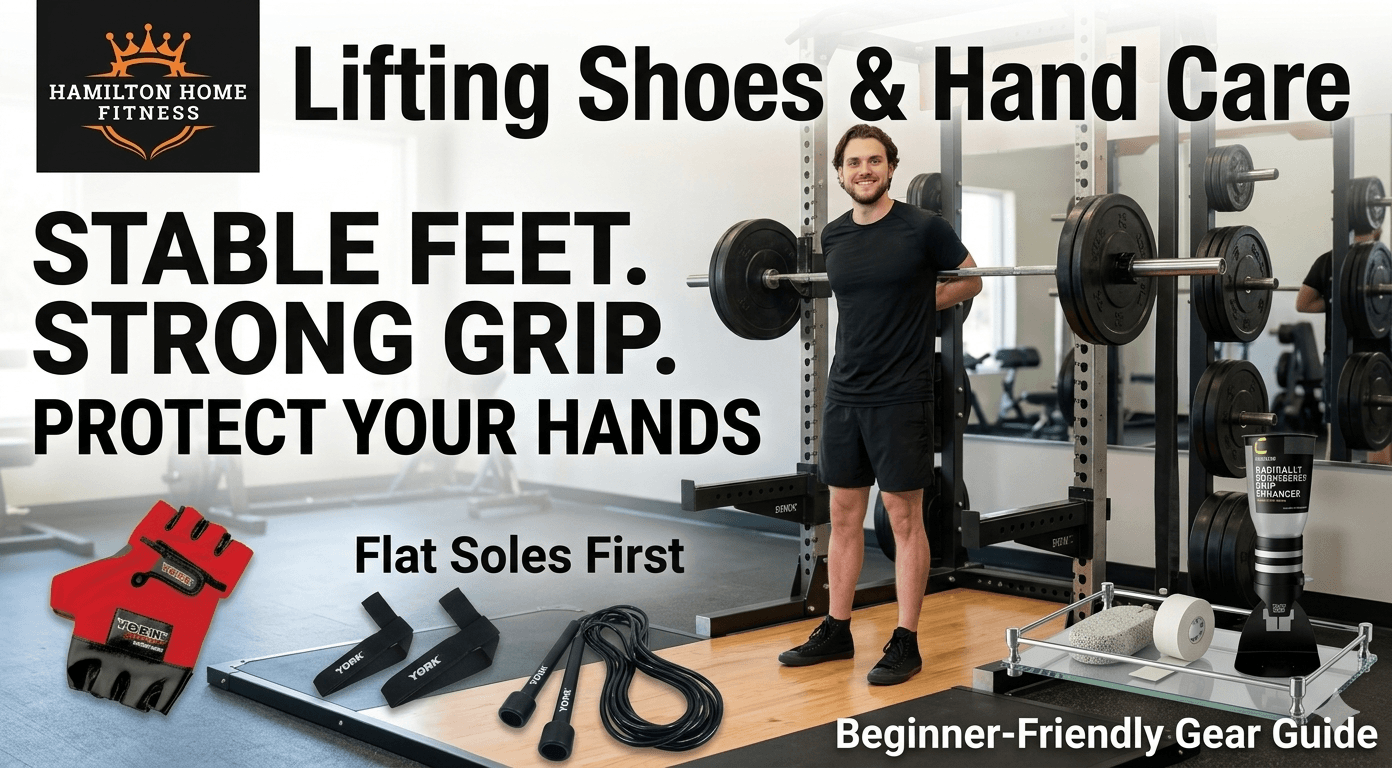
Most beginners don't need specialty shoes—a firm, flat sole beats running shoes for lifting, and weightlifting shoes mainly help squats and Olympic lifts. This is the optional-but-useful tier: footwear and hand care, worth understanding before you spend on either.
Do You Need Lifting Shoes?
Flat, hard-soled shoes (or deadlift slippers) work for most lifting; raised-heel weightlifting shoes help squat depth and an upright torso, but they're optional for beginners.
The one real mistake is lifting in running shoes. Their soft, compressible soles are built to absorb impact, which makes for an unstable base—you lose force into the cushioning and wobble under heavy weight. A flat, firm sole fixes that: think Chuck Taylors, flat trainers, or thin deadlift slippers. It's a stable platform for deadlifts and works fine for general lifting too.
Raised-heel weightlifting shoes (often called squat or Olympic lifting shoes) are the upgrade, not the starting point. The lifted heel helps you reach a deeper squat and stay more upright, which is especially useful if limited ankle mobility cuts your depth short. If you squat a lot and want that, they're worth it later—but flat shoes cover most lifters early on.
Calluses, Tape, and Gloves
Manage calluses by keeping them filed flat; use finger or thumb tape for the bar's bite; and know that gloves protect your hands but can reduce bar feel—many lifters skip them.
A short routine keeps your hands intact:
File calluses flat with a callus shaver or pumice stone so raised ridges don't catch on the knurling and tear.
Tape the hot spots before heavy or high-rep bar work — finger or athletic tape on spots that rip, and thumb tape if you use a hook grip.
Decide on gloves honestly. They cushion the bar and cut down on calluses and blisters, but the added thickness dulls your feel for the bar and can make heavy weights harder to hold. Plenty of lifters skip gloves and rely on chalk plus basic hand care instead.
If you'd rather protect your palms, the padded lifting gloves at Hamilton Home Fitness are a reasonable option—just treat them as hand protection, not a performance boost.
How to Choose Your First Kit
For most lifters, the order that earns its money is chalk or a chalk-free grip aid first, then a belt, then wraps or straps as needed. Buy the lifts you actually do—not the whole set at once.
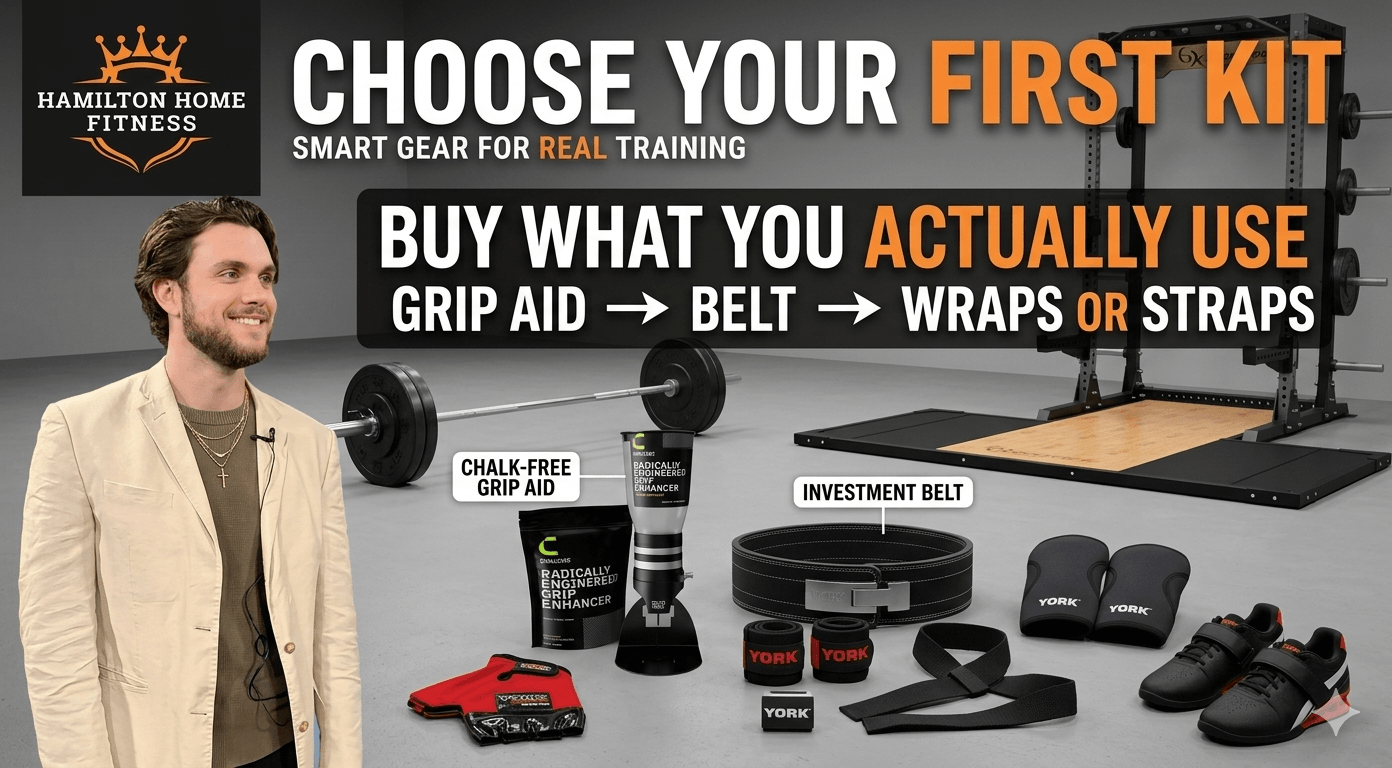
Match the priorities to your training:
General strength (most people): A grip aid covers you from day one. Add a belt once heavy squats and deadlifts are limited by bracing, and pick up wraps or straps only if pressing or pulling specifically needs them.
Powerlifting: A belt comes first, then knee sleeves and wrist wraps, with chalk throughout. Hold off on competition-spec gear until you actually enter a meet.
Olympic lifting: Raised-heel shoes and wrist support do the most here, plus chalk; a belt helps on the heaviest work.
CrossFit: Liquid chalk or a grip aid, wrist wraps, and knee sleeves see the most use; versatile lasso straps are an optional extra.
Bodybuilding: Straps for heavy back work and chalk earn their place first; wrist wraps help with pressing, and a belt is optional.
On a budget, spend where it lasts. A single-prong leather belt holds up for years, so it's worth more of your money than nice-to-haves. Sleeves and wraps in the right thickness and length matter more than the brand on them, and one good grip solution covers nearly every lift. Skip competition-approved gear unless you're competing—you're paying for rules you don't need.
When you're ready to choose, browse the full lifting accessories collection to compare belts, wrist support, gloves, and grip options in one place. Hamilton Home Fitness ships across the United States from its Tennessee base; you can review current rates and policies in the shipping and returns details before you order.
FAQ
How tight should a weightlifting belt be? Tight enough to brace hard against but loose enough to take a full breath and push your stomach out into it—usually about one notch looser than the tightest you could cinch it. A belt you can't breathe into can't be braced against, which defeats the point.
What size lifting belt should I get? Buy by your waist measurement at the belt line, not your pant size, and follow the maker's size chart—prong and lever belts are built for specific ranges. Sizing by pant size is the most common reason belts get returned, and the wrong fit changes how well it supports you.
Do I need chalk if I already use lifting straps? Often not on the pulls where you're strapped in, but chalk still helps everywhere else—pressing, grip work, and any lift you do without straps. The two tools overlap only on heavy pulls, so most lifters end up using both.
What's the difference between knee sleeves and knee wraps? Sleeves give warmth and light support you can wear all session; wraps are tightly wound elastic used only on maximal squats, and they provide far more and far stiffer support. They're different tools, so the right pick depends on whether you want everyday comfort or a boost on top sets.
Where does Hamilton Home Fitness ship lifting accessories? Hamilton Home Fitness ships across the United States from its Tennessee base. Check the shipping page for current rates and any active free-shipping offers on select brands before you order.
Final Thought
You now know what each accessory actually does, when in your training it starts to earn its place, and how to choose the right version of each. The honest summary is simple: most lifters need very little early on; accessories pay off as the bar gets genuinely heavy; and the smart buy is for the lifts you actually do—not the whole set at once and not the hype.
When something on the list does fit, Hamilton Home Fitness carries belts, wrist support and straps, lifting gloves, and a chalk-free grip enhancer. Knee sleeves, lifting shoes, and loose chalk aren't part of the catalog, so source those elsewhere—it's better to point you straight than sell you something we don't stock.