Authorized:











Dominator 72 Inch Basketball Hoop
Dominator 72 Inch Basketball Hoop — Regulation In-Ground System
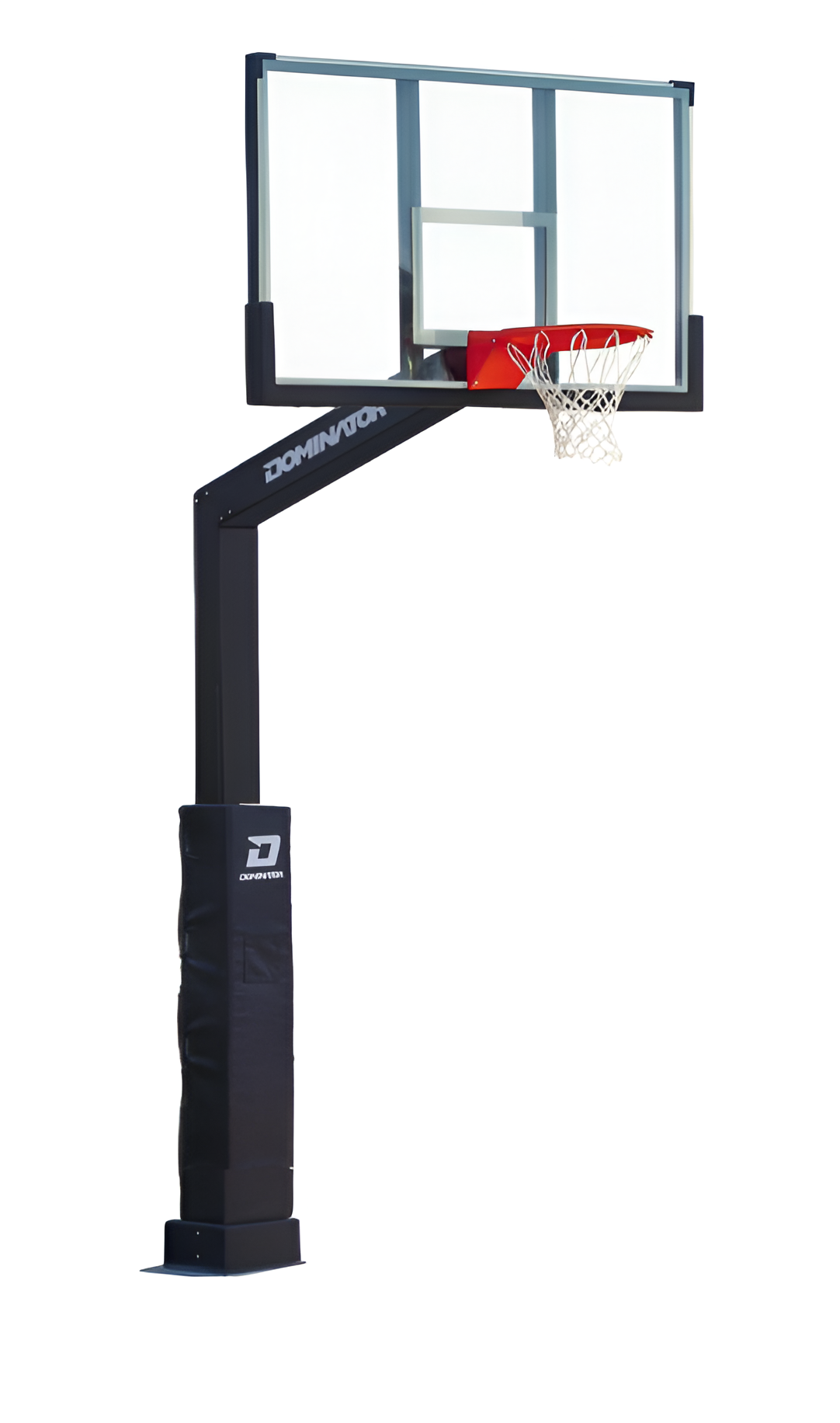
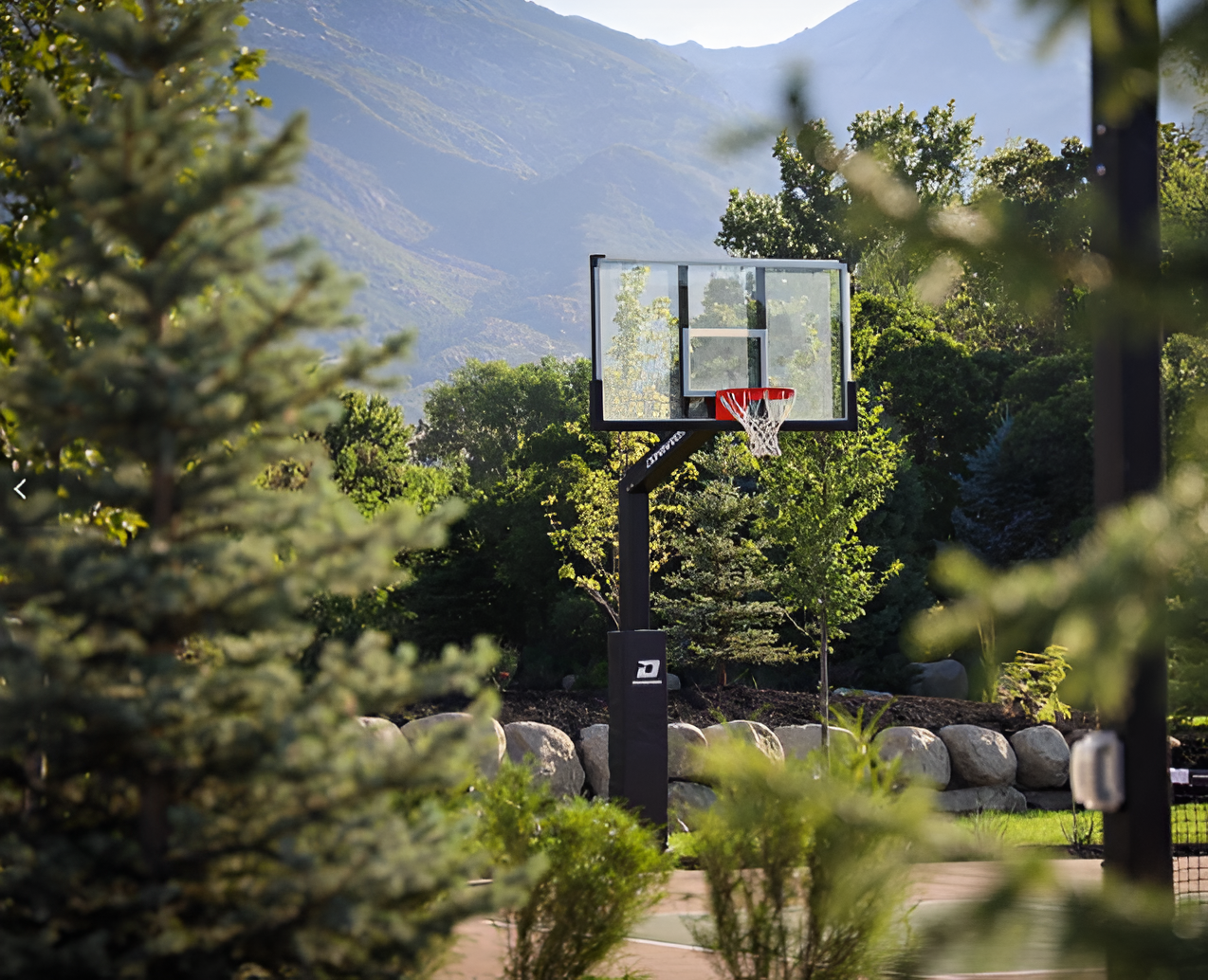
The Dominator 72 Inch Basketball Hoop is a regulation in-ground system with a 72 x 42 in., half-inch tempered glass backboard, a 4-foot overhang, and telescoping height adjustment from 7 to 10 feet. Built from rust-proof 6061 T6 aluminum, it suits three-car driveways and dedicated home courts.
Available in black ($2,999.00) or brushed aluminum silver ($2,899.00). SKU 724-AA-B.
Who This Hoop Actually Fits
This is a large-court hoop, and that is the first thing to be honest about. A 72 x 42 in. backboard is the same width used in high school, college, and pro arenas, which is why it needs room to breathe. Industry sizing guidance across the category is consistent: 54 in for a one-car driveway, 60 in for two cars, 72 in for three cars or a poured court.
Buy this one if you fit any of these:
- You have a three-car driveway, a sport court, or a dedicated pad
- Someone in the house is training seriously and needs true bank-shot geometry
- Ages in your driveway range from 6 to 46, and you want one hoop to serve all of them
- You live somewhere humid, coastal, or brutal in winter and are tired of rust
Skip it if your driveway is tight. A 60-inch system gives you a 3-foot overhang and a smaller footprint without giving up the same pole and warranty.
How much space do you need behind the hoop? The Dominator's crank handle projects about 8 inches from the base pole, and the brand recommends another 4 to 8 inches of working room—roughly 12 to 16 inches total behind the pole. That is unusually tight for an adjustable system. Competing hoops that use parallel linkage arms swing backward as the rim drops, so they demand considerably more clearance.
Browse the full Dominator basketball hoop lineup to compare sizes before you commit to a pad.
Regulation Glass, 4-Foot Overhang
The playing surface is where your money goes, and this one does not compromise. The backboard is 72 x 42 in of half-inch tempered glass—the same thickness used in competitive arenas, which is what gives you a predictable, honest rebound instead of the dull thud you get from a thin acrylic board.
That matters more than most buyers expect. A soft backboard quietly teaches bad habits, because bank shots that should drop simply do not.
The 4-foot overhang is the second half of that equation. It pushes the pole four feet back from the rim, so layups, dunks, and rebounds happen in open space instead of into a steel post. For a family court, that is a safety feature. For a training court, it is the difference between practicing a real drive and practicing a cautious one.
Holding it all steady: an 8 x 8 main pole and a 6 x 6 overhang arm. Aggressive play does not translate into backboard shake.
Why Aluminum Beats Heavier Steel
Here is the objection: nobody in this category answers honestly, so let's take it head-on. The entire Dominator 72 system weighs 375 lbs. Several competitors argue that a serious 72-in. hoop should weigh 600 lbs or more, and if you have been reading buying guides, that number is probably nagging at you.
Weight is a proxy, not the goal. What actually keeps a hoop rigid is the anchor and the pole geometry, and this system uses a 10 x 10 in. anchor bolt pattern set in concrete with an 8 x 8 in. pole above it. Rigidity comes from the footing, not from the shipping scale.
What the lighter build buys you is real:
- 6061 T6 aluminum — the alloy used in aircraft, automotive, and marine work
- No rust, ever—aluminum has no iron, so it cannot oxidize into rust
- Stainless steel hardware throughout — the bolts will not fail before the pole does
- Controlled flex on impact, which is part of how the board feels alive under a hard shot
- A limited lifetime warranty, upgraded by Dominator from their previous 10-year term
Will an aluminum basketball hoop rust? No. Rust requires iron bonding with oxygen, and 6061 T6 aluminum contains none. Powder-coated steel poles resist corrosion until the coating chips—after that, the clock starts. That gap is the whole reason coastal and snow-belt buyers pay the premium here.
Ready to lock in a hoop that survives the weather? Order the Dominator 72 through Hamilton Home Fitness and set your court up once.
Adjustable or Fixed: How to Choose
Choose adjustable if the rim height will ever change; choose fixed if it never will. That is the entire decision, and at Hamilton Home Fitness, both 72 in. versions sit at the same $2,999.00 price point in black.
This system adjusts 7 to 10 feet in about seven cranks by one person with no tools. The telescoping design is the part worth understanding: the hoop travels straight up and down, so the distance from the rim to the free-throw line stays identical at every height. A nine-year-old shooting at 8 feet is standing exactly where they will stand at 10 feet three years later. Parallel linkage systems cannot do that—they swing the rim backward as they drop, quietly moving the shot.
The floor is 7 feet, and that is deliberate. Going lower violates the relevant ASTM safety standard for young players.
| Model | Backboard | Overhang | Weight | Price at HHF |
|---|---|---|---|---|
| Dominator 54 | 54 x 32 in glass | 2.5 ft | 250 lb | $1,999.00 |
| Dominator 60 | 60 x 36 in. glass | 3 ft | 350 lb | $2,799 – $2,899 |
| Dominator 72 | 72 x 42 in glass | 4 ft | 375 lb | $2,899 – $2,999 |
| Dominator Pro 72 | 72 x 42 in aluminum | 4 ft | 325 lb | $3,199 – $3,299 |
Only the two 72-inch models are regulation size. All four share the 7–10 ft range, hinged base, rust-proof aluminum build, and limited lifetime warranty.
Two neighbors worth a look: the Dominator 72″ fixed-height hoop if the rim will live at 10 feet permanently, and the Dominator Pro 72″ with a shatterproof backboard if a glass board near a play area makes you uneasy.
Key Features
✅ Regulation 72 x 42 in tempered glass board
✅ Half-inch glass for true arena rebound
✅ Full 4-foot overhang clears the pole
✅ 8 x 8 in. main pole resists dunk shake
✅ 6 x 6 in overhang arm stops board wobble
✅ Telescoping 7 to 10 ft height range
✅ Seven cranks, one person, no tools
✅ Rim-to-line distance never changes
✅ 6061 T6 aluminum will not rust
✅ Stainless steel hardware throughout
✅ Hinging base tilts for easy service
✅ 10 x 10 in anchor bolt pattern
✅ 375 lb system ships in four pieces
✅ Limited lifetime warranty from Dominator
Installation and What Arrives
Assembly is four pieces: the main post, the overhang arm, the backboard, and the rim. Dominator estimates two adults, 45 minutes to an hour, and the hinging base is what makes that realistic—the pole tilts down so you are not wrestling a backboard at the top of a ladder.
Your shipment includes:
- Hoop Assembly
- Rim
- Backboard
- Backboard Pads
- Anchor Bolts
- Anchor Cover
- Base Pad
- Instruction Manual
Note that the anchor kit is included, but concrete, excavation, and the pad itself are not. Can you install this if concrete is already poured? Yes, with a caveat—the practical route is anchoring immediately adjacent to the existing slab. Breaking through finished concrete with a jackhammer is possible but not recommended.
What size concrete pad do you need? For a dedicated court, Dominator recommends pouring at least 45 ft x 30 ft, which accommodates a full three-point line with shooting room around it. A standard three-car driveway works well without a separate pour.
Frequently Asked Questions
Is a 72-inch basketball hoop regulation size?
Yes. A 72 x 42 in. backboard is the regulation size used in high school, college, and professional play. It is the only Dominator size marked as regulation.
How low does this hoop go?
The rim lowers to 7 feet. Dominator sets that floor because going lower conflicts with the applicable ASTM safety standard for young players.
Is tempered glass more likely to break than acrylic?
Neither is meaningfully safer from breakage—they simply fail differently. Glass shatters, acrylic cracks, and either outcome ends the backboard's life. Glass wins on rebound quality, which is why it is standard here.
What warranty comes with the Dominator 72?
Dominator provides a limited lifetime warranty covering performance and structural integrity. Warranty service runs through Dominator directly.
Does Hamilton Home Fitness handle installation?
Dominator does not perform installations and maintains an installer directory by region. For questions about ordering, options, or delivery on this system, contact the Hamilton Home Fitness team before you buy.
What is the difference between black and brushed aluminum?
Finish only. Both colors are identical in construction, specs, and warranty. Brushed aluminum silver is priced at $2,899.00 and black at $2,999.00.
Order Your Dominator 72 today.
A regulation hoop is not an impulse buy—it is a decision that shapes ten years of driveway evenings. If you have the space and you want a board that rebounds true, a rim height that grows with your kids, and a pole that will not be rusting in year six, this is the system.
Add the Dominator 72-Inch Basketball Hoop to your cart in Black or Brushed Aluminum Silver. Still weighing sizes? Compare the full range of basketball hoops and systems at Hamilton Home Fitness, or reach out and we will help you match a backboard to your driveway before you pour a thing.
Secure Payments