Authorized:











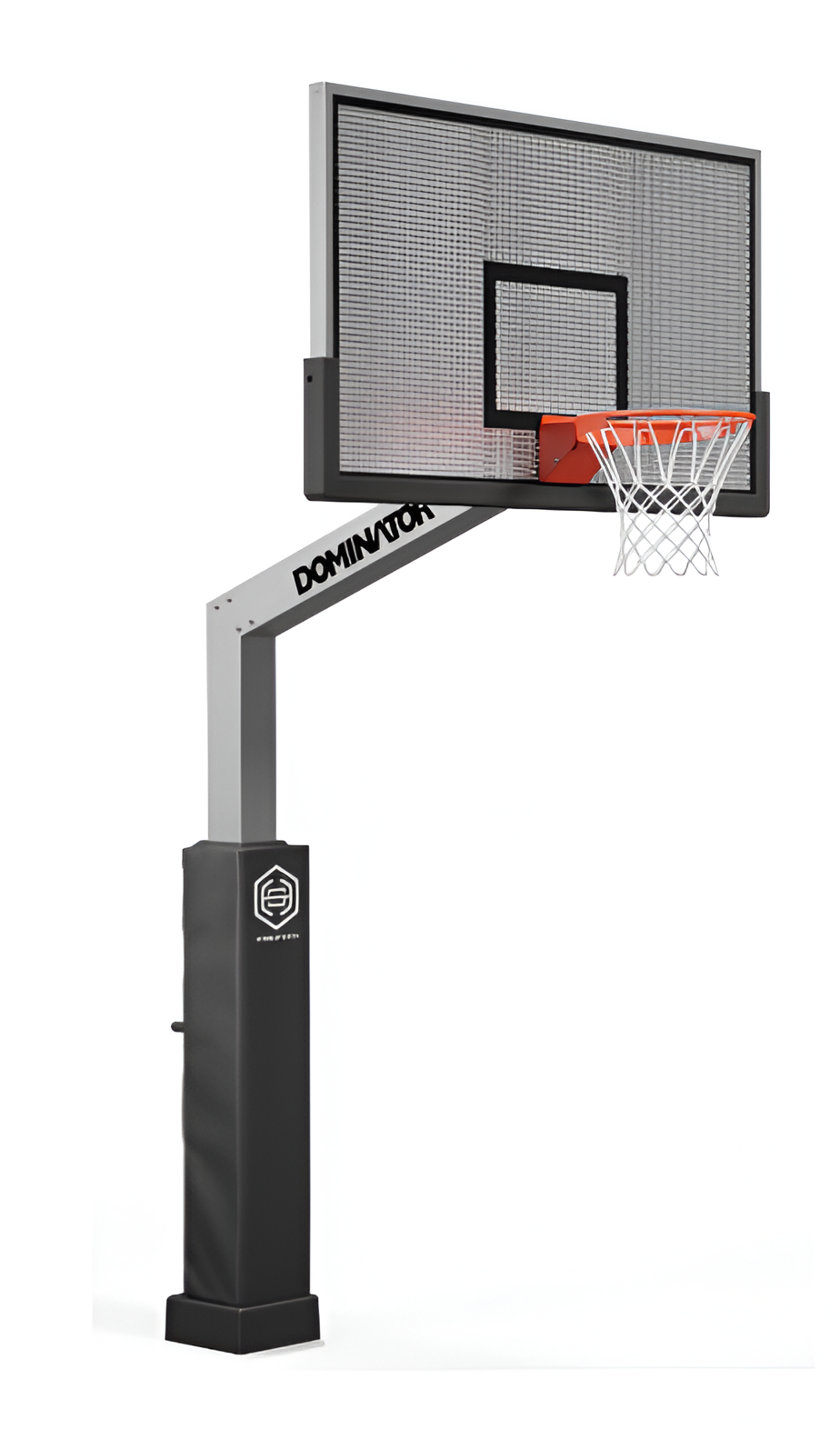
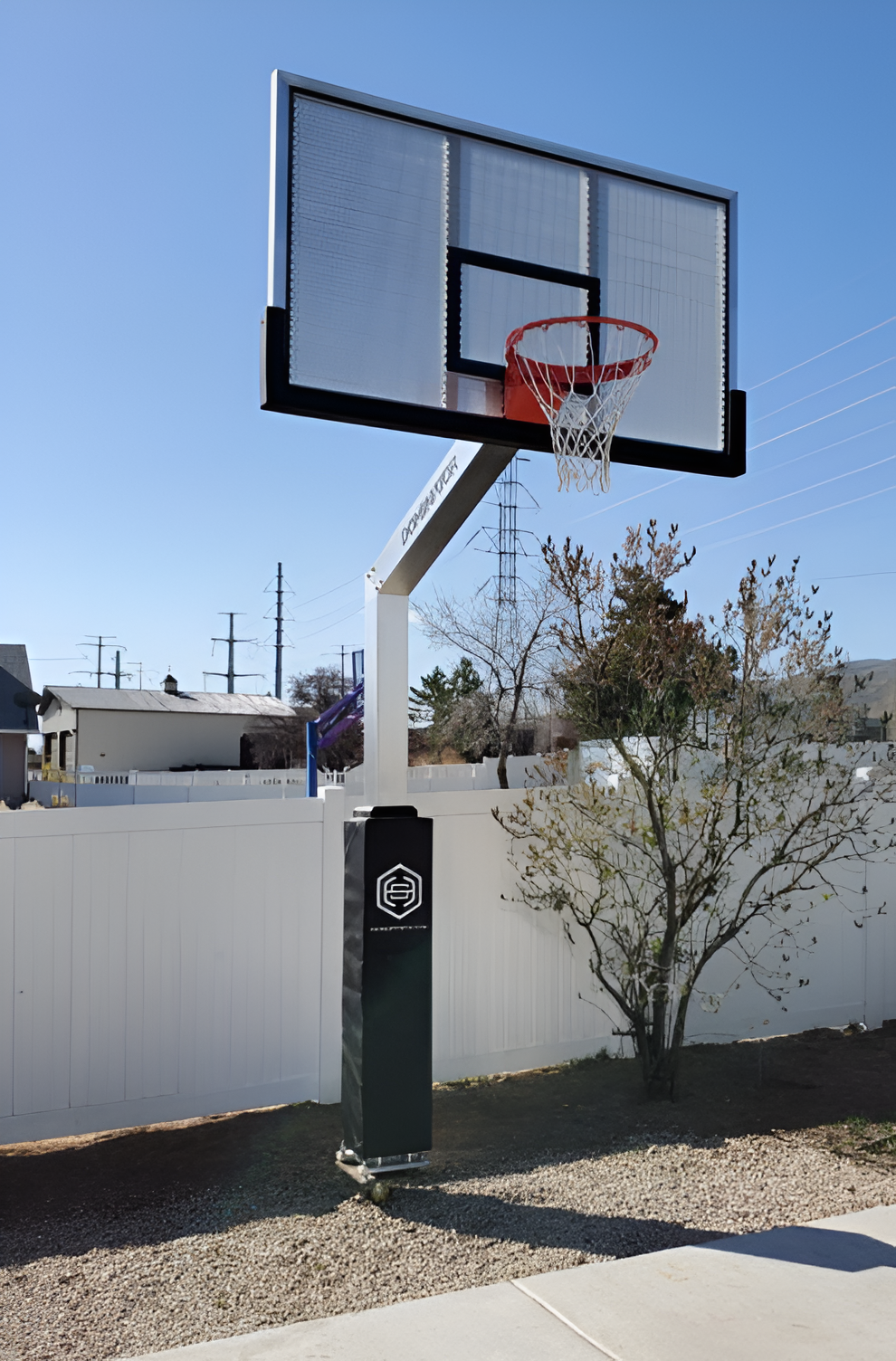
Dominator Pro 72″ Basketball Hoop – Shatterproof Backboard
Basketball Backboard and Hoop for Sale — Driveway to Competition Court
Hamilton Home Fitness carries basketball backboards and hoops for sale from $1,040 to $14,006, spanning Dominator in-ground systems for driveways, Jaypro portable indoor units, and Bison competition packages. Sizes run 54, 60, and 72 inches in acrylic, tempered glass, and perforated aluminum. Everything ships nationwide from Tennessee.
That price spread is not padding. It reflects three genuinely different jobs, and picking the wrong tier is the most expensive mistake buyers make here.
Who Each System Is Built For
Start with who plays on it and how often, not with backboard size.
A family court that sees weekend games has different structural demands than a middle school gym running six periods a day. Buying institutional gear for a driveway wastes thousands. Buying residential gear for a school court means replacing it early.
| Tier | Brand | Price range | Best for |
|---|---|---|---|
| Residential in-ground | Dominator | $1,999 – $3,299 | Driveways, home courts, churches |
| Institutional portable | Jaypro | $3,406 – $3,999 | Schools, rec centers, multi-use floors |
| Competition | Bison | $1,040 – $14,006 | League play, FIBA-level facilities |
What size basketball hoop should I buy for my driveway? For most home courts, 60 inches is the practical sweet spot, and 72 inches is the regulation choice if you have the run-out space. A 54-inch board fits tighter driveways without feeling like a toy.
Browse the full Dominator in-ground hoop range if you're buying for a home or church court.
Mounting Types and How They Differ
Three mounting styles cover almost every court, and each one solves a different constraint.
In-ground systems anchor into concrete and stay put. They deliver the most stable play and the cleanest look, but they commit you to a location and require a cured footing before assembly.
Portable systems roll out and store away. The Jaypro PB42 portable system folds to pass through standard 48-inch doorways and stows at 88 in L x 32 in W x 56 in H—which is why gyms that switch between basketball, volleyball, and assemblies rely on them.
Shooting stations mount along a wall or sideline for skill work and warm-up lanes. Bison's QwikChange and ZipCrank stations start at $1,040 and let facilities add capacity without a full second court.
Backboard Materials Compared
Tempered glass gives the truest rebound. Perforated aluminum gives the most survivable board. Acrylic sits between them on both counts.
Here is the honest trade-off most retailers skip: glass is what high school, college, and NBA courts use because the ball comes off it predictably. Perforated aluminum trades a small amount of that rebound consistency for immunity to shattering—no cracked board from a stray rock, a BB, or a hard winter. If your court is unsupervised, coastal, or shared with a neighborhood, that trade is usually worth making.
Acrylic, used on Jaypro's Titan systems, holds up outdoors better than glass and costs less than either premium option.
Is a glass backboard worth it for outdoor use? For serious training, yes — the rebound feedback is more consistent. For unsupervised public courts, perforated aluminum is the more practical long-term choice.
Sizing: 54, 60, or 72 Inches
The regulation is 72 inches wide by 42 inches tall. Everything smaller is a space compromise, and that is fine when the space demands it.
Measure three things before you commit: total court depth behind the hoop, side clearance, and the offset distance from pole to backboard. Offset matters more than people expect — a 4-foot overhang keeps the pole out of the way on drives, while Jaypro's Titan systems use a 6-foot offset for institutional clearance.
A 54-inch board on a two-car driveway plays better than a 72-inch board crammed against a garage. Dominator's 54-inch in-ground hoop starts at $1,999 for exactly this scenario.
Ready to narrow it down? Compare sizes and finishes across the full basketball catalog, or send us your court dimensions and we'll flag what fits.
Key Selection Criteria
✅ 54″, 60″, or 72″ regulation backboard sizes
✅ Tempered glass for the truest rebound
✅ Perforated aluminum resists shatter damage
✅ Acrylic balances cost and weather durability
✅ In-ground anchoring for permanent courts
✅ Portable bases for multi-use gym floors
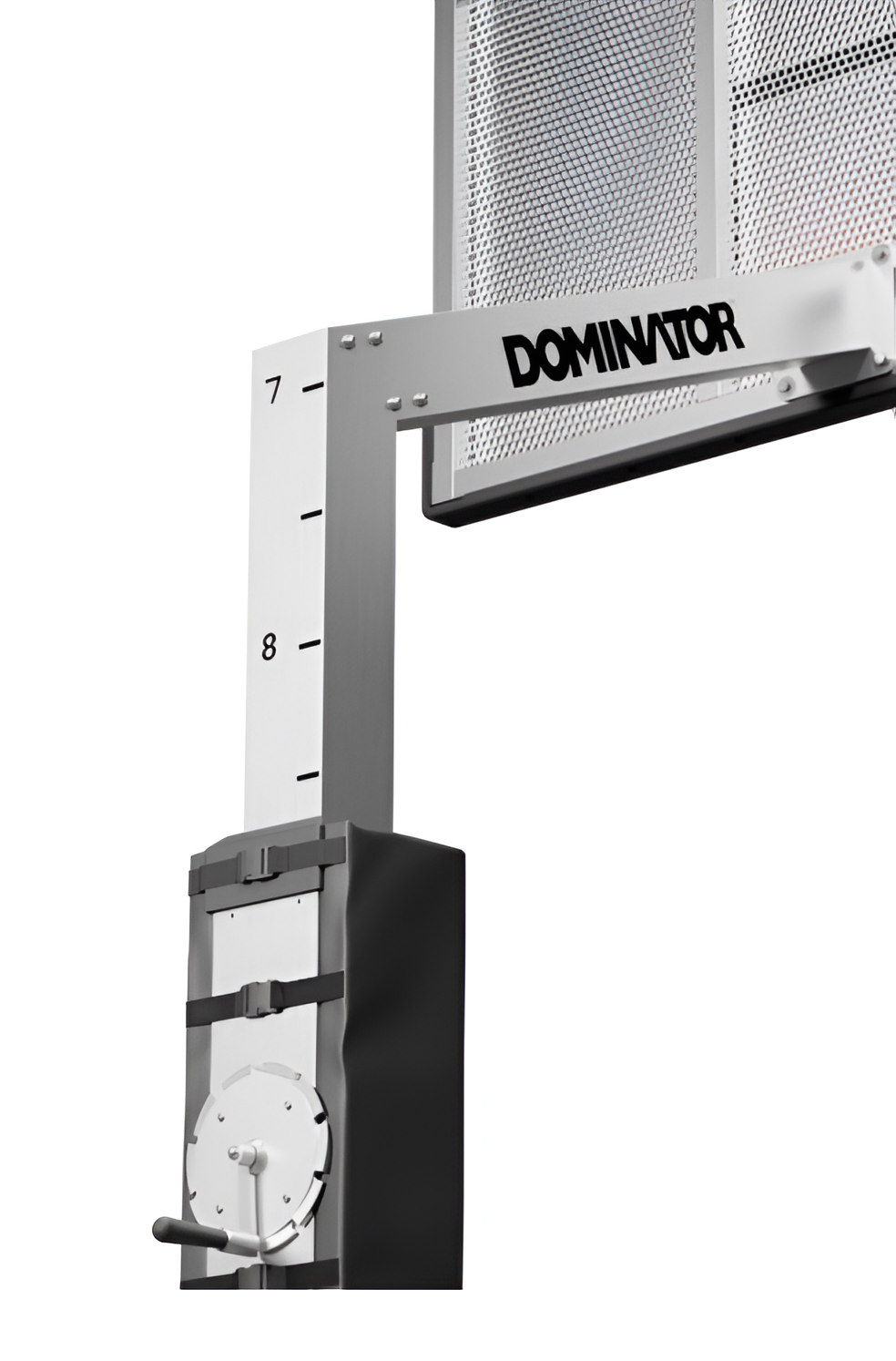
✅ Adjustable 7′–10′ crank height systems
✅ Fixed 10′ height for tamper resistance
✅ Breakaway and flex rims reduce rim stress
✅ 4′ to 6′ offset for safe under-basket play
✅ Black or brushed aluminum finish options
✅ Freight shipping to all 50 states
Installation, Anchoring and Safety
Stability comes from what you cannot see — the footing or the ballast — not from the backboard.
In-ground systems need an anchor set in concrete and fully cured before the pole goes up. The Dominator Pro 72″ ships with the hoop assembly, rim, backboard, backboard pads, anchor bolts, anchor cover, base pad, and instruction manual, so the anchoring hardware is accounted for in the box.
Portable systems are a different discipline entirely. Jaypro specifies 800 lbs of customer-supplied ballast for the PB42, and that ballast is not included. An under-weighted portable hoop is a genuine injury risk, not a minor spec detail. Assign one staff member to own the setup, document the ballast configuration, and keep players off the system during height changes.
Do I need professional installation for an in-ground hoop? Not always. Dominator systems assemble from four main components once the anchor is set. Competition-grade Bison packages and institutional installs generally warrant a professional crew.
Shipping, Freight and Support
These are freight items, not parcel shipments, and planning for that keeps delivery day simple.
Full systems ship by truck—the PB42 alone lists a 430 lb shipping weight. Someone needs to be present to receive and sign for the delivery, and oversized freight charges can apply depending on your location and access. Review current shipping and returns terms before you order.
From our Tennessee headquarters, Hamilton Home Fitness supports buyers in all 50 states with freight coordination and setup guidance. Facility builders out of a full space can also explore our commercial fitness equipment range.
Frequently Asked Questions
How much does a good basketball hoop cost?
Residential in-ground systems here run $1,999 to $3,299. Institutional portable units start around $3,406, and competition packages reach $14,006. Shooting stations begin at $1,040.
What is the difference between a fixed and adjustable hoop?
Adjustable systems crank between roughly 7 and 10 feet, which suits growing players and mixed-age training. Fixed-height systems stay at regulation 10 feet and offer fewer moving parts, making them harder to tamper with on public courts.
Can I install a basketball hoop on an existing concrete slab?
Surface-mount systems are designed for this, but the slab must be thick enough and in good condition. Send us your slab specs and we'll tell you whether a surface mount or a new footing is the right call.
Are these hoops suitable for schools and parks?
Yes. Jaypro's playground and Titan systems and Bison's competition packages are built for institutional use. Fixed-height and tamper-resistant configurations are the usual choice for unsupervised public courts.
What does "FIBA approved" mean?
It means the system meets the equipment standards set by basketball's international governing body. Bison's 6'-8' Stationary Competition Package carries that approval, which matters for sanctioned competition play.
How long does delivery take?
Freight timelines vary by product, configuration, and destination. Request a quote and we'll confirm current lead times for your specific system before you order.
Find the Right System for Your Court
The fastest way to get this right is to tell us your space and how the court gets used.
Send your court dimensions, expected daily traffic and budget, and we'll come back with the systems that actually fit—plus a freight quote to your address. Every system here ships from Tennessee to all 50 states with setup guidance included.
Request a quote today and get a recommendation built around your court, not a generic size chart.
Secure Payments