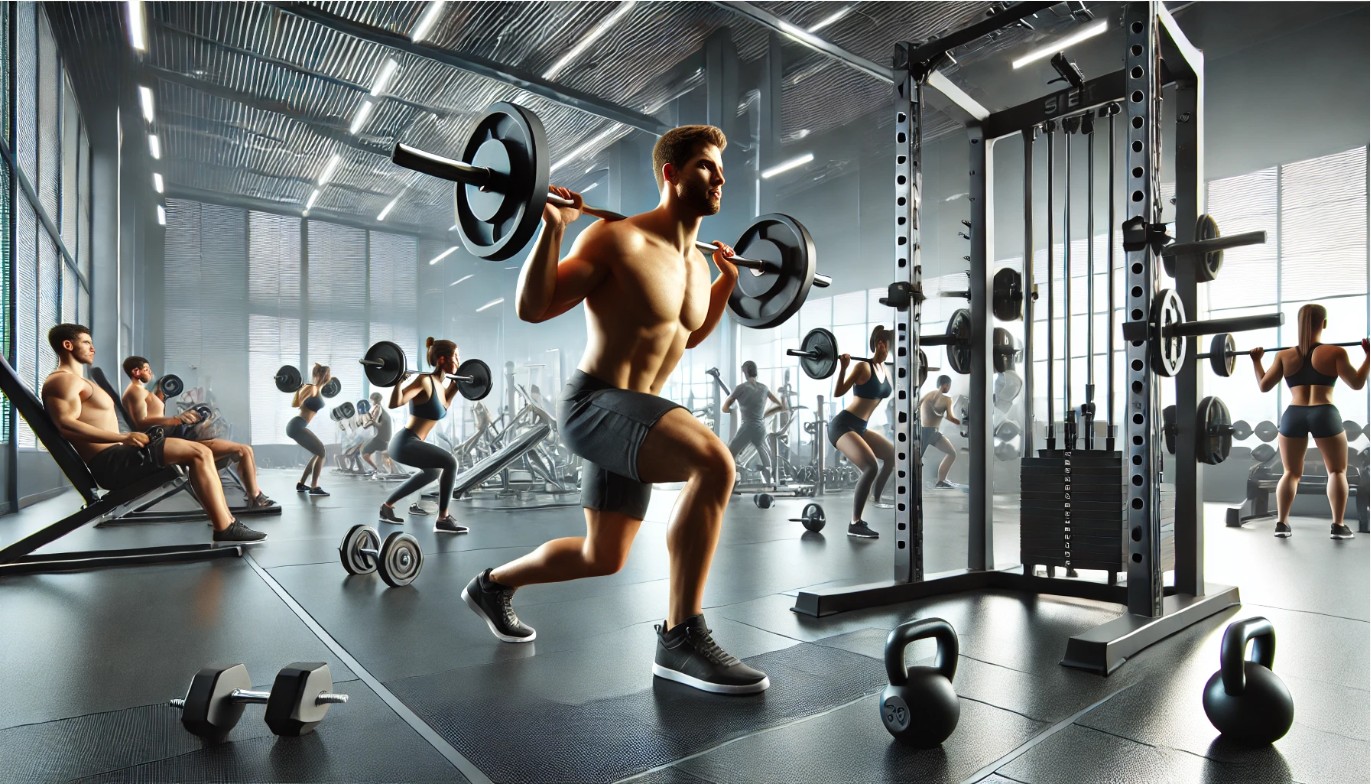
If you’re looking to build leg strength and overall lower body power, the barbell back squat is a staple in many fitness routines. However, while this classic exercise is highly effective, it isn’t the only way to sculpt strong, muscular legs. In fact, incorporating barbell back squat alternatives can not only target muscles in new ways but also help you avoid plateaus, prevent injury, and keep your training fresh and exciting.
In this blog post, we’ll explore the top 10 barbell back squat alternatives for building leg strength, each offering distinct benefits for different fitness levels. Whether you’re a seasoned athlete, a beginner, or someone recovering from an injury, these alternatives can be incorporated into your workout regimen for better results.
By the end of this post, you’ll have a well-rounded understanding of the most effective alternatives and how to implement them to maximize leg strength, mobility, and overall fitness. Let’s dive in!
1. Dumbbell Squat
Dumbbell squats are an excellent alternative to the barbell back squat, especially for those who want to improve balance and symmetry. Holding a dumbbell in each hand forces you to stabilize your body more effectively, targeting the quads, hamstrings, and glutes in a slightly different way.
Why Choose Dumbbell Squats?
- Greater range of motion compared to barbell squats.
- Ideal for beginners or those with limited access to heavy equipment.
- Helps improve unilateral strength and balance.
How to Perform:
- Stand with your feet shoulder-width apart, holding a dumbbell in each hand at your sides.
- Lower your body into a squat, keeping your back straight and knees tracking over your toes.
- Push through your heels to return to the starting position.
2. Goblet Squat
The goblet squat, typically performed with a kettlebell or dumbbell, offers a more controlled and safe alternative to the barbell back squat. The weight is held in front of your chest, encouraging a more upright torso posture and reducing stress on the lower back.
Why Choose Goblet Squats?
- Promotes proper squat form by keeping the torso upright.
- Lower impact on the lower back.
- Great for beginners and those rehabbing injuries.
How to Perform:
- Hold a dumbbell or kettlebell with both hands close to your chest.
- Keep your elbows tucked in, lower into a squat while keeping your chest lifted.
- Push through your heels to stand back up.
3. Bulgarian Split Squat
The Bulgarian split squat targets each leg individually, providing a more intense workout for the quads, hamstrings, and glutes. This exercise also improves flexibility and balance, making it ideal for athletes looking to build unilateral leg strength.
Why Choose Bulgarian Split Squats?
- Focuses on one leg at a time, correcting muscle imbalances.
- Great for developing quad and glute strength.
- Can be performed anywhere with a bench or elevated surface.
How to Perform:
- Stand about two feet away from a bench or elevated surface, with one foot resting on it.
- Lower your body by bending the front knee while keeping your chest up.
- Push through the front heel to return to the starting position.
4. Leg Press Machine
For those who want to target the quadriceps and glutes with less strain on the lower back, the leg press machine is an excellent choice. It allows you to adjust the load without compromising your form, making it safer for those with mobility issues or beginners.
Why Choose Leg Press?
- Provides a controlled movement, minimizing the risk of injury.
- Great for targeting the quads and glutes.
- Offers progressive overload by adjusting weight increments easily.
How to Perform:
- Sit on the leg press machine with your feet shoulder-width apart on the platform.
- Lower the platform toward your body by bending your knees.
- Push the platform back up by extending your legs.
5. Walking Lunges
Walking lunges are a dynamic lower body exercise that engages both the quadriceps and hamstrings, with a focus on developing balance and coordination. This exercise mimics the natural movement patterns of walking while strengthening the legs.
Why Choose Walking Lunges?
- Engages multiple muscles, including quads, hamstrings, glutes, and calves.
- Enhances balance and coordination.
- Easy to perform without heavy equipment.
How to Perform:
- Step forward with one leg into a lunge position.
- Lower the back knee toward the floor, keeping the front knee over your ankle.
- Push off the front foot to step forward into the next lunge.
6. Step-Ups
Step-ups are a functional exercise that simulates real-world movement patterns. By stepping up onto an elevated surface, you’ll activate the quads, hamstrings, and glutes while improving your balance and coordination.
Why Choose Step-Ups?
- Effective for building unilateral leg strength.
- Improves functional strength and stability.
- Low-impact and accessible for all fitness levels.
How to Perform:
- Stand facing an elevated surface such as a bench or step.
- Step one foot onto the surface, driving through your heel.
- Bring your other foot up, then step down and repeat.
7. Trap Bar Deadlift
The trap bar deadlift is a hybrid exercise that focuses on the lower body muscles while also engaging the core and upper body. Compared to a traditional barbell deadlift, it places less strain on the back and provides a more upright lifting position.
Why Choose Trap Bar Deadlift?
- Less strain on the lower back compared to the conventional deadlift.
- Engages the glutes, hamstrings, and quads effectively.
- Great for those who want to build overall lower body strength.
How to Perform:
- Stand inside the trap bar with feet shoulder-width apart.
- Bend at the hips and knees to grasp the handles.
- Lift the bar by extending your hips and knees simultaneously, standing tall.
8. Kettlebell Swings
Kettlebell swings are a dynamic movement that targets the posterior chain, including the glutes, hamstrings, and lower back. This explosive exercise is excellent for building power, improving cardiovascular fitness, and increasing lower body strength.
Why Choose Kettlebell Swings?
- Engages the posterior chain muscles (hamstrings, glutes, lower back).
- Improves explosive power and endurance.
- Low-impact and easy to perform in a limited space.
How to Perform:
- Hold a kettlebell with both hands in front of your body.
- Hinge at the hips, swinging the kettlebell between your legs.
- Drive your hips forward to propel the kettlebell to shoulder height.
9. Hip Thrusts
Hip thrusts are a fantastic exercise for isolating the glutes and hamstrings. By driving your hips upward while your shoulders are supported on a bench, you can build tremendous posterior chain strength.
Why Choose Hip Thrusts?
- Highly effective for glute and hamstring development.
- Great for increasing hip mobility and posterior chain strength.
- Easy to progress by adding weight.
How to Perform:
- Sit on the ground with your upper back against a bench and feet flat on the floor.
- Place a barbell across your hips (or use a bodyweight version).
- Drive through your heels and thrust your hips upward, squeezing your glutes at the top.
10. Swiss Ball Leg Curls
Swiss ball leg curls are a great alternative for those who want to target the hamstrings and glutes while reducing the risk of back strain. This exercise works by using your body weight to stabilize the core and engage the lower body muscles.
Why Choose Swiss Ball Leg Curls?
- Excellent for hamstring and glute activation.
- Helps improve core stability and balance.
- Low impact on the spine.
How to Perform:
- Lie on your back with your feet on a Swiss ball and your arms at your sides for support.
- Lift your hips off the ground to create a straight line from your shoulders to your feet.
- Curl the ball toward your glutes by bending your knees, then extend your legs back to the starting position.
Research & Sources
Building leg strength requires consistency, variety, and a balanced approach to training. According to a study from the National Strength and Conditioning Association (NSCA), incorporating multiple lower body exercises into your regimen can help prevent muscle imbalances and improve overall strength (NSCA, 2021). Additionally, expert trainers like those from the American College of Sports Medicine (ACSM) recommend targeting different muscle groups with various squat alternatives to avoid overuse injuries and ensure progressive overload.
The exercises listed above are backed by research and proven to be effective in targeting the quads, hamstrings, glutes, and calves. Many trainers also suggest using a combination of these movements to achieve well-rounded lower body strength and functionality.
FAQ (Frequently Asked Questions)
Q1: Can I build leg strength without a barbell?
Yes, many of the exercises mentioned above, such as dumbbell squats, goblet squats, and step-ups, are excellent alternatives for building leg strength without the need for a barbell.
Q2: Are these exercises suitable for beginners?
Absolutely! Exercises like goblet squats, walking lunges, and Swiss ball leg curls are great choices for beginners as they offer low-impact variations that build strength safely and effectively.
Q3: How often should I include these alternatives in my workout routine?
For optimal results, aim to include leg exercises 2-3 times per week, mixing in various squat alternatives to target different muscle groups and avoid plateaus.
Conclusion
Building leg strength goes far beyond the traditional barbell back squat. By integrating these 10 barbell back squat alternatives into your workout routine, you’ll not only boost your leg strength but also improve mobility, balance, and coordination. Each exercise offers unique benefits, allowing you to tailor your routine to meet your personal goals.
At Hamilton Home Fitness, we’re committed to helping you achieve peak performance in your training. Whether you're looking for advanced exercises, beginner-friendly options, or expert advice, our range of fitness equipment and resources are designed to elevate your fitness journey.
Take the next step toward stronger legs today. Visit Hamilton Home Fitness to explore the best fitness tools, and start your journey towards achieving your strength goals!