
Introduction
That split creeping along the pad seam. The creak under a loaded bar. Rust blooming on the chrome after a sweaty summer. Each one raises the same quiet question: is this bench still safe to load?
Good weight bench maintenance answers that before it becomes a real problem. This guide shows you how to clean the pad without cracking the vinyl, protect the steel frame, stop the squeak, and distinguish cosmetic wear from a genuine hazard—then settle the call most owners get stuck on. Replace the pad or replace the whole bench?
Whether you're a few years into a bench you paid good money for or you keep a row of them running for members, these are the habits that make one last.
How to Clean a Weight Bench Safely
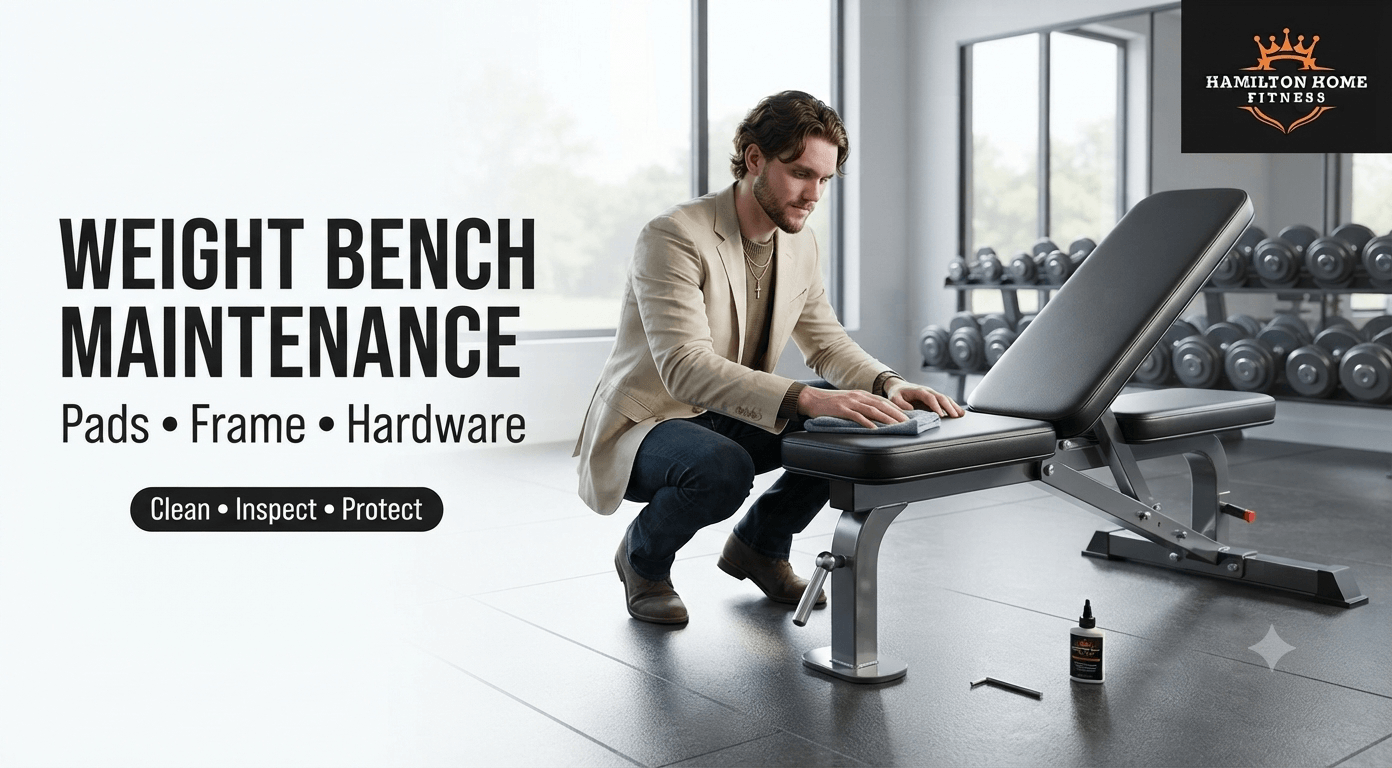
Wipe the sweat off after every session with a dry or damp microfiber cloth. Once a week, deep-clean the pad with mild soap and warm water, then dry it fully. Keep bleach, ammonia, alcohol, and solvents entirely off the vinyl—that's the whole routine.
The reason to avoid harsh cleaners isn't just caution. Bleach, ammonia, and alcohol strip the plasticizers—the compounds that keep vinyl soft and flexible—out of vinyl. Without them, the surface dries out and cracks along the seams. Those same seams then trap sweat and grime, so a cleaning shortcut quietly speeds up the wear you were trying to prevent.
One habit protects the pad more than any product: spray the cloth, never the pad. Spraying directly drives moisture into the foam and the backer board underneath, where it can't dry and starts breaking things down from the inside.
A microfiber cloth and a mild cleaner are all you really need—round out your kit from our gym cleaning supplies and care accessories.
Safe on bench vinyl
Mild soap and warm water
A pH-balanced gym cleaner
Alcohol- and bleach-free disinfectant wipes, used occasionally
A vinyl conditioner to keep the pad flexible
Keep off the pad
Bleach and ammonia
Alcohol and solvents like acetone or degreasers
Abrasive pads and scrubbers
Any cleaner sprayed straight onto the surface
Protect the Frame From Sweat and Rust
Sweat is the real threat to a steel frame, and it works against the bench two ways at once. The salt in it corrodes the steel while it dries out the vinyl. So drying the frame after a hard session is the single most valuable habit you have—especially in a garage or basement, where humidity and condensation keep feeding rust long after you've walked away.
How you protect the steel depends on its finish:
Powder-coated steel: A chip in the coating is exactly where rust starts, hidden underneath. Touch up chips promptly with a matte paint so bare metal never sits exposed. Even a heavy 11-gauge frame rusts once the coating is broken.
Chrome guide rods: Wipe them dry after use, then wipe on a light film of silicone. That's what keeps an adjustable bench's rods sliding smoothly instead of grinding.
Stainless and galvanized steel: More corrosion-resistant, but not immune — a quick wipe-down still pays off.
If light surface rust does appear, put the remover on a cloth and work the spot. Don't soak the frame. And if your gym lives in a humid room, a dehumidifier protects the steel better than any spray.
Keep Bolts Tight and Stop the Squeak
Bolts work loose on their own. Between shifting your position mid-set and dragging the bench across the floor, the hardware backs off over time — so check and retighten every couple of weeks, monthly at the latest. A sudden creak under a loaded bar almost always means a loose bolt, a dry pivot, or a foot that's lost contact with the floor.
Chase a new squeak in this order:
Bolts. Snug every frame bolt first — this fixes most noise on its own.
Hinges and pivots. On an adjustable bench, a dry backrest or seat pivot squeaks under load.
Feet. A worn or uneven rubber foot lets the frame rock and knock.
The floor. Sometimes the bench is fine and the floor beneath it isn't.
Adjustable benches have more to maintain than a flat one—pins, a ladder or gas-assist mechanism, and hinges all add wear points a flat bench doesn't have.
For a sticky popping or adjustment pin, work a little silicone or PTFE dry lube into the housing. Skip WD-40, which strips lubrication and attracts grit, and lithium grease, which turns to sludge. When a rubber foot wears down, replace it—non-marking feet keep the bench steady and save your floor.
When Pad or Frame Wear Turns Unsafe
Most wear is cosmetic. Surface cracks and faded color look rough but still hold you fine. The line to a real hazard is crossed when the pad stops supporting you or the frame stops holding its shape.
Here's the test: press the pad hard with your thumb. If you feel the backer board through the foam, the density is gone — and your spine loses support in the middle of a press. A split seam does the same damage from the inside, soaking the foam with sweat until it breaks down.
The frame is stricter. Remember what it carries: you plus the bar. Any wobble under load, a cracked weld, or a pin that won't fully lock means stop loading it now—and on any structural doubt, stop using the bench and check with the manufacturer rather than guessing.
Cosmetics—keep using them.
Surface cracks in the vinyl
Faded or worn color
Light scuffs on the frame
Stop use until it's fixed
Foam that bottoms out to the board
A split seam letting moisture into the padding
Frame wobble, a cracked weld, or a pin that won't lock
Repair the Pad or Replace the Bench?
Here's the rule that settles it: if the frame is solid and only the pad is worn, fix the pad. If the frame wobbles, the pivots are worn, the adjustments stick, or the same problems keep coming back, replace the bench. A fresh pad on a failing frame just hides the real issue—and the real issue is the part holding you off the floor.
Once you know which side you're on, there are three paths.
Replace the pad. The cheapest fix, and often all you need. Measure your old pad's length and width, and note how it mounts—most bolt to a wood backer with a few screws. A flat bench uses one pad; an adjustable bench usually has separate seat and back pads, so you can replace just the worn one. Brand-specific pads fit better than universal ones, and denser, tear-resistant vinyl lasts longer than the foam that wore out.
Reupholster. Worth it when the cover is torn or cracked but the foam and frame are still good. You keep a bench you already trust and skip the cost of a new one. Facilities often cycle reupholstery every 12 to 24 months to keep shared benches looking and feeling sound.
Replace the bench. The right call when the structure, adjustments, or ergonomics are gone—or when a repair only buys a few more months. At that point, spending on a fix traps money in a bench that's finished. If yours has reached that point, you can browse current weight benches to price a replacement. Managing a floor of them? A professional repair and reupholstery service can restore several pads at once instead of retiring the frames.
Repair if…
The frame is solid and only the pad is worn
The cover is torn but the foam still supports you
One pad on a multi-pad bench needs swapping
Replace if…
The frame wobbles or a weld is cracked
Pivots are worn or adjustments won't lock
The same problems keep returning after fixes
Your Weight Bench Care Schedule
Everything above fits into a simple rhythm. Follow it and the bench stays safe without ever becoming a project.
When | What to do |
After each use | Wipe sweat off the pad and dry the frame |
Weekly | Deep-clean the pad with mild soap; check for cracks and split seams |
Monthly | Retighten bolts and lube sticky pins and pivots |
Quarterly | Full frame-and-hardware inspection; touch up coating chips |
Facilities run the same cadence, tighter: wipe between users and log each inspection so nothing slips. The full between-users routine, inspection logs, and scheduling across many machines live in our complete facility maintenance guide.
One note on warranties: using only mild cleaners and keeping simple cleaning records helps protect your coverage, since harsh-chemical damage is often excluded. Terms vary by brand — ask our team about parts and warranty terms for the bench you own.
FAQ
Does improper cleaning void a weight bench warranty?
It can. Bleach, solvents, and other harsh chemicals that crack the vinyl or dull the finish are often excluded from coverage. Stick to mild soap and water, keep simple cleaning records, and check your brand's terms—they vary.
How long should a weight bench last?
A well-built bench kept dry, retightened, and cleaned properly can last many years, often a decade or more. The pad almost always wears out before the frame, which is why replacing the pad extends the bench's life so cheaply.
Can you use disinfectant wipes on a bench pad?
Occasionally, if they're alcohol- and bleach-free and you wipe the surface rather than soak it. For everyday cleaning, mild soap and water are gentler—frequent harsh wipes dry the vinyl out and crack the seams.
Final Thought
A bench that stays safe for years comes down to small, repeatable habits—dry the sweat, tighten the bolts, and watch the seams. When wear does set in, let the frame decide: a new pad if it's solid, a new bench if it's not. Straight answers, no pressure — that's what Hamilton Home Fitness is here for.