
Introduction
You've already chosen the rack, the bar, and the plates. The floor is the last decision—and the one that protects all of it, so it's worth getting right the first time. Pick wrong and you crack a slab, pound your joints on bare concrete, fill a basement with a tire smell, or overpay for thickness you'll never use.
This rubber gym flooring buying guide compares tiles, rolls, and horse stall mats across thickness, smell, durability, cost, and how each installs over concrete, wood, or carpet. The goal is simple — match the floor to how and where you train — and Hamilton Home Fitness stocks all three formats and can help you size the space and sort shipping when you're ready.
Tiles vs rolls vs stall mats compared
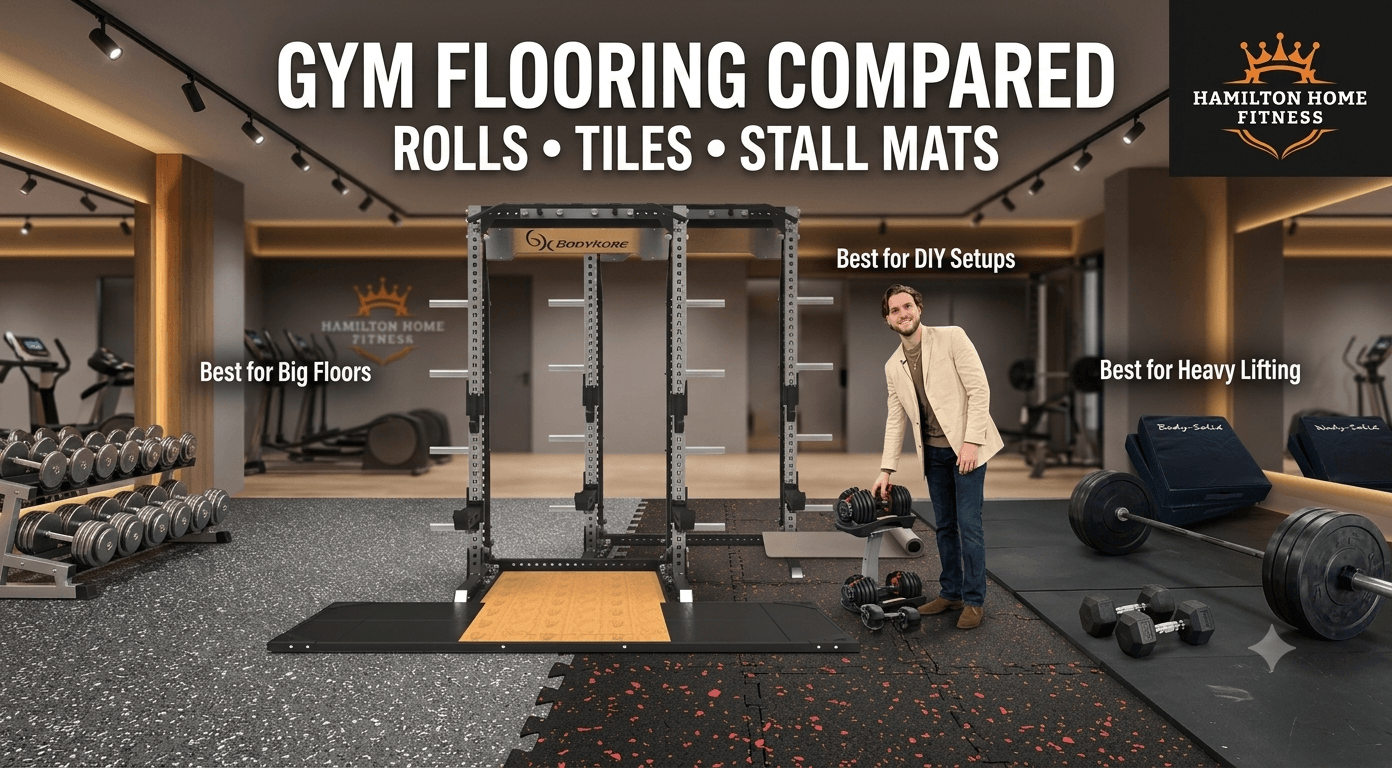
Rolls cover big, open floors with the fewest seams; interlocking tiles are the easiest to lay yourself and to pull up in a rental; stall mats are the cheapest way to armor a heavy-lifting corner.
Format | Cost per sq ft | Best for | Install | Seams & smell |
Rubber rolls | ~$1.50–$3.50 | Large, open areas; commercial floors | Unroll and trim; glue or tape; heavy, needs help | Fewest seams; low odor when purpose-made |
Interlocking tiles | ~$2–$5 | DIY setups, rentals, small or odd-shaped rooms | Snap together, no glue, removable | More seams; low odor; easy to lift and rearrange |
Horse stall mats | ~$0.75–$3 (≈$40–$70 per 4×6) | Budget heavy-lifting zones | Loose-lay, very heavy (~95 lb), needs help | Visible seams; strong tire smell when new |
Ballpark 2026 ranges; the full cost breakdown is further down.
The real trade-off is seams versus permanence and how you'll actually use the space. Rolls give the cleanest, most floor-like result but become a two-person job once they're down; tiles let you start small and reconfigure at the cost of more seams; stall mats win on price but look and feel like what they are. To weigh specific products against each other, you can compare rubber gym flooring options across all three formats.
Are horse stall mats worth it?
Horse stall mats are the cheapest way to floor a heavy-lifting zone, but you trade smell, weight, and visible seams for the savings. A standard 4×6 mat is 3/4-inch thick, dense enough to take dropped barbells, and runs about $40–$70 from farm-supply stores.
They make sense when you want to armor a squat rack or deadlift zone on a budget and don't mind a utilitarian look. They make less sense as a whole-room cardio or yoga floor: the recycled crumb rubber gives off a strong sulfur tire smell when new—rough in a closed basement—each mat weighs around 95 pounds and takes two people to move, and the seams between mats stay visible.
If you'd rather order a 4×6, 3/4-inch mat made for gym use than track one down at a farm supply store, Hamilton Home Fitness carries 4×6 3/4-inch rubber gym mats built for the same job.
What thickness do you actually need?
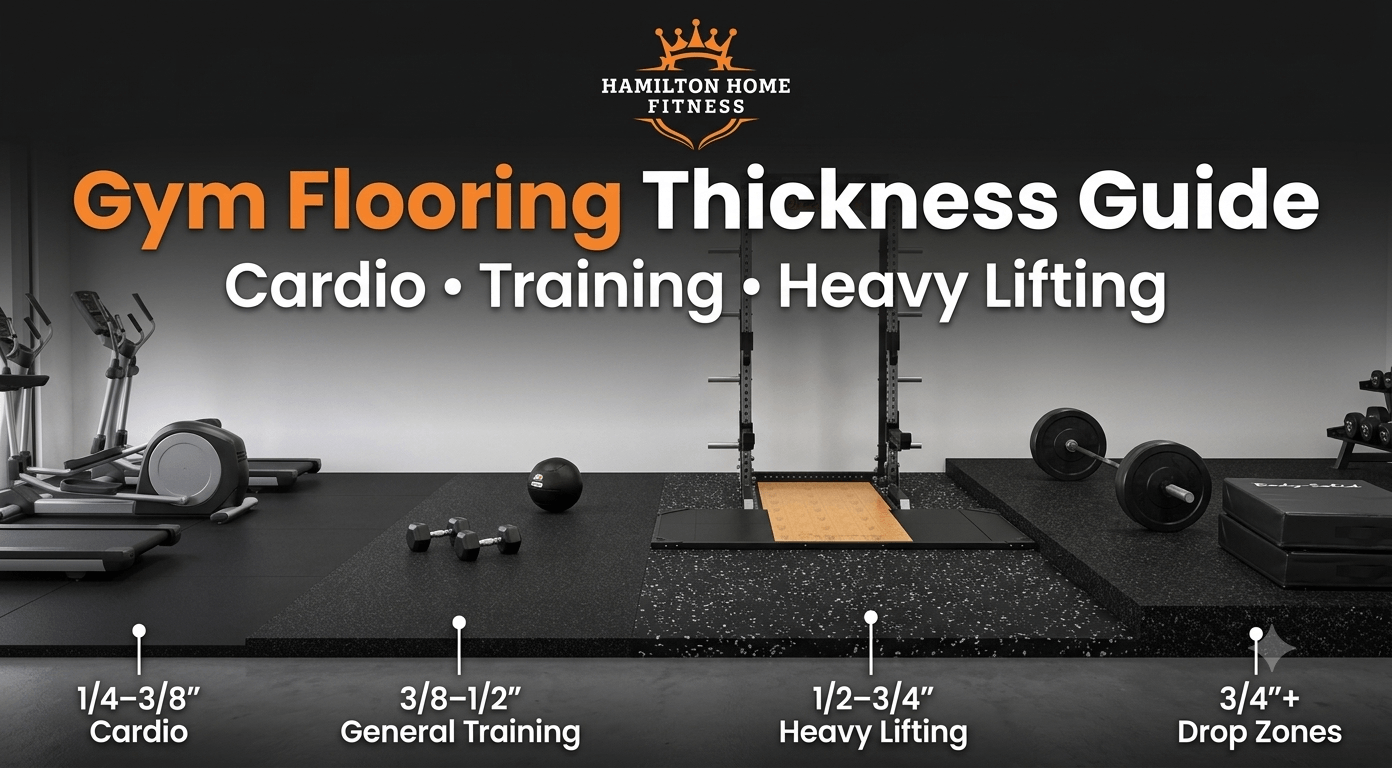
Match thickness to the heaviest thing that hits the floor, not to preference—the right number protects your slab and joints without making you pay for rubber you'll never load.
Thickness | What it's for |
1/4–3/8" | Cardio, light dumbbells, bodyweight, yoga zone |
3/8–1/2" | General training, moderate weights, HIIT |
1/2–3/4" | Heavy barbell work, racks, Olympic lifting |
3/4–1" + | Drop zones, CrossFit, dedicated deadlift platform |
Under light work, the floor's job is protection, grip, and noise; under heavy iron, it's impact absorption. Going thicker than your training calls for mostly adds cost and weight, so size the floor to the zone that takes the hardest hits and keep the rest thinner.
Thickness for deadlifts and drops
For dropped barbells, build a deadlift platform — plywood topped with a 3/4-inch mat — rather than trusting floor thickness alone. A loaded bar dropped from the hip concentrates enough force to dent a subfloor or crack concrete straight through a mat that feels plenty thick underfoot.
The platform spreads that force across a wider, stiffer base, which is why even thick floors don't replace one in a true drop zone. If you're not building a full platform, barbell crash pads give the bar a dedicated landing zone and take the worst of the impact.
Best thickness for cardio machines
Under cardio machines, 1/4-to-3/8-inch rubber is plenty—its job is to protect the floor, deaden noise, and stop the machine from creeping, not to absorb dropped weights. A treadmill, rower, or stair climber never drops a loaded bar, so the extra thickness you'd buy for a lifting zone is wasted here.
A thin mat still earns its place: it catches sweat, muffles the hum and vibration that travels through a floor, and keeps the machine from walking out of position over time. Size it to the footprint of your treadmills, rowers, and other cardio machines rather than the whole room.
Recycled vs EPDM vs virgin rubber
The material decides cost, color, and how much it smells. Recycled SBR is the affordable black workhorse; EPDM is the pricier, color-stable, lower-odor option—and the source of those colored flecks; virgin or vulcanized rubber sits between them in cost and off-gasses the least.
Recycled SBR is ground-up tire rubber bound with a binder. It's tough, cheap, and the default for black mats, rolls, and most budget tiles, but it carries the strongest new-rubber smell and fades in direct sun, so it's best kept indoors. EPDM is virgin synthetic rubber: smoother, nearly odorless, and color-stable, which is why it shows up as the flecks in mixed tiles or as a premium colored top layer—you pay more for the look and the lower smell. Virgin and vulcanized rubber are heat-pressed rather than glue-bound, so they off-gas less than rebonded recycled stock and resist wear well, landing between recycled and full EPDM on price.
For most home and commercial gyms, recycled rubber gives the best value and durability. Step up to EPDM flakes or a virgin top layer when you want specific colors, a softer underfoot feel, or the lowest odor in an enclosed room—which is exactly where the next section comes in.
Off-gassing, smell, and air quality
New rubber smells. Recycled stall mats especially give off a tire odor from residual sulfur and binders—it fades with time and airflow, faster with EPDM or virgin rubber and slower in a sealed basement.
The smell comes from the vulcanization process and the polyurethane that binds recycled crumb, not from anything actively leaking into the room. In an open garage with the door cracked, most of it dissipates over days to weeks. In a closed basement or apartment with poor airflow, the same mats can stay noticeable for months, and the odor is strongest right after install.
It's worth a measured note rather than alarm: the rubber itself is generally considered non-toxic, but the volatile organic compounds (VOCs) released as it off-gasses can irritate the eyes, nose, and throat or trigger headaches in sensitive people and poorly ventilated rooms. Sensitivity varies, so if anyone in the space has asthma or you're flooring a small enclosed room, lean toward lower-odor EPDM or virgin rubber and prioritize ventilation. For how VOCs and indoor air quality work in general, check a recognized environmental or public-health authority such as the U.S. EPA's guidance on indoor air quality.
How to reduce the smell
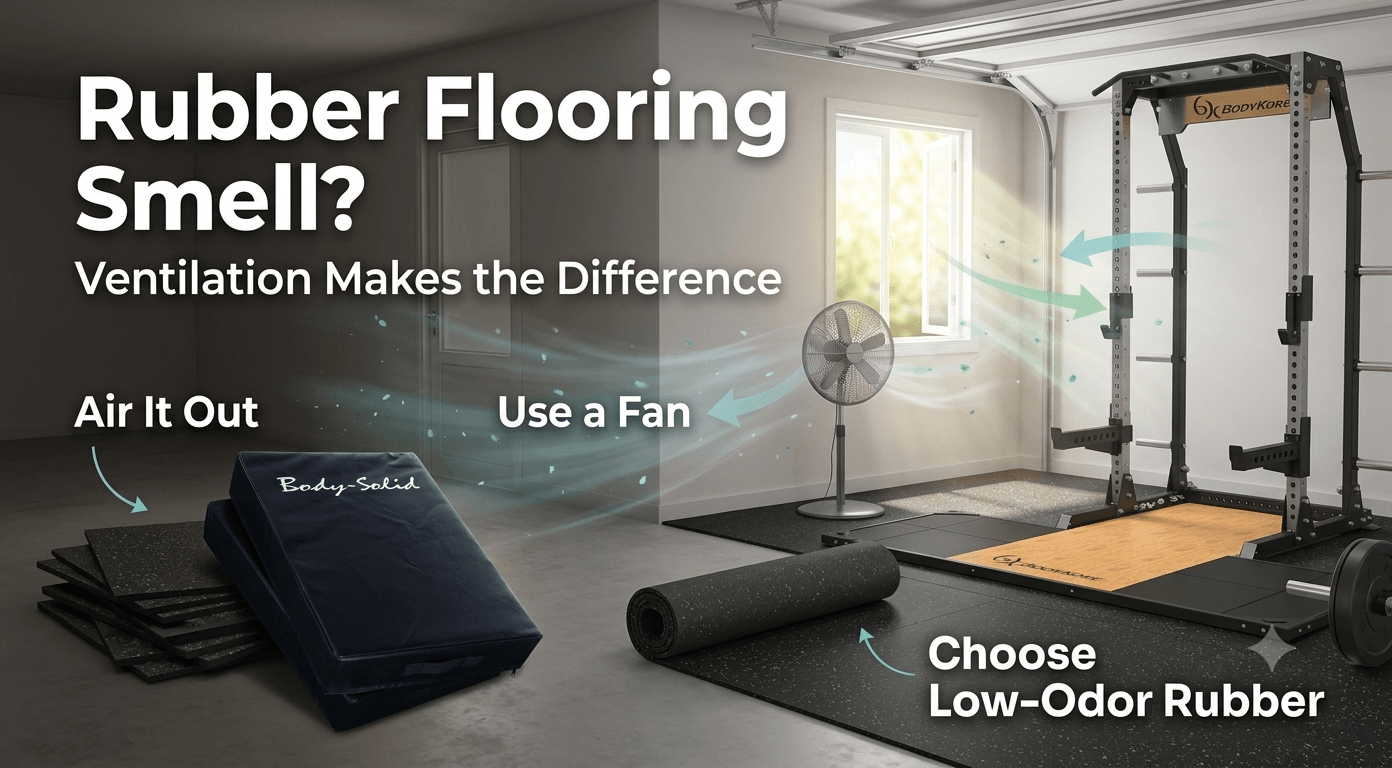
To cut the smell, air the room out, run a fan or dehumidifier, wipe the mats down, and, where you can, let them off-gas in sunlight or a ventilated garage before installation.
Ventilate hard at first. Open windows and doors and run a fan or dehumidifier during and after installation; airflow is what actually carries the odor out.
Air the mats out before they go down. A few hours in direct sun or a day in an open garage lets the worst of it release outside the room.
Wipe them clean. A wash with warm water, mild soap, or a diluted vinegar solution, followed by a baking-soda treatment, knocks back surface odor on new mats.
Give it time. Expect a steady fade over weeks; if a strong smell lingers for months in a ventilated room, contact the manufacturer, since it can signal a defective batch.
Choose the material upfront. If smell is a dealbreaker, EPDM or virgin rubber starts far milder than recycled stall mats.
Installing over concrete, wood, carpet
Rubber lays over almost any clean, flat, dry subfloor, and heavy loose-laid mats need no glue at all—but the right prep differs by surface. Interlocking tiles are the easiest no-glue route: they snap together, hold their own weight, and lift back up without a trace, which makes them the simplest DIY option and the safest choice in a rental. For that route, interlocking rubber tiles go down with no adhesive and come right back up when you move.
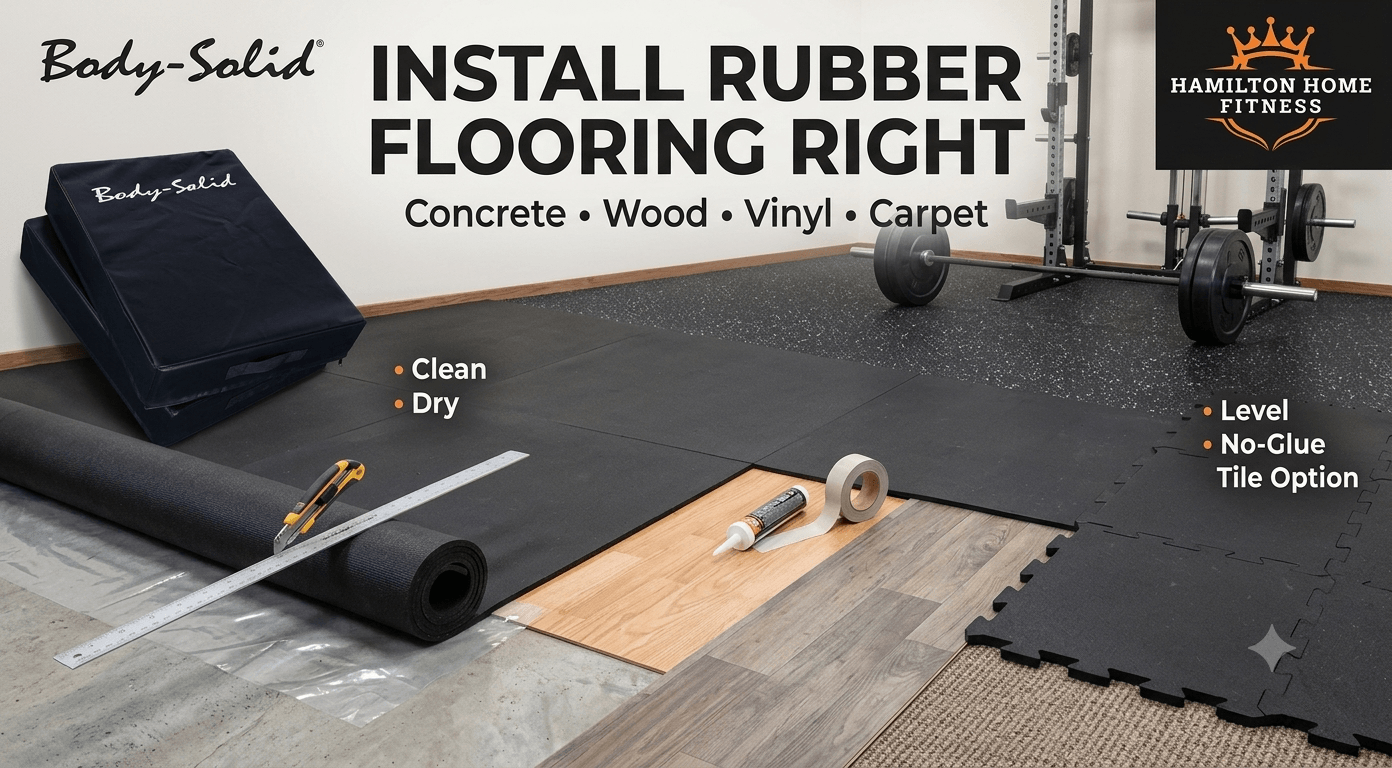
Whatever the surface, start with it clean, dry, and level—high spots and debris telegraph straight through the rubber as bumps and gaps.
Concrete, wood, vinyl, or carpet
Over concrete, add a 6-mil vapor barrier; over upper-floor wood, skip the plastic so it can breathe; protect hardwood with kraft paper; lay it over hard vinyl; and remove or cap carpet first.
Concrete (garage, basement): the most common base and the trickiest, because it wicks ground moisture. Test for moisture first, then lay a 6-mil polyethylene vapor barrier before the rubber so trapped dampness doesn't grow mold or fail your adhesive. Heavy mats can sit loose with no glue—their own weight holds them down.
Wood subfloor (upper floors, OSB/plywood): do the opposite — don't cap it with plastic. Sealing a breathing wood floor under a non-permeable barrier traps ambient moisture and risks rot. Get the wood patched and level, eliminate any movement, and lay the rubber on top.
Hardwood: never glue to a finished wood floor. Black rubber can stain the wood and react with the finish, so put down a layer of kraft paper first; it lifts off clean if you ever pull the floor.
Vinyl: rubber lays over hard, level vinyl fine — just confirm it's smooth and well-bonded so seams don't telegraph.
Carpet: Either pull it up or lay a plastic moisture barrier over low-pile carpet first to keep rubber marks and mop water off it. Thick or plush carpet makes an unstable base and is better removed.
Cutting and seaming cleanly
Score with a sharp utility or hook blade against a metal straightedge in several passes, cut over a 2×4 so the blade glides, and overlap seams slightly before trimming them flush. A sharp blade is nonnegotiable—a dull one tears the edge instead of cutting it, and that's where gaps and curling start.
Let rolls acclimate flat for about 24 hours before you cut, since rubber stored on a coil holds tension that lifts the edges. Lay the cut line over a 2×4 so the rubber drapes and opens as you score, lubricating a stubborn blade with a little soapy water or silicone. At each join, butt the pieces with a slight overlap, then double-cut or work them back to a tight, flush seam, and secure with double-sided seam tape or polyurethane adhesive if the floor needs to stay put.
What rubber gym flooring costs
Format drives the price more than anything else: stall mats run roughly $0.75–$3 per square foot, rolls about $1.50–$3.50, and tiles around $2–$5, with commercial-grade tile and specialty zones costing more. Heavy flooring also ships by freight, which adds to the final bill.
Format | Cost per sq ft | Notes |
Horse stall mats | ~$0.75–$3 | ≈$40–$70 per 4×6 mat; cheapest per foot |
Rubber rolls | ~$1.50–$3.50 | Best value for large, open areas |
Interlocking tiles | ~$2–$5 | Commercial tile can reach ~$10 |
Commercially installed | ~$5–$12 | Material plus professional install |
Rolls give the lowest cost per foot once you're covering real square footage, which is why large and commercial floors lean on them—rubber flooring rolls cover the most ground per dollar. Two costs catch buyers out: overbuying thickness, which a lighter training style never needs, and freight on heavy rolls and mats, so factor delivery in before you commit. For weight and delivery on a specific order, check the shipping and freight details.
Ranges are current as of 2026; confirm pricing before you order, since material and freight costs shift
.
Choosing by space: garage to commercial
Match the format to the room, then the thickness to the zone — your space decides as much as your training does.
Space | Best format | Thickness | Watch for |
Garage | Stall mats or rolls | 3/4" in the lifting zone, thinner elsewhere | Moisture from a concrete slab, door cracked for airflow |
Basement | Lower-odor rolls or tiles | 3/8–3/4" by zone | Off-gassing in a closed room; 6-mil vapor barrier |
Commercial | Seamless rolls, tiles in drop zones | 1/2–3/4"+ | Durability, traction, and clean seams under traffic |
Multifamily / hotel / clinic | Quiet, easy-clean tiles or rolls | 3/8–1/2" | Noise transfer to neighbors; low odor; simple maintenance |
In a garage, stall mats or rolls over the slab handle heavy lifting cheaply—arm the rack and deadlift zone at 3/4" and keep the rest thinner. Pair the floor with a rack while you're building: browse power racks and squat racks to anchor the lifting corner.
Basements need the same moisture barrier as any concrete, plus extra attention to smell in a closed room, so lean toward lower-odor material and good ventilation. Commercial floors prioritize seamless rolls for big, high-traffic areas with thicker tiles dropped into the lifting zones—the full commercial gym equipment range fits that kind of build. Multifamily, hotel, and clinic spaces care most about quiet, low odor, and easy cleaning, where tiles or thinner rolls do the job; for a rehab or PT setting, the rehab and recovery equipment lineup rounds out the floor.
FAQ
How long does rubber gym flooring last?
Well-made rubber lasts many years. Vulcanized and virgin floors hold up longest, recycled rolls and tiles commonly run a decade or more with basic care, and dense mats are extremely durable under heavy use. Check the product's stated warranty for the specific coverage.
How much rubber flooring do I need?
Multiply the room's length by its width for square footage, add about 5–10% for cuts and waste, then match that figure to roll lengths or tile coverage. For an exact count and shipping on a specific order, contact the Hamilton Home Fitness team.
Should I install it myself or hire a pro?
Loose-laid mats and interlocking tiles are DIY-friendly. Glued rolls and large commercial jobs go easier with help, and heavy mats — around 95 pounds each — need a second person, plus honest moisture testing before you cover concrete.
Final Thought
The right floor is the one matched to how you train, where the room sits, and what your air and budget can handle—chosen once and installed correctly the first time.
Keep the order simple: format, then thickness, then material, then subfloor prep. Get those four right, and the floor protects your equipment, your joints, and your home for years.