Introduction
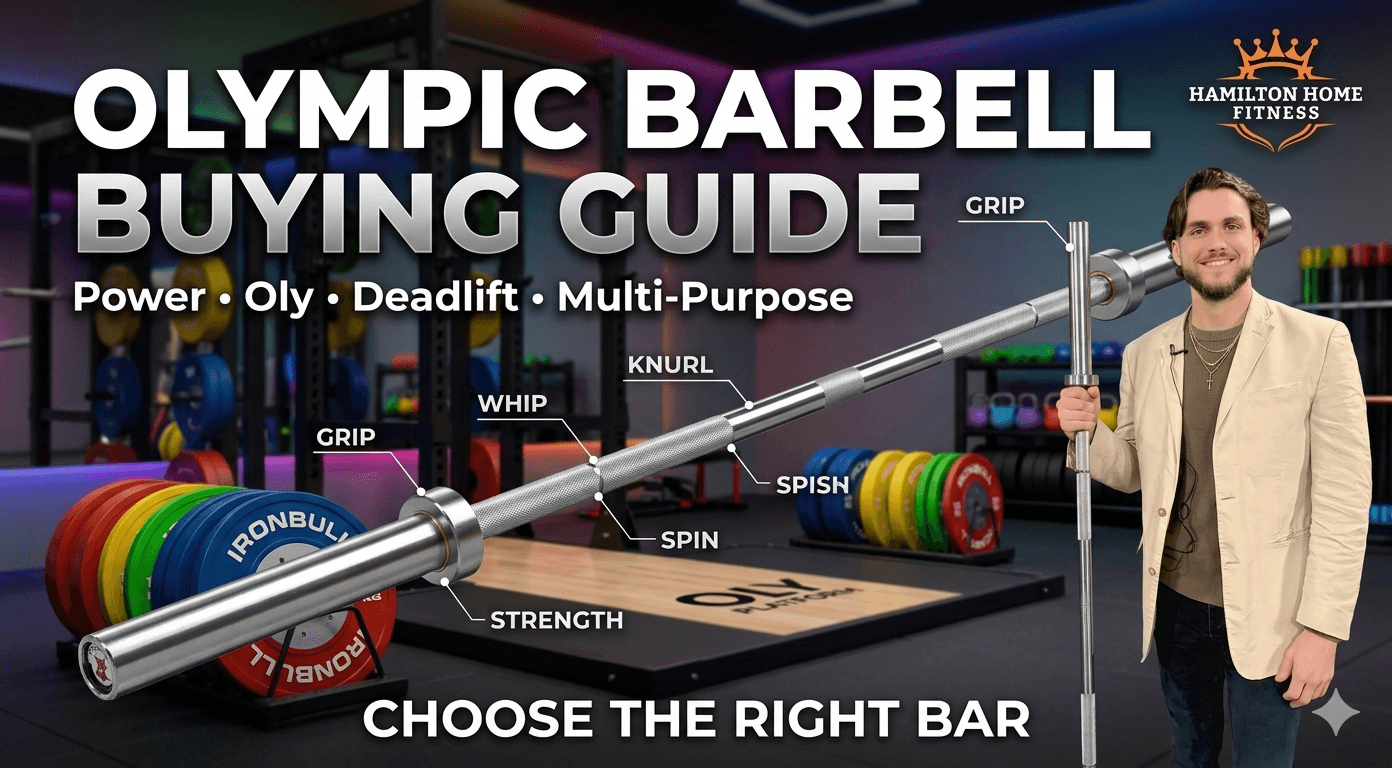
The right barbell is the one built for the lift you do most—a power bar for the squat, bench, and deadlift; an Olympic bar for the snatch and clean & jerk; a deadlift bar for the pull; or a multi-purpose bar if you train a bit of everything. Once you've outgrown a generic bar, the wrong pick quietly fights you: too much whip under a heavy squat, too little spin in a clean, or the wrong knurl tearing your hands. This Olympic barbell buying guide explains the real differences in shaft diameter, whip, knurl, and tensile strength, then gives you a clear choice by discipline and budget. Hamilton Home Fitness ships these bars nationwide from Tennessee and can match one to your training if you'd rather not guess.
The four barbell types at a glance
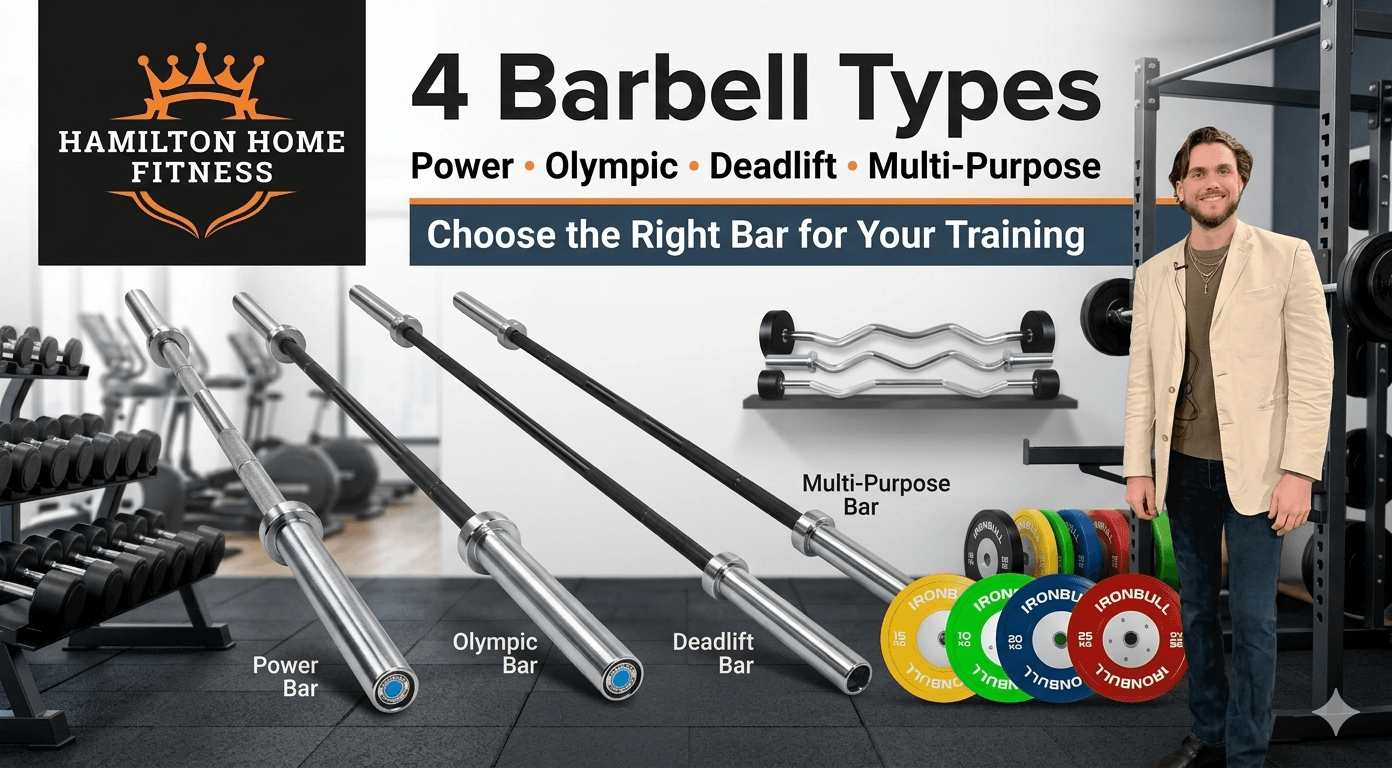
The four bar types split cleanly by job: power bars are stiff for the squat, bench, and deadlift; Olympic bars whip and spin for the snatch and clean & jerk; deadlift bars are long and thin for a bigger pull; and multi-purpose bars sit in between for general training. Here's how they compare at a glance.
Bar type | Shaft | Whip | Knurl | Sleeves | Best for |
Power bar | 29 mm | Stiff (low whip) | Firm, with center knurl | Bushings | Squat, bench, deadlift |
Olympic bar | 28 mm (25 mm women's) | Lively, controlled | Medium | Needle bearings | Snatch, clean & jerk |
Deadlift bar | ~27 mm | High | Aggressive, no center | Bushings | Heavy deadlifts |
Multi-purpose bar | 28.5 mm | Moderate | Medium | Bushings or bearings | Mixed / general training |
Want to see them next to each other? Browse the full barbells range to compare the types directly.
Power bar
A power bar is a stiff 29 mm shaft with a firm knurl and a center knurl, built to stay planted under maximal squat, bench, and deadlift loads. Where an Olympic bar is designed to flex and rebound, a power bar resists that flex so the weight tracks straight and predictable. The center knurl bites into your upper back in the squat, and the firmer outer knurl keeps a heavy bar from rolling out of your hands. The trade-off is simple: you give up whip and fast spin in exchange for control.
Olympic weightlifting bar
An Olympic bar uses a 28 mm shaft (25 mm on the women's bar) with needle bearings and controlled whip, tuned for the snatch and the clean & jerk. As you stand out of a heavy clean, the shaft loads and rebounds, helping you drive the bar through the sticking point. The needle bearings let the sleeves spin fast and freely, so the bar rotates under your hands during the turnover instead of wrenching your wrists. For slow grinds like a max squat, that same whip and spin work against you.
Deadlift bar
A deadlift bar is longer and thinner than a power bar—commonly around 27 mm—with extra whip, so the bar bends and starts lifting the plates a beat before they leave the floor. That flex shortens your effective range of motion and can mean a few more kilos off the ground. Lengths run longer than a standard bar, with more space between the sleeves, and the knurl is usually aggressive with no center knurl. It isn't legal as the single bar for squat–bench–deadlift in IPF meets, but some federations, such as the USPA and WRPF, allow it for the deadlift.
Multi-purpose bar
A multi-purpose bar typically runs a 28.5 mm shaft—right between the Olympic and power diameters—with moderate whip and medium knurl, so it handles power lifts and Olympic-style lifts well enough for most training. If you do a bit of everything, or you only have room for one bar, this is usually the smartest single choice. You lose the specialist edge of a dedicated power, Olympic, or deadlift bar, but you avoid buying three bars to cover one home gym. For most lifters who aren't chasing a platform total, that compromise is the right call.
The specs that decide your choice
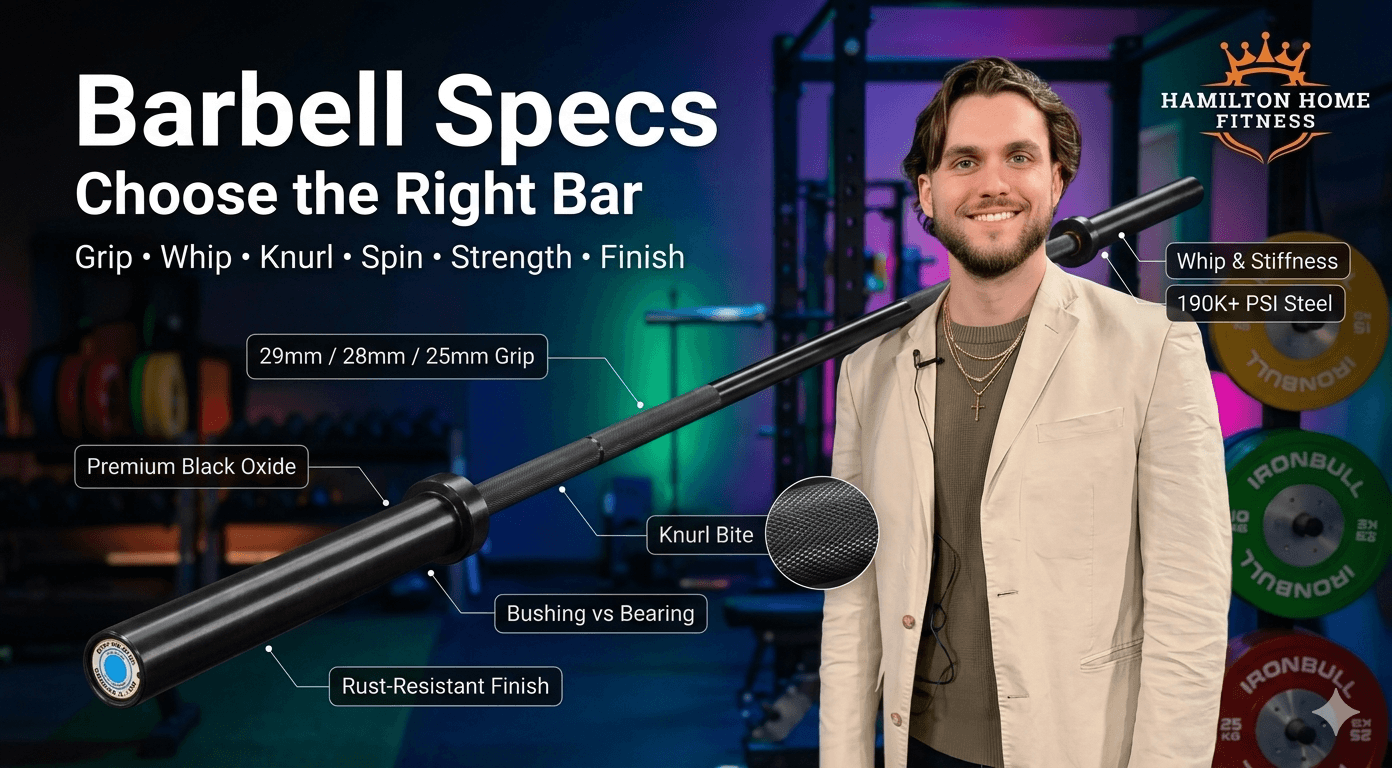
Five specs define a barbell: shaft diameter, whip, knurl, sleeve rotation, and tensile strength—plus the finish that keeps it alive. Here's what each one changes and how to read it before you buy.
Shaft diameter and grip
Thinner shafts (25–28 mm) are easier to grip and bend more; thicker shafts (29 mm) feel more secure but stiffer. A men's bar is 28 mm, the women's bar drops to 25 mm for smaller hands, and a power bar thickens to 29 mm for a planted feel under heavy squats and benches. On a heavy deadlift, many lifters actually prefer the thinner bar—it's easier to wrap the fingers around and hook, and the extra bend helps the bar start moving before the plates leave the floor.
Whip and stiffness
Whip is how much the shaft flexes under load—useful in the pull and the Olympic lifts, but a liability in the heavy squat and bench. Load a max squat onto a whippy bar, and the ends oscillate, nudging you out of position at the worst moment; the same flex off the floor in a deadlift or out of a clean works in your favor. Stiffer steel stays quiet under slow, grinding lifts, which is exactly why power bars are built rigid.
Knurl type and aggressiveness
Knurl ranges from passive to aggressive, and the right amount depends on your lifts. Powerlifters favor a sharper knurl and a center knurl that grips the upper back in the squat, while Olympic lifters prefer a medium knurl that won't shred the chest and thighs during cleans. The cut matters too—a hill pattern is gentler, while volcano and mountain knurls bite harder—and chalk lets you run a slightly less aggressive bar comfortably.
Bushings vs needle bearings
Buy a needle-bearing bar for fast Olympic lifts and a bronze-bushing bar for slow, heavy powerlifts. Needle bearings spin quickly and smoothly, which matters when the sleeves need to rotate under your hands in a snatch or clean; bushings spin slower and steadier, which is all a squat or bench requires. Bushing bars are also usually cheaper and lower-maintenance—bronze on better bars, composite on budget ones—while quality needle-bearing bars cost more and earn it in Olympic-style training.
Tensile strength and capacity
Tensile strength—usually quoted between 150,000 and 215,000 psi—measures the steel's resistance to permanent bending, not how much weight the bar holds. For a home gym, a rating around 165,000 PSI or higher is a safe target; serious lifters often want 190,000 PSI and up, ideally backed by a lifetime no-bend warranty. Don't confuse it with a load or "capacity" figure like 1,500 lb, which describes how much the bar can carry rather than the quality of the steel—the two numbers measure different things. Makers like York Barbell's North American bars publish their tensile ratings, which makes steel quality easier to compare across your options.
Finish and rust resistance
In a humid Tennessee garage, stainless steel resists rust best and keeps a near bare-steel grip feel; hard chrome is a durable runner-up, and Cerakote protects the shaft well in almost any color. Coatings like e-coat and zinc—black or bright—cost less but wear faster and need more upkeep, while raw steel offers the best raw grip and the worst rust resistance. The wetter your space, the more a good finish is worth paying for, because surface rust and pitting are far harder to undo than to prevent.
Which bar fits your training
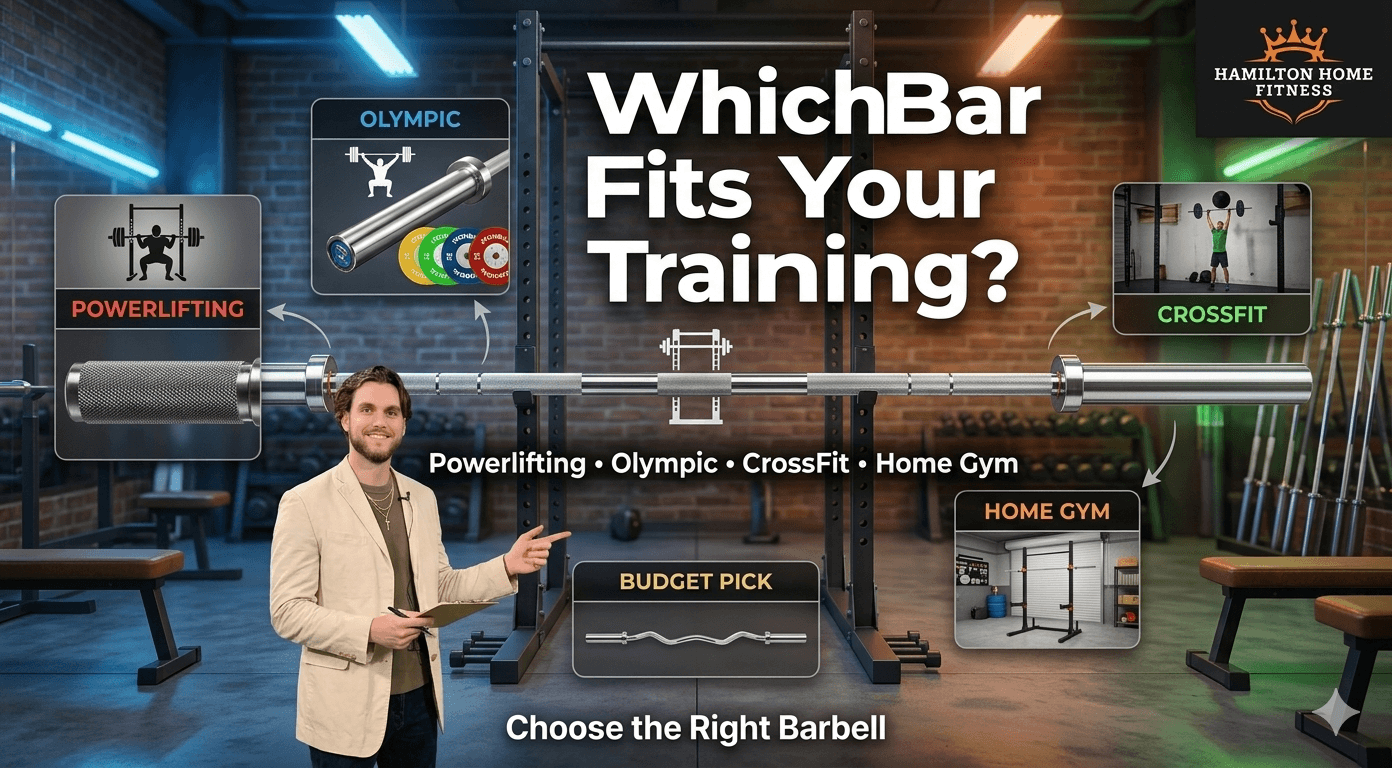
Match the bar to your main lift: a power bar for the big three, an Olympic bar for the competition lifts, and a multi-purpose bar if you do a bit of everything. Here's the clear pick for each kind of lifter.
For powerlifting
Powerlifters use a stiff 29 mm power bar with firm knurl, a center knurl, and bushings for control in the squat, bench, and deadlift. The rigidity keeps the bar tracking straight under maximal loads, the center knurl grips your upper back in the squat, and the slower bushing spin is all these slow, heavy lifts need. Skip the whip and fast bearings here—they only get in the way.
For Olympic weightlifting
Olympic lifters use a needle-bearing bar—28 mm for men and 25 mm for women—for fast spin and controlled whip in the snatch and clean & jerk. The quick rotation lets the sleeves turn under your hands through the catch instead of straining your wrists, and the shaft's rebound helps drive the bar through the sticking point. A technique or junior bar is also worth having if you're still grooving the movements. When you're ready to choose one, browse Olympic weightlifting bars built for the platform.
For CrossFit and hybrid training
For CrossFit and mixed training, a dual-marked multi-purpose bar with needle bearings and a hard-wearing finish handles high-rep Olympic and strength work. Picture a session that opens with touch-and-go power cleans and finishes with heavy back squats—you need a bar that spins fast enough for the cleans but stays composed under the squats. Dual knurl marks cover both Olympic and powerlifting grips, and a tough finish like hard chrome survives the repeated dropping and chalk.
For general strength and home gyms
If you train a bit of everything in a home gym, one quality multi-purpose or Olympic-style bar covers most lifts without buying three bars. A 28 mm needle-bearing bar with durable plating gives you spin for the occasional clean, enough stiffness for working-weight squats and presses, and a finish that shrugs off a humid garage. The Hard Chrome 1500 men's 28 mm bar is designed for exactly this lifter—20 kg, hard chrome, needle bearings, a six-stage knurl, and a stated 1,500 lb capacity—and may be a strong fit if you want one versatile bar rather than a specialist.
On a tighter budget
On a budget, prioritize tensile strength and a durable finish over fast bearings; a bushing multi-purpose bar gives the most reliable value. Bronze or even composite bushings cost less than needle bearings and are plenty for general training, so put your money into the steel and the coating that keep the bar straight and rust-free. A black zinc or e-coat shaft trims the price further—just plan on a little more cleaning and oil to keep it honest.
IPF vs. IWF-approved bars
An IPF-approved bar follows powerlifting specs—a 29 mm shaft with grip marks 810 mm apart—while an IWF-approved bar follows weightlifting specs—28 mm for men (25 mm for women) with marks 910 mm apart. The wider IWF spacing matches the snatch grip; the narrower IPF spacing matches the powerlifting grip. Beyond the marks and diameter, IWF bars are built to spin and whip for the Olympic lifts, and IPF bars are built stiff for the squat, bench, and deadlift. Both come calibrated and certified by their federations, which is part of what you pay for. (Verify exact figures against the current official IPF and IWF rulebooks if you're buying for competition.)
Do you need a competition bar?
Buy an approved bar only if you compete or want to train to an exact federation feel; otherwise, a quality non-approved bar performs identically for training. Certification adds cost for calibration and the right to be used on a sanctioned platform—neither of which changes how the bar handles it in your garage. If you're chasing a meet total under USA Powerlifting or USAW, train on the bar you'll compete with. If you're not, put that premium toward better steel, bearings, or finish instead.
When to add a specialty bar
Add a specialty bar once a standard bar limits your comfort, joint health, or variety—not before. Master the basics on a straight bar first; a specialty bar earns its place when it solves a specific problem you actually have. The common options and what each one is for:
Trap (hex) bar — upright pulls and carries with less stress on the lower back.
Safety squat bar—shoulder-friendly squats when pressing a straight bar into position hurts.
Cambered bar — added range and a different stability demand on squats and presses.
Multi-grip (Swiss) bar — neutral-grip pressing and rows that spare the shoulders and elbows.
EZ curl / Olympic curl bar — wrist-friendly arm work.
Axle (fat) bar — thicker shaft that builds raw grip strength.
Technique / junior bar — lighter, easier-handling bars for learning the lifts safely.
Care, storage and longevity
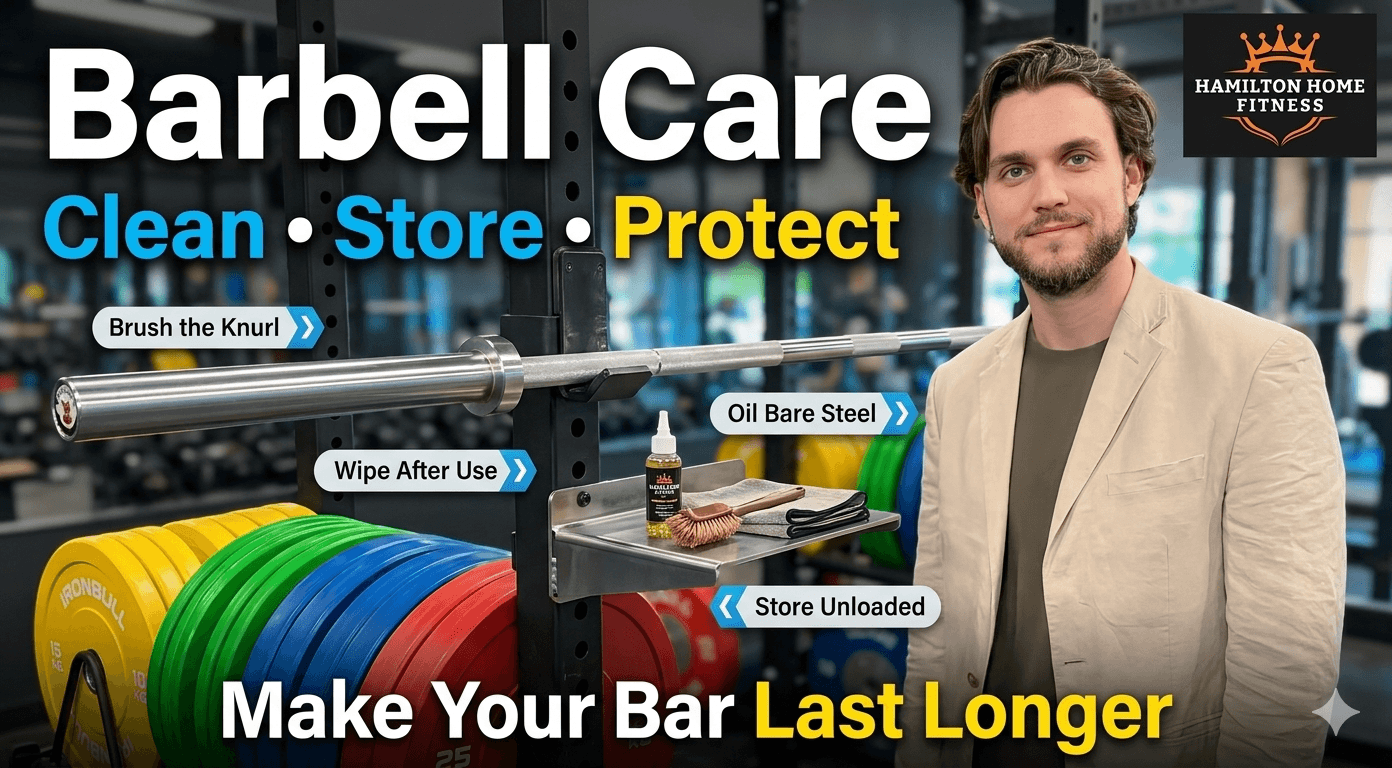
A quality barbell lasts decades with basic care—wipe it down, brush the knurl, oil bare steel, and never store it loaded. Round out your setup with bumper plates sized to the bar so it loads and balances the way it should.
Rust prevention and cleaning
Brush the knurl, wipe the shaft after chalky sessions, and apply light oil to bare-steel bars—more often in a humid climate. A quick routine is enough: run a nylon or bronze brush over the knurl to clear chalk and grit, wipe the shaft down, and add a thin coat of 3-in-1 oil to raw steel and chrome. Inspect for early surface rust now and then, since a light film wipes away easily but pitting does not.
Storing your bar safely
Store bars unloaded on a vertical or horizontal holder so the shaft can't take a permanent bend and the knurl stays protected. Leaving plates on a racked bar for weeks invites a slow warp, and resting the knurl on bare metal dulls it over time. A holder lined with plastic or rubber keeps metal off metal and keeps the bar off the floor. Keep it on a dedicated bar-and-plate storage rack to protect the shaft and the finish.
FAQ
How much does an Olympic barbell weigh? Men's bars weigh 20 kg (44 lb); women's bars weigh 15 kg (33 lb).
Are deadlift bars worth it for a home gym? Only if the deadlift is your priority. For general training, a multi-purpose or power bar is the better single buy.
Why do some barbells cost so much more than others? Higher tensile-strength steel, needle bearings, precision machining, premium finishes, and stronger warranties all raise the price.
Can one barbell do both Olympic lifts and powerlifting? Yes—a 28 mm or 28.5 mm multipurpose bar handles both well, though it won't fully match a dedicated power or competition bar.
Final Thought
The right barbell comes down to one question: which lift do you do most? Power bars own the squat, bench, and deadlift; Olympic bars are made for the snatch and clean & jerk; deadlift bars are pull specialists; and a multi-purpose bar is the safest single buy if you train a bit of everything. Match the bar to your main lift and your space — not to marketing — and you'll buy once instead of twice.
Still weighing it up? Tell Hamilton Home Fitness your main lifts and ask for a discipline-matched pick built in Tennessee and shipped nationwide.