Introduction
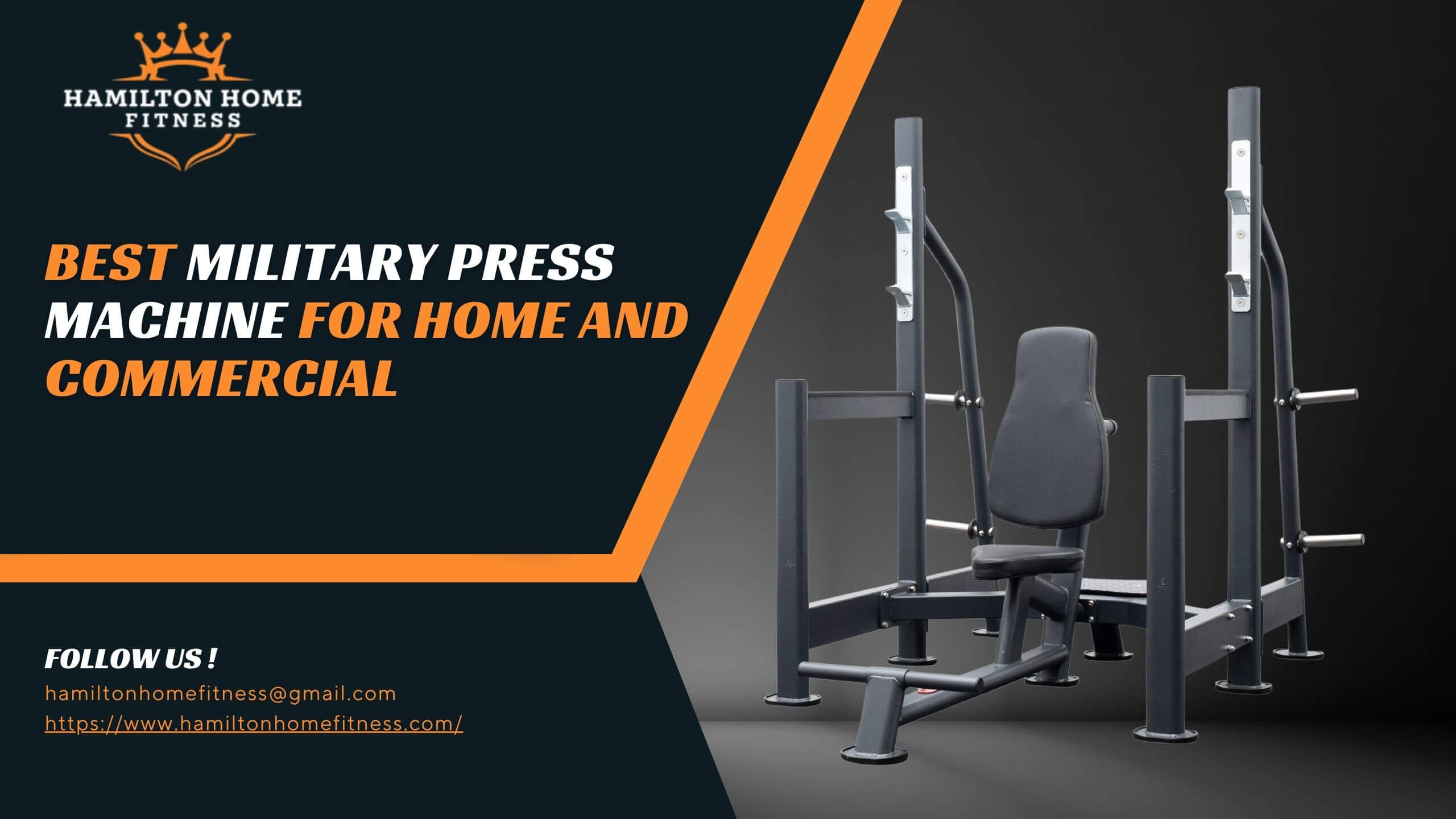
Choosing the best Military Press Machine is not just about picking the heaviest or most expensive option. It is about finding the right fit for your space, training goals, comfort needs, and budget, whether you are building a home gym, running a studio, or outfitting a commercial facility.
This guide is for home fitness enthusiasts, trainers, small gym owners, commercial buyers, sports programs, seniors, and anyone who wants a smarter way to compare shoulder press machines. Instead of giving you another generic list, it helps you evaluate machine type, footprint, adjustability, durability, and long-term value so you can make a more confident buying decision. If you are also comparing other strength equipment for your space, explore Shop Quality Fitness Gear and Equipment - Hamilton Home Fitness.
By the end, you will have a clear way to shortlist the right machine for your needs. You will know which type makes the most sense for a home gym, which features matter most in a commercial setting, and what to look for before you spend your money.
Best Military Press Machine Fits
The best Military Press Machine depends on where it will be used, who will use it, and how often it needs to perform under load. For most buyers, the right choice becomes clearer when you compare home use, commercial use, and beginner-friendly use separately instead of trying to find one machine that does everything equally well.
Best for home gyms
The best Military Press Machine for a home gym is usually one that balances a compact footprint, comfortable movement, and enough resistance to support progress without overwhelming the room. In most home setups, space efficiency, ease of use, and long-term value matter more than commercial-level throughput.
Home buyers should focus first on how the machine fits the space. A good home model should leave enough clearance for safe entry, exit, and loading if it is plate-loaded. It should also feel practical in a garage gym, spare room, basement, or dedicated home training area without making the space feel crowded.
Comfort and setup matter just as much. A home gym machine should be easy to adjust, stable during pressing, and smooth enough for repeat use by one person or a small group of family members. Seat height, back support, handle position, and starting resistance all affect how useful the machine feels day to day.
For many home users, the strongest fit usually falls into one of these paths:
- Small-space buyer: prioritize compact footprint and simple setup
- Strength-focused buyer: prioritize load capacity and stable pressing mechanics
- Family or multi-user buyer: prioritize easy adjustments and broad user fit
- Value-focused buyer: prioritize durability and lower long-term maintenance
If the machine is too large, too aggressive at the start, or too hard to adjust, it may look impressive but get used less often. The best home option is the one that fits your room and keeps training consistent.
Best for commercial gyms
The best Military Press Machine for a commercial gym is one that can hold up under heavy daily use, fit a wide range of body types, and stay easy to manage on a busy training floor. In a commercial setting, durability, user flow, serviceability, and warranty support usually matter more than having the most aggressive loading profile.
Commercial facilities need machines that work for more than one kind of member. A shoulder press machine in a studio, athletic facility, apartment gym, or full-service fitness center should support beginners, intermediate users, and stronger lifters without creating a confusing setup process. That makes seat adjustability, a natural pressing path, and visible adjustment points especially important.
Stability is another major factor. A commercial machine should feel solid under repeated use, resist wobble, and hold up well across high-traffic training hours. Upholstery durability, hardware quality, and long-term parts support also matter because a machine that is often down for repair creates both cost and frustration.
Commercial buyers should usually evaluate fit through these lenses:
- Member-friendly floor: prioritize ease of use and broad adjustability
- High-traffic facility: prioritize durability and low maintenance
- Performance center: prioritize stronger loading potential and stable mechanics
- Small studio: prioritize footprint efficiency and multi-user comfort
In commercial environments, the best machine is rarely the one with the flashiest design. It is the one that keeps serving users well over time with fewer friction points for staff and members.
Best for beginners
The best type of Military Press Machine for beginners is one that offers easy setup, predictable movement, and manageable starting resistance. Most beginners do better with a machine that feels stable and intuitive rather than one that demands perfect control from the first rep.
A beginner-friendly machine should make the movement easier to learn. Clear seat adjustment, supportive back padding, and a press path that feels natural can help new users focus on form instead of fighting the setup. This is especially important for users who are new to shoulder training, returning after time off, or building confidence with resistance equipment.
Starting resistance matters more than many buyers expect. If the first load is already too heavy, the machine becomes harder to use correctly and less welcoming for smaller, older, or less experienced users. Machines that allow gradual progression tend to be better for learning good pressing habits.
A beginner should usually look for these features first:
- Comfortable seat and back support
- Easy adjustment points
- Smooth and predictable movement
- Reasonable starting resistance
- Stable base and secure feel
Common beginner buying mistakes include choosing a machine based only on maximum load, ignoring fit adjustments, or assuming a larger commercial-style unit is automatically better. In practice, the best beginner machine is the one that makes safe, repeatable training easier from the first session onward.
Types for Home vs Commercial
The right Military Press Machine type depends on how the machine will be used, how many people will use it, and what kind of training experience the buyer wants to create. For most buyers, the main choice starts with plate-loaded versus selectorized, with pneumatic options making sense in more specific cases.
Plate-loaded vs selectorized
For shoulder press training, plate-loaded machines are often better for strength-focused users, while selectorized machines are often better for shared-use spaces that need simple and fast weight changes. The better choice depends on user experience, training goals, space, and how often the machine will be used throughout the day.
Most buyers will compare three main categories: plate-loaded, selectorized, and pneumatic shoulder press machines. If you want a deeper overview of how these categories differ, see Military Press Machine Types and Benefits. Each type creates a different ownership experience, not just a different resistance feel.
A plate-loaded machine usually appeals to buyers who want a more strength-oriented setup. It often feels more direct under load, can suit heavier pressing goals, and may appeal to experienced users who already train with plates. This type can work very well in advanced home gyms, sports performance spaces, and private training studios where users are comfortable loading and unloading weight manually.
A selectorized machine is usually a stronger fit for commercial gyms, apartment fitness rooms, hotel gyms, and multi-user settings. Quick weight selection makes training smoother for members, and it reduces friction between sets for people who do not want to handle plates. It also tends to feel more approachable for beginners and general-use environments.
Here is the simplest way to think about the tradeoff:
- Plate-loaded: better for heavier strength emphasis and a more direct loading feel
- Selectorized: better for convenience, faster transitions, and shared-use settings
- Home gym: often depends on space, budget, and who will use the machine
- Commercial facility: often depends on member flow, upkeep, and ease of use
Neither type is automatically better in every setting. The best option is the one that matches the user profile, floor setup, and day-to-day training reality.
When pneumatic makes sense
Pneumatic shoulder press machines make the most sense when smoother starting resistance, lower joint stress, or rehab-focused use matters more than heavy loading. They are usually not the default choice for general buyers, but they can be a smart fit in the right setting.
This type is often worth considering for recovery-oriented training spaces, senior-focused wellness programs, physical preparation settings with controlled progression, and buyers who want resistance that feels gentler at the start of the movement. That smoother start can be helpful for users who find standard pressing patterns too abrupt or uncomfortable.
Pneumatic options can also make sense when a facility wants simpler resistance adjustments without relying on weight stacks or loaded plates. In some cases, that creates a more approachable experience for people who are rebuilding strength, easing back into training, or working under supervision.
Pneumatic machines are usually the better fit in edge-case situations such as:
- Rehab-conscious environments
- Senior wellness programs
- Controlled training progression
- Users sensitive to harsh starting resistance
For most mainstream home gyms and commercial strength floors, plate-loaded or selectorized machines will still be more common. Pneumatic becomes the better choice when comfort, smooth resistance, and joint-friendly use take priority over maximum loading potential.
Home vs facility fit
The same shoulder press machine can work very differently in a home gym than it does in a commercial facility. A machine that feels perfect in a private space may create friction on a busy gym floor, while a strong commercial unit may be oversized or unnecessary for home use.
In a home gym, buyers usually care most about footprint, noise, ease of adjustment, and whether the machine fits one primary user or a small number of users. A good home fit should feel practical every day, not just impressive on paper. That means dimensions, clearance, and overall comfort often matter as much as the resistance style.
In a facility, the priorities shift. The machine must serve more body types, more experience levels, and more training styles with fewer interruptions. Staff also need something easy to maintain, easy to clean, and dependable under repeated use. That changes the value equation because throughput and service life matter more than personal preference alone.
A simple way to separate the two is this:
- Home gym fit: prioritize space efficiency, comfort, and personal training goals
- Studio or small gym fit: prioritize balanced durability and broad user usability
- Large commercial fit: prioritize traffic tolerance, quick adjustments, and service support
- Performance facility fit: prioritize stable mechanics and stronger loading capacity
The best machine type is not just about resistance. It is about how well the machine fits the real environment where it will live and how easy it will be to use over time.
Features That Matter Most
The most important features in a Military Press Machine are the ones that affect comfort, movement quality, user fit, and long-term usability. For most buyers, press path, adjustability, and footprint matter more than flashy design or raw load potential.
Press path and arm design
The press path matters because it changes how natural, stable, and comfortable the movement feels from the first rep to the last. A well-designed machine should guide the shoulders through a controlled path that feels strong without forcing the joints into an awkward position.
This is where arm design becomes important. Some machines use a fixed pressing path, while others use independent converging arms or iso-lateral movement. Independent arms can create a more natural pressing pattern and let each side work more evenly, which may help users who want a more balanced feel during training.
A converging or iso-lateral design can also feel more comfortable for people who do not match a one-path-fits-all setup. That does not automatically make it better for every buyer, but it can improve the training experience when shoulder comfort and movement quality are priorities.
When comparing press path and arm design, focus on:
- How natural the handles feel at the start
- Whether the motion feels smooth or forced
- Whether both arms move together or independently
- How stable the machine feels under load
The best arm design is the one that matches the user’s body mechanics, training goals, and comfort needs without creating unnecessary strain.
Seat, pad, and user fit
Seat and back support matter because even a strong machine becomes less useful if users cannot get into a stable and comfortable pressing position. Good user fit allows better form, safer repetition, and more consistent training across different body sizes and experience levels.
Seat adjustability is one of the first things buyers should check. A machine should make it easy to line the handles up with the user’s shoulder position, while the back pad angle should support pressing without forcing an awkward posture. If you want a clearer setup reference before choosing a model, review How to Use a Military Press Machine.
Back pad shape, seat height range, and handle placement all affect who can use the machine comfortably. In shared spaces, broad adjustability matters even more because the machine may need to fit beginners, experienced lifters, shorter users, taller users, seniors, and general fitness members.
A good fit setup should help answer these questions:
- Can the user sit securely without overreaching?
- Does the back pad support an upright press comfortably?
- Is the seat easy to adjust between users?
- Does the machine feel usable across a wide range of body sizes?
For many buyers, comfort and fit are what separate a machine that looks good from one that gets used regularly.
Footprint and room needed
The space you need for a shoulder press machine is more than the listed footprint on a spec sheet. Buyers should plan for the machine itself plus the clearance needed to get in and out safely, move around it comfortably, and load plates if the unit is plate-loaded.
A compact machine may work well in a home gym, but it still needs enough surrounding space to feel practical during daily use. In a commercial or studio setting, room planning also has to account for walkways, traffic flow, and how closely the machine sits near other equipment.
Plate-loaded units may need more usable room because plates must be stored, loaded, and unloaded safely. Selectorized units may simplify the area around the machine, but they still require enough operating space for user comfort and staff access.
When planning footprint and dimensions, think in terms of:
- Machine depth and width
- Safe side and rear clearance
- Front access space for seating and exit
- Extra room for plate handling or cleaning access
The best choice is not just the machine that fits on paper. It is the one that fits the room well enough to stay safe, comfortable, and easy to use over time.
Used, Warranty, and Value
A Military Press Machine is not just a training purchase. It is also an ownership decision, which means used condition, warranty coverage, and long-term value all matter before you commit to a machine for home or commercial use.
Is used worth the risk
A used Military Press Machine can be a smart buy when the frame is solid, the moving parts still work smoothly, and replacement support is realistic. It becomes a poor buy when hidden wear, missing parts, or repair costs erase the savings.
The frame should be the first checkpoint. Cosmetic scuffs are usually less important than structural condition, weld quality, base stability, and whether the machine still feels secure under pressing load. A machine that looks acceptable but shifts, squeaks excessively, or feels uneven may cost more to fix than it is worth.
Wear points matter even more on older units. Cables, pulleys, guide rods, upholstery, grips, and adjustment pins can all affect safety, comfort, and daily usability. On plate-loaded machines, buyers should also check loading horns, arm action, and starting feel. On selectorized units, weight stack travel and adjustment function deserve close attention.
Common used-equipment mistakes include:
- Buying based only on a low price
- Ignoring parts availability
- Underestimating upholstery or repair costs
- Assuming heavy-duty always means problem-free
- Skipping a full movement test before purchase
Used can be a strong value path for budget-conscious buyers, small studios, and some home gyms. It only works well when the condition is honest, the machine is still serviceable, and the expected savings remain meaningful after any repairs or transport costs.
Warranty terms to compare
A strong commercial warranty should clearly cover the frame and explain what protection applies to moving parts, upholstery, and labor. The best warranty is not always the longest one on paper, but the one that reflects real support for the way the machine will be used.
Frame coverage usually signals how much confidence a manufacturer has in the machine’s core structure. Beyond that, buyers should compare what happens with cables, pulleys, bearings, handles, seats, and cosmetic wear. These details matter because they affect what ownership will feel like after the machine has been on the floor for months or years.
Commercial buyers should also pay attention to labor and service terms. A warranty that covers a part but leaves the owner with complicated service steps or added labor expense may be less helpful than it first appears. Home users should still compare warranty details, but facilities need to look even harder at downtime risk and support responsiveness.
When comparing warranty terms, check:
- Frame coverage length
- Coverage on moving parts
- Upholstery and cosmetic exclusions
- Labor coverage
- Service process and replacement-part access
A good warranty supports the machine’s intended duty level. For a commercial shoulder press machine, buyers should expect clear coverage language that matches repeated use, not vague promises that leave too much unanswered.
Ownership cost by buyer type
Ownership cost changes depending on who is buying the machine and how the machine will be used. A good value choice for a home gym may not be the best value for a commercial facility, and the cheapest upfront price is not always the lowest long-term cost.
For budget-conscious buyers, value usually comes from balancing durability, comfort, and serviceability without overbuying. A used machine or a simpler design may make sense if the user count is low and the condition is strong. For luxury home gym buyers, value may come more from premium build quality, smoother ergonomics, and a design that fits a polished training space.
Commercial facilities need a different value lens. A machine that costs more upfront may still be the better investment if it lasts longer, fits more users, needs less maintenance, and stays available on the floor with minimal downtime. For small studios and sports programs, the right value often sits between those two extremes: strong enough for repeated use, but still mindful of space and budget.
A simple decision rule looks like this:
- Home gym buyer: prioritize fit, comfort, and realistic use frequency
- Budget buyer: prioritize condition, serviceability, and total cost over sticker price
- Luxury buyer: prioritize finish quality, user experience, and long-term satisfaction
- Commercial buyer: prioritize uptime, durability, and support structure
The best value is the machine that keeps matching your needs after the sale, not just the one that looks best in the moment. If you are ready to move from comparison into product evaluation, you can Buy Military Press Machine.
People Also Ask
What is the best Military Press Machine for a home gym?
The best Military Press Machine for a home gym is usually the one that fits your available space, feels comfortable through the full press, and gives you enough resistance to progress over time. For most home buyers, a compact machine with good seat adjustability, stable construction, and manageable starting resistance is a better choice than a larger unit built mainly for high-traffic commercial use.
A strong home-gym option should match how you actually train. If you want heavier strength work, a plate-loaded design may make more sense. If you want easier setup, simpler progression, and a more beginner-friendly experience, a selectorized machine may be the better fit.
What is the best Military Press Machine for a commercial gym?
The best Military Press Machine for a commercial gym is the one that can handle repeated daily use, fit a wide range of users, and stay easy to maintain. In most commercial settings, durability, stability, quick adjustments, and reliable warranty support matter more than having the most aggressive loading style.
A good commercial machine should feel intuitive for beginners but still useful for stronger members. Seat adjustability, a natural pressing path, durable upholstery, and low-maintenance construction all help the machine perform well on a busy gym floor.
Is plate-loaded or selectorized better for shoulder press training?
Plate-loaded is often better for strength-focused users who want a more direct loading feel, while selectorized is often better for shared-use settings that need quick and simple weight changes. The better option depends on the user, the facility, and the training goal.
For home gyms, plate-loaded can offer strong value if the user is experienced and has room for plates. For commercial gyms, selectorized often wins on convenience, member flow, and ease of use. Neither is automatically better in every case. The best choice is the one that matches the space, user level, and daily training demands.
What features matter most in a Military Press Machine?
The most important features in a Military Press Machine are a natural press path, stable construction, good seat adjustability, supportive back padding, and a starting resistance that matches the user. These features affect comfort, safety, usability, and long-term value more than cosmetic design.
Buyers should also look closely at:
- footprint and overall dimensions
- back pad angle
- handle position
- independent converging arms or iso-lateral movement
- plate storage, if plate-loaded
- maintenance needs
- commercial warranty support
The right feature set depends on who will use the machine and how often it will be used.
How much space do you need for a shoulder press machine?
You need enough space for the machine’s footprint plus safe operating clearance around it. In real use, that means planning for entry, exit, adjustment access, and plate loading if the machine is plate-loaded.
A shoulder press machine that technically fits a room can still feel cramped if there is not enough usable space around it. Home buyers should think about wall clearance and movement comfort, while commercial buyers should also account for traffic flow, cleaning access, and spacing between nearby machines.
Is a used Military Press Machine a smart buy?
A used Military Press Machine can be a smart buy if the frame is solid, the moving parts still work smoothly, and replacement parts are realistic to source. It becomes a poor value when hidden wear, repair costs, or weak support remove the savings.
Before buying used, check the frame, seat condition, grips, adjustment points, cables or pulleys if applicable, and overall movement quality. A lower price only helps if the machine remains safe, comfortable, and serviceable after delivery and setup.
What warranty should you expect on a commercial shoulder press machine?
A commercial shoulder press machine should come with clear frame coverage and specific terms for moving parts, upholstery, and labor. A strong warranty should reflect the machine’s intended duty level and give buyers a realistic sense of long-term support.
The exact coverage varies by brand and model, so buyers should compare:
- frame warranty length
- moving-parts coverage
- upholstery exclusions
- labor terms
- service process
- replacement-part availability
A longer warranty is helpful, but clear and usable support terms matter just as much.
Which type of Military Press Machine is best for beginners?
Beginners usually do best with a machine that is easy to set up, stable to use, and not too heavy at the start of the movement. In many cases, a selectorized machine is the easiest starting point because it allows simple weight changes and feels more approachable.
The best beginner machine should help the user learn good shoulder pressing mechanics without forcing awkward positioning or overly high starting resistance. Clear adjustments, supportive pads, and a smooth movement path make a bigger difference for beginners than maximum load capacity.
Final Thought
The best Military Press Machine is not the one with the most hype or the biggest frame. It is the one that fits your training goals, available space, user needs, and long-term ownership expectations. For home gyms, that often means balancing footprint, comfort, and value. For commercial facilities, it usually means prioritizing durability, user fit, easy adjustments, and dependable support.
The key takeaway is simple: machine type, press path, seat adjustability, footprint, warranty, and ownership cost should guide your shortlist more than marketing claims alone. When you compare those factors carefully, it becomes much easier to separate a machine that only looks impressive from one that will actually serve you well over time.
Your next step is to compare your top options against your real space, budget, and training use case, then choose the one that best matches how the machine will be used day after day. If you want to explore trusted equipment options from a brand focused on helping buyers make practical fitness decisions, Hamilton Home Fitness is a strong place to continue your search.