Introduction
Using a Military Press Machine should feel stable, clear, and controlled, but many people still set it up the wrong way. This guide is for home gym beginners, trainers, rehab-aware users, seniors, and fitness hobbyists who want a safer and more effective way to press.
The biggest problems usually start before the first rep. If the seat is too low or too high, the handles do not line up well, the elbows move into a poor path, and the shoulders can feel stressed instead of trained. This is true in both home and commercial gym settings, which is why many readers start by exploring Shop Quality Fitness Gear and Equipment - Hamilton Home Fitness before choosing the right setup.
By the end of this guide, you will know how to adjust the machine, set your body position, press with better form, avoid common mistakes, and tell when you should modify the movement or stop. The goal is simple: help you use the machine correctly and make each rep feel safer and more productive.
Military Press Machine Setup
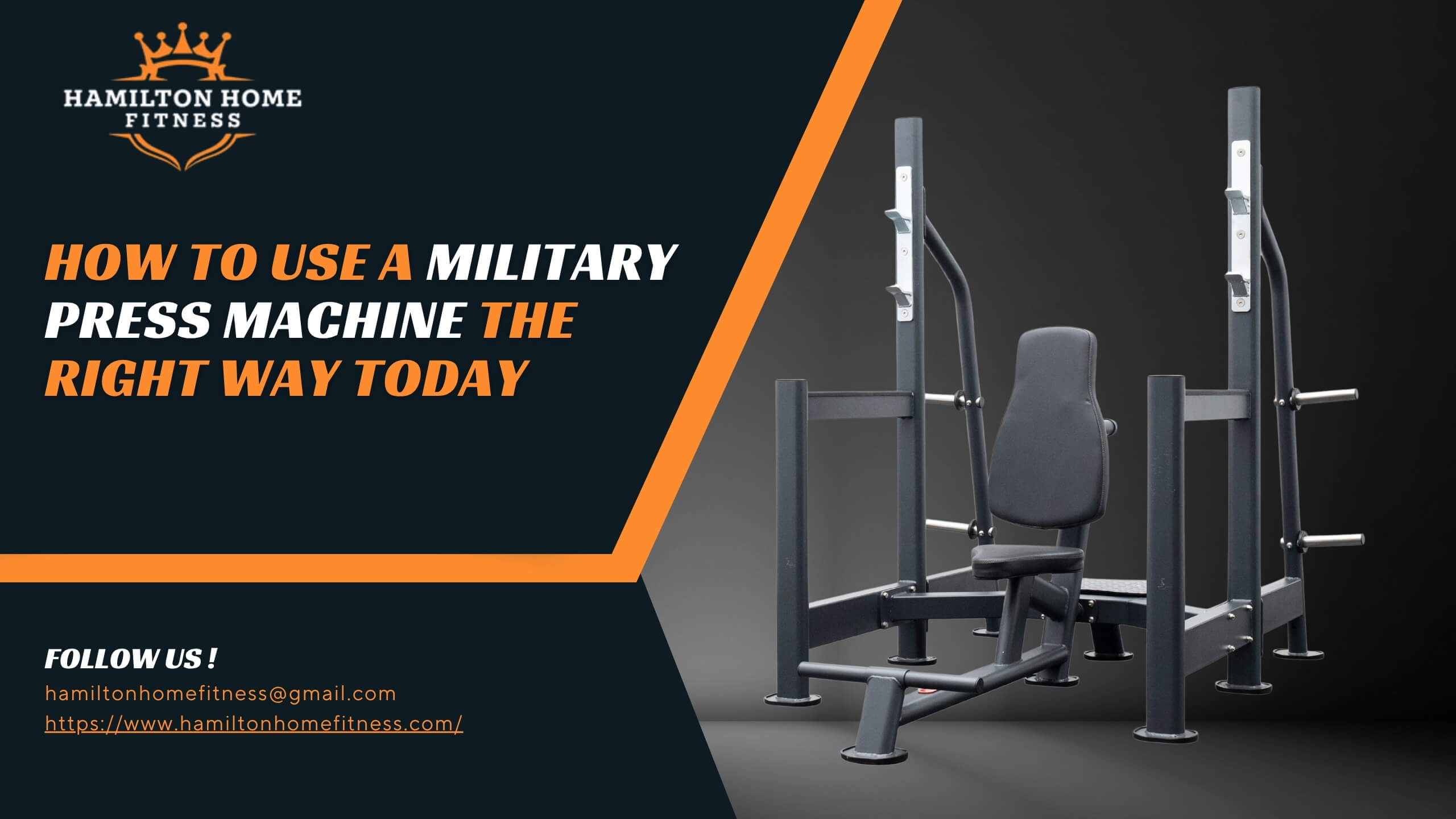
A Military Press Machine works best when the setup matches your body before you add weight. The goal is simple: set the seat so the handles start around shoulder height, lock your body into a stable position, and make the first rep feel smooth instead of cramped or awkward.
Adjust the seat height first
Seat height is the first thing to fix because it changes your starting position, elbow path, and shoulder comfort. If the seat is wrong, even a light set can feel stiff, pinchy, or unstable.
Use these quick setup checks before you press:
- Sit down with your back fully against the pad.
- Adjust the seat so the handles sit around shoulder height at the start.
- Your elbows should begin slightly below or near shoulder level, not far above it.
- You should not need to shrug up to reach the handles.
- You should not feel jammed at the bottom position.
A seat that is too low often forces the handles too high and can make the start feel awkward. A seat that is too high can push you into a cramped bottom position and reduce control.
Set handle height to shoulders
The handles should sit close to shoulder height when you begin the rep. That starting point usually gives you a cleaner pressing path and helps the shoulders move more naturally.
A good starting position usually looks like this:
- Handles begin near shoulder level.
- Wrists stay stacked over the forearms.
- Elbows stay under or slightly in front of the hands.
- Shoulders feel loaded, but not pinched.
If the handles start too high, the movement can feel short and unnatural. If they start too low, the bottom position may place too much stress on the shoulders, especially for users with shoulder mobility limits or post-injury caution.
Lock in body position
Once the seat is set, your body position should stay steady through the full set. A strong base makes the machine safer and helps the target muscles do the work.
Before your first rep, check these points:
- Keep your back against the pad.
- Place both feet flat on the floor.
- Keep your head neutral, not pushed forward.
- Brace your torso lightly without over-arching your lower back.
- Hold the handles with control before you begin pressing.
If your back comes off the pad or your feet shift during the set, the load is often too heavy or the setup is off. A solid position should make the movement feel controlled from the first rep to the last.
Form and Elbow Position
Good Military Press Machine form comes down to a controlled grip, a shoulder-friendly elbow path, and a smooth overhead press that does not force the joints into a bad position. For most users, the safest pattern is a steady press with the elbows slightly forward, the shoulders down and controlled, and the range of motion matched to comfort and mobility.
Grip and elbow path
Your grip and elbow position shape the whole rep. In most cases, your elbows should not flare straight out to the sides. A slightly forward elbow path is usually more natural and more shoulder-friendly.
Use these form cues:
- Grip the handles firmly, but do not squeeze so hard that your shoulders tense up.
- Keep your wrists stacked over your forearms.
- Let your elbows stay slightly in front of your body, not directly out wide.
- Think about pressing up and slightly back in the machine’s guided path.
- Keep both sides even from the start.
A neutral grip shoulder press machine can feel better for some users because it reduces shoulder strain and keeps the elbows in a cleaner line. If your machine offers that option, it may be a better choice when wide-elbow pressing feels uncomfortable.
Press up without shrugging
The pressing path should feel smooth and controlled, not rushed or forced. As you press overhead, your shoulders should stay stable instead of climbing up toward your ears.
Focus on these cues during each rep:
- Press the handles upward with control.
- Keep your neck relaxed.
- Do not shrug the shoulders at the top.
- Do not bounce or jerk the weight upward.
- Stop just short of a hard lockout if full locking feels harsh on your joints.
A common shoulder press machine bad form pattern is turning the rep into a shrug-heavy movement. That often happens when the weight is too heavy, the seat is poorly adjusted, or the user tries to force the top position. The rep should feel like a controlled shoulder press, not a fight to move the machine.
Use a safe range of motion
A full range of motion shoulder press machine rep should feel strong and controlled, not painful. Lower the handles only as far as you can keep good alignment and shoulder comfort, then press through a smooth path back up.
A safe range usually means:
- Lower until the handles are near shoulder level.
- Keep the forearms in a strong pressing line.
- Avoid dropping so deep that your shoulders round forward.
- Avoid cutting the rep too short just to move more weight.
- Match the range to your mobility and comfort.
If you have shoulder mobility limits, rotator cuff caution, or post-injury shoulder training needs, a slightly shorter range may be the better option. Sharp pain, pinching, or repeated discomfort are signs to reduce the range, lower the load, or stop and consult a trainer or physical therapist.
Muscles, Weight, Beginners
A Military Press Machine mainly trains the shoulders, but how well it works depends on using the right load and matching the movement to your experience level. For beginners, it can be a solid way to learn pressing mechanics, as long as the setup is correct and the weight stays manageable.
Muscles the machine trains
The main muscles worked on a Military Press Machine are the deltoids and triceps. The front part of the shoulders usually does most of the work, while the triceps help finish the press. Depending on the machine angle and your body position, the upper chest may also assist slightly.
In simple terms, this is a seated overhead press machine muscles worked pattern:
- Anterior deltoids: drive the press from the bottom.
- Side deltoids: help support shoulder movement and pressing strength.
- Triceps: extend the elbows as you press upward.
- Upper chest: may assist a little on some machine designs.
That makes the machine a useful option on shoulder day, especially for people who want a more guided pressing setup than free weights.
Is it good for beginners
Yes, a Military Press Machine can be good for beginners because the machine guides the pressing path and reduces the balance demands that come with dumbbells or a barbell. That can help new users focus on seat height, handle position, elbow path, and controlled reps instead of trying to stabilize the weight in open space.
It is still important to remember that “machine” does not mean “automatic.” Beginners still need to learn a few basic cues:
- Keep the back against the pad.
- Keep the feet flat on the floor.
- Start with the handles around shoulder height.
- Press with the elbows in a controlled path, not fully flared.
- Stop if the movement feels sharp, pinchy, or unstable.
For trainers, this machine can also work well when teaching simple shoulder press cues to first-time users, older adults, or rehab-aware lifters who need a more shoulder-friendly starting point. Readers who want a stable commercial-grade option after learning the basics can explore the Buy Military Press Machine.
Pick a sensible starting load
Start lighter than you think you need. A good starting weight is one you can move with full control, smooth tempo, and steady body position for a clean set without shoulder discomfort.
A sensible starting approach looks like this:
- Begin with a light load or the unloaded machine if needed.
- Test a few slow reps before committing to a full set.
- Make sure the shoulders, wrists, and elbows all feel lined up.
- Increase the weight only if the rep path stays smooth.
- Stop adding load when form starts to break down.
Too much weight on a shoulder press machine often leads to bad form, shortened range of motion, shrugging, or hard elbow lockout. For most beginners, better control beats heavier weight every time.
Pain, Mistakes, Safety Limits
A Military Press Machine can be a safer pressing option when the setup is correct, but it is not a license to ignore pain or force bad reps. The safest approach is to fix the common setup errors first, use a controlled range, and treat sharp or persistent shoulder pain as a signal to modify the movement or stop.
Common setup and form mistakes
Most Military Press Machine mistakes start with poor positioning before the set even begins. ACE’s machine shoulder press guidance emphasizes shoulder-level handles, feet firmly planted, a braced torso, a natural low-back position, and elbows angled more forward than straight out to the sides; once those pieces break down, the rep usually becomes less stable and less shoulder-friendly.
Watch for these common mistakes:
- seat too high or too low
- handles starting far above or below shoulder height
- elbows flared straight out
- back peeling off the pad
- shoulders shrugging up during the press
- forcing a hard lockout overhead
- using too much weight and cutting the rep short
These errors often show up together. For example, when the weight is too heavy, people tend to arch, shrug, rush the top half of the rep, or lose the elbow path that keeps the movement controlled.
What shoulder pain may mean
Mild muscle effort and next-day training soreness are not the same as joint pain during the rep. According to AAOS, shoulder problems are commonly aggravated by specific activities, and repetitive overhead motion can irritate already sensitive structures, so steady pain, weakness, pinching, or loss of motion should not be brushed off as “normal.”
If your shoulder hurts on the press machine, the cause may be simple, such as poor seat height, a bad elbow position, too much weight, or a range of motion that exceeds your shoulder mobility. It may also mean the movement is not a good fit for you right now, especially if you are training after an injury or dealing with rotator cuff caution. The safest first step is to reduce the load, shorten the range slightly, and check whether your elbows are staying a bit forward instead of flaring wide.
When to modify or stop
Modify the exercise when the rep feels awkward, unstable, or mildly uncomfortable in the shoulder. In many cases, a lighter load, a cleaner setup, and a slightly shorter range are enough to make the movement feel better. ACE notes that a more forward elbow position can reduce shoulder stress for some users, which is one reason small setup changes matter so much on this machine.
Stop the set and reassess if you feel:
- sharp pain
- pinching at the front or top of the shoulder
- sudden weakness
- loss of control during the rep
- pain that keeps returning even after reducing weight
- symptoms that do not improve after rest and activity changes
AAOS advises prompt medical attention for acute intense pain and recommends medical evaluation when pain persists rather than improving with rest and modified activity. If you are post-injury, unsure about your shoulder status, or repeatedly getting pain on overhead pressing, consult a qualified trainer or physical therapist before pushing the movement further.
People Also Ask
How do you set up a Military Press Machine correctly?
Set the machine up so the handles start at about shoulder height, your back stays against the pad, and your feet stay flat on the floor. If the first rep feels cramped, unstable, or forces you to reach, the seat is usually not in the right position.
A good setup should let you grip the handles without shrugging your shoulders up or letting your elbows flare straight out. ACE also cues a braced torso and a more forward elbow position rather than a wide, straight-out arm line.
Where should the handles sit on a Military Press Machine?
The handles should usually sit level with your shoulders or just slightly above them at the start. That position gives you a cleaner pressing path and helps you avoid starting too high or dropping too deep into a stressed bottom position.
If the handles start far above shoulder level, the rep often feels short and awkward. If they start too low, the bottom position may feel forced, especially for users with shoulder mobility limits or post-injury caution.
What muscles does a Military Press Machine work?
A Military Press Machine mainly works the deltoids and triceps. It is an overhead pressing movement, so the shoulders do most of the work while the triceps help extend the elbows through the top half of the rep.
Depending on the machine angle and your body position, the upper chest may also help a little. Still, this is primarily a shoulder press, not a chest press.
Is a Military Press Machine good for beginners?
Yes, a Military Press Machine can be a good beginner option because the machine guides the path and reduces the balance demands of dumbbells or a barbell. That can make it easier to learn seat height, body position, and controlled pressing mechanics.
It is still important to start light and focus on setup first. A guided path helps, but it does not fix a bad seat height, poor elbow position, or too much weight.
What are the most common Military Press Machine mistakes?
The most common mistakes are setting the seat wrong, starting with the handles too high or too low, flaring the elbows too wide, shrugging during the press, and loading more weight than you can control. These mistakes usually make the movement less comfortable before they make it more effective.
Another common mistake is forcing a hard lockout or cutting the range short just to move heavier weight. A better rep is smooth, stable, and repeatable from start to finish.
Should your elbows flare on a Military Press Machine?
No, for most users the elbows should not flare straight out to the sides. ACE specifically cues a slightly forward elbow position, which is often more controlled and more shoulder-friendly than a wide, fully flared position.
This does not mean forcing the elbows tightly in. It means keeping them in a natural pressing line so the shoulders can move cleanly without feeling jammed.
Is the Military Press Machine safe if you have shoulder pain?
It can be safer than free pressing for some people, but shoulder pain should never be ignored. Repetitive overhead activity can aggravate shoulder problems, and sharp, pinching, or persistent pain is a sign to reduce load, shorten range, change the setup, or stop.
If pain keeps returning, feels sharp, or comes with weakness or limited motion, do not push through it. Mayo Clinic and AAOS both note that painful overhead activity should be limited and that persistent symptoms deserve medical evaluation.
How much weight should you start with on a Military Press Machine?
Start with a light weight that lets you keep smooth reps, a steady body position, and full control from the first rep to the last. If the weight pulls your back off the pad, makes you shrug, or changes your elbow path, it is too heavy.
A simple rule is to begin conservatively, test a few clean reps, and add weight only when the setup and motion still feel stable. On this machine, good form is a better starting target than a heavy stack.
Final Thought
Using a Military Press Machine the right way is less about lifting the most weight and more about getting the setup, elbow path, and range of motion right from the start. When the seat is adjusted well, the handles line up near shoulder height, and your body stays stable against the pad, the movement becomes safer, smoother, and more productive.
The biggest takeaway is simple: good setup comes before heavy pressing. If a rep feels pinchy, awkward, or unstable, adjust the machine, reduce the load, or stop instead of forcing it. On your next shoulder workout, use the setup checklist from this guide before your first set. And if you are building a better training space at home or upgrading a facility, Hamilton Home Fitness can help you choose equipment that supports safer, more confident strength training.