Introduction
You can squat and leg-press with confidence yet still feel your hamstrings lag when sprinting, hinging, or controlling the knee. That often happens when quad-focused training is not matched with enough direct knee-flexion work.
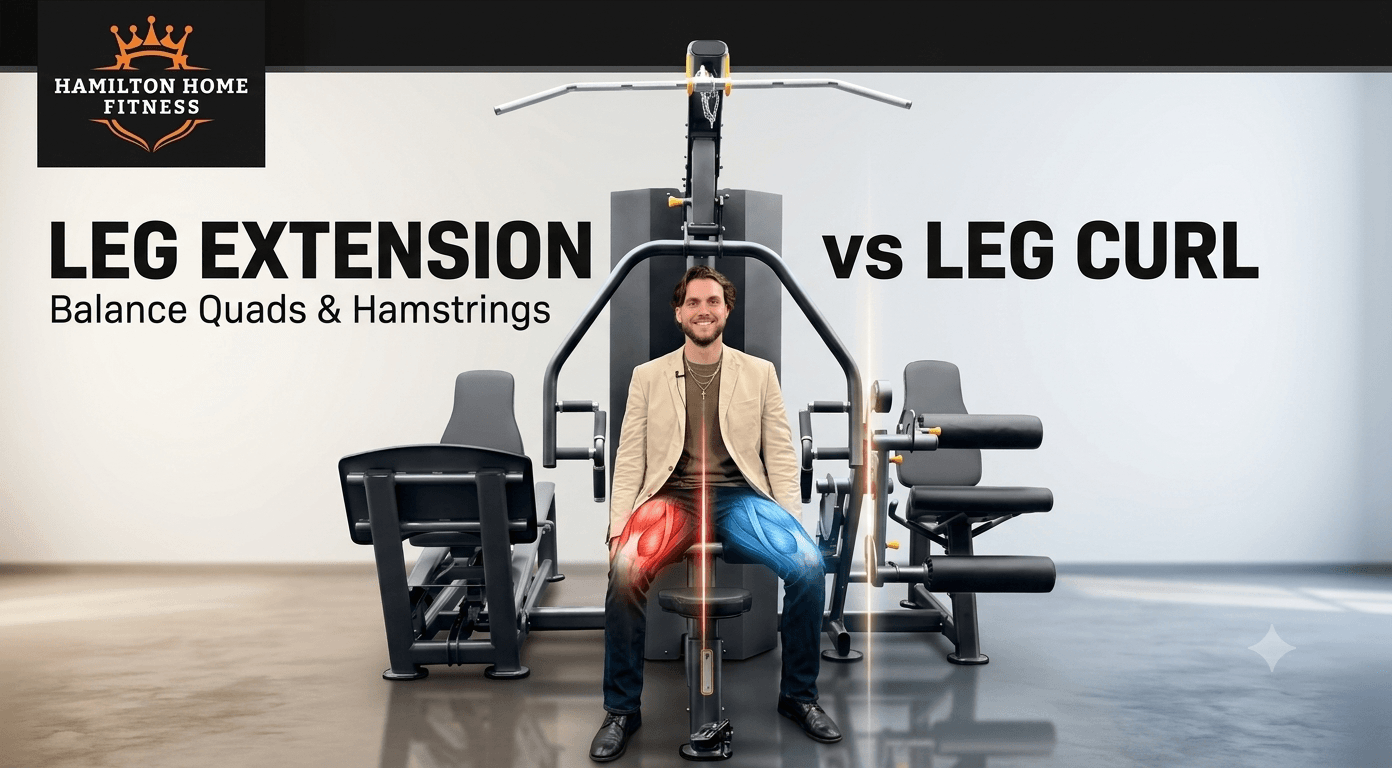
The leg extension vs. leg curl comparison is not about choosing the “better” exercise. Leg extensions isolate the quadriceps through knee extension, while leg curls train the hamstrings through knee flexion.
This guide explains what each movement adds, where compound exercises leave gaps, how to program both, and whether a dedicated or combo machine makes sense for your remaining home-gym space.
Leg Extension vs. Leg Curl at a Glance
Leg extensions isolate knee extension, primarily training the quadriceps at the front of the thigh. Leg curls isolate knee flexion, targeting the hamstrings at the back. One does not replace the other. Whether you need both depends on what your current squats, presses, hinges, and athletic training already cover.
Comparison Point | Leg Extension | Leg Curl |
Main joint action | Straightening the knee | Bending the knee |
Primary muscles | Quadriceps | Hamstrings |
Main purpose | Direct knee-extensor work | Direct knee-flexor work |
Common compound support | Squat, leg press, split squat | Romanian deadlift, good morning, hip hinge |
Best priority case | More quad volume or isolated control | Undertrained hamstrings or weak knee flexion |
Machine options | Dedicated extension or combo unit | Dedicated curl or combo unit |
For balanced leg development, most lifters benefit from training both actions. However, a dedicated machine is unnecessary when the existing setup already provides enough targeted resistance for that movement.
What Squats and Hinges Still Miss
Squats and leg presses train the quadriceps through multi-joint movement, while Romanian deadlifts and good mornings challenge the hamstrings mainly through hip extension. Leg extensions add focused knee-extension work. Leg curls add resisted knee flexion, which a hip hinge does not reproduce in the same way.
What Extensions Add
A squat trains your quads, but a leg extension lets you load knee extension without balance demands, substantial hip contribution, or the systemic fatigue of another heavy compound set.
This makes extensions useful for adding targeted quadriceps volume after squats, front squats, hack squats, split squats, or leg presses. They should complement compound training rather than replace it. Lifters still building the foundation of their lower-body setup should prioritize squat machines for compound leg training before relying on isolation work alone.
What Curls Add
A Romanian deadlift lengthens and loads the hamstrings through the hip. A leg curl challenges them by bending the knee against resistance.
Because the hamstrings contribute to both hip extension and knee flexion, hinges and curls train different functions of the same muscle group. A program built around squats and RDLs may still lack direct knee-flexion work. Adding seated, prone, or standing curls fills that gap without requiring another demanding compound lift.
Why Quad-Hamstring Balance Matters
The quadriceps and hamstrings perform different jobs around the knee, so both need adequate strength. However, no single curl-to-extension number proves that your legs are balanced or predicts injury by itself. Training history, sport demands, movement quality, and side-to-side differences also matter.
No Magic Ratio
There is no universal machine-weight ratio that every healthy lifter should reach.
A leg extension and leg curl may use different lever lengths, resistance curves, pad positions, and weight increments. That means curling 60% of your extension weight does not automatically represent a clinical quad-to-hamstring ratio.
Strength professionals assess this relationship using controlled testing methods that account for joint angle, movement speed, and contraction type. For home training, focus instead on consistent progress, controlled repetitions, and whether one leg or movement pattern repeatedly falls behind.
Injury Claims Need Context
Leg curls can build knee-flexion strength, but they do not guarantee that a runner or field-sport athlete will avoid a hamstring strain.
Hamstring health also depends on sprint exposure, eccentric strength, fatigue management, hip strength, training progression, and previous injury history. Machine curls can support a broader program, but they should not replace sport-specific preparation or professional rehabilitation.
Persistent knee pain, swelling, instability, or recurring strains require qualified assessment rather than another accessory exercise. For more detail, review this leg- and knee-safety guide.
Which Curl Variation Fits Best?
Seated, lying, and standing leg curls all train knee flexion, but each positions the hips and body differently. The best option depends on machine fit, comfort, available range of motion, and whether you want bilateral or single-leg training.
Seated vs. Lying Curl
A seated curl places the hamstrings in a more lengthened starting position because the hips remain flexed. A lying, or prone, leg curl keeps the hips closer to neutral and provides a stable face-down setup.
Seated curls may suit lifters who prefer lengthened-position training, while prone curls can feel more natural for users who want firm torso support. Neither variation is automatically better if the roller pad, thigh restraint, or range of motion does not fit the user correctly.
Standing and Unilateral Work
Standing curls make it easier to train one leg at a time and notice whether one side fatigues earlier.
This can help athletes and home lifters monitor side-to-side performance, but it should not be treated as a medical diagnosis or guaranteed imbalance correction.
How to Program Both Movements
Most lifters should perform leg extensions and leg curls after their primary squat, press, or hinge work. Place the weaker or more important movement first, use controlled repetitions, and increase resistance only when you can complete the full range without pain or momentum.
Weekly Leg-Day Placement
For a general leg day, complete the highest-skill compound lift first, then use extensions and curls to add targeted volume.
A simple order could be
- Squat or leg press
- Romanian deadlift or another hip hinge
- Leg extension
- Leg curl
Start with two to four controlled sets of each isolation movement. A field-sport athlete with undertrained knee flexion may perform curls before extensions, while a lifter prioritizing quadriceps growth may reverse that order.
Progression Rules
Add resistance only after you can complete the target repetitions with stable hips, aligned knees, and a controlled lowering phase.
Progress by adding a small amount of weight, completing more repetitions within the same range, or improving control through the full movement. Avoid swinging the load, forcing painful end ranges, or comparing extension and curl machine numbers as though both machines provide identical resistance.
How to Choose a Home Leg Machine
Buy a dedicated leg extension when quadriceps isolation is the only clear gap. Choose a dedicated leg curl when your program lacks direct knee-flexion work. A combo machine makes more sense when you need both movements but have space for only one station.
Fit Before Features
A machine is not a good value if its pivot, seat, or roller cannot be adjusted to fit your body.
Check that your knee lines up with the machine’s pivot point and that the ankle pad sits comfortably above the ankle joint. The seat back, roller position, and range of motion should allow controlled repetitions without forcing the hips or knees into an uncomfortable position.
Measure the working footprint, not only the listed frame dimensions. Include space for leg movement, plate loading, machine adjustments, user access, assembly, and freight delivery. After confirming those requirements, compare available leg extension and curl machines.
Dedicated or Combo?
A dedicated station usually provides a more specialized setup. A combo machine trades some convenience for better space and purchasing efficiency.
Choose a plate-loaded model when you already own Olympic plates and do not mind changing resistance manually. A selectorized weight-stack machine allows faster adjustments but may require more floor space and a larger budget.
Buy neither when your current cable attachments or compact equipment already train knee extension and flexion effectively. The right machine should fill a genuine programming gap rather than duplicate equipment you already use.
When a Combo Machine Pays Off
A combo machine is worth considering when your program genuinely lacks both knee extension and knee flexion, but your home gym has room for only one additional station. The machine should also provide suitable adjustability, enough resistance for progression, and adequate operating clearance.
Body-Solid GLCE365B
The Body-Solid GLCE365B Leg Extension Curl Machine is designed for buyers who want plate-loaded leg extensions and traditional leg curls from one adjustable station.
Its adjustable back pad and foam rollers help accommodate different exercise positions, while the wide base and support handles provide stability during use. It may suit a home gym that already has Olympic plates and needs both isolation movements without adding two separate machines.
Before buying, check the working footprint, plate-loading clearance, exercise changeover, assembly requirements, and whether the pivot and roller positions fit your body.
When MTI4005 Fits Better
The BodyKore MTI4005 3-Station Multi-Gym may fit better when you also need a seated leg press and upper-body stations.
It is a larger selectorized multi-station system for premium home gyms, studios, sports programs, or commercial facilities—not a compact substitute for a dedicated combo machine.
FAQ
Are Extensions and Curls a Complete Leg Workout?
No. They isolate knee extension and knee flexion but do not replace compound movements such as squats, leg presses, hinges, lunges, or step-ups. A complete leg program should train multiple movement patterns.
Is Plate-Loaded or Selectorized Better?
Plate-loaded machines may suit buyers who already own Olympic plates and want a simpler setup. Selectorized machines make resistance changes faster but usually cost more and require a heavier, more complex frame.
How Much Room Does a Combo Machine Need?
Measure the working footprint, not only the listed dimensions. Allow space for full leg movement, plate loading, adjustments, user access, assembly, and freight delivery.
Final Thought
Leg extensions train the quadriceps through knee extension, while leg curls strengthen the hamstrings through knee flexion. Balanced leg training may need both alongside squats and hinges. Choose the machine that fills your actual training gap, fits your body, and works within your available space. Before ordering, request a footprint and capacity check.