Authorized:











Battle Ropes


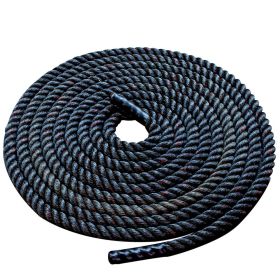
Battle Ropes for Sale for Home & Commercial Gyms
Battle ropes for sale at Hamilton Home Fitness cover 1.5-inch and 2-inch diameters in 20, 30, 40, and 50-foot lengths, from brands like TAG Fitness, York, and Body-Solid. Use them for full-body conditioning, HIIT, and grip strength at home or in a commercial gym. Every rope ships nationwide across the US from an authorized dealer.
Shopping for a rope means matching three things to your training: length, thickness, and the space you have to swing it. The guide below walks through each one, then shows the exact ropes we carry and what they cost. Ready to buy now? Browse the full battle rope range at Hamilton Home Fitness and add your size to the cart.
What battle ropes are used for
Battle ropes build conditioning, grip, and upper-body strength while raising your heart rate fast. You anchor the rope at its midpoint, grab both ends, and drive waves, slams, and pulls that work your shoulders, arms, forearms, back, and core at once. Add squats, lunges, or steps, and the same rope becomes a full-body cardio tool.
Are battle ropes a good workout? Yes, and they suit almost every level. The rope pushes back as hard as you push it, so a beginner and an advanced athlete can use the same tool at very different intensities. Short, hard intervals raise your heart rate and burn calories, while steadier sets build muscular endurance in the arms and grip.
Ropes fit a wide range of buyers. Home users like them because they store in a corner and need no power. HIIT studios, CrossFit-style gyms, hotels, and sports programs use them because they hold up to constant, multi-user training and add variety without taking much floor space.
How to choose a battle rope
Start with the length that fits your floor, then pick the thickness that fits your grip. Get those two right, and the rest is preference.
How much space do you need for battle ropes? More than the number on the label. The rope loops back to you, so the working length is about half the total. A 30-foot rope gives you roughly 15 feet of working length, and you want about five feet of buffer, so leave close to 20 feet of clear space from the anchor. Use this as a quick guide:
| Length | Clear space to leave | Wave & effort | Best suited for |
|---|---|---|---|
| 20 ft | ~15 ft | Light, fast waves, easy to start | Small rooms, apartments, beginners |
| 30 ft | ~20 ft | Balanced weight and wave | Home and garage gyms |
| 40 ft | ~25 ft | Heavier, bigger waves | Cross-training and light commercial |
| 50 ft | ~30 ft | Heaviest, hardest to start | Commercial gyms and group training |
Is a 1.5- or 2-inch battle rope better? Neither is better outright; they suit different hands and goals. A 1.5-inch rope is easier to grip and control, which makes it the right call for most users, smaller hands, and longer sets. A 2-inch rope is heavier and taxes your grip and forearms far more, so strong-handed lifters and those doing short, explosive work benefit most from it.
Material matters too. Most training ropes use poly Dacron, which resists fraying and holds up indoors with a strong poly-Dacron strand. A protective nylon sleeve adds durability on rough or outdoor surfaces at a little extra weight. You also need a solid anchor point, since the rope alone does nothing without a wall mount, strap, rack, or heavy fixed post to loop around.
Run through this checklist before you buy:
✅ Length matched to your floor space
✅ 1.5″ grip for most users and beginners
✅ 2″ grip for a forearm challenge
✅ Poly Dacron for low-fray durability
✅ Nylon sleeve for outdoorsurfaces atloors
✅ Weight that fits and those doing training goal
✅ A solid anchor point or wall mount
✅ Comfortable, secure rubber handles
✅ Home-grade or commercial-grade build
✅ Authorized-dealer brand and warranty
✅ Nationwide US shipping to your door
✅ Room to store the rope when finished
Our battle rope range and prices
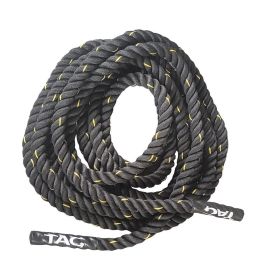
We carry battle ropes across the sizes and price points most buyers need, all from named brands rather than unbranded imports. The TAG Fitness battle rope line comes in both 1.5-inch and 2-inch diameters and in 20, 30, 40, and 50-foot lengths, so you can dial the weight and wave to your exact space and level.
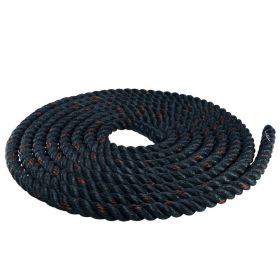
How much do battle ropes cost? Prices here start at $50 for the York battle rope, a straightforward entry option. The TAG Fitness range runs from $100 up to $320 as length and thickness increase, and the Body-Solid fitness ropes sit around $69.50 for a 1.5-inch, 30-foot rope. That spread covers a first home setup through to commercial 50-foot ropes for busy floors.
Buying from an authorized dealer means you get the real brand, the stated warranty, and support after the sale. Orders ship nationwide across the US, with free shipping on select brands including Body-Solid. Warranty terms vary by brand and model, and each product page lists the specifics.
Compare sizes and add your rope to the cart, or ask our team to help match a rope to your space and goals.
Pair your ropes with the right gear
Battle ropes work best as part of a conditioning setup, not on their own. They pair naturally with the rest of your functional training, which is why many buyers add them alongside other cross-training tools in the same order.
For explosive lower-body work between rope intervals, plyo boxes add jumps and step-ups to the circuit. For heavy pushing and pulling that complements the rope's upper-body focus, workout sleds round out a full conditioning zone. Together they give a home gym or studio a complete HIIT station without machines.
Outfitting a full gym or studio? For a larger order, our team can map equipment to your space and budget when you book a gym design, and you can request a quote for facility pricing.
Battle rope FAQs
What length battle rope should I buy?
A 30-foot rope suits most home and garage gyms and lets you leave about 20 feet of clear space. Go shorter at 20 feet for tight rooms and beginners, or longer at 40 to 50 feet for bigger waves and commercial floors. Because the rope loops, your working length is roughly half the total.
What size battle rope is best for beginners?
A 1.5-inch rope in a 20 or 30-foot length is the easiest starting point. It is lighter, simpler to grip, and easy to control while you learn waves and slams. Step up to a 2-inch or 50-foot rope as your grip and conditioning improve.
What do you anchor a battle rope to?
Anchor it to a wall or floor mount, a rope anchor strap, a power rack, or a heavy, immovable post. Loop the rope around the anchor at its midpoint so both ends are even. A stable anchor keeps tension consistent and protects the rope over time.
Do battle ropes come with an anchor?
Not always. Many ropes are sold on their own, so you supply the anchor point or add a strap. Check the individual product page to confirm what is included before you order.
Can battle ropes be used outside?
Yes, though rough concrete wears a bare rope faster. A rope with a protective nylon sleeve holds up better on abrasive outdoor surfaces. Anchoring to a fixed post or a ground anchor works well for outdoor sessions.
Does Hamilton Home Fitness ship battle ropes nationwide?
Yes. Orders ship across the United States, with free shipping on select brands including Body-Solid. For a large gym or facility order, you can request a quote.
What warranty comes with battle ropes?
Warranty terms vary by brand and model, and each product page lists the specifics. Hamilton Home Fitness sells as an authorized dealer for the brands it carries.
Shop battle ropes for sale today and build conditioning that carries into every workout. Order online with nationwide US shipping and free shipping on select brands including Body-Solid, all from an authorized fitness dealer.
Secure Payments