Introduction
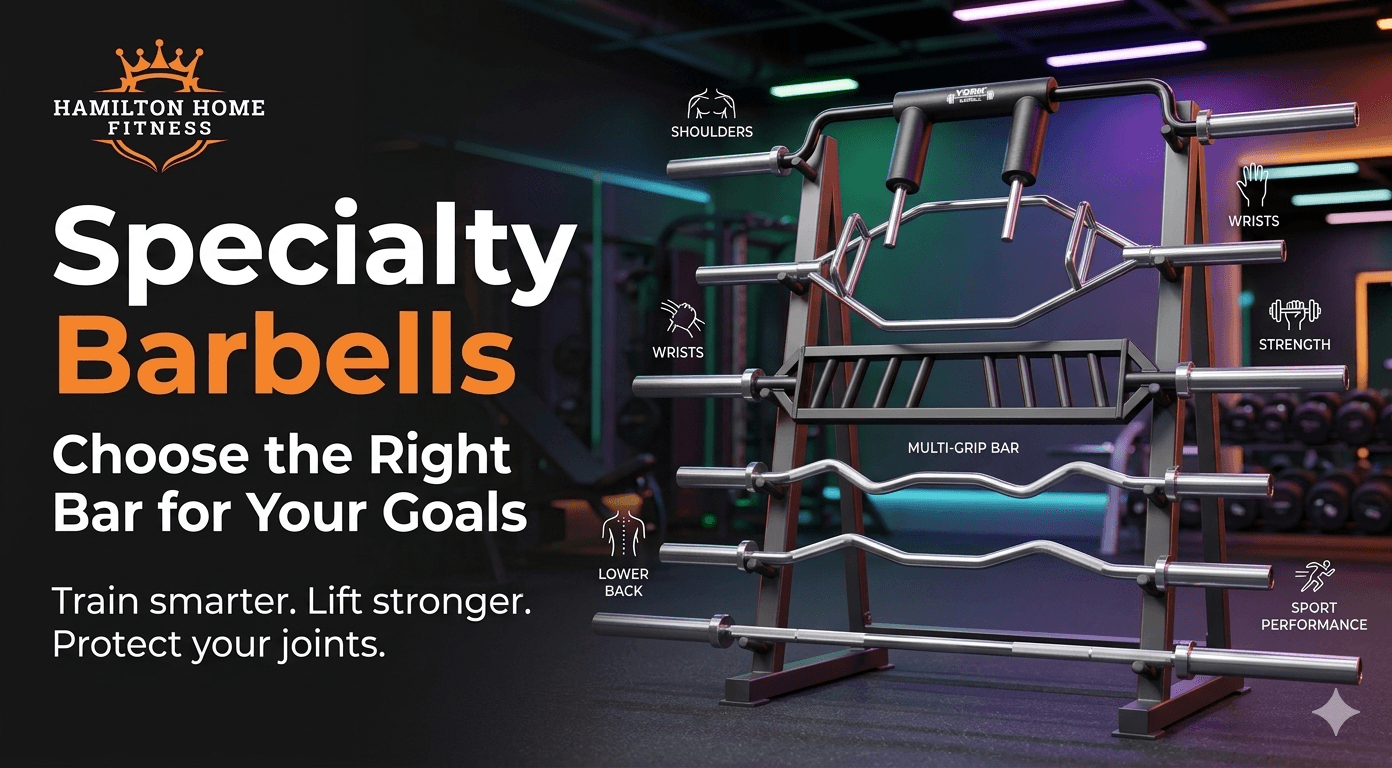
You already own a solid Olympic bar, and now you're weighing safety squat bars, trap bars, multi-grip bars, EZ curl bars, and cambered bars—unsure which one actually earns a place in your gym. Most lifters need only one or two, and the right pick comes down to your joints, your sport, and the space you have to store it.
Choose wrong and you've spent a few hundred dollars on a bar that gathers dust; choose right and you train around a cranky shoulder or a stalled deadlift instead of pushing through it. This specialty barbells guide covers what each bar does, who it suits, and how to decide—and points to specific bars only where that helps your choice.
What specialty bars do, and who needs one
Specialty bars change the load path, grip, or position of a standard lift so you can spare a joint, attack a weak point, or unlock a movement a straight bar can't. The decision to buy one is simpler than the catalog makes it look: add a specialty bar when a normal lift hurts, stalls, or doesn't fit your body—not because it's popular.
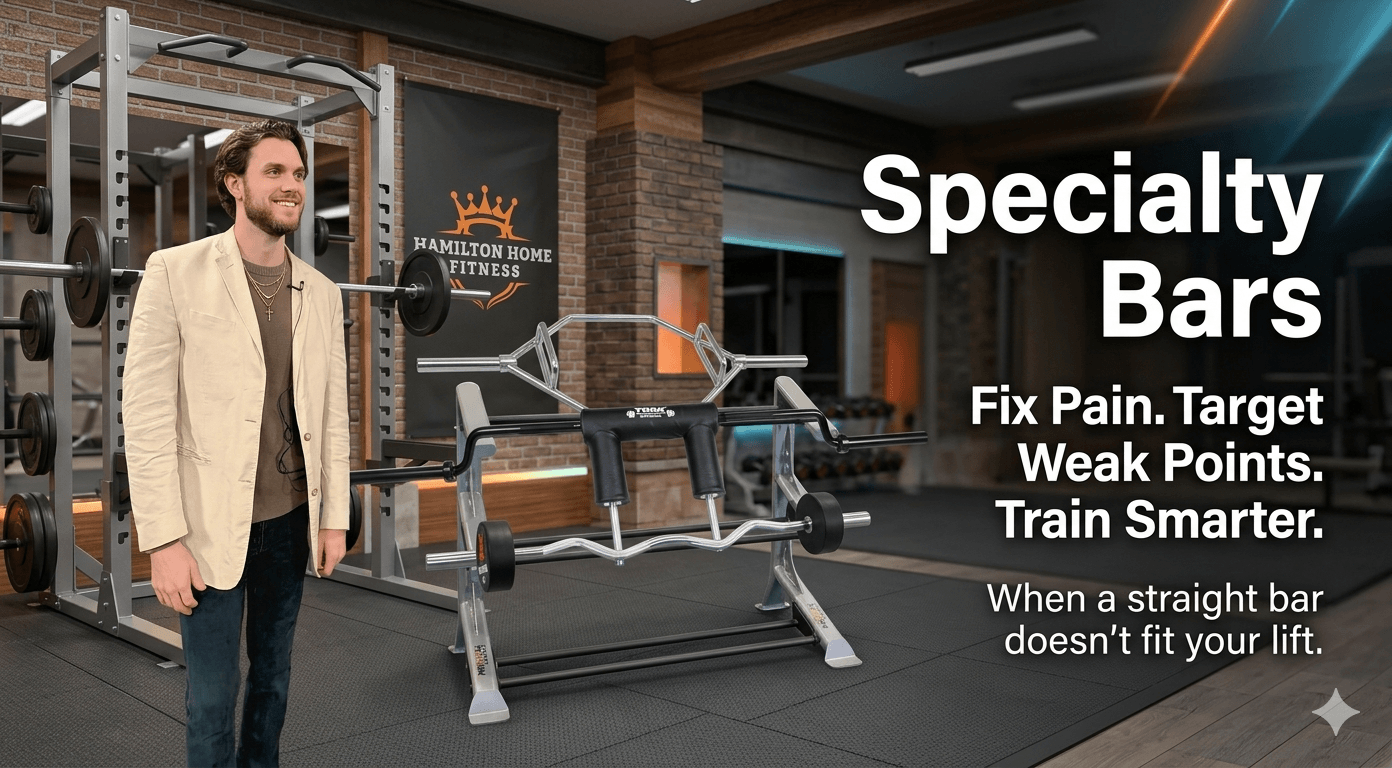
When one Olympic bar is enough
If you're healthy, training general strength, and short on space, one good Olympic barbell will take you a long way before a specialty bar earns its spot. A straight bar still handles squats, deadlifts, presses, and rows, and progressive overload on those basics drives most of your results.
The case for a specialty bar gets real when something specific breaks down: your shoulders hate the squat rack position, your low back complains on conventional pulls, your elbows flare on straight-bar curls, or your sport rewards a movement the barbell does awkwardly. That's the signal to spend—a clear problem the bar solves, not a gap in your collection.
If you're still building a base, it's worth confirming your foundation first; standard Olympic barbells cover the core lifts before any specialty bar needs to enter the picture.
Safety squat bar and cambered bar
Both the safety squat bar and the cambered bar shift the load off your shoulders and force a more upright torso, which is why lifters with cranky shoulders, wrists, or elbows often squat—and, with a cambered bar, bench—more comfortably than they can with a straight bar.
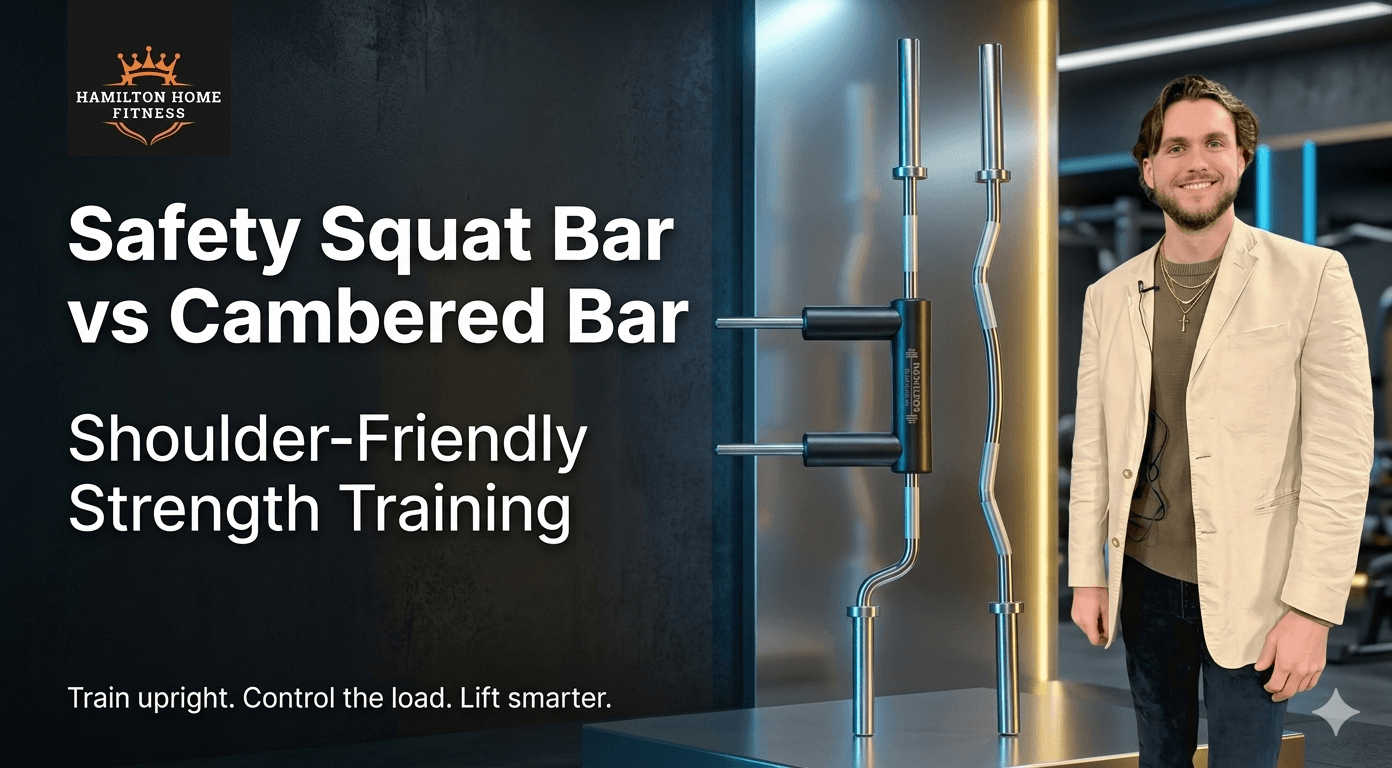
Safety squat bar: when and why
Reach for a safety squat bar when straight-bar squats bother your shoulders or wrists, when you want a more upright squat, or when you're training around a shoulder problem. Its padded yoke rests on your traps while two forward handles let you hold the bar without wrenching your shoulders back, so the position that aggravates a lot of lifters simply disappears.
The cambered ends sit the load a little higher and forward, which pulls you upright and makes your upper back and midline work harder to stay there. That suits low-bar squatters whose shoulders can't comfortably get under the bar, masters lifters managing wear and tear, and anyone with shoulder impingement. It also handles good mornings well. Expect it to weigh more than a 45 lb bar and to feel harder at the same load—that extra control demand is the point, not a sign you've gotten weaker.
One honest limit: squatting around discomfort isn't the same as fixing it. If a joint hurts rather than just feels tight, get it checked by a professional before you load it.
If this matches your situation, the York Safety Squat Bar is an in-stock option to start with.
Cambered, buffalo, and duffalo bars
A cambered bar's curved shaft drops the load below the sleeves, so the weight wants to swing, and you have to actively control it—and it sits closer to your center of mass. That makes it useful for building stability in the squat and for benching when your shoulders dislike a straight bar's fixed position.
Buffalo and Duffalo bars use a gentler arch; they're mainly shoulder-friendly squat and bench bars that ease the strain of getting into position. Deeper cambered squat bars, along with yoke and good-morning variants, show up most in conjugate-style training—Westside Barbell's max-effort and dynamic-effort work—where the swing and added range of motion pair naturally with accommodating resistance like bands and chains.
These are more advanced tools. Load light at first to learn how the bar moves before you chase weight on it.
Trap and hex bar for safer deadlifts
The trap bar—also called a hex bar—centers the load through your body instead of out in front of it, so most lifters pull more weight with less strain on the lower back than a conventional deadlift while shifting a little more of the work onto the quads.
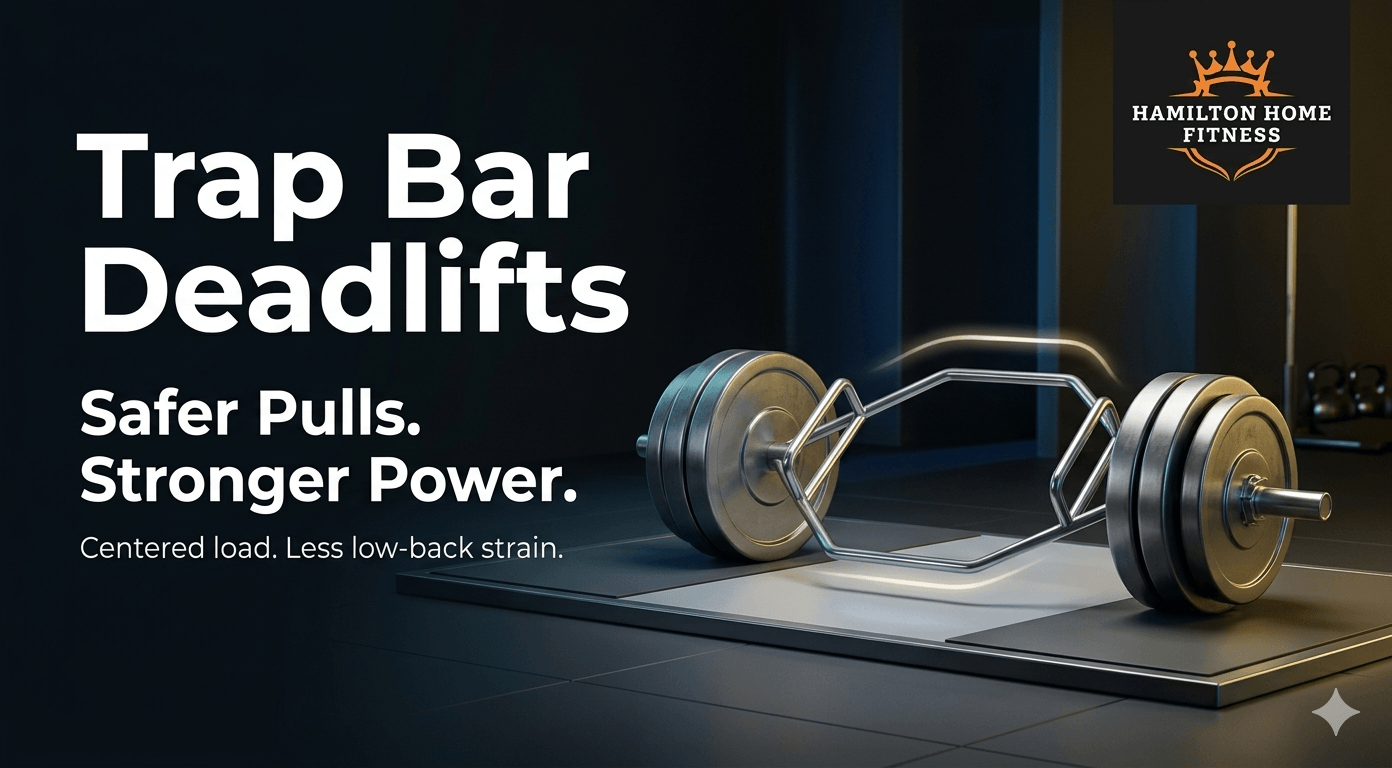
That makes it one of the most effective deadlift variations for general strength and for athletes, and it's easier to learn. Whether it's "as effective" as a conventional pull depends on your goal: the centered load reduces the hip hinge and posterior chain demand, so for maximal hamstring and glute development, or for competition deadlift specificity, the straight bar is more specific. For total-body strength, power, and carryover at a lower technical and low-back cost, the trap bar more than holds its own. Biomechanics research and strength coaches generally find it lowers the shear and bending load on the lumbar spine compared with pulling a barbell off the floor.
"Trap bar" and "hex bar" are the same tool. Hex describes the hexagonal frame you stand inside; trap points to the trap-muscle emphasis. An open trap bar drops one end so you can step out of it for walking lunges, loaded carries, and presses.
Most trap bars give you two handle heights, and the choice matters. High handles raise your starting position and shorten the range of motion, which is easier on the hips and friendlier for taller or less mobile lifters. Low handles ask for a full range and pull in more hamstring and hip work. Flip the bar to match the lift and your mobility.
That handle choice is also why the trap bar suits tall lifters with long femurs. A conventional pull forces them into a steep forward lean, but the neutral grip and centered load let them keep a more upright torso, and the high handles take the edge off a long pull.
For football, hockey, and rugby athletes, the neutral grip and lower back risk make it a staple—you can train heavy triple-extension power and even jumps or carries, including in-season when a maximal barbell pull is a harder sell.
If a trap or hex bar fits your deadlift, the Tag Fitness Hex Combo Bar is an in-stock option to consider.
Multi-grip and EZ curl bars
Neutral and angled grips are the common thread here: a multi-grip bar and an EZ curl bar both let you press, row, and curl with your hands in a more natural position, which takes a lot of the strain off your shoulders, elbows, and wrists.
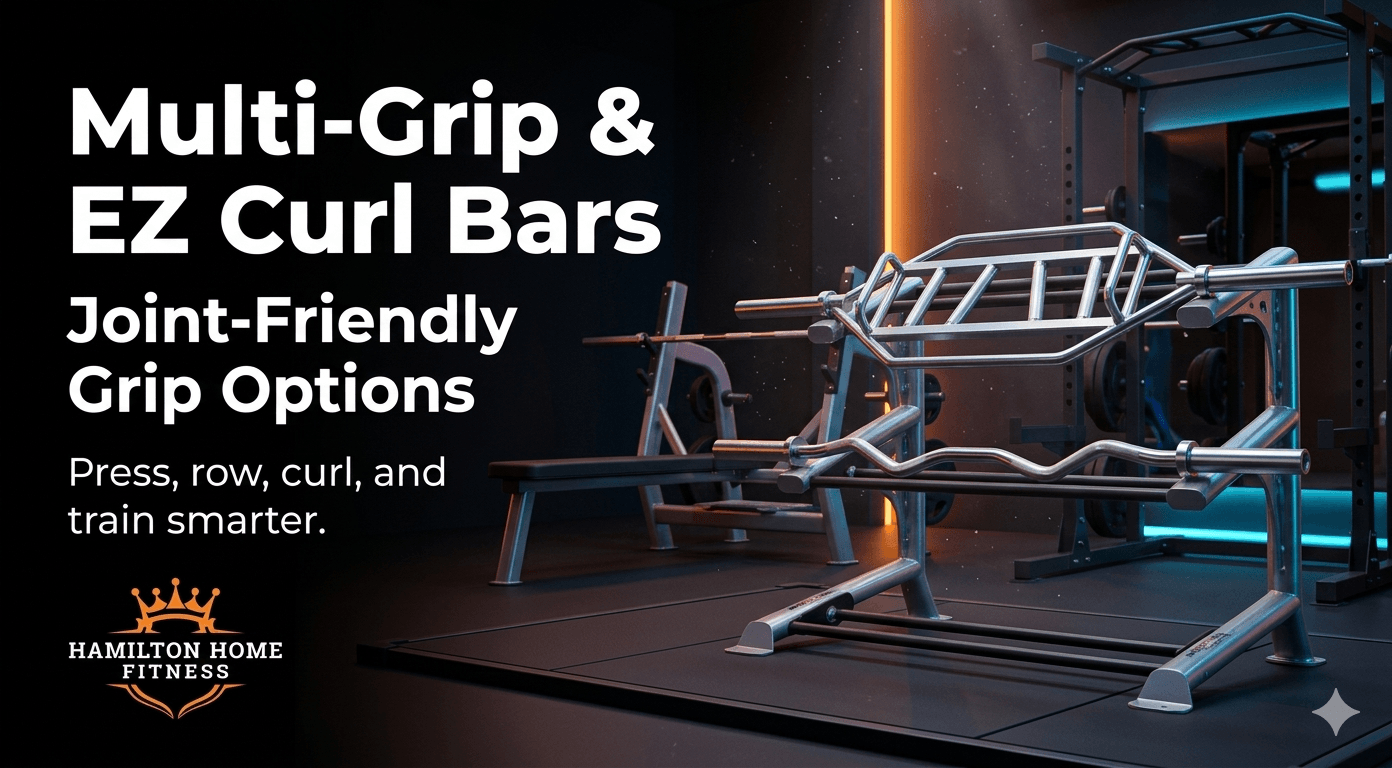
Multi-grip (Swiss) and football bars
A multi-grip or Swiss bar gives you neutral and angled hand positions, which is why lifters with shoulder impingement, elbow pain, or biceps-tendon irritation often press and row with it pain-free when a straight bar hurts. Turning your palms to face each other opens up the shoulder joint and stops the forearm rotation that aggravates a cranky elbow or biceps tendon.
It earns its keep on pressing: neutral-grip bench, floor press, close-grip work, and overhead press all sit more comfortably, and seal rows and standard rows feel more stable. A football bar is essentially the same idea—a set of neutral and angled grips built for pressing. If a barbell bench is the lift your shoulder dreads, this is usually the bar that lets you keep training it.
EZ curl bar: spare the wrists
The EZ curl bar's angled grip lets you curl and do triceps extensions with your wrists in a more natural, less strained position than a straight bar. That small change is why people who get wrist or elbow pain from straight-bar curls can keep training arms without it.
It covers the obvious work—barbell-style curls, skull crushers, reverse curls, and upright rows—in one compact, low-cost bar. Add a thick or fat grip, and the same movements double as forearm and grip training. If you want to dial in your loads, it helps to know how much a curl bar weighs before you start adding plates.
Match the bar to your goals and joints
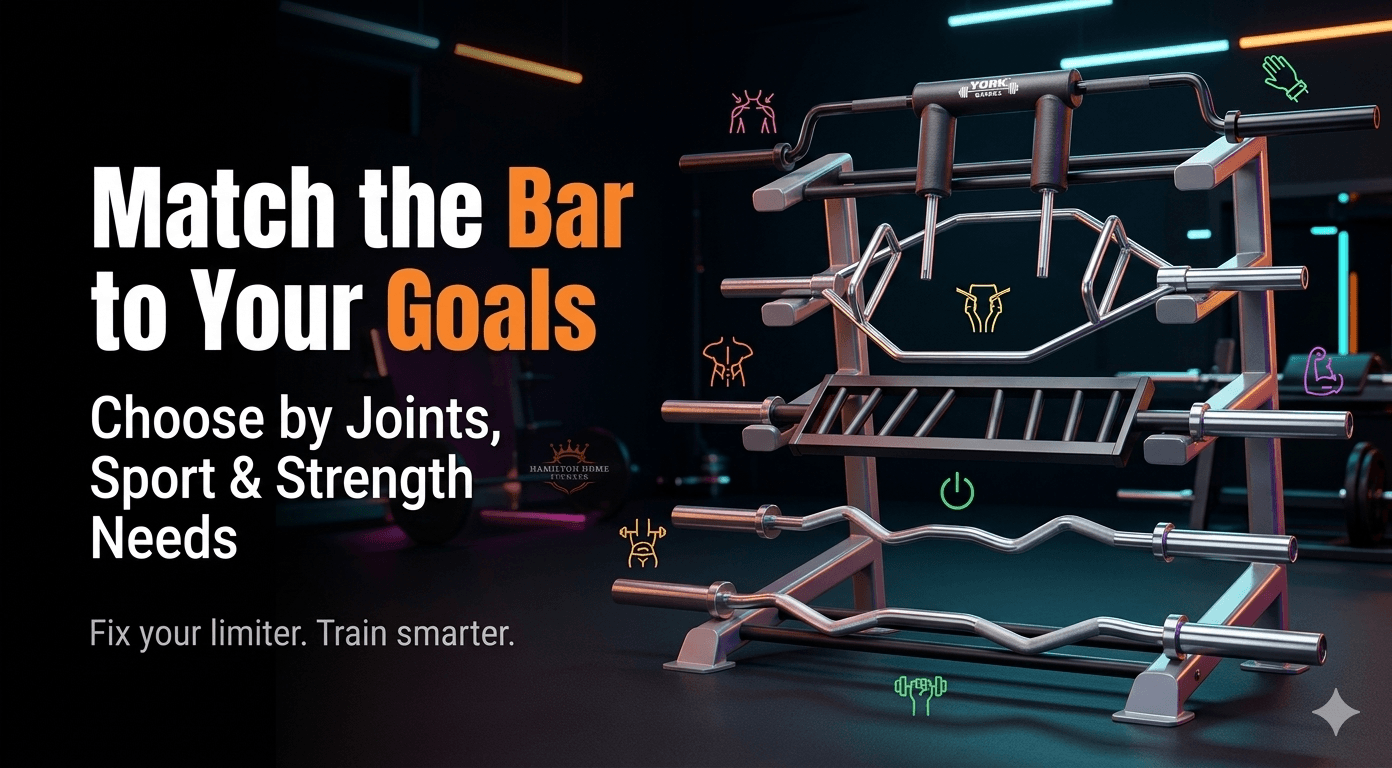
Pick the bar that fixes your limiting factor first: your joints, your sport, your body proportions, or whether you're chasing size or maximal strength. Run your situation through the quick map below and you'll usually land on one or two bars, not five.
If your limiter is… | Consider | Why |
Shoulders (impingement, can't get under the bar) | Safety squat bar; multi-grip bar for pressing | Off-the-shoulder load and neutral grips remove the painful position |
Elbows, wrists, or biceps tendon | EZ curl bar; multi-grip bar | Angled and neutral grips stop the forearm rotation that flares these up |
Lower back on deadlifts | Trap/hex bar | Centered load cuts spinal shear versus a conventional pull |
Tall with long femurs | Trap bar (high handles) | Keeps your torso more upright through a shorter, friendlier range |
Hypertrophy | Multi-grip, EZ curl, SSB | More comfort means more quality volume on pressing, arms, and squats |
Maximal strength / powerlifting | Cambered or SSB squat work | Builds control and trains weak points, often with bands or chains |
Field-sport power (football, hockey) | Trap/hex bar | Heavy triple-extension and carries with low back risk, in or out of season |
A few rules make the choice cleaner. Buy for the problem you have now, not the one you might have later—a healthy lifter chasing a bigger total needs different bars than someone managing a shoulder. If two bars fit, pick the more versatile one first; the trap bar in particular covers deadlifts, carries, lunges, and presses in a single tool. And the joint-friendly bars matter more, not less, as training history adds up, which is why masters lifters, women wanting a kinder squat position, and anyone returning from injury often get the most out of an SSB or multi-grip bar.
If you'd rather not sort this out alone, you can book a gym-design consultation and get a recommendation built around your training history and joints.
Storing specialty bars without crowding
Store specialty bars vertically to save floor space, and switch to a horizontal wall or rack holder when low ceilings or an awkward shape—like a safety squat bar's yoke or a trap bar's frame—makes standing them up impractical.
A few things keep a growing collection from taking over the rack:
Go vertical first. A vertical holder stands bars on end in a small footprint, ideal when floor space is tight but you have ceiling height to spare.
Go horizontal for odd shapes and low ceilings. Yoke-style SSBs, trap bars, and cambered bars sit better on horizontal pegs or a wall rack, which also keeps them off the floor and easy to grab.
Keep specialty bars off your power rack. Bar pegs free up the rack's uprights so your J-cups and safeties stay clear for working lifts.
Plan by weight and length before you buy. A 60–70 lb SSB and a long trap bar need a holder rated for the load and sized for the bar; check capacity and clearance first so you're not improvising later.
Sorting storage out before the bar arrives is what keeps adding one from shrinking your usable space. Hamilton's bar and weight storage racks cover both vertical and horizontal options.
FAQ
How heavy is a safety squat bar? Most safety squat bars weigh roughly 60 to 70 pounds, depending on the model—noticeably more than a standard 45 lb Olympic bar. Always check the spec sheet for your exact bar, since padding and build vary. Knowing the empty-bar weight matters because it changes your working loads and the rack height you set up at.
What's the difference between a trap bar and a hex bar? They're the same tool. "Hex" describes the hexagonal frame you stand inside, and "trap" points to the trap-muscle emphasis the bar allows. An open trap bar simply drops one end so you can step out of it for walking lunges, loaded carries, and presses. The naming trips people up constantly, so it's worth knowing you're not comparing two different bars.
Is a safety squat bar harder than a regular back squat? Yes, at the same load. The forward camber and higher bar position pull you toward folding forward, so your upper back and core have to work harder to keep you upright. That harder feel is the training effect, not a sign you've gotten weaker—expect to use somewhat less weight than your straight-bar squat.
Which specialty bar should most lifters buy first? For the widest carryover, the trap (hex) bar—it handles deadlifts, carries, lunges, and presses in one tool, with a lower technical and lower-back cost than a conventional pull. The exception is a specific joint issue: if your shoulders are the problem, a safety squat or multi-grip bar earns its place ahead of the trap bar.
Final Thought
The right specialty bar isn't the most popular one—it's the one that fixes your limiting factor, whether that's a sore shoulder, a strained low back, long femurs, a sport demand, or the space you have to store it. Most lifters do well starting with one versatile bar and adding a second only when a clear need shows up, so let your joints, your goals, and your gym decide rather than the catalog.
When you're ready to compare in-stock options side by side, browse Hamilton's weightlifting bars and match one to the problem you're actually trying to solve.