Introduction
You can out-train almost anything except a position your body cannot reach. When your squat stalls above depth, your press stops short of lockout, or the front rack bites every time you clean, the limiter is usually range, not strength—and fixing it costs far less than most lifters assume.
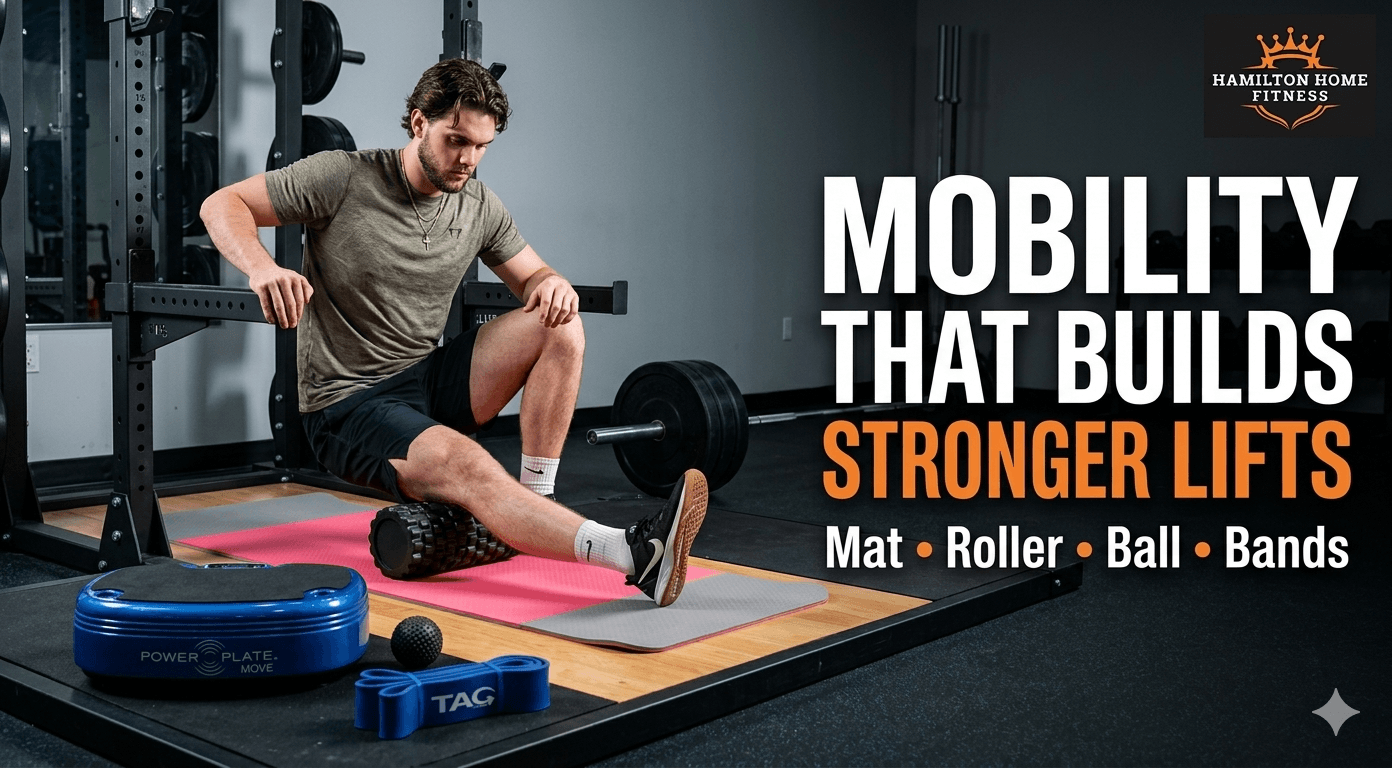
The right yoga and mobility equipment for lifters—a dense mat, a foam roller, a firm ball, and a set of loop bands—does more for depth, lockout, and recovery than any pricey shortcut, especially when used about ten minutes a day. The goal is mobility, meaning active range you control under load, not passive flexibility.
This guide covers which tools matter, what to look for before you buy, and exactly how and when to use each one to free the joint holding your lift back. Every piece can be assembled into a simple kit that ships nationwide.
Does mobility work improve your lifts?
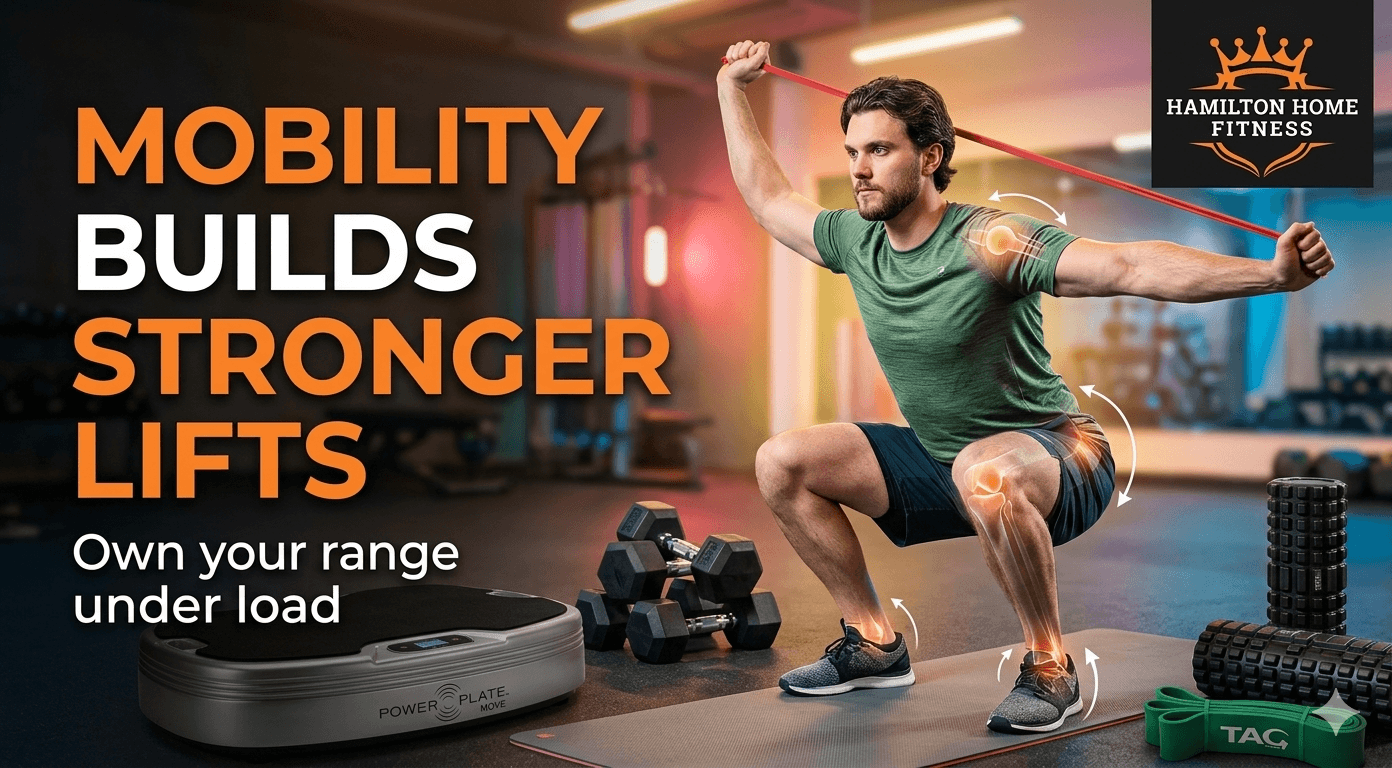
Yes—for most lifters, better ankle and hip range unlocks squat depth; more thoracic and shoulder range improves the overhead press and bench arch; and regular tissue work supports recovery. The aim is active range you can own under load, not how far a muscle stretches when relaxed.
That distinction is where "yoga is just stretching" falls apart.
Mobility vs. flexibility: Flexibility is how far a joint can be moved passively. Mobility is how far you can move and control it under your own power and load. Lifters need the second kind—a range that holds up with a bar on your back.
A passive split does nothing for your squat if your hips collapse the moment you load them. Useful mobility pairs range in the strength and stability to use them, which are exactly what loaded positions demand.
The carryover is specific, joint by joint. Ankle dorsiflexion and open hips let you reach depth with your heels down instead of cutting the squat high. A thoracic spine that extends lets you finish a press overhead and set a stronger, safer bench arch. Shoulders that externally rotate hold a cleaner front rack and lockout. Fix the range in the right place, and the lift improves without forcing it.
This is also why yoga earns a spot for powerlifters and weightlifters who once dismissed it. The value is not the class or the vibe—it is the positions, the breathing, and the control that transfer back to the bar. Used as a tool rather than a religion, it builds range you can actually load.
The lifter's mobility starter kit
Four tools cover most lifters: a dense mat for a stable floor, a foam roller for large muscles and your thoracic spine, a firm ball for small trigger points, and a set of loop bands for banded joint work. A massage gun and whole-body vibration are optional add-ons for faster recovery.
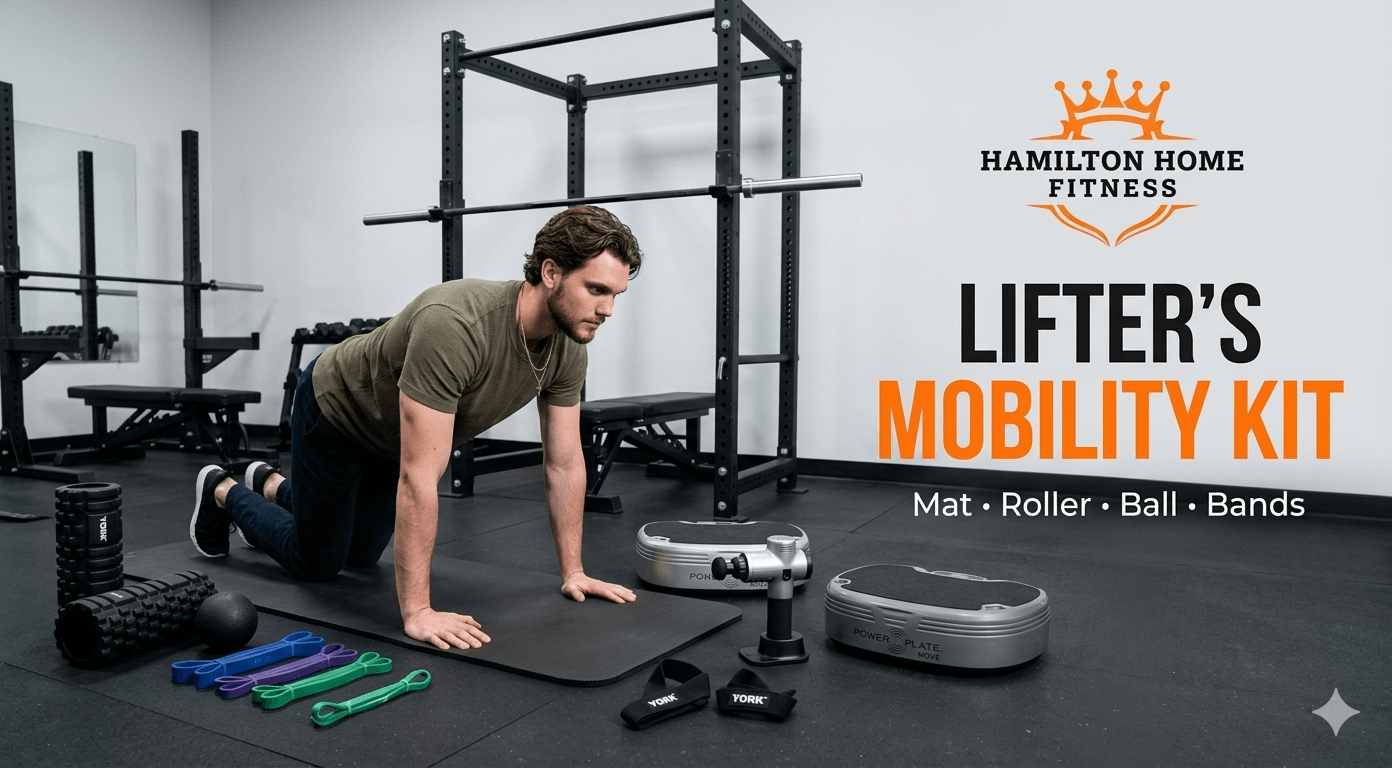
Tool | What it fixes | When to use |
Dense mat | A stable, cushioned base for floor work | Every session |
Foam roller | Large-muscle prep and thoracic extension | Pre-lift and rest days |
Firm ball | Small, hard-to-reach trigger points | Targeted, pre- or post- |
Loop bands | Banded joint distraction and activation | Pre-lift warm-up |
Massage gun (optional) | Fast, precise tissue relief | Post-lift |
Vibration platform (optional) | Advanced warm-up and recovery | Pre or post |
Start with the four core tools and add the extras only when you will actually use them. The whole kit is light enough to keep by your rack, and at this price point, density and firmness, not cost, should drive what you choose.
You can build the mat-and-roller base from yoga and mobility gear built for lifters, then round it out with bands and any add-ons.
Choosing a yoga mat for lifting
For heavy floor work on a hard floor, a firm, dense 6 mm mat is the safest default. Density matters as much as thickness: a soft 8 mm mat can bottom out and leave you pressing into the floor, while a firm 6 mm stays stable and supportive under load. Pick support first, then thickness.
![Yoga and Mobility Equipment for Lifters [2026]](https://www.hamiltonhomefitness.com/images/rich-text/Gemini_Generated_Image_z3xsqtz3xsqtz3xs1.png?rs=1781753593 "Yoga and Mobility Equipment for Lifters [2026]")
That single point — firmness over raw millimeters — saves most lifters from buying the wrong mat. Press your thumb in hard; a good mat resists and springs back instead of collapsing.
Thickness | Best for | Trade-off |
5–6 mm | Balanced floor work and standing stability | Less padding for long kneeling |
8 mm | Kneeling comfort, sensitive knees | Can feel less steady, may bottom out if soft |
10 mm | Weighted or high-impact floor work | Bulky, unstable for balance work |
Thickness: 5 mm to 10 mm
Thickness controls cushioning and stability, and the right number depends on your floor and the work you do on it. On hardwood or concrete, 5–6 mm gives enough cushion for floor presses and ab work while keeping you grounded for anything done on your feet.
Go to 8 mm if you kneel often and want more padding, but accept slightly less stability. Reserve 10 mm for weighted floor work where shock absorption matters more than balance. Above 8 mm, a soft mat that bottoms out protects your joints less than a firm, thinner one—so judge the cushion under load, not the number on the label.
Material: rubber, TPE, PVC, cork
Material decides grip, weight, and how long a mat keeps its support under repeated load. Each option trades off differently, so match it to what you care about most.
Natural rubber is dense and heavy, lies flat without curling, and grips well—a strong pick for loaded floor work, though it weighs more to move. TPE is lightweight and budget-friendly, a reasonable entry point if the density holds up. PVC is durable with high grip but is the least eco-friendly. Cork grips well, suits sustainability-minded buyers, and usually comes with a TPE backing for cushion.
Once you know your thickness and material, you can compare options among yoga mats for heavy lifters and prioritize a dense, firm build over price.
Foam roller, lacrosse ball, or gun?
Use a foam roller for large muscle groups and general pre-lift prep, a firm ball for small, hard-to-reach trigger points, and a massage gun for fast, targeted relief. None of them fix tissue permanently—the best tool is the one you will actually use often enough to matter.
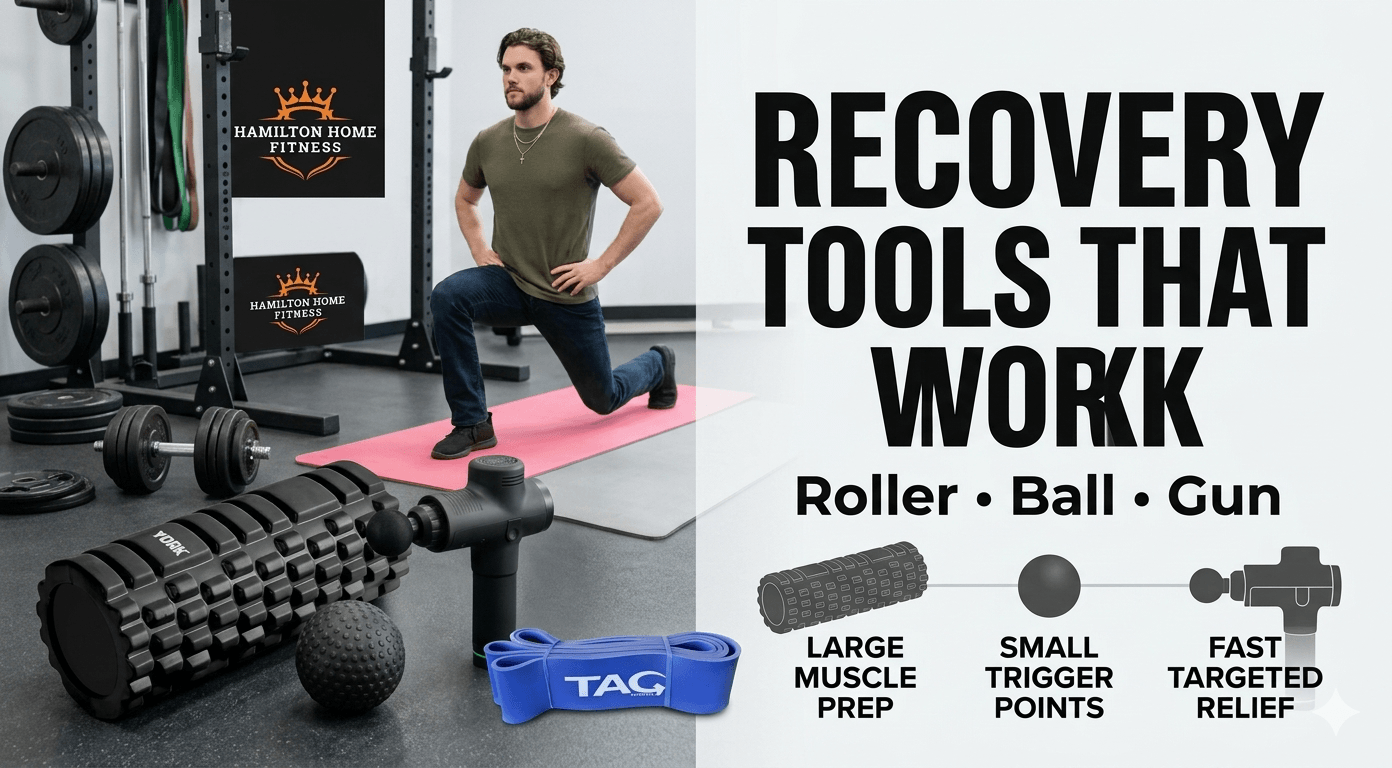
Think of them as preparation and recovery aids, not repairs. Each has a clear lane:
Foam roller — use when you want to prep big areas like quads, hamstrings, glutes, and lats, or to open the thoracic spine before pressing. It covers the most surface area for the least effort.
Firm ball — use when the spot is small or buried: glute medius, pecs, calves, or the area around the shoulder blade. The smaller contact point reaches what a roller rolls right over.
Massage gun — use when you want quick, precise relief without setting up on the floor, usually after training. It adds speed and convenience, not a different result.
A roller plus a firm ball already covers most lifters. Add a gun only if its speed will keep you consistent, not because it promises more. Whatever you pick, brief and regular beats long and occasional—a few focused minutes do more than a once-a-week session.
When you are ready to choose a roller, compare foam rollers and mobility wheels and start with a firm, full-length option.
Do mobility bands and floss work?
Loop bands create joint distraction or muscle activation that can briefly improve range and warm-up quality, and compression floss may temporarily restore glide around a joint. The evidence points mostly to short-term, warm-up-level gains—so treat both as preparation tools, not cures.
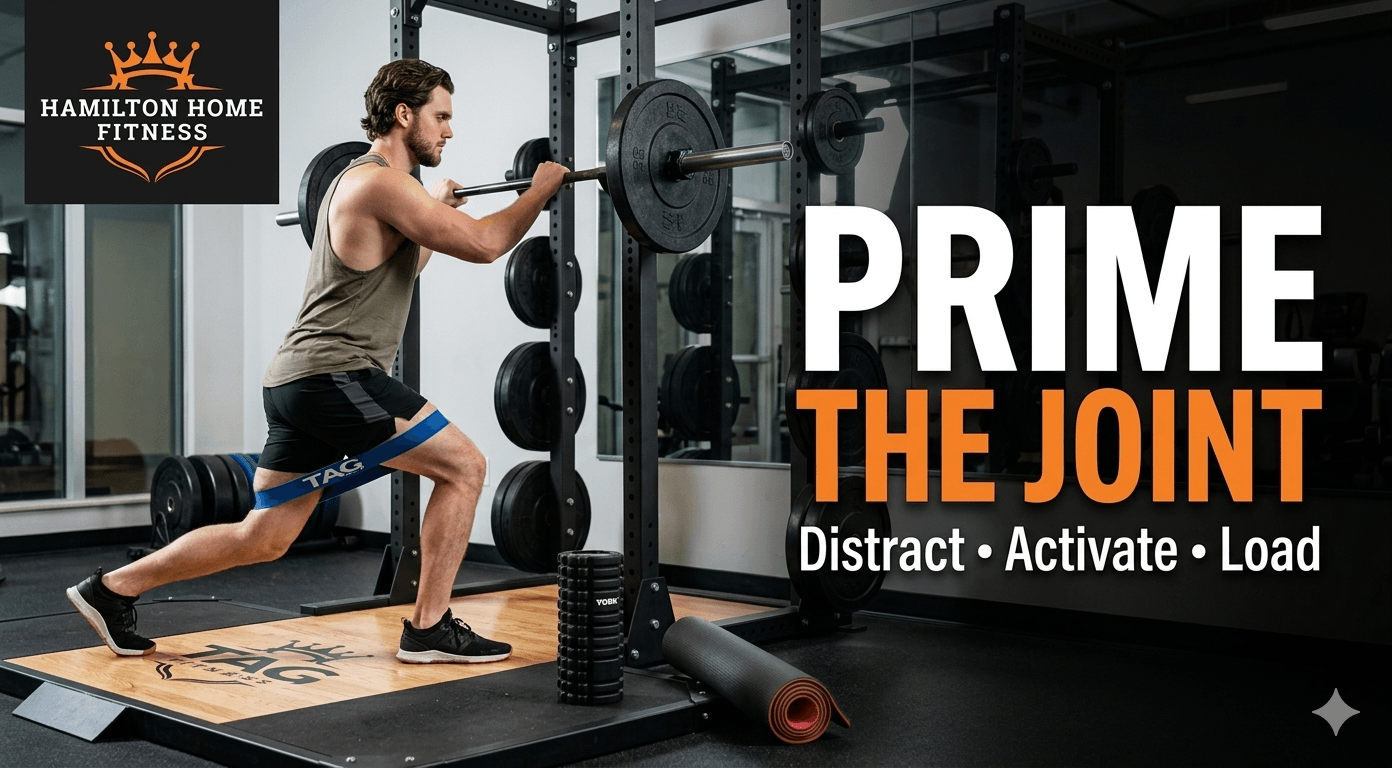
Here is the honest split:
What they help: Banded distraction pulls a joint, like the ankle or hip, slightly in a direction that opens room to move, often making the next few reps feel cleaner. Floss wraps a joint or muscle under tension, and people frequently report better movement right after taking it off. Both are useful right before you train.
What they won't do: Neither permanently lengthens tissue or replaces strength work in the new range. If a position improves only while the band is on and reverts minutes later, the gain was temporary—you still have to load and own that range to keep it.
So use bands to prime a stubborn joint in your warm-up, then immediately train the range you just opened. That sequence — distract, then load — is where banded work earns its place, rather than as a standalone fix.
A set of loop bands also doubles for activation and assistance, so it is one of the most versatile pieces in the kit. You can find resistance bands for mobility work in light-to-heavy tensions to match the joint you are targeting.
Fix your biggest lift limitation
Most stalled lifts trace back to one of five areas—hips, ankles, thoracic spine, shoulders, or wrists. Each responds to a specific drill, so find the one limiter holding a lift back and fix that instead of trying to mobilize everything at once.
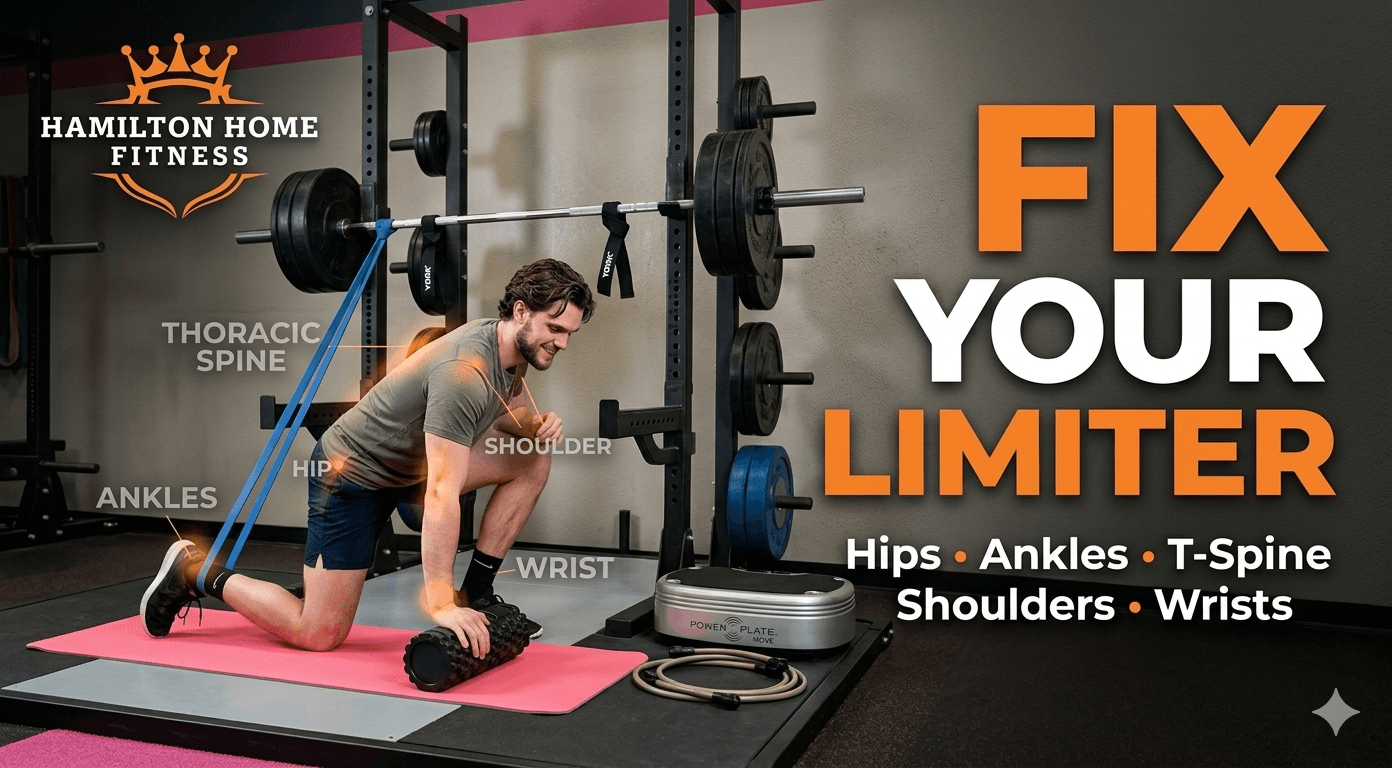
Work the area that matches your sticking point, give it a few focused minutes, then load the range you just opened.
Hips: deeper, stronger squats
Tight hips cap squat depth, and a deep hip-opener plus banded distraction restores room fast. Reach for a pose like pigeon, lizard, or frog to open the hips, and rest your hands on blocks if your range is limited so you can keep the position without collapsing.
Hold the opener for a couple of minutes per side, then squat to reinforce the new depth. If the restriction feels deep in the joint rather than the muscle, add a band pulling the hip back into the socket before you drop in.
Ankles: dorsiflexion for depth
Limited ankle dorsiflexion forces your heels up or your knees in, and banded ankle work plus a calf drill helps. Test it first: kneel and drive your knee toward the wall over your toes—if the heel lifts early, dorsiflexion is your limiter.
Loop a band around the front of the ankle, anchor it behind you, and rock the knee forward over the toes for reps. Pair it with a calf stretch, then squat and check that your heels stay planted.
T-spine: cleaner press and bench
A stiff thoracic spine blocks overhead lockout and a solid bench arch, and extension over a roller opens it. Lie back with a foam roller across your mid-back, support your head, and extend over it segment by segment before you press.
Keep your ribs from flaring and move through the upper back, not the lower. A few passes before pressing or benching makes the overhead and arched positions easier to find and hold.
Shoulders: overhead and rack
Restricted shoulder external rotation compromises the overhead and front-rack positions, and targeted drills restore it. Use scapular wall slides to groove the motion and a sleeper stretch to address internal-rotation tightness, adding a strap for controlled reach if needed.
Move slowly and stop short of pain. Done before lifting, this opens the lockout overhead and lets you hold a cleaner rack without your elbows dumping forward.
Wrists: pressing and front rack
Cranky wrists under load often need both mobility and support, especially in the front rack and overhead. Prep them first with gentle wrist extension and rotation on the floor, taking the joint through its range before you ask it to hold weight.
The common mistake is skipping that prep and loading a cold, passive joint. For lifts that consistently bite, wrist support can complement the mobility work and keep heavy pressing and racking comfortable.
When to mobilize and recover
Do dynamic, lift-specific mobility before training, and save longer static stretching and tissue release for after sessions or rest days. Yoga supports a warm-up but does not replace lift-specific preparation, and steady breathwork can aid recovery between hard training days.
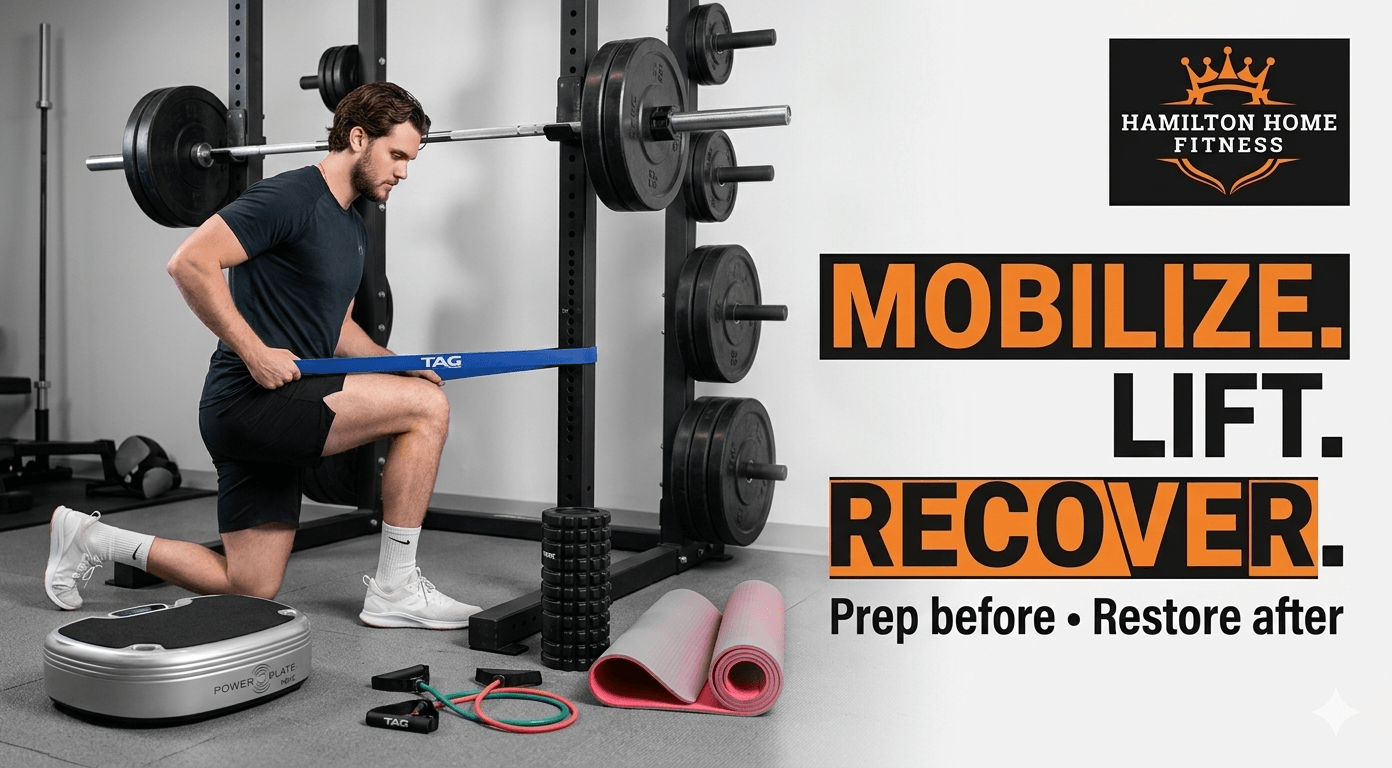
A simple model keeps it straightforward:
Before lifting: Move the joints you are about to load — banded distraction, dynamic openers, and a roller pass on the thoracic spine. Keep it active and brief; long static holds before a max effort can leave you feeling loose rather than primed.
After lifting: This is the time for longer static stretching and tissue work, when you are warm and no longer chasing peak output.
Rest days: Use a daily ten-minute routine or a yoga session to maintain range and circulation without taxing recovery.
So no, a yoga flow alone does not replace a warm-up. It is excellent preparation and rest-day work, but you still need to rehearse the specific positions and ranges your session demands.
Breathing belongs here too. A few minutes of slow diaphragmatic or box breathing after training nudges you toward parasympathetic recovery, which can help you wind down and sleep—both of which do more for progress than any single tool.
For advanced warm-up and recovery, a Power Plate whole-body vibration platform is an optional step up that some athletes use to prime tissue and aid circulation in short sessions. If you are recovering from an injury or managing pain, follow a qualified professional's plan rather than self-prescribing.
FAQ
Is yoga alone enough, or do lifters still need mobility tools?
Yoga builds range and body awareness, but tools like rollers and bands target specific tissues and joints faster and let you load the new range. Most lifters benefit from both—yoga for general movement and tools for the exact spot holding a lift back.
How much mobility work do lifters actually need per week?
A daily ten-minute routine, or focused work before and after your key sessions, covers most needs. Consistency beats long, occasional sessions—a few honest minutes most days does more than one long stretch a week.
Are budget yoga mats and rollers good enough for lifters?
Yes, for many lifters, as long as the mat is dense enough and the roller is firm. Prioritize density and firmness over price, and replace any foam that bottoms out under load — that is what protects your joints, not the price tag.
Do I need a massage gun if I already have a foam roller?
Not necessarily. A gun adds speed and precision for small areas, but a roller plus a firm ball covers the basics. Add one only if its convenience will keep you consistent, not because it promises a better result.
Final Thought
The right mat, roller, ball, and bands—used a little each day and aimed at the one joint holding a lift back—do more for depth, lockout, and recovery than any expensive shortcut. The path is simple: build the kit, fix your limiter, and time your work around your sessions.
Pick your four core tools, spend a focused ten minutes on the joint that is actually stalling your lift, and load the range you open. That is the whole method, and it compounds fast.
If you are returning from injury or surgery or training through pregnancy and postpartum, start with rehab and recovery equipment and a qualified professional's guidance first—then build back to consistent, lift-specific mobility.