Introduction
A treadmill with incline can make more sense for more people than it first appears, especially home fitness buyers, trainers, small gym owners, rehab-minded users, and wellness-focused shoppers across Tennessee and the wider USA. For readers comparing options through Shop Quality Fitness Gear and Equipment - Hamilton Home Fitness, this guide fits a brand that serves both home and commercial spaces, offers nationwide shipping, and positions its catalog around quality equipment for real-world training needs.
The problem is simple: many shoppers see incline percentages, consoles, and long feature lists, but they still do not know what an incline treadmill actually does, whether it is worth paying for, or which features matter for walking, running, beginner use, or safer day-to-day training. That confusion makes it easy to compare the wrong specs or choose a machine that looks impressive on paper but does not fit the user’s goals.
This article solves that by explaining what a treadmill with incline is, how it works, when it is better than a flat treadmill, what incline range makes sense for home use, and which features separate entry-level, advanced, and commercial-ready machines. By the end, readers should be able to judge whether an incline treadmill fits their goals and what to look for before moving closer to a buying decision.
What a Treadmill with Incline Is
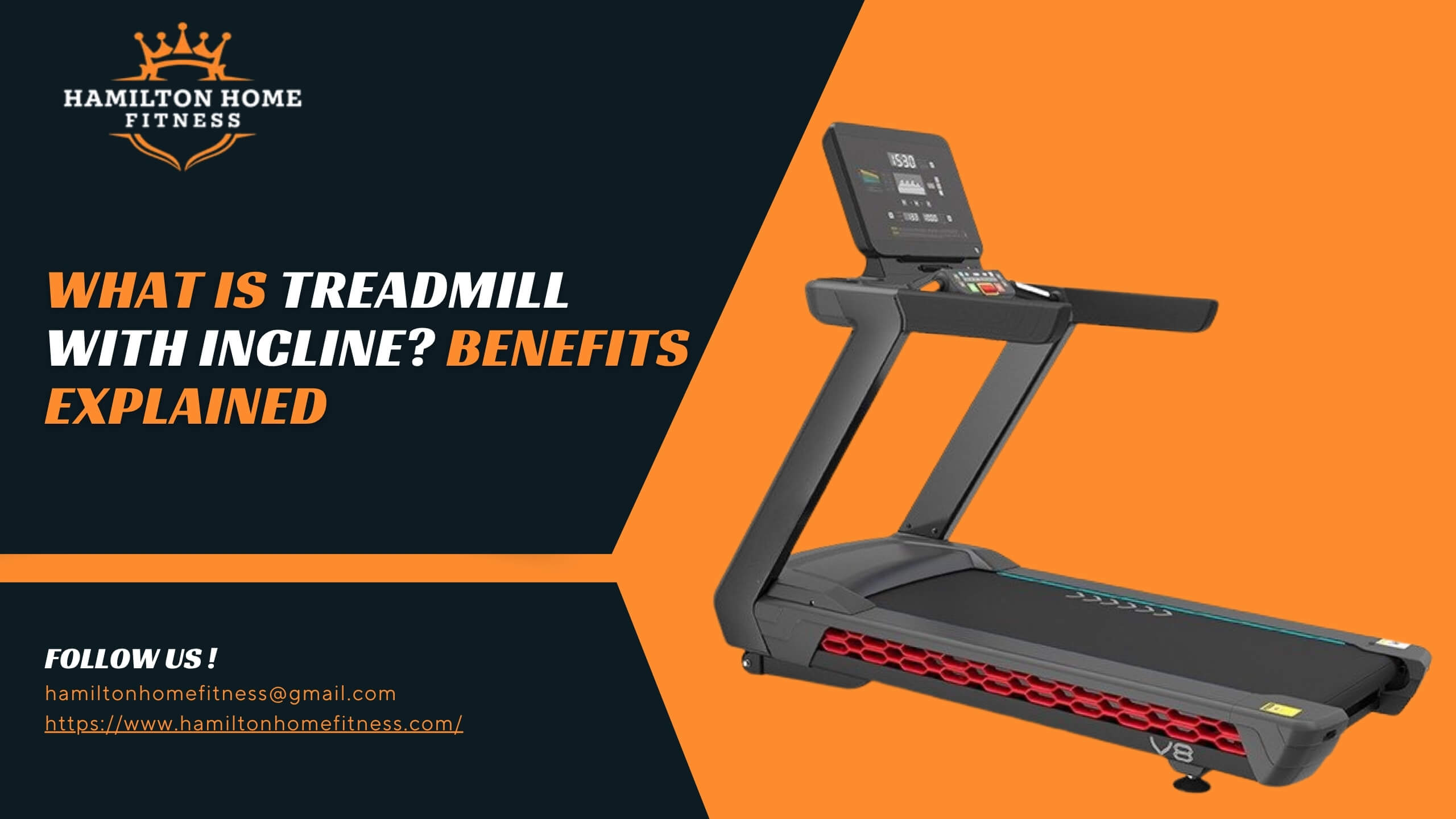
A treadmill with incline is a treadmill that raises the front of the running deck so your workout feels more like walking or running uphill. That change in angle increases effort without always requiring more speed, which is why incline treadmills are often used for walking workouts, hill-style training, and more flexible home or gym cardio sessions.
Basic incline treadmill definition
A treadmill with incline is built to adjust the angle of the deck above a flat position. On most models, the incline is shown as a percentage, such as 0%, 3%, 10%, or 15%, rather than as degrees.
At 0%, the treadmill is flat. As the incline rises, your body has to work harder against gravity. That usually increases training demand and changes which lower-body muscles do more of the work.
This is what separates an incline treadmill from a standard flat treadmill. Some higher-end machines also offer decline, which lowers the front of the deck below flat level, but decline is a separate feature and not something every incline treadmill includes.
In simple terms, an incline treadmill is designed to make one machine more versatile. Instead of only walking or running on a flat surface, the user can create uphill-style training indoors with a button press or a manual adjustment.
Auto vs manual incline
Incline treadmills usually come in two main types: auto incline and manual incline. The difference is how the angle changes during the workout.
An auto incline treadmill uses a motorized system to raise or lower the deck while you are on the machine. The user changes settings through the workout console, and some models can adjust automatically during preset workouts. This is usually the more convenient option for people who want smoother progression, interval training, or easier control during walking and running sessions.
A manual incline treadmill requires the user to adjust the angle by hand, usually before starting the workout. These models are often simpler and more affordable, but they are less flexible during use because you cannot change incline as easily in the middle of a session.
For many home users, the choice comes down to goals and convenience:
- Manual incline may suit light walking and tighter budgets.
- Auto incline usually makes more sense for regular use, training variety, and easier progression.
- Commercial settings often favor auto incline because it is faster, smoother, and more practical for multiple users.
How incline changes effort
Incline changes the workout by increasing the amount of work your body does with each step. Even when speed stays the same, walking or running uphill-style usually feels harder than moving on a flat deck.
That matters because incline can help users raise workout intensity without relying only on faster pace. For some people, that makes training more manageable. A brisk walk at an incline may feel more effective and controlled than trying to jog faster on a flat treadmill.
Incline also changes movement demand. In many cases, it places more emphasis on the calves, glutes, and hamstrings while increasing overall cardiovascular effort. That is one reason incline treadmills are popular for incline walking benefits, incline running benefits, and low-impact cardio routines that still feel challenging.
It is also why people often ask whether incline can mimic outdoor hills or outdoor running. The short answer is that incline can help create a more hill-like training effect indoors, but the exact feel depends on the incline level, the speed, the user’s stride, and the treadmill itself. That is why incline percentage alone does not tell the whole story.
At a practical level, incline makes a treadmill more than just a moving belt. It turns the machine into a tool for adjusting effort, variety, and training style in a way a flat-only treadmill cannot.
Benefits vs a Flat Treadmill
An incline treadmill is often better than a flat treadmill when the goal is to add challenge, variety, or walking intensity without relying only on speed. That said, “better” depends on the user, because some people benefit most from incline, while others do better with a simple flat setup.
Walking benefits of incline
For walking, incline can make a treadmill workout feel more productive without forcing the user to move faster. That is one of the biggest reasons many people see value in an incline treadmill for home use.
A higher incline increases effort at the same walking pace. For beginners, older adults, busy professionals, and people who prefer walking over running, that can make training feel more effective without turning the session into a hard-impact workout. In many cases, it is easier to manage a moderate incline than it is to keep increasing speed.
Incline walking also helps add variety. A flat treadmill can work well for steady walks, but incline gives the user another way to adjust difficulty, build routine variety, and avoid the feeling that every session is the same. That matters for consistency, especially in home fitness where simple changes can make workouts easier to stick with.
This is also why many shoppers ask whether a treadmill with incline is worth it for walking. For people who want more intensity, more flexibility, or a better way to progress without jumping straight into running, the answer is often yes.
Running benefits of incline
For runners, incline adds a different kind of training stress than flat running alone. It can help create hill-style effort indoors, which makes the treadmill more useful for conditioning, pace control, and workout variety.
One of the main benefits is that incline can raise difficulty without requiring extreme speed. A runner who does not want every hard session to depend on faster turnover may use incline to build effort in a more controlled way. That can be useful for interval work, hill-style sessions, and training blocks where variety matters.
Incline can also make treadmill running feel less one-dimensional. Flat running has its place, but incline gives more room to change stimulus, challenge the lower body differently, and keep sessions from feeling repetitive. For advanced users, higher incline ranges may support stronger hill-style training. For general users, even moderate incline settings can make the machine more versatile.
This does not mean incline replaces outdoor hills perfectly in every case. It means incline gives runners an indoor tool that better mimics uphill effort than a flat treadmill can.
When flat may still make sense
A flat treadmill can still be the better choice for some users, goals, and sessions. Incline adds versatility, but not every person needs that extra feature to get good results.
For example, a flat treadmill may make more sense when the main goal is light walking, very basic cardio, or a lower-cost setup for occasional use. Some users also prefer the simplicity of flat training because it feels more familiar, easier to manage, or more comfortable during recovery-focused sessions.
Flat settings can also be useful inside an incline treadmill workout. Not every session should be uphill. Warm-ups, cool-downs, easy walks, and certain steady runs may feel better at or near 0% incline. That balance is important because the goal is not to use incline all the time. The goal is to have the option when it supports the workout.
So, is a treadmill with incline better than a flat treadmill? For many users, yes, because it offers more training flexibility and more ways to progress. But the better machine is still the one that matches the user’s needs, comfort level, and actual workout habits.
Best Incline Range for Your Goals
The best incline range depends on how you plan to use the treadmill, not just on the biggest number on the console. For most home users, a treadmill that moves from flat to a moderate incline is enough for walking, steady cardio, and gradual progression, while steeper ranges matter more for advanced hill-style training.
Good ranges for beginners
For beginners, the right incline is usually a gentle incline, not a steep one. The main goal is to add a little challenge while keeping stride, breathing, and posture under control, especially for people who are new to treadmill training, returning to exercise, or using walking as their main form of cardio.
That cautious approach matters because higher incline work is not always a beginner baseline. In ACE-supported research on the 12-3-30 workout, a 12% incline at 3 mph for 30 minutes was manageable for a young, fit group, but ACE also noted that older or less-fit users may need to work up to that speed, duration, and incline over time. In practice, that means beginners are usually better off starting low and progressing only when the workout still feels controlled and repeatable.
What home treadmills should offer
For home use, a treadmill does not need an extreme incline range to be useful. Many current home models sit in the 0–10% to 0–12% range, while more performance-focused home treadmills often reach 0–15%. Horizon’s current treadmill specs list models at 0–10%, 0–12%, and 0–15%, and NordicTrack’s current Commercial 1750 lists 12% incline with -3% decline.
What that means for buyers is fairly simple. A home treadmill with a moderate incline range is usually enough for walking workouts, beginner intervals, and general fitness. A steeper range becomes more valuable when the user wants harder hill-style sessions, more training variety, or a machine that feels closer to advanced home or light commercial expectations.
Does 1% mimic outdoor running?
Sometimes, yes—but only in a limited sense. The familiar 1% rule comes from a classic treadmill study that found a 1% grade most closely matched the energetic cost of outdoor running over about five minutes at speeds between 2.92 and 5.0 meters per second.
The important part is the context. That finding is useful as a rule of thumb for some steady running conditions, but it is not a universal rule for every runner, every pace, every workout length, or every walking session. For most home users, the better question is not whether they must always set the treadmill to 1%, but whether the machine gives them enough incline range to train comfortably, progress gradually, and match the kind of walking or running they actually plan to do.
Who It Suits and Features to Check
A treadmill with incline suits the widest range of users when the machine matches how they actually plan to train. For many buyers, that includes home walkers, beginner exercisers, runners who want more workout variety, trainers working with mixed ability levels, and facilities that need one cardio machine to serve more than one type of user. Hamilton Home Fitness itself positions its fitness catalog around home gyms, commercial facilities, rehab clinics, sports and recreation spaces, and gym design support, which reflects how broad the real use cases can be.
Who benefits most from incline
Incline is often most useful for people who want more challenge without relying only on speed. That makes it especially practical for walkers who want higher effort at a manageable pace, home users who need more workout variety from one machine, and runners who want indoor hill-style sessions without leaving the gym.
It can also make sense for older adults or recovery-minded users when the goal is controlled cardio rather than aggressive training. Research in healthy older adults found that incline walking reduced knee abduction moment compared with level walking at several gradients, which suggests incline walking may help some users train the lower body and cardiovascular system without automatically increasing the same knee loading pattern seen on flat walking. That does not make incline universally therapeutic, but it does support the idea that incline is not only for advanced runners.
Features that matter most
The most important incline treadmill features are the ones that affect safety, comfort, and long-term fit. For most buyers, that means looking closely at incline range, whether the machine uses auto incline or manual incline, motor power for smoother belt performance, deck size for stride comfort, cushioning for repeated use, weight capacity for stability, handrails and a safety key for safer operation, and a workout console that makes incline changes easy instead of frustrating.
Feature fit matters more than hype. If you want to compare one option against that checklist, you can Shop the Treadmill with Incline while reviewing whether the incline system, safety setup, and deck comfort actually match your walking or running goals. Hamilton Home Fitness also positions its catalog around quality equipment for both home and commercial environments, with secure checkout, fast shipping, and broad category coverage that includes cardio, rehab, and design-oriented facility support.
A simple way to judge machine tiers is this: entry-level models usually cover basic walking and light cardio needs, advanced home models usually add smoother motorized incline, stronger consoles, and more comfort features, and commercial-ready machines are built for heavier use, more user turnover, and more demanding facility settings. That is the practical difference readers should care about, because the right treadmill is the one built for their real usage pattern, not just the one with the biggest headline number.
Body stress and safety limits
Incline training can affect knees, calves, and the Achilles area, but the effect is not as simple as “good” or “bad.” Incline walking has been associated with lower knee abduction moment in older adults, yet uphill treadmill walking also increases gastrocnemius muscle activity compared with level walking, which helps explain why calves and the Achilles region can feel more stressed if incline rises too fast or stays too steep for the user’s current capacity.
The safest approach is controlled progression. A proper warm-up, gradual speed or incline increases, and a slow cooldown are standard injury-reduction habits, and the treadmill safety key matters because it immediately stops the belt in an emergency; many machines will not operate without it inserted.
Common mistakes are what usually make incline work feel worse than it should: starting too steep, skipping the warm-up, gripping the handrails the whole time, or treating every session like a hill test. For beginners, seniors, and anyone managing discomfort, a better rule is to start with a mild incline that still allows normal posture and controlled breathing, then increase only when the workout feels repeatable rather than punishing.
People Also Ask
What is a treadmill with incline?
A treadmill with incline is a treadmill that raises the front of the deck so your walk or run feels more like going uphill. On many models, incline is shown as a percentage, and common ranges run from flat to about 10%, 12%, or 15% depending on the machine.
That matters because incline changes workout effort without always requiring more speed. It gives one machine more flexibility for walking, running, and hill-style training indoors.
Is a treadmill with incline better than a flat treadmill?
A treadmill with incline is often better when you want more workout variety or more challenge at the same walking or running speed. A flat treadmill can still be the better fit for very simple cardio, lighter use, or buyers who do not need hill-style training.
The key difference is versatility. Incline lets users increase effort in another way, while flat-only training keeps the experience simpler and usually more basic.
What incline range is good for a home treadmill?
A good home incline range is usually one that supports daily walking, steady cardio, and gradual progression without forcing you into advanced hill training. In practice, many home treadmills land around 0–10% or 0–12%, while more advanced home models may go to 15%.
For most households, a moderate incline range is enough. The better choice is the range that matches how you actually plan to use the treadmill, not just the steepest number on the spec sheet.
Does 1% incline really mimic outdoor running?
Sometimes, but only as a rough rule of thumb. A classic treadmill study found that a 1% grade most closely matched the energetic cost of outdoor running over about five minutes at certain running speeds, not in every situation.
So the 1% idea is useful, but it is not universal. It applies more to specific running conditions than to every walker, every pace, or every training goal.
Is a treadmill with incline worth it for walking?
Yes, it often is, especially for people who want a harder walking workout without having to move much faster. The American Heart Association notes that walking uphill on a treadmill at a slower speed can reach the same energy cost as faster flat walking.
That makes incline especially useful for walkers who want more intensity, more variety, or a more efficient use of workout time. For people who only want very light, basic walking, it may be less important.
Is incline training good for beginners?
Yes, incline training can be good for beginners when it starts modestly and builds gradually. Beginner-friendly walking guidance from ACE and ACSM-backed materials supports starting with accessible treadmill walking and easing into incline instead of jumping straight to steep settings.
The practical rule is simple: start with a mild incline you can handle with good posture and steady breathing, then increase only when the workout still feels controlled. Gradual progression matters more than high numbers.
Can incline training affect knees, calves, or Achilles tendons?
Yes, incline training can change how stress is distributed through the lower body. Research suggests incline walking may reduce knee abduction moment in some older adults, but incline also increases demands around the calf and ankle, which is why the calves or Achilles area may feel more loaded if progression is too aggressive.
That does not mean incline is bad. It means form, recovery, and progression matter. If incline causes pain instead of normal exercise effort, it is smarter to reduce the grade, shorten the session, or get individual guidance before continuing.
Final Thought
A treadmill with incline is most useful when its incline range, comfort features, and safety setup match the way you actually plan to use it. The key takeaway is simple: the best machine is not the one with the biggest number on the console, but the one that fits your walking, running, recovery, or facility needs with the right balance of control, support, and long-term value.
Your next step is to compare your goals against the feature checklist in this guide, then use that standard to narrow your options with Shop Quality Fitness Gear and Equipment - Hamilton Home Fitness if you are ready to move from research to a smarter buying decision.