
Introduction
An Adjustable Decline Bench is built for people who want more than a basic flat bench but do not want to waste money or space on equipment they may never use. This guide is for home gym beginners, trainers, small gym owners, rehab or recovery shoppers, and budget-conscious buyers across the USA who want a clear answer before they buy.
The problem is simple: many people see product pages, workout articles, and “best bench” lists, but still do not know what an adjustable decline bench actually does or whether decline capability is worth the extra cost and footprint. That confusion can lead to purchasing the wrong bench, overspending, or selecting features that do not align with actual training needs.
This guide will help you understand what an adjustable decline bench is, how it compares to an FID bench, what exercises it supports, which features matter most, and who should or should not buy one. By the end, you will be able to decide whether it fits your training goals, space, and budget.
What Is an Adjustable Decline Bench?
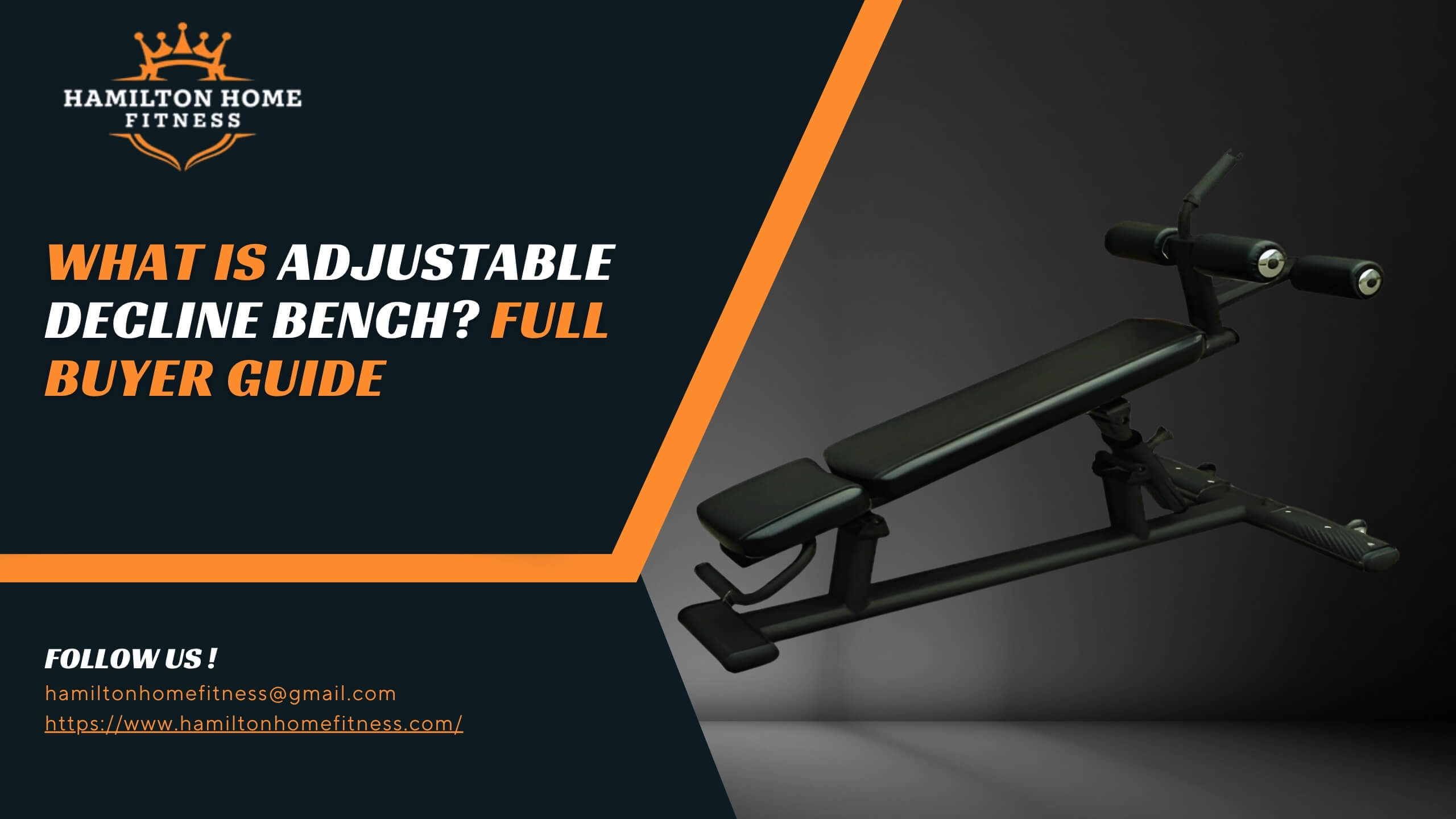
An adjustable decline bench is a weight bench that lets you train at a downward angle, and many models also support flat and incline positions. In simple terms, it gives you more training angles on one bench, which can be useful if you want more exercise variety without buying separate benches.
For many buyers, the main question is not just what it is, but what it adds. The key benefit is flexibility. A decline setting can support certain chest and ab exercises, while flat and incline settings make the same bench more useful for general strength training.
What the bench does
An adjustable decline bench changes your body position so your torso can move below flat. That decline angle is what separates it from a standard flat bench and makes it useful for exercises such as decline bench press, decline dumbbell press, and decline sit-ups.
In practical terms, this type of bench is designed to do more than one job. Depending on the model, it may function as a:
- flat bench for basic pressing and dumbbell work
- incline bench for upper-body angle changes
- decline bench for chest- and core-focused movements
That is why many shoppers see it as a more versatile home gym bench. Still, versatility only matters if you will actually use the decline feature often enough to justify the added footprint, moving parts, and price.
Is it the same as an FID bench?
Often, yes. An adjustable decline bench is commonly the same thing as an FID bench, which stands for flat, incline, decline. If a bench truly offers all three positions, it falls into the FID category.
That said, not every adjustable bench is an FID bench. Some adjustable weight benches only move between flat and incline. Others advertise multiple positions but offer a very limited decline angle or a decline setup that is not practical for real training.
Before treating the terms as identical, buyers should check whether the bench includes:
- a true decline setting, not just flat and incline
- a secure way to hold the body in place, such as leg rollers or a foot catch
- enough stability to feel safe in declined movements
- a pad design that stays comfortable through angle changes
This matters because the label alone does not tell you how usable the decline function really is.
Decline vs flat and incline
A decline bench angles your torso downward, a flat bench keeps you level, and an incline bench raises your upper body. That angle difference changes how the bench feels during training and what kinds of movements it supports best.
A flat bench is usually the simplest and most widely used option. It works well for basic presses, rows, and general strength work. An incline bench adds more upper-body variety. A decline bench adds another angle, but it is usually more specialized.
Here is the simplest way to think about it:
- Flat bench: best for basic, everyday strength work
- Incline bench: useful for added pressing variety and angle-based training
- Decline bench: helpful for specific chest and ab exercises when decline work is part of your routine
For many beginners, flat and incline coverage is enough. Decline becomes more valuable when you know you want those extra movement options and have the space to make a decline-capable bench worth owning.
Exercises and Muscle Focus
An adjustable decline bench is most useful for chest and ab exercises that benefit from a downward body angle. It can add variety to a training plan, but its value depends on whether you will actually use decline movements often enough to justify the extra feature.
Chest moves on the bench
For chest training, the most common uses are the decline bench press and decline dumbbell press. These exercises let you press from a declined position, which many lifters use to add variety to their chest training and reduce overlap with flat and incline pressing.
A decline-capable bench can support chest work such as:
- decline barbell bench press
- decline dumbbell press
- single-arm decline dumbbell press
- light accessory pressing for home gym workouts
This does not mean decline pressing needs to replace flat or incline work. For most people, it works better as an added option inside a wider chest routine rather than the foundation of every upper-body session.
Abs and decline positioning
A decline bench is also commonly used for decline sit-ups and other ab-focused movements. The downward angle increases the challenge compared with a flat setup, which is why many buyers also see it as an ab training bench, not just a chest training bench.
For ab work, the setup matters as much as the angle. A bench is easier to use for core training when it has:
- secure leg rollers or a foot catch
- enough stability to prevent wobbling
- a pad shape that feels supportive through the full range of motion
Without those features, decline ab work can feel awkward or unstable. That is one reason some benches look versatile on paper but are less practical in real training.
Muscles worked and limits
What a decline bench works depends on the exercise you do on it. In general, decline pressing movements train the chest, shoulders, and triceps, while decline sit-ups and similar movements focus more on the abdominal muscles and hip flexors.
That said, the bench itself does not create results on its own. It only changes the angle of the movement. A decline bench is helpful when you want:
- more chest-training variety
- a dedicated setup for decline ab exercises
- one bench that supports more than flat and incline work
It may not add much value if your program already covers your needs with flat and incline positions. For many home gym users, decline is useful, but not essential.
Is It Worth It for Your Gym?
An adjustable decline bench is worth it when you will actually use the decline function often enough to justify the extra cost, size, and setup. For buyers who want one bench that can handle flat, incline, and decline training, it can be a smart long-term choice. For others, it may be more bench than they need.
Home gym value and tradeoffs
For a home gym, the biggest value of an adjustable decline bench is versatility. One bench can cover more training angles and reduce the need for separate equipment, which makes it appealing for users building a compact but capable setup.
The tradeoff is that added function usually means:
- a higher price than a basic flat bench
- more moving parts
- a larger footprint
- more setup attention for decline movements
That makes the bench a better fit for people who want a wider range of exercises and plan to use decline work regularly. If your routine mostly centers on flat pressing, dumbbell work, and basic incline exercises, the extra feature may not deliver enough value to matter.
For small gyms, trainers, and multi-user setups, the value often improves because one adjustable bench can support more training styles across different clients and goals.
Do beginners need decline?
Most beginners do not need a decline bench right away. A flat or flat-incline bench is often enough to build a strong, useful home gym foundation.
A beginner should usually start simple if the main goal is to:
- learn pressing basics
- train consistently
- save space
- stay within budget
Decline becomes more relevant when the user already knows they want decline chest work, decline ab training, or one bench that covers more angles from the start.
A common mistake is buying the most feature-heavy bench before knowing whether those extra positions will be used. For many first-time buyers, it makes more sense to prioritize stability, comfort, and overall build quality before paying extra for decline capability.
One bench or separate benches?
In many home gyms, one good adjustable decline bench can replace separate flat, incline, and decline benches. That is one of its strongest selling points. It gives buyers more flexibility without requiring multiple benches to do multiple jobs.
This one-bench approach works best when:
- space is limited
- the bench adjusts easily
- the decline setup feels stable and secure
- the user wants convenience more than specialization
Separate benches may still make sense in some situations. A commercial facility, athletic program, or high-traffic studio may prefer dedicated benches because they are faster to use, easier to keep in place, and sometimes better suited to repeated heavy use.
So the decision is simple:
- choose one adjustable decline bench if you want versatility and space efficiency
- choose separate benches if you need speed, specialization, or multiple users training at once
For most home gym buyers, one well-made adjustable decline bench is enough. The key question is whether its flexibility matches how you actually train.
Space, Features, and Fit
Space, features, and fit are what turn an adjustable decline bench from a good idea into a smart buy. Even if the decline function sounds useful, the bench still has to fit your room, feel stable in use, and match your training goals well enough to justify the cost.
How much space do you need?
An adjustable decline bench needs more than just floor space for the frame itself. You also need enough room to get on and off the bench, adjust the angle safely, and train without crowding your rack, dumbbells, or other equipment.
For most buyers, the real space question comes down to three things:
- the bench footprint when fully set up
- the clearance around the bench for safe movement
- the storage plan if the bench will be moved between sessions
This matters most in home gyms, garage gyms, apartment workout spaces, and small studios. A bench that technically fits the room may still feel frustrating if you cannot use decline settings comfortably or move around it without bumping into other gear.
A simple rule works well here: if your space is already tight with your current setup, decline capability should earn its place by giving you exercise options you will use regularly.
Features that matter most
The best adjustable decline bench is not just the one with the most positions. It is the one with the right features for safe, comfortable, repeatable training.
The most important features to evaluate are:
- Back pad angles: enough adjustment range for flat, incline, and true decline work
- Seat positions: support for body alignment as the bench angle changes
- Decline angle: practical decline that feels usable, not just included for marketing
- Leg rollers or foot catch: secure body support for decline presses and decline sit-ups
- Pad gap: minimal separation between pads for better comfort across positions
- Bench height: a height that feels natural for pressing and setup
- Bench stability: a solid base that does not wobble under load
These features matter because they affect how the bench feels in real use. A bench can look versatile on paper and still fall short if the decline setup is awkward, the leg support feels weak, or the frame shifts during pressing and ab work.
For beginners, stability and ease of use should come before extra complexity. For trainers, small gym owners, and multi-user spaces, durability and fast adjustment often matter just as much as angle variety.
How to choose the right fit
The right adjustable decline bench is the one that fits your goals, your room, and your budget without adding features you will barely use. If you want decline chest work, decline ab training, and one bench that covers more angles, a good FID-style bench can make sense. If you mainly want basic pressing and general strength work, a simpler bench may be the better value.
Use this decision guide:
- Choose an adjustable decline bench if you want flat, incline, and decline training in one bench
- Choose it for home use if you have enough clearance and plan to use the decline function often
- Choose it for trainers or small gyms if one bench needs to support different users and exercise styles
- Choose carefully for rehab or recovery use if comfort, stability, and easy setup matter more than maximum versatility
- Skip it for now if you are a beginner with limited space and no clear need for decline-specific movements
- Skip it for now if your budget is better spent on a more stable flat or incline bench first
The goal is not to buy the most features. The goal is to buy the bench that matches how you will actually train. If decline capability fits your needs, space, and budget, the next step is to Buy the Adjustable Decline Bench.
People Also Ask
What is an adjustable decline bench?
An adjustable decline bench is a weight bench that can move into a declined angle, and many models also support flat and incline positions. It gives users more exercise options on one bench instead of requiring separate pieces of equipment.
In practical terms, the decline function lets your torso sit below flat for specific chest and ab exercises. That makes it a useful option for buyers who want more training variety from a single bench.
Is an adjustable decline bench the same as an FID bench?
Often, yes. FID stands for flat, incline, decline, so an adjustable decline bench usually falls into that category if it truly supports all three positions.
Still, the terms are not always used carefully in the market. Some adjustable benches only offer flat and incline settings, so buyers should always check the actual adjustment range before assuming a bench includes a real decline position.
What exercises can you do on an adjustable decline bench?
You can use an adjustable decline bench for decline bench press, decline dumbbell press, decline sit-ups, and other chest- and core-focused movements. Many people also use it as a general adjustable bench for flat and incline exercises.
Its value comes from flexibility. One bench may support pressing, ab work, and other upper-body training angles, which is why it appeals to home gym users who want more function without adding multiple benches.
What muscles does a decline bench work?
A decline bench works different muscles depending on the exercise. For decline pressing movements, it mainly supports the chest, shoulders, and triceps. For decline sit-ups and similar core work, it targets the abdominal area and also involves the hip flexors.
The bench itself does not change your body on its own. It changes the angle of the movement, which changes how certain exercises feel and what part of your routine the bench supports best.
Is an adjustable decline bench worth it for a home gym?
Yes, it can be worth it for a home gym if you want flat, incline, and decline training in one bench and will use the decline setting regularly. It is often a smart choice for buyers who want more exercise variety without buying separate benches.
It may not be worth the extra cost or space if your routine mostly covers basic flat and incline work. For many home gym buyers, the right answer depends on training goals, room size, and how often decline exercises will actually be used.
Do beginners need a decline bench?
No, most beginners do not need a decline bench right away. A stable flat bench or flat-incline bench is usually enough to cover the basics while building strength and consistency.
A decline-capable bench becomes more useful later if the buyer wants more exercise variety or already knows decline chest and ab work will be part of the routine. For many beginners, simplicity, stability, and budget matter more than extra bench angles.
Can one adjustable decline bench replace separate benches?
Yes, in many home gyms, one adjustable decline bench can replace separate flat, incline, and decline benches. That is one of its biggest advantages for buyers who want versatility and better use of limited space.
Separate benches can still make sense in commercial or high-traffic settings where speed, convenience, or specialization matters more. For most home users, though, one well-made adjustable decline bench is often enough.
What is the difference between a decline bench and an incline bench?
A decline bench angles your torso downward, while an incline bench angles your upper body upward. That difference changes how exercises feel and what kinds of movement each setup supports best.
In simple terms, incline is commonly used for upper-angle pressing work, while decline is more often used for specific chest and ab exercises. They serve different purposes, even though both adjust away from flat.
Is a decline bench good for abs and chest training?
Yes, a decline bench can be very good for both abs and chest training when the design is stable and the setup is comfortable. It is commonly used for decline sit-ups, decline dumbbell press, and decline bench press.
The key is usability. A bench with secure leg support, a practical decline angle, and strong stability will usually feel much better for both chest and ab work than a model with weak support or awkward positioning.
How much space does an adjustable decline bench need?
The amount of space depends on both the bench footprint and the clearance around it. You need enough room not only for the bench itself, but also for getting on and off, adjusting positions, and training safely.
For home gyms, that means thinking beyond the listed product dimensions. A bench may fit the room on paper, but it still needs enough open space to be comfortable and useful during real workouts.
Final Thought
An adjustable decline bench makes the most sense for buyers who want more than basic flat training and know they will use decline angles for chest or ab work on a regular basis. The right choice is not about getting the most features possible. It is about choosing a bench that fits your training goals, available space, comfort needs, and budget.
For many home gym owners, trainers, and small fitness spaces, one well-built bench that handles flat, incline, and decline can be a smart long-term upgrade. For beginners or shoppers with limited room, a simpler setup may still be the better first move until training needs become more specific.
The key takeaway is simple: buy decline capability because it supports how you actually train, not because it sounds more advanced. If you are ready to explore dependable equipment options that fit real home and commercial fitness needs, Shop Quality Fitness Gear and Equipment - Hamilton Home Fitness.