
- SUNNY HEALTH AND FITNESS
Authorized:











Adjustable


Adjustable Weight Benches Built for Real Strength
An adjustable weight bench is the single most versatile piece of strength equipment you can own—one platform that flexes from flat to incline to decline, replacing two or three fixed benches at a fraction of the floor space. The curated lineup at Hamilton Home Fitness brings together heavy-gauge, commercial-grade FID benches from trusted brands, sized for serious home gyms, training studios, rehab clinics, and corporate wellness rooms across the United States.
Whether you press, row, curl, or rehab, the right adjustable weight bench gives every rep the same secure base—without the wobble, pad gaps, or angle limits that cheaper benches force you to live with.
Why Choose an Adjustable Bench
An adjustable bench unlocks more exercises per square foot than any other strength tool. Multi-angle pressing, supported rows, split squats, step-ups, glute bridges, skull crushers, and seated shoulder work all run from the same platform — which is why most coaches treat it as a non-negotiable in any complete home gym.
Is an adjustable weight bench worth it? For anyone training beyond a few months, yes. A solid FID bench costs more upfront than a flat bench, but it replaces incline benches, decline benches, and most utility benches in your floor plan. Across years of use, it becomes the cheapest piece of equipment per exercise it supports.
Key advantages over a flat-only bench:
- Trains upper, mid, and lower chest from a single platform
- Supports incline curls, seated press, and prone rows
- Adjusts for shorter and taller lifters with seat-angle locks
- Doubles as a stable surface for rehab and mobility work
- Saves real floor space versus owning two or three fixed benches
Buyer's Guide: What to Look For
Pick a bench by frame strength, angle range, pad quality, and footprint—in that order. These four pillars decide whether a bench feels rock-solid for a decade or starts wobbling inside a season.
Frame and Weight Capacity
Steel gauge and tube width control how much load a bench carries without flex. Look for 11- or 12-gauge steel with 2" × 3" tubing on serious lifting benches. Ratings across this collection range from roughly 600 lb on lighter home models up to 1,000 lb-plus on commercial FID frames.
What weight capacity do I need on an adjustable bench? Add your bodyweight to the heaviest load you plan to press, then build in a generous safety margin. A 200 lb lifter pressing 300 lb should look for a 700 lb-plus rating, ideally higher — capacity often drops at incline.
Back Pad and Seat Angles
Angle range decides which exercises you can actually program. A true FID bench should cover at least one decline setting (around -10° to -20°), flat, and four to seven incline positions stepping up to roughly 85°. An adjustable seat pad matters just as much — without it, you slide forward on steep inclines and lose tension at the chest.
What angles should an adjustable bench have? A practical setup is decline, flat, 30°, 45°, 60°, 75°, and 85° on the back pad, with three to four matching seat positions. That covers chest, shoulder, and supported arm work without compromise.
Padding, Upholstery and Comfort
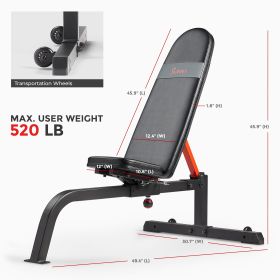
Dense, firm foam holds you stable; soft, plush foam sinks under heavy loads and steals power off the bench. Aim for high-density foam wrapped in tear-resistant vinyl, with a tacky grip surface for steep inclines. Wider pads (10.5"–12") suit broader shoulders; narrower pads keep the arm path clear on dumbbell pressing.
Footprint, Wheels and Storage
A premium bench earns its place by fitting your room, not just your workout. Check overall footprint, total height in the upright position, and whether it folds or rolls. Built-in transport wheels and a vertical storage stand turn a 90 lb FID frame into something one person can move and stow in seconds.
Match the Bench to Your Lifter Type
Different lifters need different bench priorities — pick by training goal, not price alone.
- Powerlifters and heavy pressers: 1,000 lb-plus capacity, zero-gap design, IPF-spec pad width
- Bodybuilders and hypertrophy lifters: wide back-pad range with fine 5°–10° angle steps
- Functional and CrossFit-style athletes: tough frame, fast adjustments, wheels for floor flexibility
- Trainers and small studios: commercial-rated capacity and a warranty-backed build
- Rehab, therapy and senior users: low step-on height, broad base, gentle incline transitions
- Apartment and condo home gyms: folding designs, compact upright storage, floor-safe rubber feet
For clinics and studios, the commercial fitness collection pairs cleanly with these benches for full-room build-outs.
How It Compares to Other Benches
An adjustable FID bench wins on versatility, but it isn't the only choice. The table below shows how it stacks up against the rest of the lineup so you can match the right bench to the right job.
| Bench Type | Best For | Typical Capacity | Key Trade-Off |
|---|---|---|---|
| Adjustable / FID | Full-body, multi-angle training | 600–1,500 lb | Higher upfront cost |
| Flat bench | Heavy pressing and rows | 1,000–2,000 lb | Single angle only |
| Incline-decline bench | Dedicated chest splits | 600–1,200 lb | Less compact |
| Curl bench | Isolated arm work | 300–600 lb | Specialty use only |
Can you do all exercises on an adjustable bench? Almost. A well-built FID covers chest, shoulders, arms, back, and core work. Heavy benchers chasing top-end PRs may still prefer a dedicated flat bench for absolute stability under maximal loads.
Key Selection Criteria
✅ Heavy-gauge steel frame
✅ 600–1,500 lb load rating
✅ True flat-incline-decline range
✅ Multi-position adjustable seat
✅ Zero or minimal back-pad gap
✅ High-density tear-resistant pads
✅ Wide non-slip rubber feet
✅ Built-in transport wheels
✅ Vertical storage option
✅ Commercial-grade warranty
✅ Pairs with racks and dumbbells
Care, Setup and Longevity
A premium bench needs almost no maintenance—only sensible habits. Bolt every joint to spec on assembly, retighten after the first week of use, and wipe the pad after each session to protect the upholstery. Store the bench upright when it isn't in use to keep dust off hinges and prevent compression marks in the foam.
For full-room builds, pair your bench with a power rack or cage and a matched free-weight set so working height, footprint, and load capacity stay consistent across every station.
Shop Across the USA
Hamilton Home Fitness ships nationwide from Tennessee, with free shipping on select brands and dedicated support on larger commercial orders. Are FID benches better than flat benches for home gyms? For most home users, yes—the angle range earns its keep on day one. If you're laying out a full space and want help matching benches, racks, and flooring, the gym design consultation team can spec your room before you order.
Browse the full lineup of adjustable weight benches above, compare specs side by side, and order today—every bench is backed by a brand warranty and honest, real-person service.
Secure Payments