Introduction
If you’re using a vertical chest press machine and wondering, “Why do I feel this more in my shoulders and triceps than my chest?” You’re asking the right question. The vertical pressing path looks simple, but small setup details change which muscles do the work—especially the pectoralis major, anterior deltoid, and triceps brachii.
Across commercial gyms and home setups, the most common error is starting too high or letting the shoulders roll forward. That often shifts effort away from the mid-chest (sternal head) and upper chest (clavicular head) and into the front delts. A quick example: raise the seat one notch too far, and many lifters immediately report “shoulder burn” on the first reps, even at the same weight.
This guide is a full breakdown of vertical chest press machine muscles worked, plus the practical tweaks that change activation: neutral vs. pronated grip, grip width, range of motion, and why lockout increases triceps dominance. We’ll also compare chest press machine muscles to bench and dumbbells using what biomechanics and EMG research show about pressing angles and tension. If you want chest growth, strength, or joint-friendly pressing, you’ll finish knowing exactly how to target pecs on the machine with total confidence.
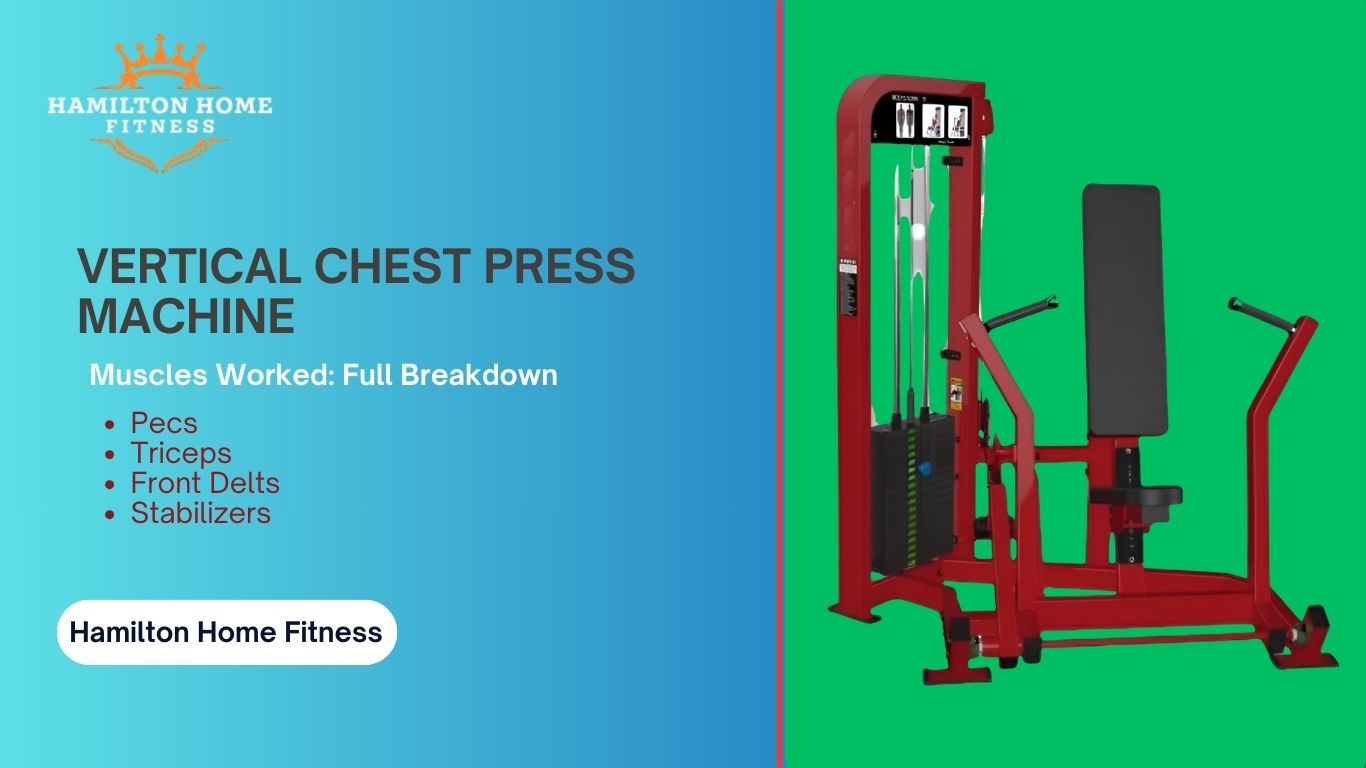
Vertical Chest Press Muscles Worked
What chest muscles work the most?
The main target on a vertical chest press machine is the pectoralis major—your largest chest muscle. Most lifters feel the strongest tension through the mid-chest (sternal head) when the handles start around nipple-to-mid-chest height and the elbows track slightly below shoulder level. If the machine’s handles start higher, you’ll usually shift more work toward the upper chest (clavicular head)—but only if your shoulders stay “down and back” instead of rolling forward.
A practical, gym-floor test: if you can pause for one second in the bottom stretch position and still feel chest tension (not shoulder pinch), your setup is probably chest-dominant.
Does it work triceps and shoulders?
Yes—this is a compound press. The triceps brachii drives elbow extension, especially in the top half and lockout. The anterior deltoid (front delt) assists at the shoulder, and it often becomes the “lead actor” when your seat is too high, your elbows flare wide, or you press with a forward-reaching motion. In real-world training, people who report “triceps dominance” usually lock out hard and rush the stretch—great for strength practice, not ideal for chest growth.
What stabilizers help during presses?
Even on a machine, your body stabilizes. The serratus anterior helps control the shoulder blade as you press, while the rotator cuff and upper back muscles contribute to shoulder positioning. Your core braces against the pad to stop torso shifting. If you notice your shoulders drifting forward rep-to-rep, that’s often a stabilizer fatigue sign—and it’s a cue to reduce load, slow the tempo, and earn cleaner reps for better pec activation.
Upper vs. Mid Chest: What Changes?
Is it better for the upper or lower chest?
Most vertical chest press machines naturally feel like a slightly “incline-style” press because you’re seated upright and pressing forward. That often means the upper chest (clavicular head) can contribute more than it would on a flat press—if your setup supports it. In real use, the biggest switch is seat height: when the handles start closer to upper-chest level, many lifters feel more clavicular tension. But if the start position is too high, your anterior deltoid takes over, and your “upper chest” work becomes “front shoulder” work.
A quick real-world example: if you raise the seat one notch and suddenly feel the rep in the front of the shoulder on the first push, you didn’t “find upper chest”—you shifted the joint angle into delt-dominance.
Which grip hits pecs best?
Grip changes your shoulder position and elbow path. A neutral grip (palms facing each other) often feels more joint-friendly and makes it easier to keep the shoulders stable, which helps pec activation for a lot of people. A pronated grip (palms forward) can feel more like a classic press, but if it encourages elbows to flare and shoulders to roll forward, chest tension can drop.
If your goal is “more chest, less triceps,” choose the grip that lets you feel tension in the chest during the first half of the rep—not just at lockout.
Does range of motion change results?
Yes. The stretch position is where many lifters feel the pecs most, while the lockout tends to emphasize the triceps brachii because elbow extension becomes the limiter. Partial reps near lockout are great for practicing strength and triceps emphasis, but for chest growth, you’ll usually get better results controlling the bottom range and stopping before the shoulders dump forward.
Why Do I Feel It in My Shoulders?
Why does it hit my front delts?
When a chest press machine turns into a “shoulder workout,” it’s almost always a position problem, not a “weak chest” problem. The anterior deltoid takes over when the press starts too high, the elbows flare hard, or the shoulders roll forward as you drive the handles. In real gyms, you’ll see this pattern fast: a lifter unracks, shrugs slightly, and the shoulders creep toward the ears by rep three—then the chest pump disappears.
A simple cue that works well: keep your chest tall on the pad and imagine your shoulders staying “heavy” (down), not reaching forward.
How do I set the seat and elbows?
Start with the seat so the handles line up around mid-chest, not neck height. Your wrists should stay stacked and neutral, and your elbows should track at a moderate angle—neither pinned tight nor flared straight out. If the machine allows, choose a grip that keeps your shoulders comfortable (many people prefer a neutral grip). During the rep, control the descent until you feel a chest stretch, then press without letting your shoulders round forward.
A real-world fix I use with clients: reduce the weight, pause one second at the bottom, and do 8 clean reps. If the shoulders stop barking, you’ve found the right groove
Why is the chest press “so hard”?
Machines feel brutally honest because the path is fixed. You can’t subtly change your pressing groove like you can with dumbbells, so any mismatch in handle height, seat depth, or shoulder mobility shows up immediately. If it feels awkward, don’t force it—adjust the seat, switch grip, shorten the range slightly, and rebuild with controlled reps. That’s how you keep shoulder involvement appropriate while restoring pec activation.
Chest Press Machine vs Bench Press
Does the machine build chest muscle?
Yes—when programmed well, a vertical chest press machine is one of the most reliable tools for chest growth because it stabilizes the movement and lets you focus on output. In real training, it’s especially effective for adding quality volume after heavier free-weight work. For example, many lifters bench first, then use the machine for 2–4 controlled sets where they can chase a deep stretch and steady tension without worrying about balancing dumbbells or needing a spotter.
If your goal is hypertrophy, the “proof” is in repeatability: you can keep the same setup, tempo, and range of motion week to week and track progressive overload cleanly.
Is it as good as a bench press?
They overlap in muscles—pectoralis major, triceps brachii, and anterior deltoid—but the experience is different. The bench press demands more stabilization from the whole body and shoulder girdle, while the machine reduces instability so you can push closer to muscular failure with less technique breakdown. That doesn’t make one “better.” It means the bench is great for skill-based strength, and the machine is great for controlled effort and consistent chest-focused reps.
A practical comparison: if you lose tightness and your shoulders ache on the bench, the machine often keeps you training productively while you rebuild pressing mechanics.
Who should choose it for training?
The machine is a smart choice for beginners learning pressing patterns, lifters training alone, people managing shoulder irritation, and anyone who wants predictable chest volume on a push day. It’s also a solid option for home gyms and facilities because it scales from entry-level users to advanced lifters—provided the machine fits the user’s arm length, handle height, and preferred grip.
Final Thought: Press With Purpose
The Vertical Chest Press Machine is only “a shoulder-and-triceps machine” when it’s set up that way. When the handles start at the right height and your shoulders stay stable, the pectoralis major—both the sternal head (mid chest) and, with the right alignment, the clavicular head (upper chest)—can do the job you actually came for. In my experience coaching and watching lifters troubleshoot this exercise, the biggest breakthrough is usually simple: drop the seat one notch, switch to a neutral grip, slow the descent, and pause briefly in the stretch. Suddenly the chest turns on and the front delts stop screaming.
Use this guide as your checklist: grip, seat height, elbow path, and controlled range of motion. If you want a machine that fits your body and supports real chest growth—whether you’re building a home gym or outfitting a facility—Hamilton Home Fitness can help you choose a vertical chest press that matches your frame, goals, and space. Train smart, press with intent, and let the results follow.