Introduction
If the Vertical Chest Press Machine keeps lighting up your shoulders instead of your chest, it’s usually not a strength issue—it’s a setup and path issue. Most people sit down, grab the handles, and press… But small misalignments (seat too low, elbows drifting, wrists bent back) can turn a chest-builder into a shoulder-dominant grind. The fix is often immediate once you know what to look for.
In real-world coaching and gym floors, the fastest wins come from dialing in chest press machine setup basics: handle height near mid-chest, feet planted, ribs down, and scapular retraction (shoulder blades “back and down”) before the first rep. From there, elbow angle and wrist position decide whether your pecs stay loaded or your joints take the stress. One simple proof-check: if you can pause at the bottom without your shoulders rolling forward, you’re in a safer, more chest-friendly groove.
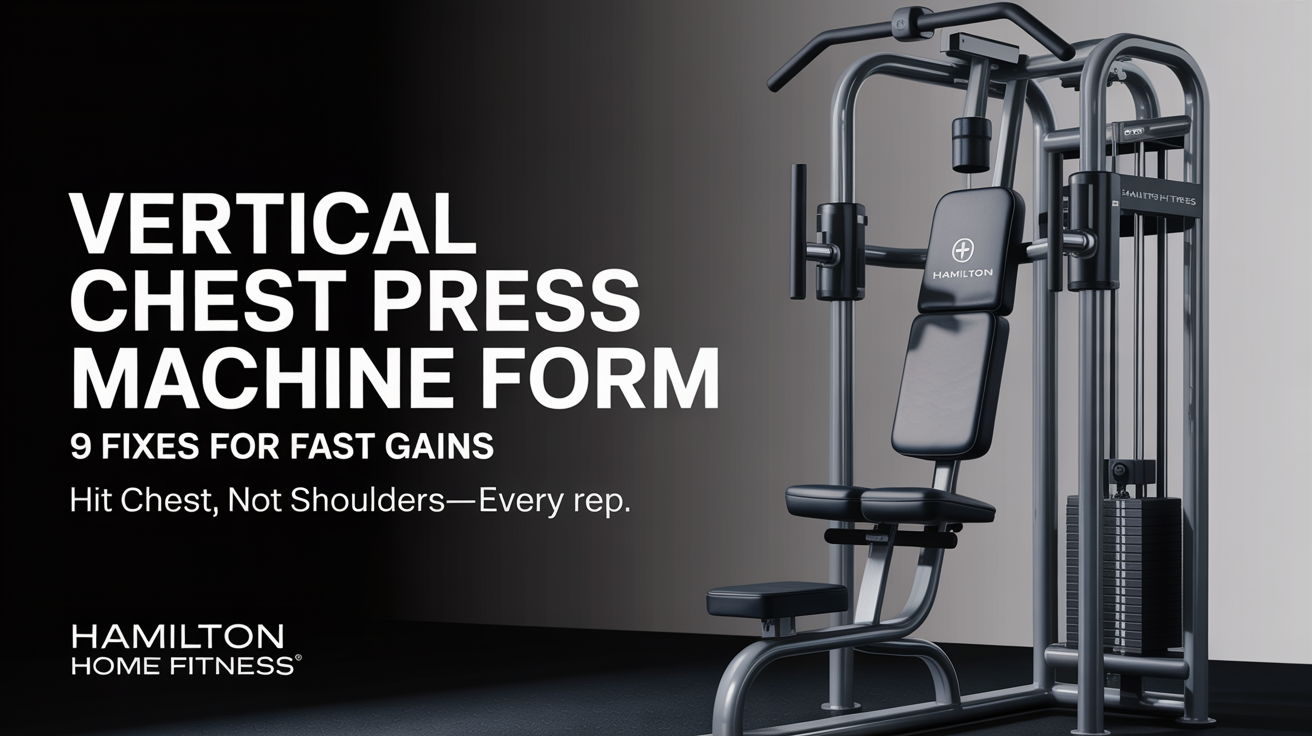
This guide focuses on vertical chest press machine form with quick, practical cues—plus safe execution details like controlled eccentrics, breathing, and bracing—so you feel chest, not shoulders, every rep. And if you’re building a home setup, Hamilton Home Fitness (Tennessee-based, shipping nationwide) prioritizes adjustability because the right fit makes good technique repeatable.
How do I do a vertical chest press?
The goal on a vertical chest press machine is simple: a stable press line that loads the pectoralis major while the anterior delts assist, not dominate. In real-world form checks, the biggest “aha” is that great seated chest press technique is mostly setup, not effort—get the start position right and the pecs show up fast.
What’s the step-by-step setup?
Set the seat and handles so the grips start around mid-chest (sternum line), not up near your collarbone. Plant your feet, keep your ribs “down,” and set a tall chest press machine back position. Before the first rep, pull your shoulder blades slightly back and down (scapular retraction chest press) and keep them pinned as your arms move. Now press smoothly and return with control—no bouncing. Proof-check: you should be able to pause for one second at the bottom without your shoulders rolling forward.
What elbow angle hits the pecs?
For most bodies, the best elbow angle for a chest press is “slightly down and out,” not glued to your ribs and not fully flared. If you get chest press machine elbow flare, it often turns into a shoulder press. If you tuck too much, you’ll feel the chest press machine triceps takeover. Proof-check: during the descent, your forearms stay close to vertical and your elbows track the same groove every rep.
Where should wrists and grip be?
Keep a neutral wrist position during the chest press—knuckles stacked over forearms—to avoid chest press machine wrist pain and lost force. Start with a grip width just outside shoulder width, and choose handles that let you keep wrists straight. If you’re unsure, drop the load, slow the controlled eccentric chest press, and use the grip that makes the pecs “switch on” without shoulder irritation.
How do I set the seat and handles?
Good vertical chest press machine form starts before the first rep. When someone says the machine “just doesn’t feel right,” it’s almost always one of three things: seat height, handle height, or shoulder-blade position. In practice, a one-notch change can turn a shoulder-dominant press into a clean chest hit—especially on machines with multiple handle options or adjustable backrests.
How high should the seat be?
Use this chest press machine setup basic rule: at the start position, the handles should line up around mid-chest, and your elbows should be slightly below shoulder height. If the seat is too low, you end up pressing “up” and feeling shoulders. If it’s too high, your range gets cramped and you often lose stable contact with the pad. Proof-check: feet flat, hips steady, and you can keep a tall posture without your lower back over-arching.
Where should handles start/finish?
For handle height chest press, start where you can feel a chest stretch without the shoulders rolling forward. Your bottom position should look controlled—no shrugging, no rounded upper back. At the top, aim for full extension without jamming the elbows; a “soft lockout” keeps tension in the pecs and helps keep the lockout chest press safe. Proof-check: if your shoulders creep toward your ears as you reach the top, the handles are likely too high or the load is too heavy.
How do I set shoulder blades?
The fastest fix for chest activation is shoulder blade chest press control. Set them “back and down” (retraction plus slight depression) before you press, then keep them anchored. Think: “proud chest, long neck.” Proof-check: during the set, you should feel your upper back gently pressing into the pad, not sliding or rounding. If you lose that anchor, the press often shifts into the front delts—exactly why many people say the chest press machine feels like it's in the shoulders.
Why do I feel it in my shoulders?
Feeling some front delt on a vertical chest press machine is normal—pressing is a shared job. But if the movement feels like “all shoulders” or you get pinchy discomfort at the front of the joint, that’s usually a form-and-setup mismatch. On gym floors, the pattern is consistent: shoulders take over when the start position is too high, the shoulder blades aren’t anchored, or the elbows drift into a bad path under fatigue.
How do I stop shoulder takeover?
Start by rechecking handle height, chest press, and seat height so you’re pressing forward from mid-chest, not upward toward your face. Then do a quick “quiet shoulders” reset: ribs down, shoulder blades back and down, neck long. Drop the load and do 5 slow reps with a 2–3 second controlled eccentric chest press. Proof-check: if your shoulders stop burning and your chest starts working, it wasn’t a “weak chest”—it was speed and alignment.
How do I fix elbow flare fast?
Chest press machine elbow flare is one of the most common mistakes. Use the cue “elbows slightly down and out,” and keep your forearms close to vertical as you lower. If your elbows fly wide at the bottom, reduce the range slightly until you can keep the scapular retraction chest press stable. Proof-check: film one set from the side—if your elbows drift higher than your shoulders, you’re setting yourself up for shoulder dominance.
Why don’t I feel my chest working?
If you’re asking, “Why don’t I feel chest press in my chest?” look for these three culprits: wrists bent back, elbows tucked too much (triceps takeover), or a rushed tempo. Fix the wrist position in the chest press (stacked knuckles), choose a moderate grip width, and add a one-second squeeze near the top without shrugging. Proof-check: you should feel the pecs working hardest in the mid-range, not only at lockout or only at the bottom.
How do I get fast gains safely?
Fast gains on the Vertical Chest Press Machine come from repeatable reps, stable joints, and progressive overload you can sustain. In day-to-day programming, the lifters who grow quickest aren’t the ones who max out every set—they’re the ones who keep vertical chest press machine form consistent across weeks, so their chest gets the stimulus instead of their shoulders getting beat up.
What tempo builds muscle fastest?
A reliable hypertrophy tempo is smooth up, controlled down. Focus on a 2–4 second controlled eccentric chest press and avoid letting the weight stack “drop.” That slower lowering is where many people finally feel chest press machine chest activation—especially if they’ve been bouncing reps. Proof-check: you should be able to stop the handles halfway down for a split second without losing posture. If you can’t, the load is too heavy or the tempo is too fast.
How should I breathe and brace?
Use the chest press machine breathing like this: inhale and brace before you press, then exhale as you drive the handles away. Think of a “360° brace” around your torso—this is bracing for a chest press—so your ribs don’t flare and your lower back doesn’t arch off the pad. Proof-check: if your hips shift or your chest pops up to finish reps, you’re compensating. Reduce weight and rebuild the brace.
How do I program reps and sets?
For most people, 3–5 working sets of 6–12 reps is a strong starting zone. Warm up with 2 lighter sets focusing on chest press machine setup basics, then work near technical failure—hard reps where you keep shoulder blades anchored to the chest press. Proof-check: when fatigue hits, the first thing that should change is rep speed, not your elbow path or shoulder position. If form breaks, stop the set—those “ugly reps” train the wrong pattern.
Final Thought
The Vertical Chest Press Machine can be one of the fastest ways to build your chest—if your setup and cues keep tension where it belongs. When in doubt, return to the “non-negotiables”: handles starting at mid-chest, feet planted, ribs down, scapular retraction (shoulder blades back and down), elbows slightly down-and-out, and a controlled eccentric. In real training, those basics are what separate “I feel it in my shoulders” from reliable chest press machine chest activation—and they keep wrists, elbows, and shoulders happier long-term.
If you want a simple next step, use this test on your next session: drop the load by 20%, slow the lowering, and pause for one second in the bottom position without your shoulders rolling forward. If your pecs light up, you’ve found your groove.
If you’re building a home setup, Hamilton Home Fitness (Tennessee-based, shipping nationwide) can help you choose a vertical chest press machine with the adjustability that makes good form repeatable—so your progress isn’t limited by poor fit.