Introduction
Buying used commercial gym equipment is one of the smartest ways to cut fit-out costs—and one of the fastest ways to inherit someone else's broken machine. That gap is the whole problem. A restored commercial rack or treadmill can cost 40–70% less than new and still outlast a cheaper new model, but one uninspected purchase can leave you with a machine you can't service and can't return.
If you're opening a gym, outfitting a school weight room, or upgrading a hotel or apartment fitness room, you already feel the pull. The prices look great. The risk is what keeps you up — hidden defects, thin warranties, and no one to call when something fails on a busy floor.
This guide fixes that. You'll learn when a used beat is new and when it isn't; exactly what to inspect on a treadmill or strength machine; the seller red flags that mean walk away; and how to buy refurbished equipment from a source that actually stands behind it.
New vs Used Commercial Gym Equipment
Restored used commercial equipment delivers 40–70% savings on the same commercial-grade build, while new wins on warranty length and lead time. Lean is used for durable strength machines and free weights. Lean new for high-cycle cardio, or when full manufacturer coverage isn't something you can compromise on.
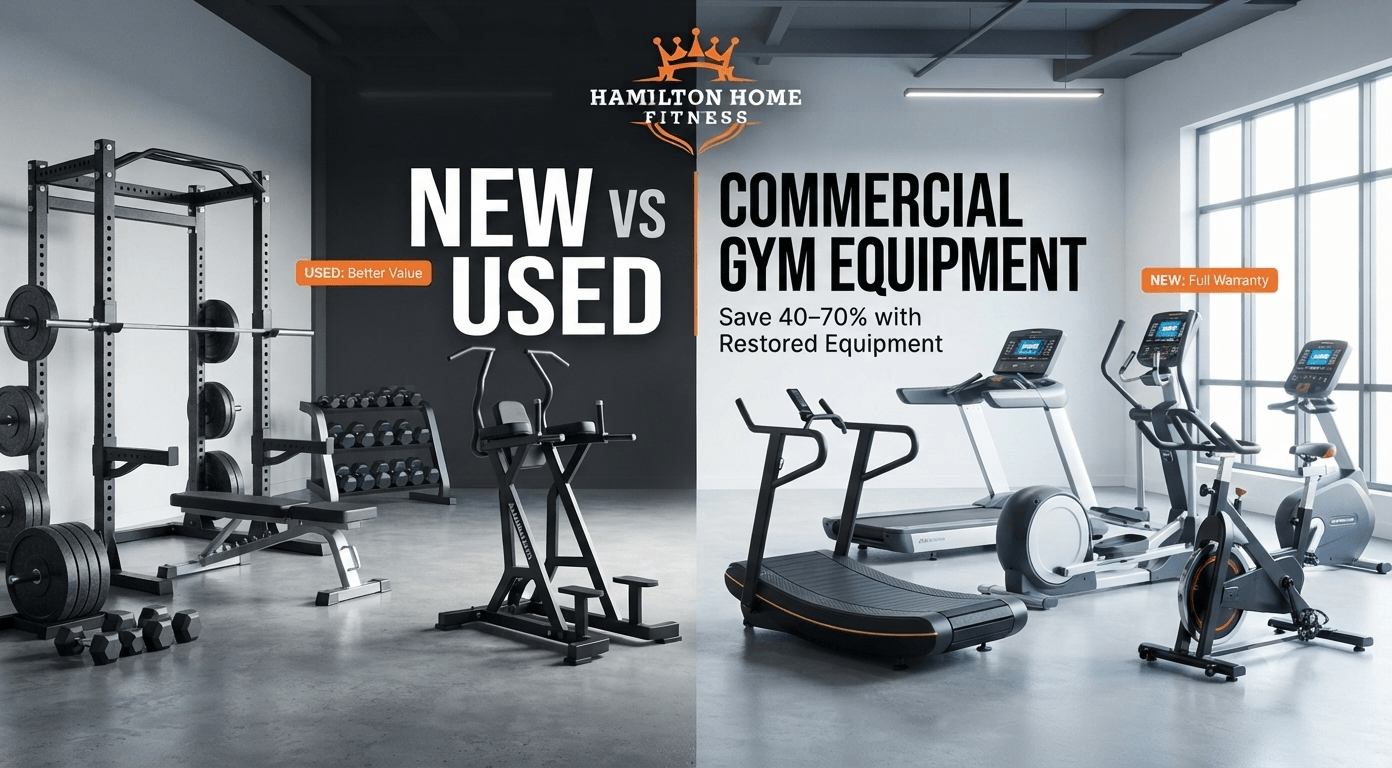
The reason comes down to how commercial equipment is engineered. Frames, bearings, and weight stacks are built for years of full-time facility use, so a properly restored piece starts with far more life left than the label suggests. That's why a restored half-rack often outperforms an entry-level new rack at the same price — you're buying commercial bones instead of stamped-steel shortcuts.
Here's how the three options actually compare:
Factor | Certified Used / Refurbished | New | Remanufactured |
Price vs new | 40–70% less | Full MSRP | 25–50% less |
Warranty | Limited, varies by item | Full manufacturer term | Often rebuilt-to-spec coverage |
Lead time | Fast — in stock, rotates | Can involve build/ship wait | Moderate |
Lifespan left | High on commercial builds | Full | Near-original |
Main risk | Condition varies by seller | Cost | Higher price than plain used |
The decision rule is simple. If a category has few moving parts and takes heavy use—squat racks, benches, plates, and dumbbells—used is almost always the smarter spend. If a machine runs on a motor and electronics under constant daily traffic, weigh new more seriously, because that's where remaining life is hardest to judge and most expensive to replace.
Used vs Refurbished vs Remanufactured
These three words get used interchangeably in listings, but they mean very different things for your money. "Used" means previously owned and typically sold as-is. "Refurbished" means the machine has been inspected, worn parts replaced, and function tested. "Remanufactured" goes furthest—stripped to the frame and rebuilt to near-original spec. Price and reliability climb at each step, so the label tells you what you're actually buying.
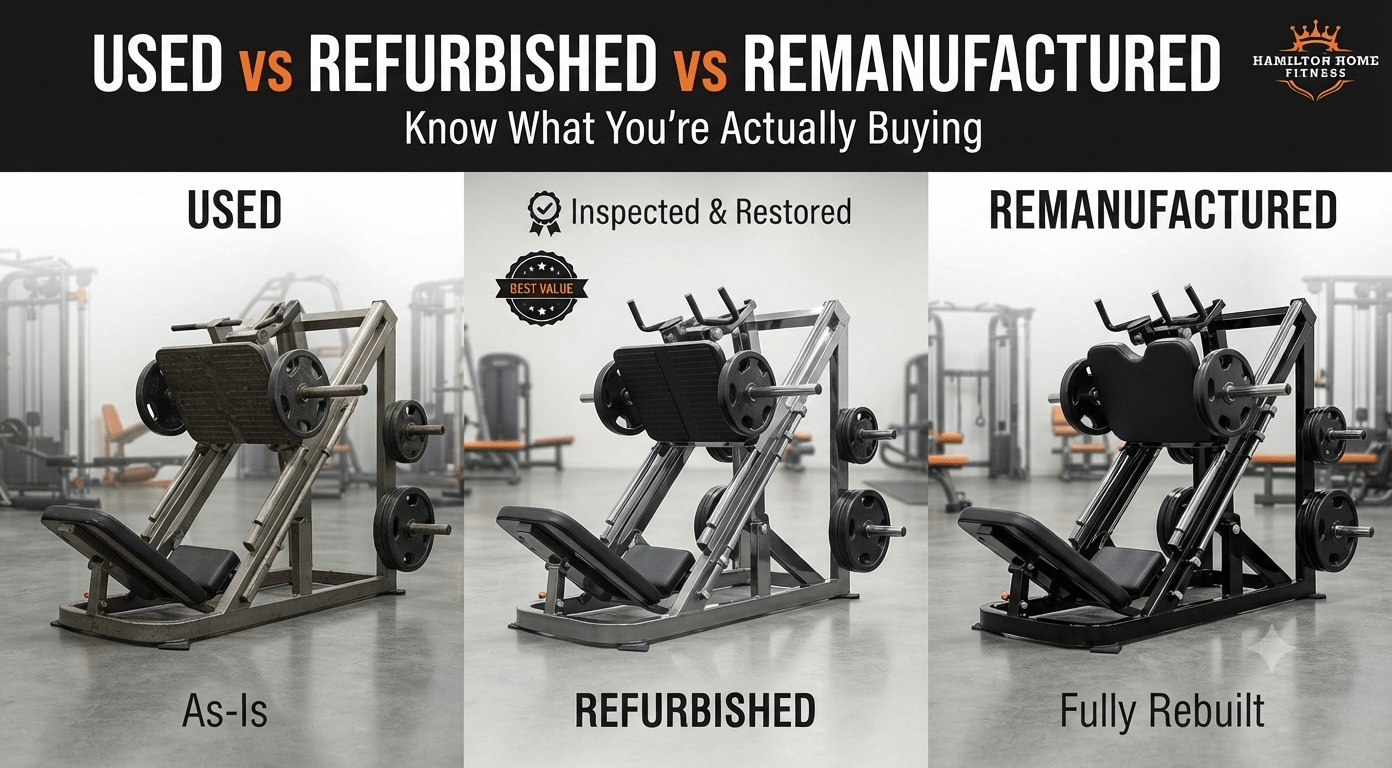
Used (as-is) is the machine exactly as it left its last owner. No one has replaced parts or tested it for you. The price is the lowest, but so is the certainty—you're accepting whatever wear came with it.
"Refurbished" means a real restoration happened: cables, pads, belts, and hardware were swapped where needed, then run under load to confirm it works. You pay more than as-is, and you get a machine that's been checked by someone before it reached you.
"Remanufactured" is a full rebuild—the frame is stripped, worn components are replaced wholesale, and the piece is brought back to near-original performance. It costs the most of the three used tiers, but it's the closest a pre-owned machine gets to new.
Which to trust when? For a commercial floor, refurbished from a seller who inspects and warranties it is the practical sweet spot—remanufactured if you want maximum life on a heavily used piece and plain as-is only when you can inspect it yourself and the discount is worth the gamble.
How to Inspect Used Gym Equipment
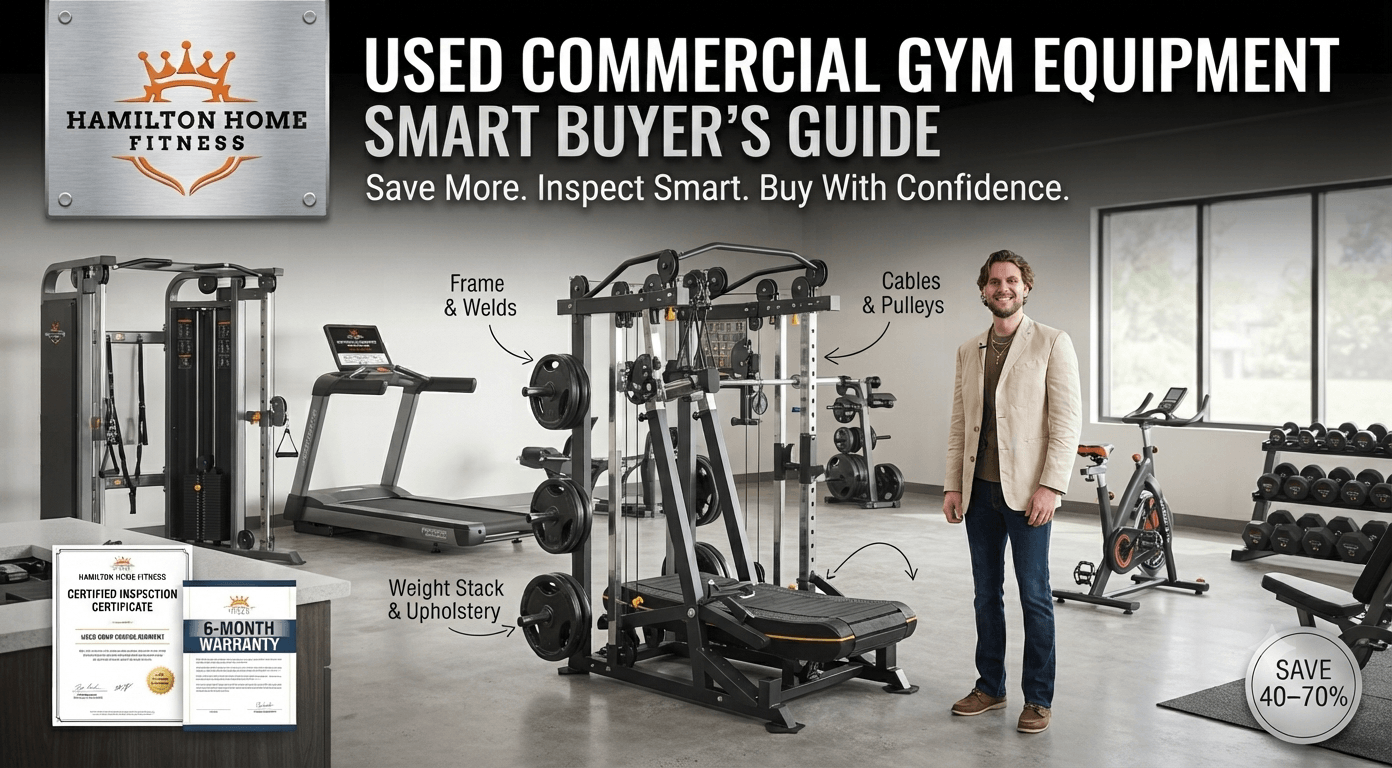
Check the frame and welds for cracks or rust, test every cable, pulley, and moving part under load, and confirm the electronics, belts, and motor run smoothly. If a seller won't let you test a machine or won't tell you where it came from, treat that as a warning—not a minor detail. A quick inspection is the difference between a bargain and a liability.
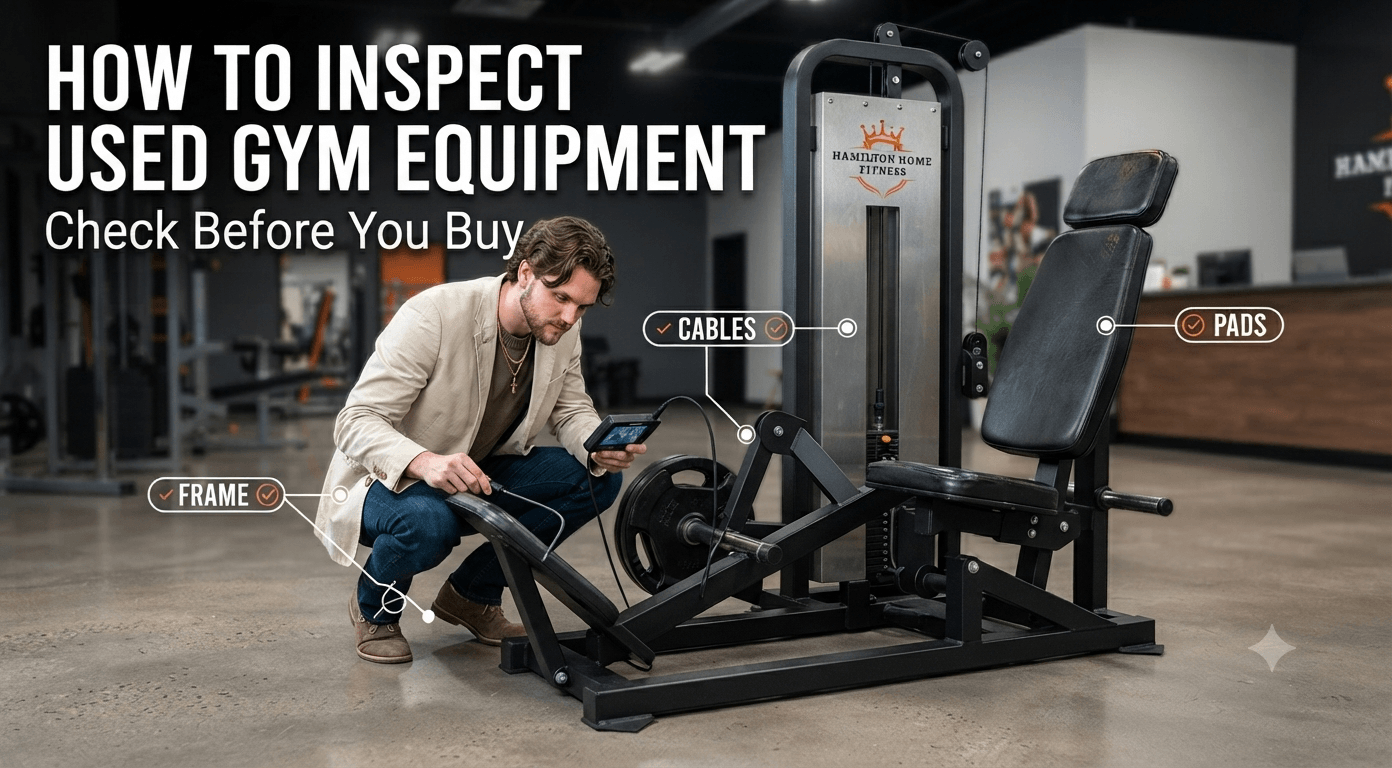
The mistake first-time buyers make is judging a machine by how it looks. Fresh paint hides nothing structural. A treadmill can gleam and still have a motor on its last legs, so run the diagnostics that actually predict remaining life.
Checking a Used Treadmill or Bike
On used cardio machines, the motor and electronics decide the machine's remaining life—check them first.
Motor: listen for grinding or surging under load; a smooth, steady hum is what you want
Belt and deck: look for even tracking, no fraying edges, no worn patches down the center
Console: confirm every button, display, and safety stop responds, and ask about firmware
Drive system: feel for a consistent stride or pedal resistance, with no slipping or clunks
A used treadmill priced suspiciously low usually has a motor or board problem — the exact repairs that erase your savings. If a specific model doesn't pass, it's worth comparing against new cardio machines before you settle.
Checking a Used Strength Machine
On used strength machines, structural integrity matters more than cosmetics—inspect welds and cables before pads and paint.
Welds and frame: no cracks, no stress lines radiating from joints, no deep rust
Cables and pulleys: smooth glide end to end, no fraying, intact stops
Pads and upholstery: firm and intact is ideal, but torn padding is cosmetic and cheap to fix
Weight stack: every pin and peg present, plates moving cleanly on the guide rods
Learn to separate the two kinds of wear. A cracked weld is a walk-away; a scuffed pad or faded finish is nothing. That instinct alone saves you from both overpaying and overlooking real danger—and it's why power racks and cages are one of the strongest used-buy categories, since the value lives in the steel.
Red Flags That Mean Walk Away
Some warning signs outweigh any discount. Walk when a seller sells strictly AS-IS with no testing allowed, can't offer any service history, or won't put a warranty in writing. On a private listing, those gaps mean you're absorbing every hidden defect yourself. A great price attached to zero accountability isn't a deal—it's a gamble with your facility's uptime.
Does Used Gear Hold Up in Commercial Use?
Yes—commercial-grade used equipment is built for full-time facility duty and routinely outlasts entry-level new machines. Strength pieces last 15–25+ years with basic care; cardio runs 8–15 years from new. The smart move is placement: put restored gear in secondary and member zones, and buy new for your highest-traffic cardio.
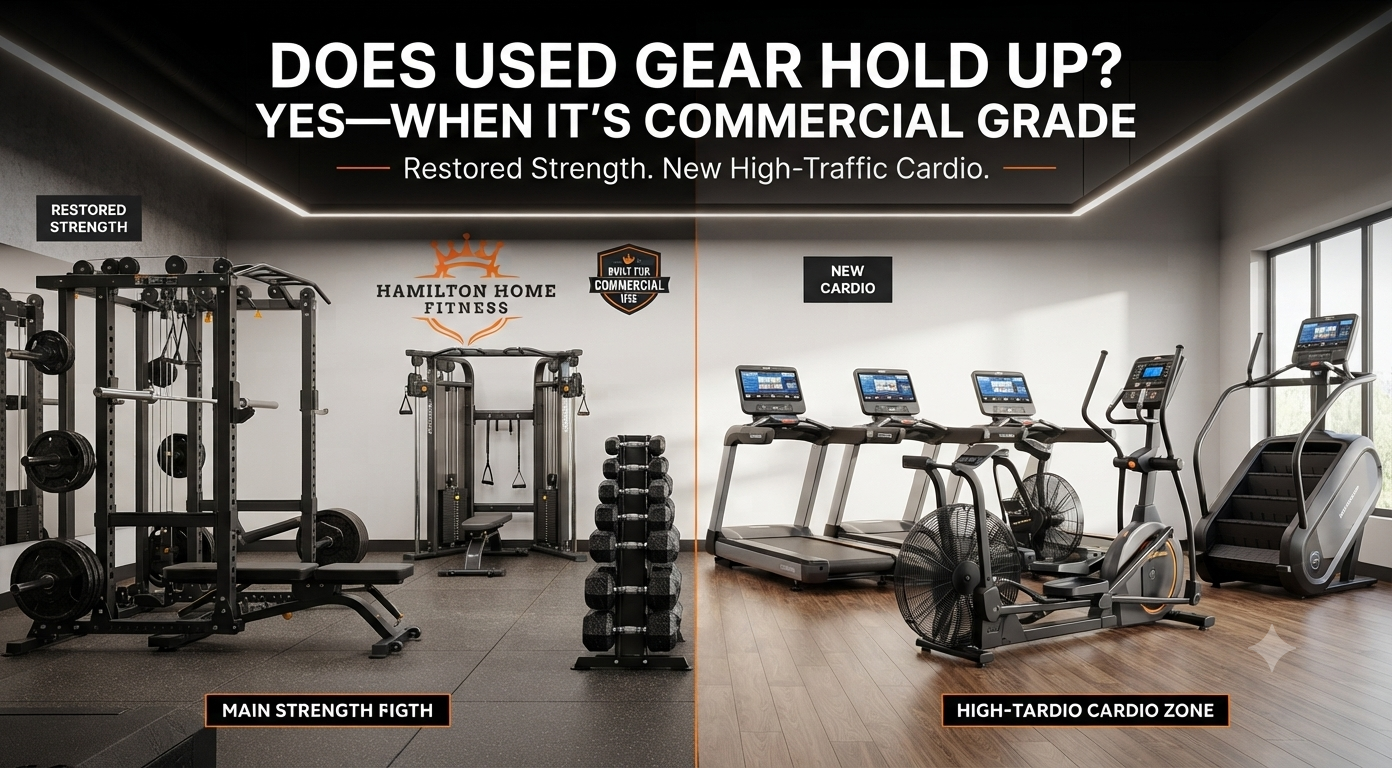
The distinction that matters is commercial versus residential building, not new versus used. A commercial machine was engineered for back-to-back use by hundreds of members, so even after years of service it often has more durability left than a new residential-grade model has when it ships. Restoration resets the wear parts and extends that runway further.
Think in zones. A boutique studio can put restored plate-loaded machines and racks in its main training area with confidence, since those pieces thrive on heavy use and have few parts to fail. The same studio might buy new ones for its front-row treadmills—the units running the most hours with the highest visibility and the most electronics to wear out.
There's a liability angle too. Any machine on a member-facing floor needs to hold up under strangers using it hard, so confirm weight capacities and service support before it goes into rotation. Buy used where the build carries the load, and buy new where constant motor and electronic duty makes fresh coverage worth the premium. For the full range of options across both, the commercial fitness equipment catalog covers where used and new each make sense.
Where to Buy Used Gym Equipment
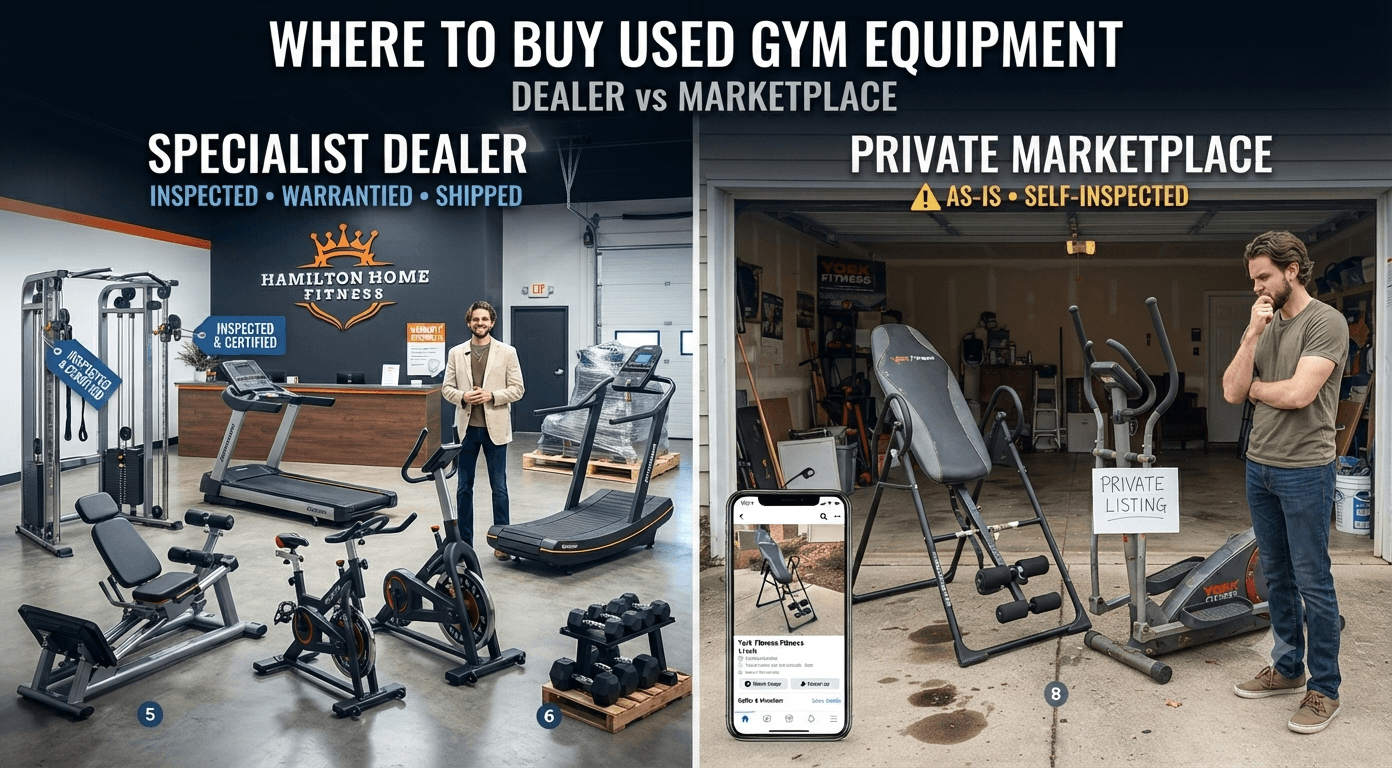
Gyms sell their old equipment through closures, upgrades, liquidations, and trade-ins, and that inventory feeds two very different channels: specialist dealers and public marketplaces. A dealer inspects, restores, warranties, and ships. A Craigslist or Facebook listing does none of that. For commercial spend, the channel you buy through decides how much risk you take on.
Where Used Inventory Comes From
Most used commercial equipment enters the market when a facility closes, upgrades its floor, or trades in older pieces. A gym remodel sends dozens of working machines looking for a second home. So do liquidations and closeouts when a location shuts down.
This is why provenance matters. A machine pulled from a well-maintained corporate gym is a different buy than one from a high-abuse 24-hour facility, even if they're the same model. Knowing where a piece came from tells you how hard its life was — and reputable sellers can speak to that history.
Dealer vs Marketplace Listings
A dealer and a marketplace listing can show you the same machine — but not the same protection. The gap is everything that happens before and after the sale.
Specialist Dealer | Craigslist / Facebook Marketplace | |
Inspection | Tested under load before listing | None—you inspect it yourself |
Condition | Restored, worn parts replaced | Exactly as the last owner left it |
Warranty | Limited coverage, disclosed upfront | None |
Freight | Quoted and coordinated | You arrange moving a 400 lb machine |
Recourse | A real team to call if something's wrong | Once it's sold, you're on your own |
A marketplace find can absolutely make sense for small, simple items — a rack of dumbbells or a used bench where there's little to break and nothing to service. But for a leg press, a cable station, or a full facility, the dealer premium buys inspection, warranty, and recourse. On commercial equipment, that protection usually costs less than a single surprise repair.
Warranty and Support on Used Machines
Many restored commercial machines carry a limited warranty on functional parts, but coverage varies by item and should be confirmed in writing before you buy. Ask about parts availability and service support too. A machine you can't get parts or help for is a risk no matter how good the price looks.
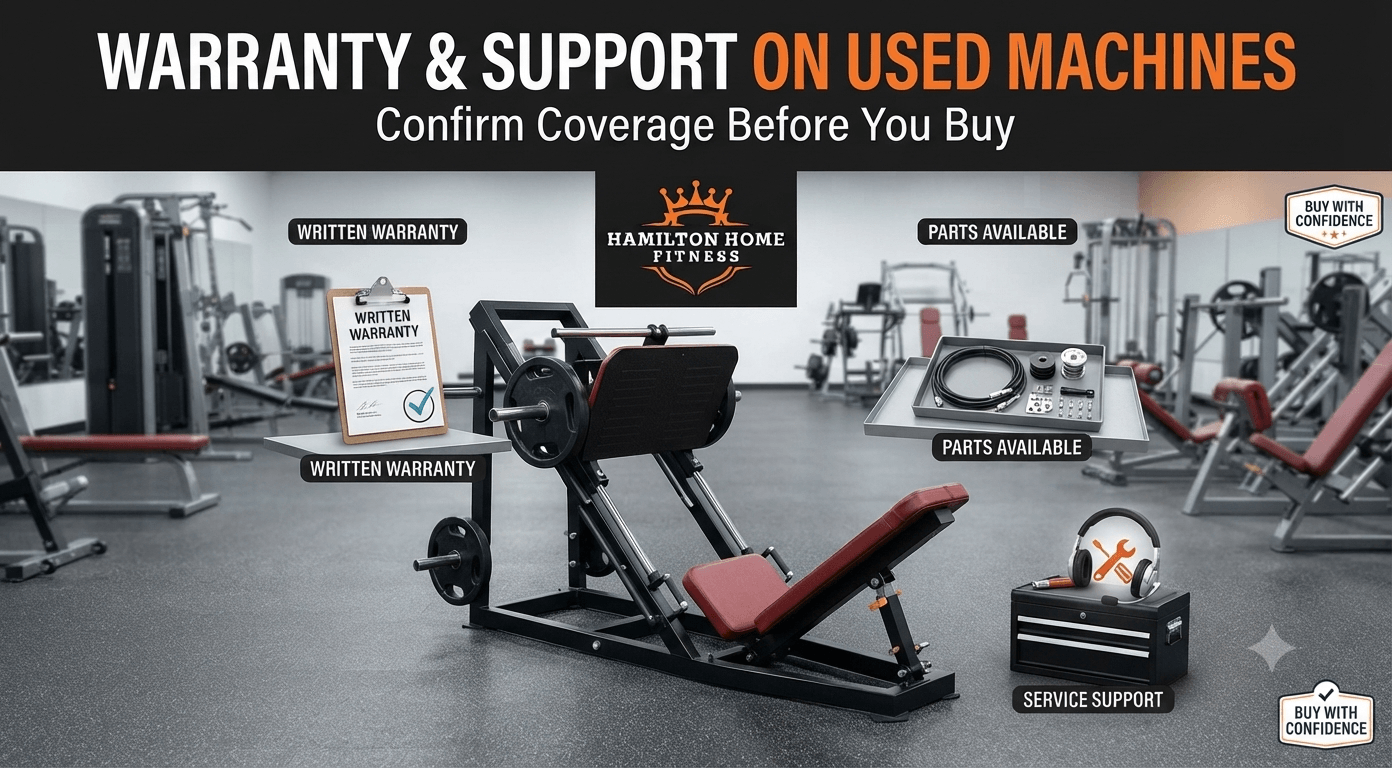
Warranty terms on used equipment aren't standardized the way they are on new. One piece might cover functional components for a set window; another might be sold with narrower terms. That's normal — what matters is that you know the exact coverage before money changes hands, not after. New brands shipped through a dealer typically follow the manufacturer's standard terms instead.
Serviceability deserves as much attention as the warranty itself. Before you commit, ask one plain question: if a cable snaps or a motor fails in two years, can I get the part and someone to fix it? On commercial machines built for long service lives, replacement parts are usually available — but confirm it for the specific piece rather than assuming.
Get the terms in writing. A verbal "it's covered" means nothing when a component fails on a busy floor. A reputable seller will state coverage and service options clearly and stand behind them, so contact the Hamilton Home Fitness team to confirm condition and warranty terms before you finalize any used purchase.
FAQ
Can you finance used commercial gym equipment?
Some sellers offer financing or leasing on commercial equipment, though terms vary widely by provider and are rarely uniform across used inventory. Financing options often depend on the specific pieces, their price, and their condition. If spreading the cost matters to your build, ask the dealer directly what applies to the machines you're weighing before you commit.
Can you buy a full commercial gym package used?
Yes. Multi-piece used packages are common for gyms, hotels, clinics, and corporate wellness rooms. They're usually configured to your floor plan and budget rather than sold as a fixed bundle, since used inventory rotates. Hamilton Home Fitness assembles used commercial packages through a gym design consultation built around your space and goals.
Does Hamilton Home Fitness restore and ship used equipment nationwide?
Yes. Hamilton Home Fitness inspects, restores, and function-tests used machines at its Tennessee facility, then ships nationwide across all fifty states. Freight on heavy pieces is quoted per item and destination rather than free, because dimensions, liftgate needs, and delivery location all affect the rate. Full terms are on the shipping and returns policy.
Final Thought
Used commercial gym equipment is a smart buy when you inspect it properly and buy from a seller who stands behind it. The savings are real — 40–70% off commercial-grade builds made to outlast cheaper new models — and the guesswork disappears once you know what to check and who to trust. Inspect the frame and moving parts, match each category to used or new, confirm the warranty in writing, and buy through a channel that offers real recourse.
That last part is where Hamilton Home Fitness fits. Every used machine is inspected, restored, function-tested, and backed by disclosed warranty terms, then shipped nationwide from Tennessee—so you get commercial quality without the risk that comes with a private listing.
Ready to see what's available? Browse the restored used inventory or reach out for current availability and a quote built around your space.