
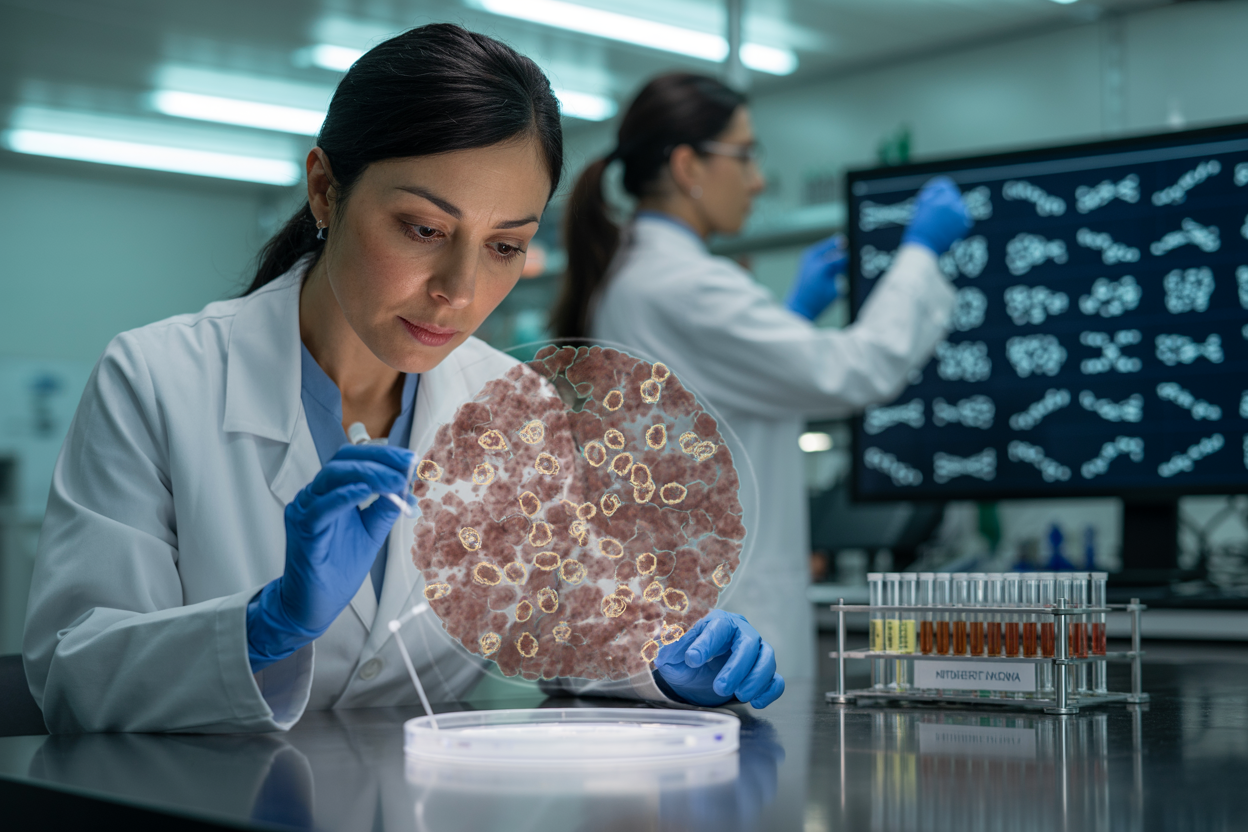
In recent years, cancer treatment has undergone a massive transformation. Once dominated by surgery, radiation, and chemotherapy, oncology is now witnessing a shift toward highly targeted and patient-specific therapies. Among these, personalized cancer vaccines have emerged as one of the most promising frontiers, combining the precision of genetic science with the body’s own immune system to fight tumors.
Why Personalized Vaccines Are Gaining Attention
Traditional cancer therapies, although lifesaving, often bring severe side effects and can sometimes struggle against recurring or resistant disease. Immunotherapy brought fresh hope, as it sought to engage the body’s natural defenses. However, even with checkpoint inhibitors and CAR-T therapy, the results have varied across cancer types and patient populations. Personalized cancer vaccines seek to bridge this gap by designing a treatment that is unique to each individual’s tumor biology.
The essence of these vaccines lies in teaching the immune system to recognize cancer cells as foreign invaders. By using data from the patient’s own tumor genome, researchers identify “neoantigens”—small protein markers that are specific to the cancer and not found in healthy cells. Vaccines are then developed to stimulate T-cells to attack cells displaying these markers, leading to a targeted and sustained immune response.
The Role of Cutting-Edge Genomics
What makes this approach possible today, as opposed to decades ago, is the advancement in next-generation sequencing and bioinformatics. With rapid genome analysis, it is feasible to map out a tumor’s mutational landscape in days. Algorithms then predict which mutations are most likely to trigger an immune response.
This data-driven process transforms treatment planning. Instead of giving every patient the same standardized protocol, oncologists can now consider a therapy designed specifically for one individual. It represents a shift away from “one size fits all” to “this one fits you.”
Breakthrough Clinical Trials
Several ongoing trials across the United States, Europe, and Asia are showing encouraging results. For example, mRNA-based personalized cancer vaccines—the same technology behind COVID-19 vaccines—have entered clinical testing for melanoma, pancreatic cancer, and even aggressive forms of brain cancer. Early studies indicate that patients receiving such vaccines not only demonstrate stronger immune responses but also show reduced relapse rates compared to conventional treatments alone.
Pharmaceutical companies are heavily investing in this field, while academic centers are forming collaborations to accelerate discoveries. The excitement is not unfounded: these vaccines could potentially transform cancers once deemed incurable into manageable conditions.
Integration With Existing Treatments
Cancer treatment rarely relies on one method alone. Surgery remains essential in removing localized tumors, while radiation and chemotherapy help shrink or eliminate cancer spread. Personalized vaccines are not meant to replace these entirely but to complement them.
For instance, after a tumor is surgically removed, patients still face the risk of microscopic cancer cells being left behind. A personalized vaccine can act as a safeguard, activating the immune system to hunt down residual disease and prevent recurrence. Similarly, combining vaccines with checkpoint inhibitors may enhance the body’s ability to sustain a long-term defense.
The Challenge of Cost and Accessibility
Despite the hope, one of the biggest challenges lies in cost and scalability. Designing a vaccine for each patient involves complex lab processes, sequencing, and manufacturing—all of which are resource-intensive. Moreover, developing global supply chains that can deliver such individualized treatments quickly remains a logistical puzzle.
This raises an important discussion: how can healthcare systems ensure that breakthroughs in personalized oncology do not widen the gap between patients who can afford cutting-edge care and those who cannot? Addressing this question will require innovation not only in science but also in policy, financing, and infrastructure.
The Human Perspective
Beyond the science, the appeal of personalized cancer vaccines lies in the psychological impact on patients. Being told that a treatment is literally designed for them provides hope and reassurance at a time when uncertainty dominates their lives. This shift in mindset may improve adherence to therapy and overall quality of life.
In cancer care, emotional resilience is as important as clinical outcomes. A treatment that empowers patients and makes them feel part of the process could bring benefits that extend beyond survival statistics.
Ethical Considerations
As with any new frontier, ethical questions arise. Who owns the genetic data collected from patients? How do we protect privacy when genomic information is so sensitive? How can clinical trials ensure equitable participation across diverse populations?
Answering these questions will be critical as the technology moves from experimental to mainstream. Transparency, patient consent, and global collaboration will be key pillars in ensuring the responsible use of personalized cancer vaccines.
Lifestyle, Fitness, and Recovery
It is also worth noting that oncology is increasingly adopting a holistic approach, recognizing that lifestyle and rehabilitation influence outcomes. Patients undergoing modern treatments often benefit from strength training, guided exercise, and nutrition programs designed to reduce fatigue and rebuild resilience. In this context, tools like an incline decline weight bench can be integrated into recovery regimens under professional supervision, promoting physical fitness while maintaining safety.
By combining medical advances with healthier living, patients may not only survive cancer but thrive after treatment.
Looking Ahead
The oncology community stands at a pivotal moment. Personalized cancer vaccines have the potential to redefine what it means to treat cancer. They bring together genomics, immunology, data science, and patient-centered care into one unified vision.
It is important, however, to balance optimism with realism. Not every cancer type may respond, not every patient will benefit, and large-scale access remains a distant goal. Still, history shows that transformative therapies often begin as experimental ideas before evolving into standard practice.
Just as chemotherapy revolutionized cancer care in the 20th century and targeted therapies in the early 21st, personalized vaccines may well define the next era. Oncologists, researchers, and patients are already shaping this future together.
Conclusion
Cancer is not a single disease but a collection of thousands of genetic variations, each with its own unique fingerprint. Personalized cancer vaccines acknowledge this truth by offering treatments that adapt to the patient, not the other way around. They represent hope for patients who once had few options and a step toward a more humane, precise, and effective era in medicine.
In this evolving landscape, the guidance of a Surgical Oncologist remains central, ensuring that cutting-edge therapies are integrated thoughtfully with established practices. The future of oncology is not just about curing disease but about creating pathways for patients to live longer, healthier, and more meaningful lives.