Introduction
When building muscle, many ask, "Should I use a barbell or dumbbell?" The answer depends on your goals, experience level, and desired results.
Strength training helps you build muscle, strengthen, and improve your fitness. But the tools you use—barbells or dumbbells—can change your training. Understanding the differences between barbell vs. dumbbell exercises can help you make the best choice for your body and goals.
In this blog, we'll explore the benefits of both. We'll also look at expert insights to help you make the right decision for muscle growth. Whether you're new to lifting or an advanced lifter, you'll find useful tips here.
1. Barbell Training: The Power of Heavy Lifting
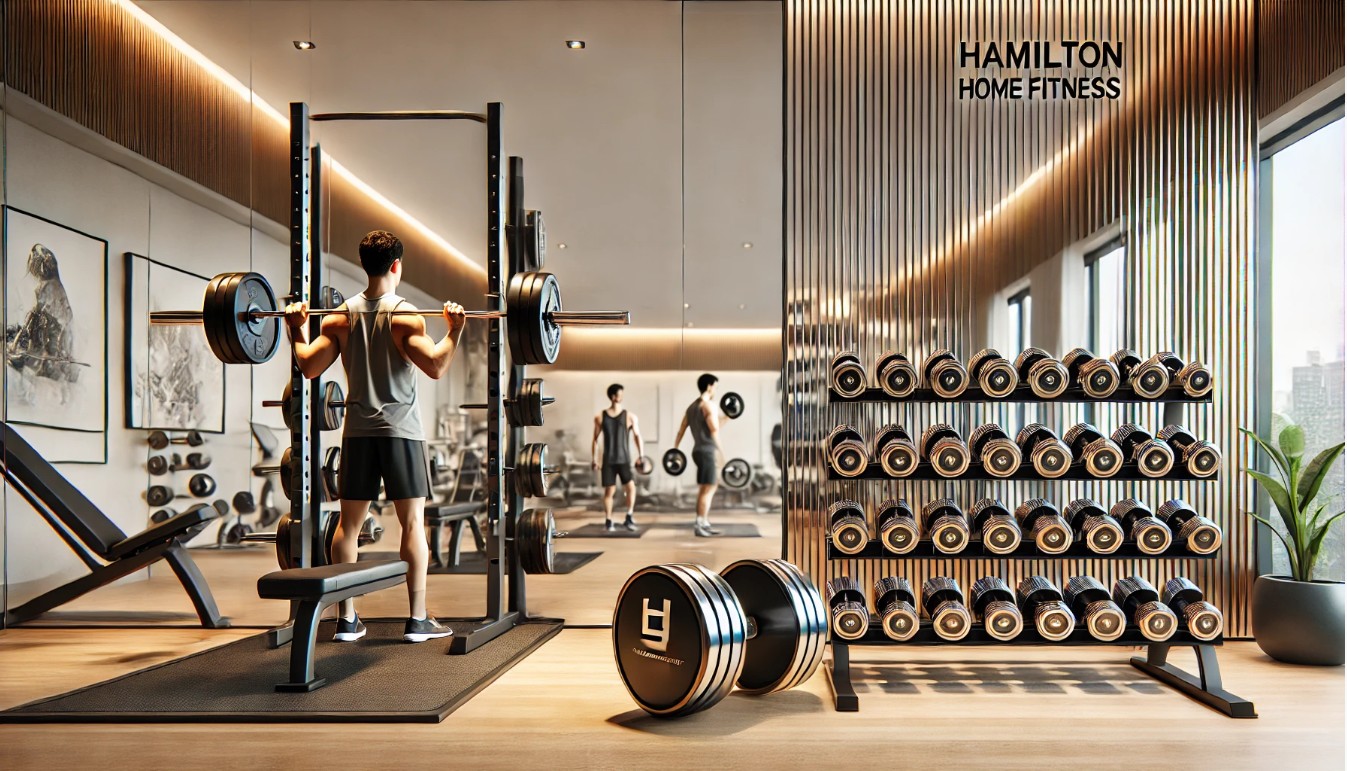
Barbells are great for heavy lifting and compound exercises like squats, deadlifts, and bench presses. These exercises work multiple muscle groups simultaneously, which is key for muscle growth.
Why Barbell Training Works:
- Lifting Heavy Weights: Barbells let you lift heavier weights, which is important for building muscle.
- Stability: The barbell offers stability, making it easier to control. This helps with balance and good form, especially for beginners.
- Full-Body Movements: Exercises like squats and deadlifts target several muscles simultaneously, giving you a complete workout.
Research Behind Barbell Training: Studies show that lifting heavy with barbells recruits muscle fibres. This helps your muscles grow bigger and stronger over time. Schoenfeld et al. (2016) found that heavy lifting boosts muscle mass.
2. Dumbbell Training: Flexibility and Range of Motion
Dumbbells are more flexible and allow you to use a wider range of motion, which can help you target specific muscles more effectively.
Why Dumbbells Work:
- Better Range of Motion: With dumbbells, you can lower the weight further, allowing for a deeper stretch. This stretch helps muscles grow.
- Unilateral Training: Dumbbells let you train each arm or leg separately, which is great for correcting muscle imbalances.
- Stabilizer Muscles: Using dumbbells also works your stabilizer muscles, helping with muscle density and control.
Research Behind Dumbbell Training: Research by Wernbom et al. (2007) found that dumbbells can increase muscle activation. This happens because of the wider range of motion, which hits more muscle fibres.
3. Barbell vs. Dumbbell: Which is Better for Muscle Growth?
So, which is best for muscle growth: barbells or dumbbells? It depends on your goals.
- For Strength and Mass: Barbells are better if you want to lift heavy weights and build strength quickly. The heavier load from barbell lifts leads to more muscle growth.
- For Symmetry and Isolation: Dumbbells are better if you want to focus on specific muscles or fix imbalances. They allow for a deeper stretch and more control over individual muscle groups.
- For a Balanced Routine: Using both can be the best choice. You can do barbell lifts for strength and then use dumbbells for isolation exercises.
4. Combining Barbell and Dumbbell Training
You don't have to choose between barbells and dumbbells. A mix of both is a smart way to train for muscle growth.
How to Use Both:
- Start with Compound Lifts: Begin your workout with heavy barbell lifts like squats and deadlifts. These exercises work multiple muscles and allow you to lift more weight.
- Finish with Dumbbells: After heavy lifting, use dumbbells to target specific muscles. Dumbbells help with muscle isolation, giving you a more complete workout.
By using both barbells and dumbbells, you get the best of both worlds: strength, size, and balance.
5. Tips for Combining Barbell and Dumbbell Training
- Progressive Overload: To keep building muscle, try to lift a little more weight or do more reps each week. This works with both barbells and dumbbells.
- Periodization: Change your focus every few weeks. You can use barbells for strength for a few weeks, then switch to dumbbells for hypertrophy (muscle growth).
- The form is Key: Always use good form. Poor form can lead to injuries and slow down your progress. Focus on technique, not just lifting heavier weights.
Research & Sources
Schoenfeld, B.J., et al. (2016). "The influence of resistance exercise frequency on muscle hypertrophy: A review and meta-analysis." Sports Medicine.
This study shows how lifting heavy weights with barbells can lead to muscle growth.
Wernbom, M., et al. (2007). "The influence of frequency, volume, and intensity of strength training on muscle hypertrophy." Sports Medicine.
This research shows how dumbbells' range of motion helps activate more muscle fibres, improving muscle growth.
FAQ (Frequently Asked Questions)
1. Which is better for muscle growth: Barbell or Dumbbell?
Both can help you grow muscle. Barbells are great for lifting heavier weights, which builds strength and size. Dumbbells allow you to focus on individual muscles and improve flexibility. A mix of both gives you the best results.
2. Can I build muscle with dumbbells alone?
Yes! Dumbbells are great for building muscle. They target all muscle groups and allow for a wider range of motion. However, barbells are better for heavier lifts if you want to build strength quickly.
3. How often should I use barbells and dumbbells?
Use both in your weekly routine. You can start with heavy barbell lifts, then add dumbbell exercises for isolation and variety. This keeps your workouts balanced and effective.
4. Do I need to lift heavy to build muscle?
Lifting heavy is one way to build muscle, but it's not the only way. You can also use lighter weights and higher reps to grow muscles. The key is to keep challenging your muscles over time.
Conclusion
Choosing between barbell and dumbbell training depends on your fitness goals. Barbells are perfect for lifting heavy weights and building strength, while dumbbells help target specific muscles and improve range of motion.
For the best results, use both in your workout routine. Focus on heavy compound lifts with barbells, then isolate muscles with dumbbells to add variety.
At Hamilton Home Fitness, we offer premium strength training equipment to help you achieve your muscle-building goals. Visit Us to explore our range of barbells, dumbbells, and other fitness gear.