Authorized:











STEPR ALL-IN TREAD XL
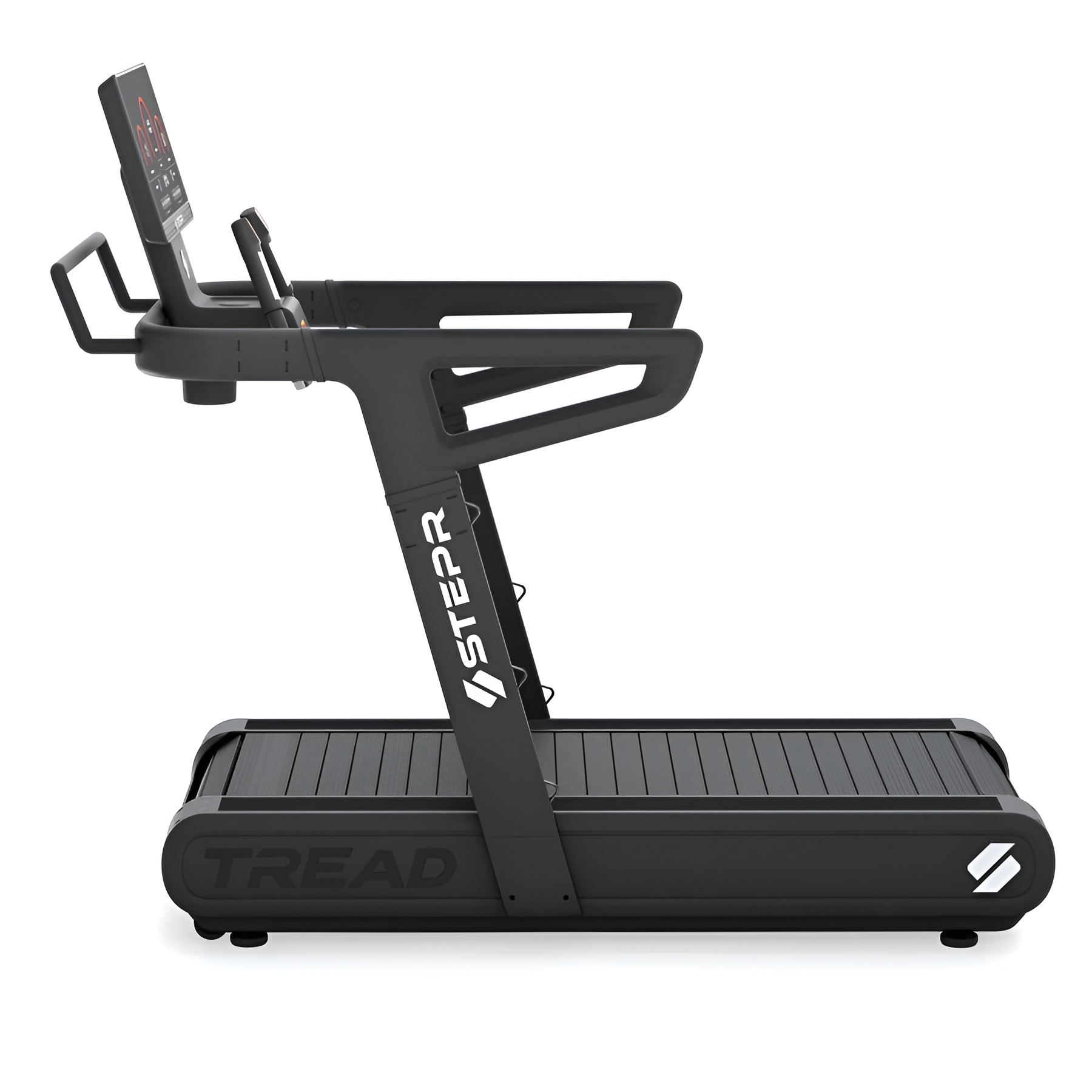
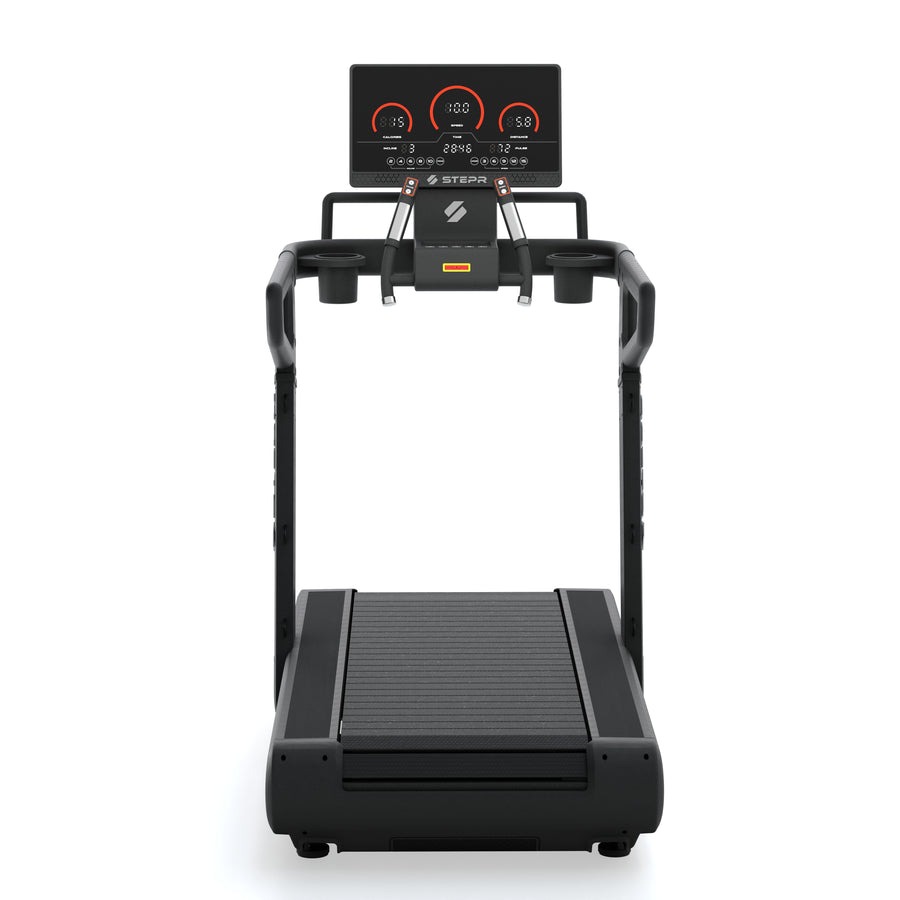
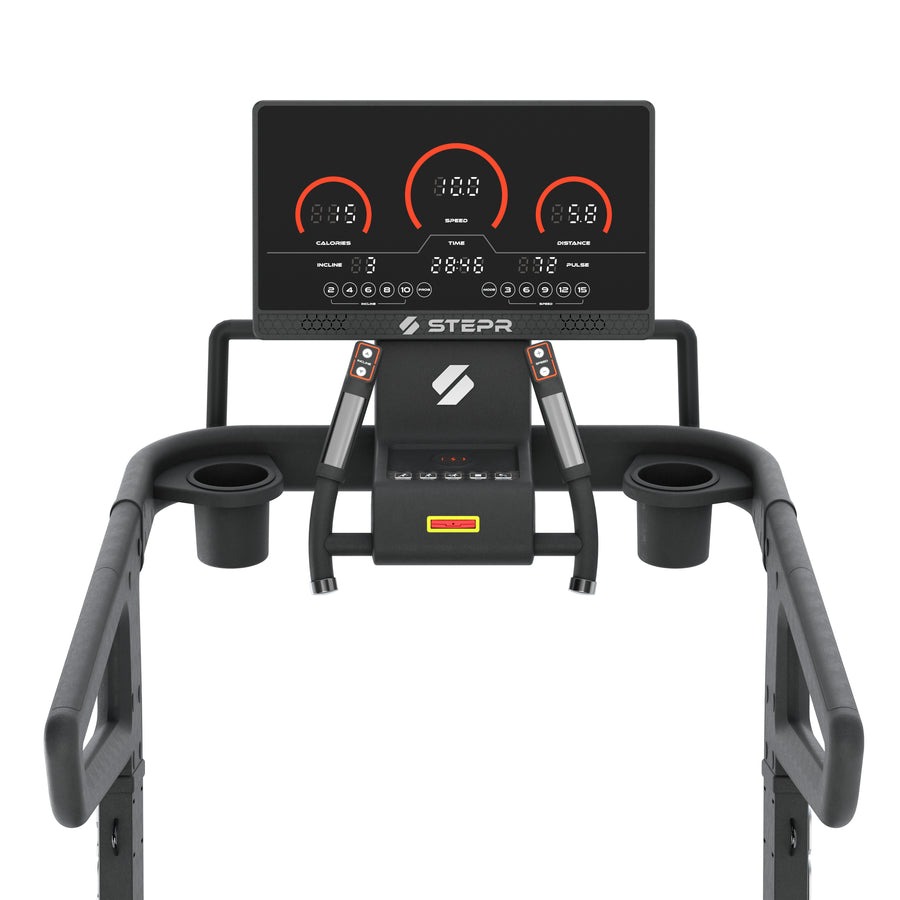
Best Treadmill for Home: STEPR ALL-IN TREAD XL
Why this is the best treadmill for home training
If you want one machine that replaces “cardio,” the STEPR ALL-IN TREAD XL is the best treadmill for home because it combines an oversized slat-belt run deck, steep incline, and manual resistance modes for sled and ruck work—without asking you to baby it.
Most home treadmills are built for jogging indoors. This one is built to train daily—a stable frame, a serious drive system, and a running surface that feels closer to the ground than a soft belt.
The research-backed build that changes how it feels
A home treadmill feels “premium” when it’s predictable: steady speed, smooth incline, and a deck that cushions landings without turning push-off into mush.
Slat-belt deck comfort without wobble
The ALL-IN TREAD XL uses a shock-absorbing slat belt and an oversized running surface (63" L × 21.6" W). That width matters for real life—fast intervals, tired legs, bigger strides, or a rehab walk where balance is the whole point.
Consistency drives outcomes. CDC guidelines point to about 150 minutes of moderate-intensity activity per week as a baseline, and a dependable treadmill makes that target easier to hit.
Brushless servo motor and why uptime wins
Instead of “peak horsepower” hype, this treadmill runs on a maintenance-free brushless servo motor built for smooth operation under load. Translation: fewer surges, less drama, and a calmer sound profile when you train early or share walls.
Incline that earns its place
Incline up to 15% is not a checkbox feature here. It’s a programming lever: short hill repeats, steady incline walks, and low-impact conditioning sessions that elevate heart rate without demanding faster speeds.
Training modes that keep home workouts from getting stale
This is where “best treadmill for home gym” stops being a phrase and starts being a plan: you can run, push, pull, and ruck on one platform.
Run mode for real runners
Top speed reaches 13.7 mph—enough for structured intervals, tempo work, and marathon-style progression runs without the machine feeling “maxed out.”
Sled push and sled pull, indoors
Manual resistance modes enable sled-style pushes (forward) and pulls (backward). That’s rare in residential cardio, and it trains power and work capacity—not just pace.
Manual ruck mode for durability and grit
With a 440 lb capacity, the ALL-IN TREAD XL is built to handle heavier users and weighted sessions like rucking. If your “home treadmill” needs to be ready for plates or a loaded vest, this is the lane.
It also keeps the “tech” clean: app compatibility (including Strava and Kino Maps), with no required subscription.
Who this fits (and why)
It’s best-in-class for serious home athletes, but the control and stability also support recovery work when used responsibly.
- For runners: the oversized deck gives stride freedom.
- For families: predictable response reduces “setting chaos.”
- For coaches and studios: more modes, better sessions.
- For rehab-minded buyers: incline walking can support return-to-walk plans (clear your protocol with your clinician).
How to choose the best treadmill for home use (fast checklist)
Choose based on uptime, use case, and total cost—not vibes.
- Measure the true space: footprint plus step-off clearance.
- Prioritize deck size first, then incline, then speed.
- Check weight capacity and rail stability for confidence.
- Look for training variety (incline + resistance modes).
- Confirm warranty terms for frame, parts, and labor.
- Verify app compatibility if you track training.
Two-minute reality check (home test)
Before you commit, run this simple test in a showroom or delivery walkthrough:
- Step onto the side rails and shake the console—no sway.
- Raise the incline, then lower it—listen for smooth changes.
- Clip the safety key and practice the stop—confidence matters.
- Look down the belt line—straight tracking beats “drift.”
Key features you’ll feel on day one
✅ Oversized 63" × 21.6" deck
✅ Shock-absorbing slat-belt feel
✅ 0–15% incline range
✅ 13.7 mph top speed
✅ Brushless servo motor drive
✅ Sled push and sled pull modes
✅ Manual + ruck training modes
✅ 440 lb user capacity
✅ App sync: Strava + Kino Maps
✅ Commercial warranty coverage
Quick answers (People Also Ask)
What to check when buying the best treadmill for home?
Check deck length/width, incline smoothness, and how stable the frame feels at your fastest pace. Then read the warranty like a contract: frame, parts, and labor.
How does a premium home treadmill cut long-term costs?
It cuts downtime. Fewer “dead treadmill” weeks means fewer rushed repairs and more consistent training.
Is the STEPR ALL-IN TREAD XL good for rehab or seniors?
It can be when programmed for safety: slower speeds, incline walking, and hands-on rails. The deciding factor is the plan—and using the safety key.
Ready to bring commercial calm into your home gym?
If you’re done buying “almost” equipment, the STEPR ALL-IN TREAD XL is the upgrade that stays relevant as you get stronger. Tell us your goals, your room measurements, and whether you train for performance, recovery, or both.
Explore options through the Hamilton Home Fitness team—based in Tennessee and set up for nationwide U.S. service and shipping.
Secure Payments