Introduction
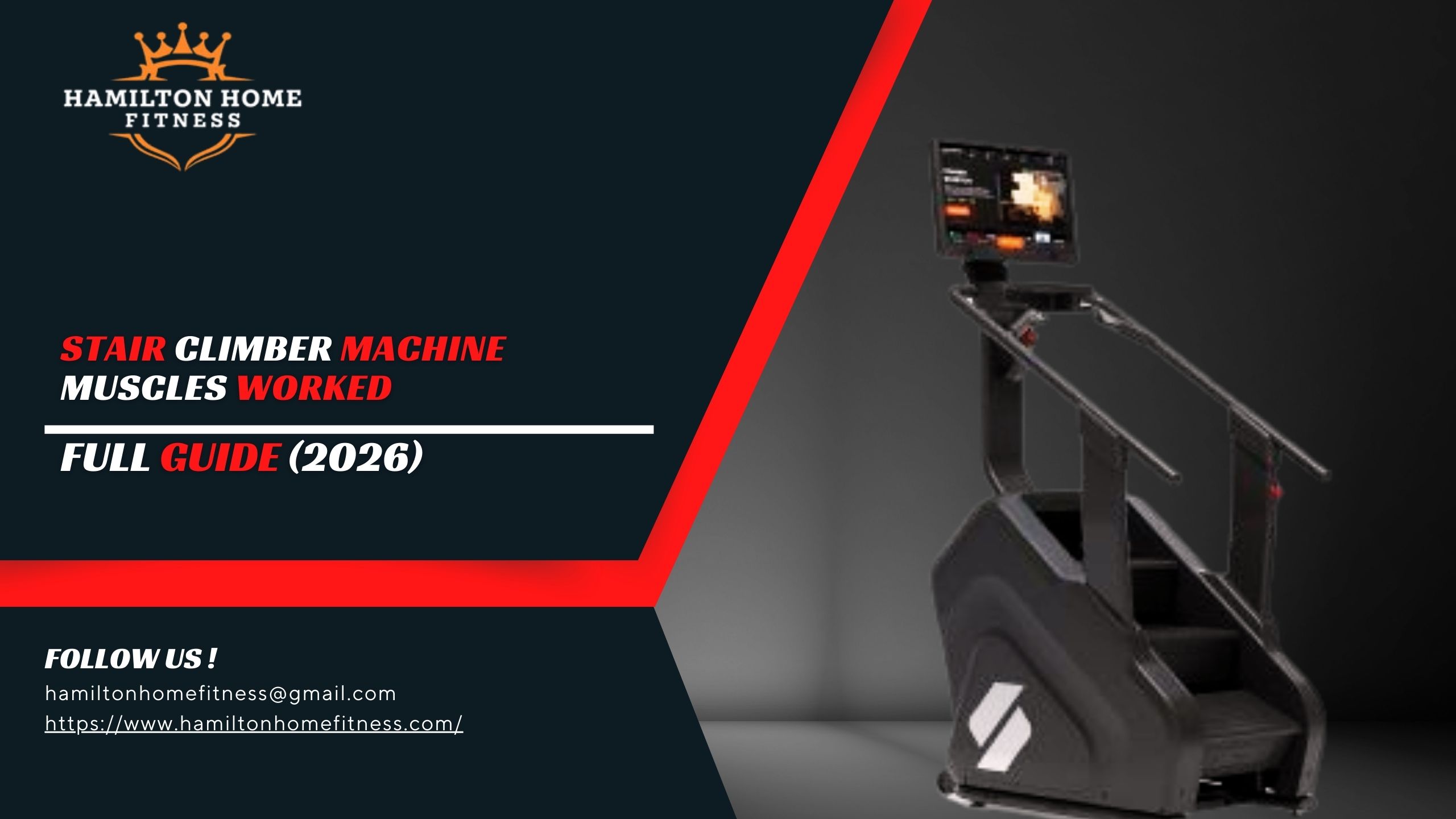
If you use a Stair Climber Machine and feel it mostly in your thighs, you’re not alone. Home fitness fans, small gyms, trainers, and busy professionals across Tennessee and the rest of the U.S. often ask the same thing: “What muscles am I actually working?” This guide is built to clear that up fast, in plain language.
You’ll learn which muscles do the heavy lifting (glutes, quads, calves, and core stability), why the “quad burn” shows up so quickly, and how small form changes shift the focus. For example, changing step depth, posture, and how much you lean on the rails can move the work from a quadriceps-dominant movement toward better glutes activation. If you’re ready to set up the right machine at home or in your facility, you can also buy the Stair Climber Machine while you follow along.
Along the way, you’ll get simple proof-based checks—like a 60-second “light touch on rails” test, a foot-pressure cue for calves and Achilles load, and a quick posture scan for hip flexors and posture muscles—so you can feel the difference on your very next session. After reading, you can adjust resistance and cadence to match your goal and recover well.
Which muscles work hardest?
Glutes, quads, calves: the big 3
The Stair Climber Machine works your glutes, quadriceps, and calves the most because you’re repeatedly pushing your body upward against gravity. Each step is basically a small “single-leg drive,” repeated hundreds of times.
A simple way to prove which muscle is taking over is to do this 60-second check:
- Glutes: you feel a firm “push” in the back of the hips, especially when you keep a tall torso and use full step depth.
- Quads: you feel the front thighs light up fast, especially with short steps or a forward lean.
- Calves: you feel lower-leg tension when you stay more on the toes or use higher resistance (this can increase calves and Achilles load).
Core stability and posture muscles
Yes—your core stability and posture muscles work hard, but mostly to keep you stacked and stable, not to “crunch.” Think of your abs, obliques, glute medius, and spinal stabilizers working like a seatbelt around your trunk.
Quick posture scan (10 seconds):
- Ribs down, chest tall (no big arch)
- Hips level (no side-to-side sway)
- Shoulders relaxed (no shrugging)
If your lower back tightens or you wobble, your stabilizers are getting taxed.
What does StairMaster work?
When people ask “what does StairMaster work,” they usually mean the same thing: a stair-climbing machine that targets glutes, quads, calves, and core stability. The muscle pattern is similar across stepmills and many stair climbers.
Try a real-world comparison: do 30 seconds with a light fingertip touch on the rails, then 30 seconds while leaning. In the second half, most people feel less leg demand because rail support often “steals” load. If you’re building a home or facility setup, you can browse options at Shop Quality Fitness Gear and Equipment - Hamilton Home Fitness while keeping these form cues in mind.
Glutes vs quads: what’s happening?
Does it build glutes?
Yes, a stair climber can build your glutes—especially muscle endurance and a stronger “push” pattern—when the load is high enough and your form keeps tension on the hips. If you treat it like a fast cardio bounce with shallow steps, it often turns into a quadriceps dominant movement instead.
Proof pattern to use next session (decision rule):
If you finish a set and only your front thighs are wrecked, don’t add more minutes first. Keep the same time and change one lever: slightly deeper steps, taller posture, and slower cadence for 2–3 minutes. Most people feel glutes activation improve within that single round.
Hamstrings engagement vs quads
The Stair Climber Machine works hamstrings too, but many people don’t “feel” them because the quads fatigue first and because hip position changes how much the hamstrings help. Hamstrings engagement usually rises when your hips extend more and you push through midfoot/heel instead of staying up on the toes.
Edge case that changes everything: tight hip flexors can keep your hips slightly “stuck,” making hamstrings quieter and shifting effort to quads. A quick tell: you feel your hip crease working hard, and your stride shortens without you noticing.
Why thighs burn so fast
Your thighs burn quickly mainly because the quads are doing repeated, high-rep work—classic local fatigue from limited muscle endurance, especially at higher cadence. This is normal, but it’s also a form signal.
Troubleshooting ladder (3 fixes in order):
- Technique: taller torso, full foot contact, avoid leaning forward.
- Pace: slow down 10–20% for one minute.
- Load: add a small resistance increase only after form feels stable.
Stair Climber Machine: glute focus
Step depth for glutes
Deeper steps usually increase glutes activation because your hips must drive more of each rep. “Deeper” does not mean stomping or overreaching—it means placing your whole foot securely and letting your hip extend as you stand tall.
Proof pattern (quick checklist):
- Aim for midfoot-to-heel pressure on the working leg
- Keep knees tracking over toes (no collapse inward)
- Feel the push from the back of the hips, not just the front thigh
If you feel knee pressure or you’re bouncing, shorten the step slightly and slow down.
Cadence vs resistance effects
Higher cadence often feels more cardio, while higher resistance can shift the work toward muscular effort—but posture decides where it lands. If you lean forward or rush, it becomes more quadriceps dominant movement even at higher resistance.
Proof pattern (2×2 test you can do today):
- 60 seconds slower cadence + moderate resistance (glutes usually show up more)
- 60 seconds fast cadence + low resistance (quads burn faster)
Match the setting to your goal: endurance, lower body toning, or glute emphasis.
Rails: support reduces activation
Yes—leaning hard on the rails often reduces leg demand and can reduce glute recruitment. For most people, a light fingertip touch is enough for balance while keeping the load on the hips and legs; if you want a form reset, follow the Stair Climber Machine Beginner Guide during your next few sessions so you don’t build bad habits.
Proof pattern (30-second self-audit):
Try “no-lean mode” for 30 seconds: tall torso, elbows soft, hands hovering or barely touching. If your heart rate jumps but your glutes finally wake up, rail support was stealing the work.
Core, calves, and leg toning
Is it good for calves?
Yes, a stair climber is good for calves because you repeatedly push off and stabilize through the ankle each step. You’ll usually feel more calf work when you stay higher on the forefoot or turn resistance up—both can increase calves and Achilles load.
Proof pattern (safe-feel cues):
- “Good” calf work feels like steady tightening and warmth.
- “Too much” feels like sharp pulling near the Achilles or a pinch behind the heel.
If you’re sensitive there, keep the heel a bit heavier, slow the cadence, and build time gradually.
Toning legs and endurance
The Stair Climber Machine is great for “toning” legs if you define toning correctly: better muscle endurance, stronger posture, and improved lower-body shape over time, often alongside overall body-composition changes. Most people notice a fast shift in how their legs feel (less shaky, better stamina) before they notice visible changes.
Real-world example: if you start with 8 minutes and your quads flame out at minute 3, you can “tone” faster by holding 8 minutes and improving form—taller posture, fuller steps—rather than chasing 20 minutes right away.
Stepper vs stepmill muscles
A stair stepper and a stepmill work similar muscle groups (glutes, quads, calves, core stability), but they can feel different. A stepmill’s continuous rotating stairs often encourages a more natural climbing rhythm, while some steppers have a shorter path that can keep tension more quad-heavy if you take shallow steps.
If you want a structured plan to match your goal—fatigue-proof legs, glute focus, or lower body toning—use the Stair Climber Machine Workout Guide so your sessions progress instead of repeating the same intensity every time.
People Also Ask
What muscles does a stair climber machine work the most?
It works your glutes, quads, and calves the most because you’re repeating an uphill push every step. For example, if you climb for 10 minutes without leaning, most people feel the front thighs and hips working hardest.
Does the stair climber build glutes?
Yes, it can build glutes when you use enough resistance and take controlled steps. A simple condition: do 3 sessions per week and keep steps deep enough to feel the push from the back of the hips.
Does the stair climber work hamstrings or just quads?
It works both, but many people feel quads more because they fatigue first. If you keep a tall torso and push through midfoot/heel, hamstrings engagement is usually easier to notice.
Can a stair climber strengthen your core?
Yes—mainly through core stability, because your trunk must stay steady while your legs move. If you stop leaning and keep hands light on the rails for 60 seconds, you’ll often feel more bracing around your midsection.
Does using the rails reduce glute activation?
Yes, heavy rail support often reduces lower-body demand and can reduce glutes activation. A clear test: do 30 seconds leaning, then 30 seconds with only a fingertip touch—legs usually work harder in the second half.
Is a stair climber good for calves?
Yes, calves work on every step because the ankle stabilizes and pushes. If you climb on your toes at higher resistance, calves and Achilles load rises, so start with shorter bouts like 5–8 minutes if you’re sensitive.
How do I target glutes more on the stair climber?
Use a slightly deeper step, stay tall, and avoid leaning on the rails. One easy cue: keep pressure through the midfoot-to-heel for 2 minutes and see if your hips light up more than your thighs.
Why do my thighs burn so quickly on a stair climber?
Your thighs burn fast because the quadriceps dominant movement pattern can overload the quads, especially at high cadence. If you slow the pace by 10–20% for one minute, the burn often becomes more manageable.
Is the stair climber good for toning legs?
Yes, it supports lower body toning by building muscle endurance and improving leg stamina over time. A simple condition: consistency matters—many people notice better stamina in 2–4 weeks.
Can you build muscle on a stair climber or only cardio?
It’s mainly cardio, but it can build some muscle endurance and modest muscle if resistance and volume progress. For example, increasing resistance slightly every 1–2 weeks can keep the legs adapting.
What’s the difference between a stair stepper and a stepmill for muscles?
They hit similar muscles, but a stepmill often feels more like real stairs because the steps keep moving under you. If your stepper has a short stroke, you may feel more quads unless you focus on step depth.
Why do I feel the stair climber more in quads than glutes?
Most people feel it more in quads when steps are shallow, cadence is fast, or they lean forward. If you increase step depth slightly and keep the torso tall for 90 seconds, glutes activation often improves.
Final Thought
The Stair Climber Machine can be a simple, powerful tool for lower body toning when you understand what’s happening: glutes activation rises with better step depth, while a quadriceps dominant movement shows up fast when you rush, lean, or take shallow steps. The best part is that the fix is usually small, not complicated.
If you want a quick next step, try this one-session proof check: go for 6 minutes at a steady pace, keep a tall torso, use a light touch on the rails, and aim for midfoot-to-heel pressure. If you feel more hamstrings engagement and less thigh burn, you’ve already shifted the pattern in the right direction.
When you’re ready to build a consistent routine at home, in a studio, or for a corporate wellness space, Hamilton Home Fitness makes it easier to choose equipment that fits your goals and budget. Use the form cues in this guide, train with intent, and let muscle endurance build week by week.