Introduction
Stair climbers are one of the smartest tools in modern fitness. They give fast cardio and strong leg work with far less joint shock than running. In a short session you can lift your heart rate, build glute and quad strength, and burn meaningful calories.
This guide lists the main stair climber benefits and the real health impact. You’ll find clear facts, short workouts, rehab-safe tips, and buying help for home or gym use. Each idea is simple to apply and backed by common sense training.
Hamilton Home Fitness brings expert plans and hands-on support. Read on to learn easy steps that turn short work into real, lasting results.
Max Calorie Burn & Fat Loss
A stair climber is one of the fastest ways to burn calories in a short time.
It forces big leg muscles to work hard. That raises heart rate and power output.
More work per minute means more calories burned. You get strong legs and a big metabolic load in the same session.
Calorie Estimates & Trackers
 Calories depend on your weight, effort, and time. Lighter people burn less; heavier people burn more. A 30–45 minute session at moderate to high effort often burns hundreds of calories. Don’t trust the console alone. Use a heart-rate monitor or a calorie calculator that asks for weight and intensity for a better read.
HIIT & Interval Protocols
Short, hard bursts raise calorie burn fast. Try 30–60 seconds hard, then 60–90 seconds easy. Do 8–12 rounds for a 20–30 minute workout. Tabata-style sets (20s on / 10s off) work well for short days. Interval training spikes your heart rate and speeds up fat loss while saving time.
EPOC & Metabolic Effect
High-intensity climbing boosts afterburn, or EPOC. This means you burn more calories for hours after the workout. To boost EPOC, add heavy resistance or brief all-out sprints. Mix intervals and steady climbs across the week to keep your metabolism high and your progress steady.
Cardio Health & Stamina Gains
A stair climber builds a strong heart and better stamina. It asks large leg muscles to work for long periods. That raises your aerobic fitness and makes daily tasks feel easier. Use steady climbs and short, hard efforts to get both endurance and power.
Heart Rate Zones & VO₂
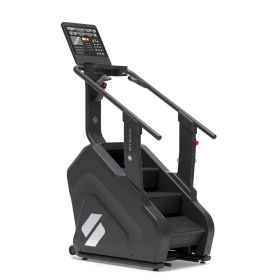 Train by heart rate for clear gains. Do steady work at 60–75% of your max heart rate to build base fitness. Use 80–90% in short bursts to raise VO₂ and your top-end stamina. Track time in each zone with a heart-rate strap. If you lack a monitor, use effort: use the talk test for steady work and hard breathing for intervals.
Frequency & Progression
Start with two to three sessions a week. Add one session every second week or raise time by 10% per week. Mix longer steady climbs with interval days. For steady gains, increase either time, resistance, or interval intensity—but only one at a time. Rest days help your heart adapt and prevent burnout.
Safety & Heart Conditions
Stair climbing is intense. If you have heart disease, high blood pressure, or chest pain, talk to your doctor first. Use a heart-rate monitor and stop if you feel lightheaded, very short of breath, or have chest tightness. For most people, scaled stair work gives big cardio returns with low impact on joints.
Strength, Muscles & Rehab
A stair climber is not just cardio. It is a strong tool for the legs. It loads the glutes, quads, and hamstrings with repeated concentric force. This builds muscular endurance, power, and functional strength. It also adapts well for rehab when used with care.
Glutes, Quads & Muscle Activation
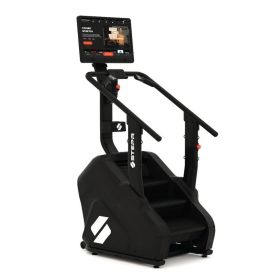 To target glutes, use a taller step and push through the heel. Slow the tempo on the upstroke for more muscle time under tension. For quad focus, use a shorter step and a faster cadence. Avoid leaning on the rails—keep an upright posture and a slight forward hip hinge. Add short heavy-resistance intervals (30–60 seconds) to build strength and size.
Joint-Friendly Rehab Protocols
Stair climbers have lower impact versus running because there is no foot strike shock. Start rehab with low resistance and short sessions. Monitor pain and swelling, not just effort. Progress by time first, then resistance, then cadence. Work with a clinician to set safe milestones like pain-free range of motion and steady gait before advancing.
Balance & Senior Progressions
For older adults, begin with hand support and short work bouts. Gradually reduce rail use as balance improves. Add single-step holds, short single-leg reaches off-machine, or slow step cadence to train stability. Keep sessions brief (5–15 minutes) and focus on consistent frequency. These steps build confidence, reduce fall risk, and turn stair-climber gains into safer daily movement.
Buy, Use & Compare Machines
Choosing the right stair climber matters. The right machine fits your goals, space, and budget. This section helps you compare types, pick features, and keep machines running well.
Stair Climber vs Other Cardio
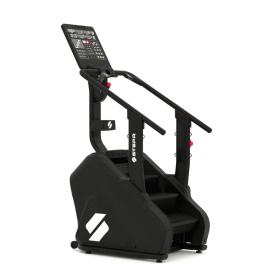 Stair climbers give more vertical work than treadmills. They hit the glutes and quads harder than a bike or elliptical. Rowers work the whole body, but they do not match the vertical load. If you want time-efficient calorie burn and leg strength, the stair climber wins. For low-impact steady work, a recumbent bike or elliptical can be easier on the back.
Buying Checklist & Models
Look for a solid frame and smooth steps. Check step height range and resistance levels. Prefer models with a clear console and heart-rate support. For homes, pick a compact, quiet model with a good warranty. For gyms, choose a commercial-grade unit and a strong service plan. Hamilton Home Fitness offers curated picks and trainer help for both home and commercial needs.
Setup, Safety & Maintenance
Place your unit on level, stable flooring. Allow room for safe mounting and dismounting. Wear stable shoes and warm up before hard efforts. Clean handrails and touchpoints often. For gyms, follow the maker’s service schedule for belts, bearings, and drive parts. Regular checks keep the machine safe and extend its life.
Final Thoughts
Stair climbers offer a rare combo: efficient cardio, strong lower-body work, and low joint impact. In short sessions you can burn calories, build muscle, and boost stamina while protecting knees and hips. That mix suits busy people, athletes, and rehab clients alike.
Use clear plans: track heart rate, mix intervals with steady climbs, and raise resistance slowly. If you are rehabbing, work with a clinician and follow stepwise progressions. For gear, pick a model that fits your space, goals, and service needs.
Hamilton Home Fitness helps you do this right. We provide curated machines, coach-led programs, and maintenance plans for homes and gyms. Book a demo, download our free 4-week plan, or speak with a trainer to start smart and reach lasting results.