Introduction
If you stand in your gym and look at a power squat machine on one side and a barbell and rack on the other, it is normal to feel unsure. Which one will build real strength? Which one will protect your knees, hips, and back as you age?
At Hamilton Home Fitness, we help people across Tennessee and the rest of the United States answer that question with facts, not hype. This guide will show you how squat machines and barbell squats compare in terms of strength, safety, and muscle growth. You will see which tools make sense for home gyms, studios, teams, and rehab.
Whether you are a new lifter, a busy parent, a coach, or an older adult who wants to move without fear, this guide is for you. We will keep the language simple and the steps clear. By the end, you will know which option fits your goals, your body, your space, and your budget, and when it is smart to use both. You will learn how to avoid common squat mistakes that lead to pain and stall progress. We aim to give you direction, so every rep feels safer and worth the time you invest.
Squat Machine vs. Barbell: Which Wins?
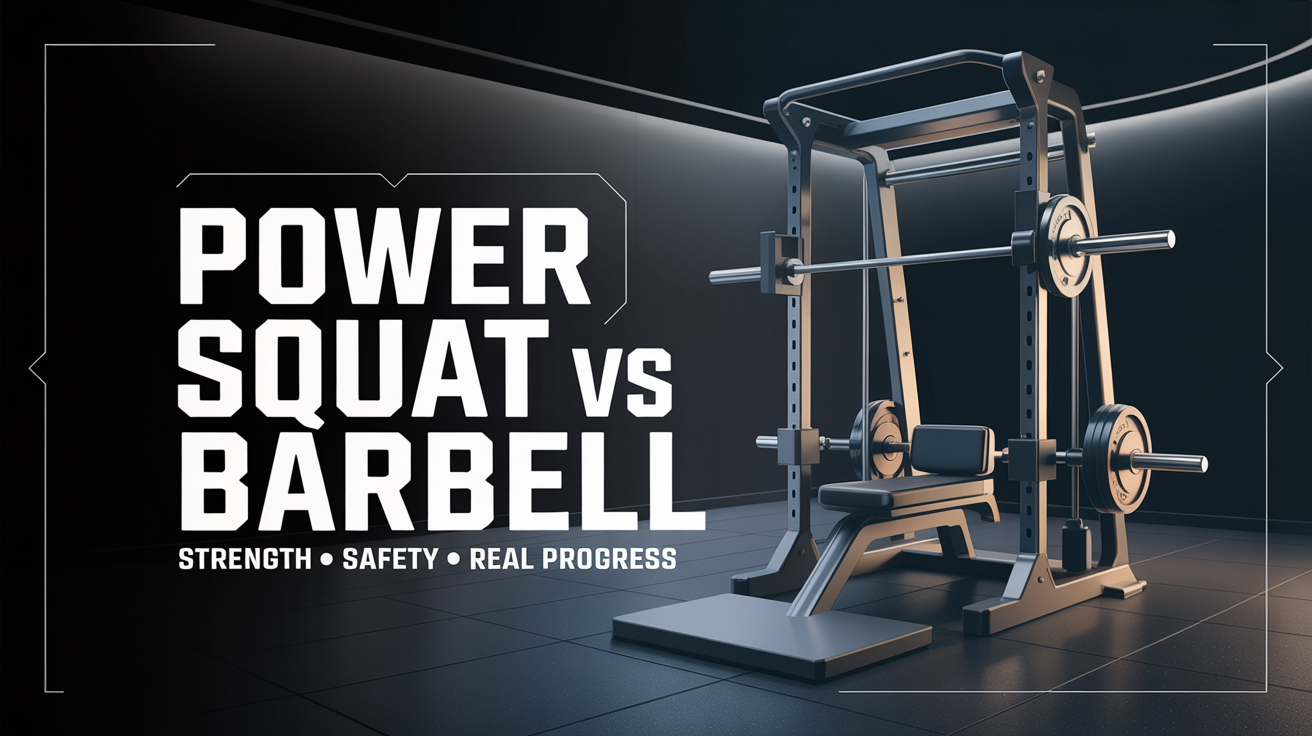
Many people want a simple winner. In truth, both can work. A power squat machine gives you a set path and more support. A barbell gives you more freedom and more demand on your whole body. The "best" choice depends on your goal, skill, and home or gym setup.
Key Differences in Setup and Feel

A barbell squat is free in space. You must walk the bar out, stand tall, and keep your body in line over your feet. This builds balance and control, but it can feel scary at first. A power squat machine holds the load on rails or arms. You step in, set your feet, and move on a fixed path. This feels safer for many new or tired lifters.
Hamilton Home Fitness Expert Verdict
At Hamilton Home Fitness, we see both tools as part of one bright plan. For pure "real world" strength and whole-body work, the barbell wins. It trains your legs, core, and mind at once. For easy learning, fast setup, and less fear, the power squat machine wins. It is excellent when you want hard legwork but less stress on balance and focus.
Who Should Choose Each Option?
New lifters, older adults, and people who train alone often start best with a power squat machine. It lets them feel loaded without fear of a missed rep. Lifters who want peak strength or sport carryover should lean toward the barbell. Many people use both: a barbell for main strength work and a machine for extra safe volume and muscle growth.
Are Squat Machines Safer Than Barbells?
Many people see a power squat machine and think, "This must be safer than a barbell." The truth is more mixed. The tool can help, but how you use it matters more. Your setup, your load, and your form decide how your joints feel, not the steel alone.
At Hamilton Home Fitness, we treat safety as a skill, not an add-on. Let's break it down in plain terms.
Lower Back Stress and Support
A machine can feel kind to your lower back. The rails guide the path, and you do not have to balance the bar. This can calm fear and reduce bracing mistakes.
But the fixed path can also force your hips and spine into a line that does not match your build. If your feet are set wrong, your back can feel jammed. The key is slow load jumps, tight bracing, and a stance that feels strong, not forced, on each rep.
Knee Load and Joint Comfort
On both tools, your knees hate one thing most: ego. When you chase plates or depth you cannot control, stress spikes fast.
On a machine, it is easy to pile on weight because the rep feels smooth. On a barbell, wobbles warn you sooner. With either option, aim for a pain-free range, track how your knees feel the next day, and adjust load and stance before minor aches turn into real issues.
Fall Risk, Spotting, and Setup
Here, the machine has a clear edge. You do not walk the weight out. You are less likely to trip. Built-in stops can catch a failed rep.
With a barbell, fall risk rises if you skip safety arms or train alone in a tight space. For home gyms across Tennessee and the USA, we urge simple rules: always set safeties, never rush the walkout, and pick the tool that lets you move with calm control, not fear.
Do Squat Machines Build Real Strength?
Many people fear that machine strength is "fake" strength. That is not true. A power squat machine still works your legs, hips, and core. The key question is how that strength carries over to barbell squats and real life.
At Hamilton Home Fitness, we see great results when people use machines with a clear plan, not as a shortcut.
Muscle Activation and Real Work
On a power squat machine, your legs still push hard. Your quads, glutes, and hamstrings all work. The main change is that the machine helps with balance and bar path.
With a barbell, more muscles switch on at once. Your trunk, hips, and feet must all fight to stay in line. This is why barbell sets often feel harder at the same weight. Both tools build muscle. The bar just asks more of your whole body.
Does Machine Strength Transfer?
Strength transfer is like language. The closer the movement is to the "real" task, the better it carries over. If you only use a power squat machine, your barbell squat may still feel strange at first.
But machine work is not wasted. It builds leg size, joint comfort, and work capacity. When you practice barbell skill on top of that base, gains come faster.
Athletes, Rehab, and Older Lifters
For athletes, the barbell squat remains the primary test. Sport needs balance and force in many planes.
For people in rehab or older adults, the machine can be a safe bridge. It allows loading with less fear and less need to walk a bar out. At Hamilton Home Fitness, we often start these clients on machine squats and gradually add barbell work when they feel ready.
How To Program Machine and Barbell Squats
Most people do not need to pick sides. You can use both a power squat machine and a barbell in one bright plan. The key is knowing when each tool should lead and when it should support.
Beginner Paths and Confidence

If you are new to lifting, start simple. First, learn to sit back and stand up with just bodyweight or a light box squat. Then add a goblet squat with a dumbbell or kettlebell.
Next, move to the power squat machine. Use light to medium loads and slow reps. Focus on depth, breathing, and even weight through your feet. When this feels smooth, start with an empty barbell squat for a few sets each week. Your skill and trust will grow step by step.
Hybrid Plans for Strength
For most home lifters and athletes, a "hybrid" plan works best. Make the barbell squat your main lift once or twice per week. Use lower reps, longer rests, and full focus.
Then use the power squat machine for extra sets. Choose higher reps and shorter rests. This lets you chase muscle growth without the same risk of a wobbly heavy rep. Over time, your barbell numbers rise, and your legs still get a big pump.
Buying a Power Squat Machine
When you are ready to buy, think about space, budget, and who will use it. Measure your ceiling and floor area first. Check that the machine path feels natural, not forced.
At Hamilton Home Fitness, we help buyers in Tennessee and across the USA match machines to home gyms, studios, and teams, so every squat session feels safe, smooth, and worth the cost.
Final Thought: Strong, Safe Progress
Choosing between a squat machine and a barbell is not a test of courage. It is a choice about what keeps you safe, strong, and moving forward. Both tools can build muscle and power. The real win is finding the mix that fits your body, space, and season of life.
At Hamilton Home Fitness, we see one pattern again and again. People who match their setup to their actual needs stay more consistent. New lifters often feel better starting on a power squat machine. As skill and trust grow, the barbell takes a bigger role. Together, they make an intelligent "squat machine vs. barbell" plan, not a fight.
If you train in Tennessee or anywhere in the USA, we are here to help you choose. We can guide you on racks, bars, and power squat machines that fit your goals and budget. Build a squat setup that makes you want to train, not one you fear.