
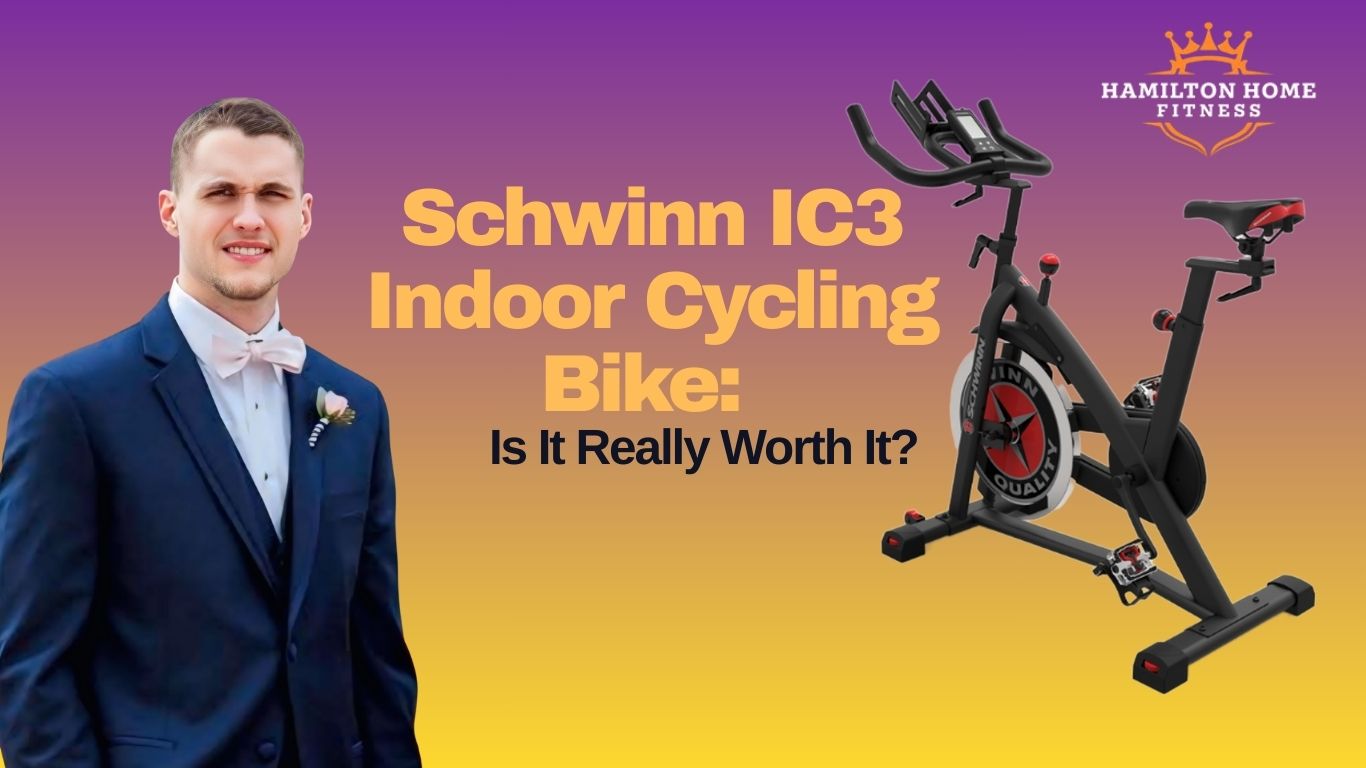
Introduction
You’ve probably seen the Schwinn IC3 Indoor Cycling Bike pop up in sales, reviews, or at your local gym and thought, “Should I just buy this thing and finally commit to riding at home?” That hesitation is smart—because the IC3 can be an amazing value for some riders and a frustrating compromise for others.
As Hamilton Home Fitness, based in Tennessee and serving riders across the US, we’ve helped thousands of people choose indoor bikes that actually get used, not just parked in a spare room. This guide is built to answer one core question clearly: is the Schwinn IC3 really worth your money in 2025, for your goals and your space?
We’ll walk through who the IC3 is perfect for (and who should avoid it), how it compares with gym spin classes and higher-end smart bikes, and the real costs you might not see on the price tag. By the end, you’ll know whether the Schwinn IC3 is the right “engine” for your home fitness routine—or if your money belongs somewhere else. And if it’s not your perfect match, you’ll see smarter alternatives we’d recommend instead, so your next purchase feels confident, intentional, and truly you.
Is the Schwinn IC3 Worth It in 2025?
If you want a sturdy, “hop on and ride” indoor bike without paying smart-bike prices, the Schwinn IC3 can still be worth it in 2025. It delivers a heavy flywheel, decent adjustability, SPD-compatible pedals, and solid build quality at a mid-range price, making it attractive for budget-conscious home riders who don’t need a built-in screen or fancy metrics.
However, it’s not a one-size-fits-all win. The IC3 uses old-school friction resistance, has a basic LCD console, and offers no Bluetooth, so it won’t satisfy riders who live for app-connected training, live leaderboards, or ultra-quiet magnetic resistance. For those users, it’s better seen as an entry-level training tool rather than a long-term “dream bike.”
Is the Schwinn IC3 a Good Bike?
Yes, the Schwinn IC3 is a good bike for its category. The 40 lb flywheel gives a stable, powerful feel; the belt drive keeps the motion relatively smooth; and the 300 lb weight limit plus fore-aft seat and handlebar adjustment means it fits a wide range of riders. The dual SPD/toe-cage pedals are a standout perk at this price. Its main weakness is the simple console, which tracks basic stats but feels dated compared to connected competitors.
Is the Schwinn IC3 Outdated in 2025?
From a tech standpoint, the IC3 is behind newer bikes with magnetic resistance, numbered levels, and native Bluetooth/app integration. If you expect “smart” training out of the box, it will feel outdated. If you mainly care about a tough cardio session and are happy using your own phone or TV for classes, it’s more “classic” than obsolete.
Schwinn IC3 Long-Term Satisfaction
Long-term satisfaction tends to be high when buyers know what they’re getting: a robust analog spin bike that may need occasional pad and saddle upgrades, not a connected fitness ecosystem. Disappointment mostly comes from people who later realize they truly wanted app integration and silent magnetic resistance.
Who Should Actually Buy the IC3?
The Schwinn IC3 makes the most sense for riders who want strong cardio, a serious spin feel, and a fair price—without needing built-in screens or app-controlled resistance. If you’re happy using your own phone or TV for classes and just want a reliable “workhorse” bike, the IC3 fits well.
If you know you’re only motivated by live leaderboards, auto-adjusting workouts, or deep performance metrics, you’ll likely outgrow the IC3 and should consider a more connected, magnetic-resistance bike instead.
Schwinn IC3 For Beginners At Home
For beginners, the IC3 is forgiving and scalable. The heavy flywheel and friction knob let you start very light, then increase resistance gradually as your fitness improves. Basic metrics—time, distance, RPM, and calories—are enough to track simple weight-loss and cardio goals. A saddle cover and a short adjustment period usually solve early comfort issues, turning an “intimidating spin bike” into a routine-friendly partner.
Schwinn IC3 For Serious Cyclists
Serious cyclists can use the IC3 as a budget-friendly indoor trainer. The 40 lb flywheel, SPD-compatible pedals, and aggressive riding position support intervals, climbs, and longer tempo rides. But without Bluetooth, power data, or magnetic resistance, it’s better suited to athletes who train by feel and heart rate, not by precise watt targets or smart training platforms.
Fit, Weight Limit, and Space Needs
The IC3 supports riders up to 300 lbs and offers fore-aft and height adjustments on both the seat and handlebars, so it fits most adults comfortably. Its footprint is compact enough for small apartments or spare rooms, and transport wheels make it easy to roll away after rides. If you’re extremely tall or short, a quick in-store fit check (or adjustable seat/handlebar tweaks) is wise before committing.
Real Schwinn IC3 Costs And Risks
On the surface, the Schwinn IC3 usually sits around the mid-$600 to $700 range at major US retailers, placing it between budget and mid-range exercise bikes.
For many Hamilton Home Fitness customers, that feels like a big one-time spend—but it’s often less than a single year of mid-tier gym membership, especially when you factor in parking, commute, and add-ons.
Value For Money And Price Range
Most 2025 reviews list the Schwinn IC3 around $649–$699, depending on sales and retailer promos.
At that price, you’re buying a heavy flywheel, 300 lb capacity, SPD pedals, and solid adjustability without paying for a built-in screen or proprietary tech. Compared to smart bikes that can easily exceed $1,500–$2,000, the IC3 offers strong “engine for your dollar” value if you are happy using your own devices for content.
Gym Classes, Apps, and Subs Cost
Average US gym memberships now hover around $50–$70 per month, while many national chains cluster near $60–$65.
Peloton’s All-Access membership alone is roughly $49.99 per month in 2025, with app-only options from about $15.99 per month.
That means a Schwinn IC3 can effectively “pay for itself” in 10–14 months versus many studios or connected ecosystems, especially if you pair it with free or low-cost classes on YouTube or affordable apps.
Hidden Costs, Warranty, and Support
Because the IC3 uses friction resistance, its felt brake pad will wear and eventually need replacing; this is inexpensive but worth planning for.
Many riders also invest in a better saddle, a floor mat, and sometimes SPD shoes or a heart-rate strap. Schwinn backs the IC3 with a frame, parts, and electronics warranty that’s competitive for this price tier, which helps reduce long-term risk compared with a no-name or used bike.
Schwinn IC3 vs Other Bike Choices
When you’re deciding if the Schwinn IC3 is really “worth it,” you’re almost never choosing in a vacuum. You’re choosing between this bike, quieter magnetic-resistance models, the Schwinn IC4 and other smart bikes, or a second-hand spin bike from a gym or marketplace. This section helps you see where the IC3 genuinely shines—and where another option may suit your life, tech preferences, and budget better.
IC3 vs Magnetic Resistance Bikes
Friction resistance on the IC3 keeps the upfront price lower and still delivers strong, adjustable intensity. The trade-off is more noise at higher loads, a brake pad that wears over time, and less precise repeatability of specific “levels.” Magnetic-resistance bikes cost more but are almost silent, smoother at high cadence, and essentially maintenance-free in that area. If you live in a small apartment and ride at odd hours or just love a whisper-quiet experience, magnetic is usually worth the extra money; if you’re okay with a bit more sound and occasional pad changes, the IC3’s friction system is perfectly workable.
IC3 vs IC4 And Smart Screen Bikes
The Schwinn IC4 and fully smart bikes sit a tier above the IC3 in connectivity. They typically add magnetic resistance, numbered levels, Bluetooth, and sometimes an integrated screen that talks directly to apps and subscription platforms. That means richer data, easier progress tracking, and more immersive coaching—but at a significantly higher upfront cost plus ongoing subscription fees. The IC3, by contrast, is more of a “bring your own screen” workhorse. Choose it if you’re happy with simple metrics and flexible content; choose an IC4 or smart bike if built-in tech and connected training are key to keeping you motivated.
IC3 vs Used Spin Bikes Overall
A used commercial spin bike can look tempting: heavy-duty build, often cheaper than a new IC3, and a “studio feel.” But you’re accepting unknown wear on the frame, drive system, and resistance parts, plus little to no warranty. The Schwinn IC3 offers new-bike reliability, predictable condition, and manufacturer support, which matters if you’re equipping a family home, a small studio, or a corporate wellness space. If you enjoy tinkering and hunting deals, a used bike might suit you; if you’d rather unbox, adjust, and ride with fewer surprises, a new IC3 is usually the safer long-term choice.
Final Thought:
For many riders, the Schwinn IC3 Indoor Cycling Bike is absolutely worth it—as long as you choose it for the right reasons. It’s a tough, no-nonsense workhorse built for real sweat sessions, not a flashy, hyper-connected toy.
If you’re a home fitness enthusiast (or a busy family) who just wants a reliable bike you can roll into a corner, follow classes on your own phone or TV, and get serious cardio without a massive price tag, the IC3 fits beautifully.
If you crave silent magnetic resistance, app-controlled workouts, and leaderboards to stay motivated, you’ll likely be happier investing in a more connected bike from day one. That’s not a flaw in the IC3—it’s about aligning the machine with your mindset.
At Hamilton Home Fitness in Tennessee, serving customers across the US, our job is to help you avoid “expensive clothes hanger” syndrome. If the IC3 matches your goals, space, and budget, it can be a fantastic long-term partner. If not, we’ll help you find the bike that will.