Introduction
If you are new to gym equipment, learning how to use a seated row machine can feel confusing at first. This guide is for beginners, home fitness users, trainers, seniors, rehab-aware exercisers, and small gym owners who want a simple way to train the back safely and correctly.
Many people are unsure how to set the machine up, where to place their feet, which grip to use, how far to pull, or whether they should lean back. It is also common to feel the movement more in the arms than the back when form is off, which can make the exercise feel awkward on the first try.
This page will show you how to set up the machine, use proper seated row form, breathe correctly, and choose a beginner-friendly weight so you can feel more confident on your first session. If you are also comparing equipment for a home gym or facility, Shop Quality Fitness Gear and Equipment - Hamilton Home Fitness while learning the movement basics, then use the steps below to row with better control, better posture, and better back engagement.
How to Use Seated Row Machine
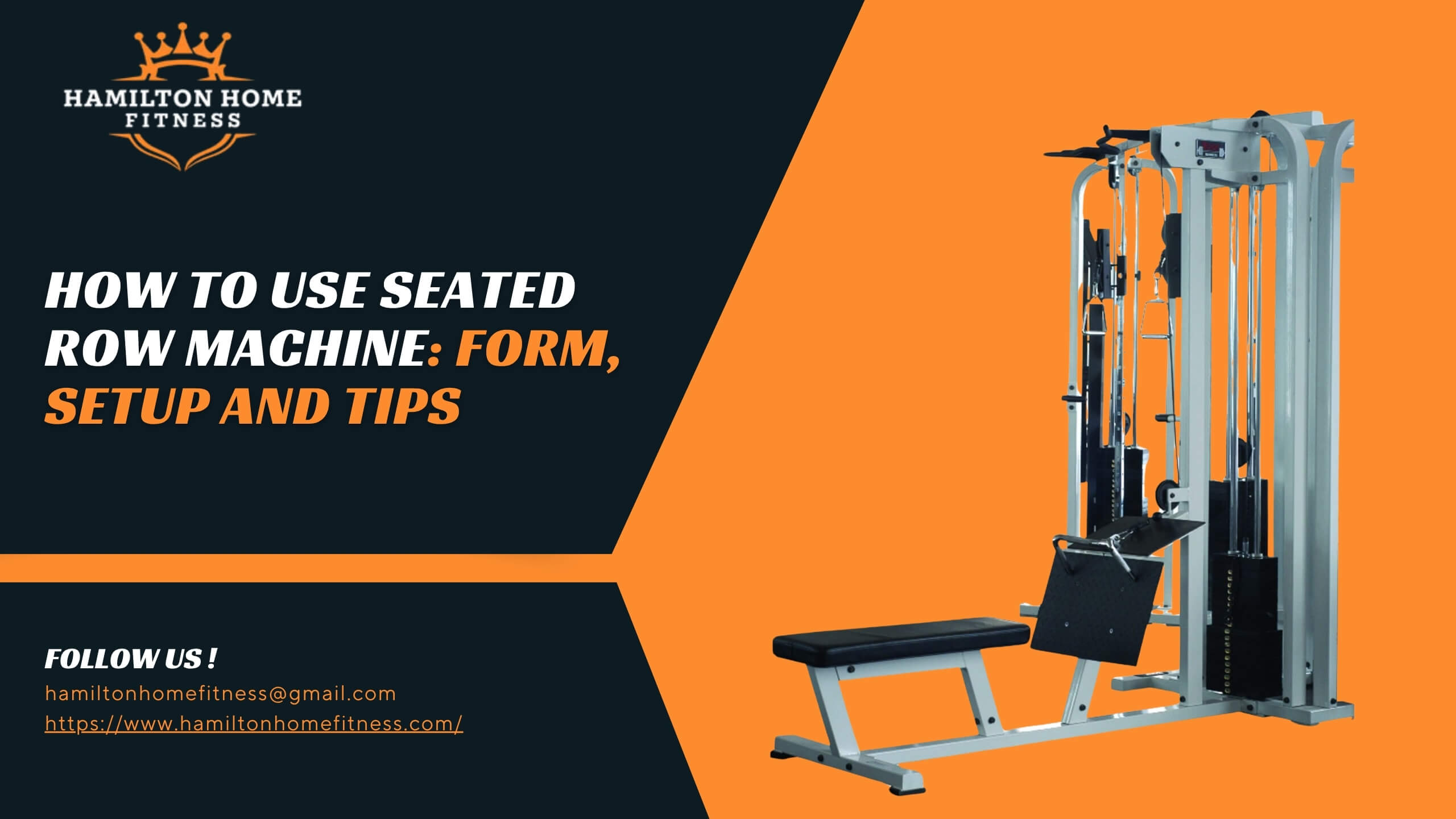
Using a seated row machine correctly starts with a simple setup, a stable torso, and a controlled pull toward your lower ribs or upper waist. For most beginners, the goal is not to move heavy weight. It is to keep the movement smooth, feel the upper back working, and avoid using momentum.
Set the seat and footplate
Set the machine so you can reach the handle without rounding your lower back or shrugging your shoulders forward. Your feet should feel planted and stable, and your starting position should let you begin each rep with control.
Start by sitting down and placing your feet firmly on the footplate or platform. Your knees can stay slightly bent instead of locked straight. Then take the handle and check your starting reach. You want enough stretch to feel tension at the front of the rep, but not so much that your chest collapses or your spine rounds.
A good beginner setup usually looks like this:
- Feet flat and secure
- Knees soft, not locked
- Hips square on the seat
- Arms extended with control
- Chest lifted, not caved in
- Shoulders down, not shrugged
If you have to lunge forward to grab the handle, the setup is too long for your body position. If you feel cramped before you even start pulling, the setup may be too short. The best setup lets you begin in a strong, balanced position.
Start with chest tall and braced
Your torso should stay tall, braced, and mostly steady throughout the set. Most beginners will get better results by keeping a neutral spine and letting the back muscles do the work instead of rocking backward.
Before your first rep, sit tall and lightly brace your core. Think about keeping your chest proud without over-arching your lower back. Let your shoulders stay down and slightly back so the upper body feels organized, not tense.
This is the body position you want to hold at the start of every rep:
- Neutral spine
- Chest tall
- Core lightly braced
- Neck relaxed
- Shoulders away from the ears
You do not need a dramatic lean to make the seated row effective. A small natural shift can happen on some machines, but beginners should avoid swinging back to move the weight. If the torso starts doing most of the work, the set becomes less about the back and more about momentum.
Pull, pause, and return smoothly
Pull the handle toward your lower ribs or upper waist, pause briefly, and return under control. The movement should feel smooth and deliberate, with the elbows driving back and the shoulders staying down.
As you begin the pull, think about leading with your elbows instead of yanking with your hands. Let your shoulder blades move naturally, then squeeze the upper back as the handle reaches your body. At the end of the rep, stop before your shoulders roll forward or your elbows travel too far behind you.
Use this simple rhythm:
- Exhale as you pull
- Pause briefly near the body
- Inhale as you return
- Control the weight on the way back
A good rep should feel clean from start to finish. You should not need to jerk the handle, slam the stack, or lean back hard to finish the pull. If that happens, the weight is probably too heavy or your setup needs adjusting.
A simple beginner cue is this: reach with control, pull with the elbows, squeeze the back, then return slowly. That cue alone fixes many first-session mistakes.
Grip, Muscles, and Pull Path
The seated row machine mainly trains your upper and mid-back, with help from the biceps and forearms. For most beginners, the best results come from using a grip you can control, then pulling the handle to the right stopping point without shrugging or leaning back.
What muscles the row should hit
The seated row machine primarily works the lats, rhomboids, middle trapezius, and rear delts. Your biceps also assist, but the movement should feel like a back exercise first, not an arm exercise.
When your form is good, the main training focus is the upper and middle back. That is why the seated row is often used to build back strength, support better posture, and improve control in horizontal pulling movements. The lats help drive the elbows back, while the rhomboids and middle traps help move and stabilize the shoulder blades.
In simple terms, here is what each area does:
- Lats: help pull the arms back and support a strong rowing motion
- Rhomboids: help pull the shoulder blades back
- Middle traps: support scapular control and upper-back tension
- Rear delts: assist with shoulder extension and upper-back work
- Biceps: help bend the elbow during the pull
You may still feel some work in your arms, especially as a beginner. That is normal. What you want is for the back to feel like the main driver of the movement.
Choose the grip for your goal
For most beginners, a neutral grip is the best place to start because it usually feels stable, natural, and easier on the shoulders. After that, grip choice can slightly shift where you feel the exercise, but it does not change the basic form rules.
A close neutral handle is often the easiest version to learn. It helps many people keep the elbows in a smooth path and makes it easier to stay controlled. A wider or different handle attachment can change how the row feels, but beginners do not need to overcomplicate this part.
Here is a simple way to think about grip options:
- Neutral grip: best starting point for most beginners; often feels shoulder-friendly and controlled
- Close grip: can help you focus on a smooth elbow path and strong back squeeze
- Wider grip: may shift the feel more into the upper back for some users, but it can also be harder to control if setup is poor
The best grip is not the one that looks advanced. It is the one that lets you keep your chest tall, shoulders down, and elbows moving smoothly without pain or compensation.
How far to pull the handle
Pull the handle until it reaches your lower ribs or upper waist, then stop before your shoulders roll forward or your elbows travel too far behind your body. The right range of motion is controlled and repeatable, not exaggerated.
Many beginners make the mistake of trying to pull as far back as possible. That usually turns a clean row into a shrugging, leaning, or arm-dominant rep. A better goal is to finish where you can squeeze the back briefly while keeping the chest lifted and the neck relaxed.
Use these cues to find the right stopping point:
- Pull the elbows back, not straight up
- Bring the handle to the lower ribs or upper waist
- Keep the shoulders down and away from the ears
- Stop when the back is fully engaged, not when the body starts twisting or rocking
If you pull too short, you may miss some useful back engagement. If you pull too far, you may lose posture and shift tension away from the muscles you want to train. For beginners, a clean moderate range is almost always better than an extreme one.
Weight, Reps, and Safety
A beginner should use a weight that allows smooth, controlled reps with good posture from start to finish. The seated row machine is beginner-friendly when the load is easy enough to control, the rep target stays simple, and you stop if the movement causes sharp pain instead of normal muscle effort.
Pick a beginner starting load
Start with a light weight that lets you feel your back working without needing to jerk, lean back, or rush the handle. If you cannot keep your chest tall and the return controlled, the weight is too heavy.
A good beginner rule is to choose a load that you can move for about 10 to 12 clean reps while still feeling like you could stop with good form intact. The final reps can feel challenging, but they should not turn into swinging, shrugging, or pulling mostly with the arms.
If you are unsure where to begin, use this simple check:
- Start lighter than you think you need
- Test a short set with strict form
- Keep the load only if the motion stays smooth
- Reduce the weight if posture breaks or the handle slams back
If you are building a home gym, upgrading a rehab-aware setup, or planning equipment for a studio, Buy seated row machine only after you understand what good seated row form should feel like, because the right machine should support control, comfort, and repeatable back training rather than just heavier pulling.
Use simple sets and rep targets
Most beginners do well with a moderate rep range and a small number of quality sets. The goal early on is to learn the movement, not to chase heavy numbers.
A simple starting plan is 2 to 4 sets of 8 to 12 reps with full control. That rep range gives you enough practice to improve technique while keeping the load manageable. If you are still learning the setup and movement path, staying closer to the middle of that range often works well.
Use these basic rep guidelines:
- 8 to 10 reps: useful if the weight is a little more challenging but still controlled
- 10 to 12 reps: strong starting range for most beginners
- 2 to 4 sets: enough volume to practice form without turning the session sloppy
Rest long enough that your next set still looks clean. If the quality of the movement drops fast, reduce the weight or stop the set earlier.
When pain means stop and reset
You should stop the set if you feel sharp pain, joint pain, numbness, or a pulling sensation that feels wrong. Normal effort in the back and arms is expected, but pain in the shoulder, neck, elbow, or lower back is a sign to reset.
Sometimes the fix is simple. The weight may be too heavy, the range may be too long, or the shoulders may be rising during the pull. In many cases, lowering the load and tightening up the setup solves the problem quickly.
Stop and reassess if you notice any of the following:
- Sharp or sudden pain
- Pain in the joints instead of the muscles
- Tingling or numbness
- Lower-back strain during the pull
- Shoulder discomfort that gets worse each rep
If pain does not improve after adjusting the setup or lowering the weight, stop the exercise for the day and get guidance from a qualified trainer or healthcare professional. This matters even more for older adults, rehab-aware users, and anyone returning to training after injury.
Fix Common Seated Row Mistakes
Most seated row problems come from using momentum, pulling with the arms first, or confusing the exercise with a different back movement. Fixing these mistakes usually makes the row feel smoother, safer, and much more effective for beginners.
Do not lean back to cheat reps
You should not lean back hard to finish a seated row rep. A small natural torso shift can happen on some machines, but using body swing to move the weight turns the exercise into a momentum-based pull instead of a controlled back exercise.
This mistake often starts when the load is too heavy. The handle gets close to the body, then the chest lifts too far, the lower back takes over, and the rep becomes more about rocking than rowing. That usually reduces back tension and makes it harder to feel the lats, rhomboids, and middle traps doing the work.
Watch for these common signs of cheating:
- Your torso rocks backward on every rep
- The handle only moves because your body swings
- Your shoulders shrug as you pull
- The return feels uncontrolled
- You cannot pause briefly at the end of the rep
A better fix is simple. Lower the weight, brace your core, keep your chest tall, and think about driving the elbows back while the torso stays mostly steady. If you can pause for a moment near the body without losing posture, the weight is probably in a better range.
Why you feel rows in your arms
If you feel seated rows mostly in your biceps or forearms, the problem is usually not the exercise itself. It is usually a setup, grip, or movement-path issue that shifts tension away from the back.
This happens a lot with beginners because the hands naturally want to take over. A grip that is too tight, shoulders that rise during the pull, or elbows that do not travel in a clean path can all make the movement feel arm-dominant. Weight that is too heavy can make the same problem worse.
The most common reasons are:
- You are squeezing the handle too hard
- The weight is too heavy to control
- Your shoulders are creeping up toward your ears
- You are pulling with the hands first instead of leading with the elbows
- You are cutting the setup short and starting from a weak position
To fix it, try these cues on your next set:
- Loosen the grip slightly without losing control
- Pull the elbows back instead of yanking with the hands
- Keep the chest lifted
- Keep the shoulders down
- Lower the weight and slow the return
It can also help to think about your shoulder blades moving back as the handle comes in. You do not need to force a huge squeeze, but you do want the upper back to feel involved from the start of the pull. If the arms still dominate after those changes, reduce the load again and focus on smoother reps instead of harder reps.
Row vs pulldown for back focus
Seated row is not better than lat pulldown in every situation, but it is often better for learning horizontal pulling and building mid-back strength. Lat pulldown uses a different pulling angle, so the two exercises train the back in different ways.
The seated row usually gets more attention for back thickness because it emphasizes a horizontal pull. Many beginners also find it easier to learn posture, elbow path, and shoulder-blade control on the row once the setup is right. Lat pulldowns, on the other hand, use a vertical pull pattern and often feel more lat-focused for some users.
A simple comparison looks like this:
- Seated row: often used for mid-back strength, posture support, and back thickness
- Lat pulldown: often used to train vertical pulling and lat involvement from a different angle
- For beginners: both can be useful, but seated row is especially helpful for learning controlled horizontal pulling mechanics
If your goal is better back control, stronger posture muscles, and a beginner-friendly machine path, the seated row is a strong place to start. If your goal is a more complete back routine, seated rows and lat pulldowns can work well together instead of competing with each other.
People Also Ask
How do you set up a seated row machine correctly?
Set the seated row machine so you can reach the handle without rounding forward or shrugging your shoulders. Your feet should feel secure, your knees should stay slightly bent, and your chest should stay tall before the first rep.
A good beginner setup starts with stable foot placement and a seat position that lets you begin with control, not a long stretch or a cramped start. If you have to lunge forward to grab the handle or your back rounds before the pull begins, reset the machine before you start.
What muscles does the seated row machine work?
The seated row machine mainly works the lats, rhomboids, middle traps, and rear delts, with help from the biceps. It is a horizontal pulling exercise that builds upper-back strength and supports better posture.
When the form is right, the movement should feel like a back exercise first. Some arm involvement is normal, but the upper and mid-back should do most of the work.
Should you lean back on a seated row machine?
You should not lean back to create momentum on a seated row machine. A small natural torso shift can happen on some machines, but most beginners should keep the torso steady and let the back muscles move the load.
If you need to rock backward to finish the rep, the weight is likely too heavy. Lowering the load and bracing the torso usually fixes the problem quickly.
What grip is best on a seated row machine?
For most beginners, a neutral grip is the best place to start. It usually feels more stable, easier to control, and more comfortable on the shoulders.
Other grip options can change how the row feels, but they do not change the main goal. Choose the grip that helps you keep your chest tall, shoulders down, and elbows moving in a smooth path without pain.
How far should you pull the handles on a seated row?
Pull the handle until it reaches your lower ribs or upper waist without letting your shoulders roll forward or your elbows travel too far behind you. The best range is controlled and repeatable, not extreme.
A clean stopping point helps you keep tension on the back muscles. If you keep pulling until your posture breaks, you are going too far.
Is the seated row machine good for beginners?
Yes, the seated row machine is usually very good for beginners. It gives a clear movement path, easy load changes, and a stable position for learning how to train the back safely.
It works best when the weight stays light enough to control and the setup is adjusted properly. For first-time users, it is often easier to learn than more advanced free-weight rowing variations.
How much weight should a beginner use on seated row?
A beginner should use a weight that allows smooth, controlled reps with good posture from start to finish. If you need to jerk the handle, shrug the shoulders, or lean back to move it, the weight is too heavy.
A simple starting rule is to begin lighter than you think you need and test a short set. Keep the weight only if you can feel the back working while the movement stays clean and controlled.
Why do I feel seated rows in my arms instead of my back?
You usually feel seated rows in your arms first when the grip is too tight, the weight is too heavy, or the elbows and shoulders are not moving in a good path. In most cases, this is a form issue, not a problem with the exercise itself.
Try loosening your grip slightly, lowering the weight, keeping the chest up, and leading the pull with your elbows instead of your hands. Those small changes often help the back engage more clearly.
How many sets and reps should I do on seated row machine?
Most beginners do well with 2 to 4 sets of 8 to 12 reps. That range gives you enough practice to learn the movement without making the set so heavy that form breaks down.
The goal early on is quality reps, not max effort. If your posture starts to slip or the handle return becomes sloppy, reduce the weight or stop the set sooner.
Is seated row better than lat pulldown for back thickness?
Seated row is often better for building mid-back strength and the look of back thickness because it is a horizontal pull. Lat pulldown uses a different angle, so it is not a direct replacement.
For many beginners, seated row is especially helpful for learning posture, elbow path, and shoulder-blade control. In a full back routine, seated rows and lat pulldowns usually work well together rather than competing with each other.
Final Thought
Learning how to use a seated row machine does not need to feel complicated. Once you get the setup right, keep your chest tall, pull with control, and choose a weight you can manage, this exercise becomes one of the most useful beginner-friendly ways to build upper-back strength, improve posture, and train more confidently.
The biggest takeaway is simple: good seated row form matters more than heavy weight. If you focus on smooth reps, a stable body position, and feeling the back do the work, you will get far more from the movement than you will from rushing progress or chasing numbers too early.
For your next workout, use the cues from this guide on your first few sets and adjust the load only if your form stays clean. And if you are building a home gym, upgrading a studio, or looking for equipment guidance you can trust, Hamilton Home Fitness is the brand to keep in mind for quality machines, practical support, and beginner-friendly fitness solutions.