
Introduction
If you’re new to back day, the How to Use Lat Pulldown Machine question usually comes down to one thing: setup. When the seat is too high, the thigh pads are loose, or the grip feels wrong, the movement can turn into shrugging, swinging, or sore shoulders instead of a clean lat pull.
In this guide, you’ll learn a beginner-simple lat pulldown machine setup you can repeat every time—how to adjust seat height, lock in the thigh pads, choose a starter grip, and do your first reps with control. If you’re also choosing equipment for a home gym or facility, you can browse options at Shop Quality Fitness Gear and Equipment - Hamilton Home Fitness while you follow the same setup rules.
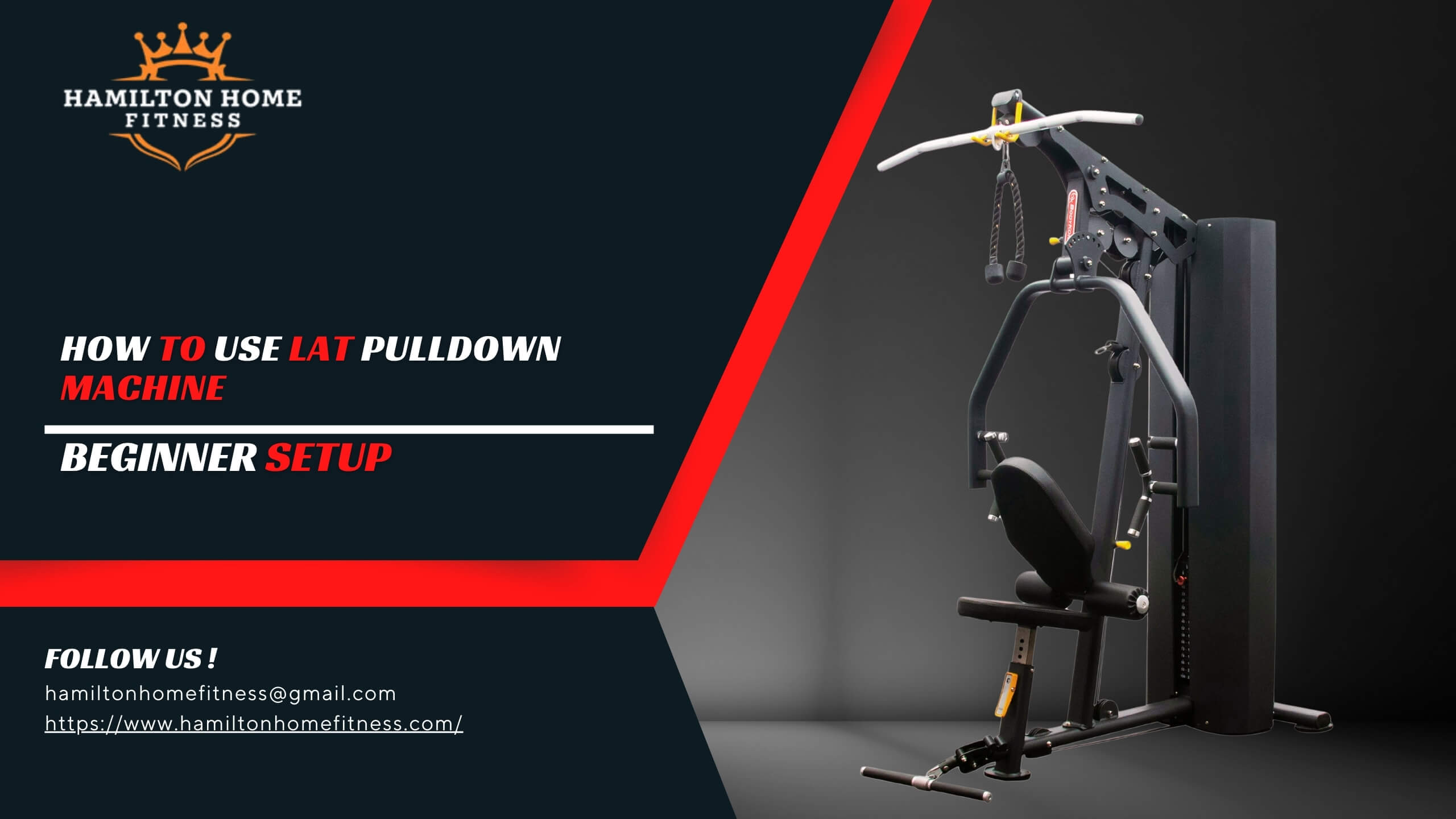
To make this practical, we’ll use proof-first checks you can feel right away (like a 5-rep test set where you stay seated and the weight moves smoothly). And if you want a consistent, beginner-friendly station that supports repeatable adjustments, Hamilton Home Fitness (Tennessee HQ, shipping across the USA) features machines like the BodyKore MTI4201 multi-gym with a lat pulldown function—built for stable setup and cleaner form.
Set up the lat pulldown correctly
Selector pin + bar attachment
Start by setting the weight stack selector pin and confirming the bar attachment (wide bar) is secure—this prevents surprise jerks and keeps your first reps smooth. If you’re building a home setup, a stable multi-gym like the BodyKore MTI4201 from Hamilton Home Fitness can make consistent adjustments easier (you can buy right Lat Pulldown Machine when you’re ready).
Quick checklist (30 seconds):
- Pin is fully inserted (no half-click).
- Cable moves freely (no twisting or rubbing).
- Bar clip/carabiner is closed and centered.
Real-world tip: If the first rep feels “stuck,” don’t yank—stand up, re-seat the pin, and do a light 1–2 rep test pull to confirm the stack lifts cleanly.
Seat + thigh pad adjustment
Adjust the seat so you can start with arms extended without shrugging, then set the knee pad / thigh pad adjustment so your thighs are pinned down firmly. A good test is simple: when you pull, your hips stay planted and you don’t float up.
Example check: If you rise off the seat on rep 1, lower the pads or reduce weight before continuing.
If you can’t reach the bar
It’s okay to stand briefly to grab the bar, but you shouldn’t need to stand to do the reps—if you do, your setup is off. First, lower the seat (or adjust your start position) so the bar is reachable with control, then reset your grip before you sit tall again.
Decision rule: If you must stand to finish reps, the weight is too heavy or the pads aren’t holding you down—fix those before adding load.
How to Use Lat Pulldown Machine
Feet on floor or lifted?
For most beginners, keep feet flat on floor during lat pulldowns. This makes your body feel “locked in” and helps you pull with your back instead of rocking your torso. If you’re shorter and your feet barely touch, don’t point your toes and wobble—slide the seat position if the machine allows, or place your feet slightly forward so your heels can stay grounded.
Quick stability test: Do a 5-rep warm-up set. If your knees drift, feet shuffle, or you feel like you’re tipping, reset your feet before you add weight.
Start with arms extended
Your starting position arms extended means the bar is up, elbows straight, and your shoulders are down—not shrugged toward your ears. Think “long arms, proud chest,” then tighten your midsection so you don’t arch hard. This start position makes the first inch of the pull smoother and protects your shoulders.
3-cue self-check:
- Shoulders down (no shrug)
- Ribs stacked (no big flare)
- Thigh pads holding you (no lift)
Experience-based note: If you feel biceps taking over immediately, you’re usually starting with bent elbows or shrugged shoulders—reset and try again.
Torso angle: slight lean back
A small torso angle (slight lean back) can help beginners feel the lats, but it should be subtle—think a few degrees, not a full recline. The goal is to keep the pull vertical like a cable machine pulldown, not turn it into a rowing motion.
Simple rule: If the weight stack swings or your chest “pops up” to meet the bar, you leaned back too far. Re-set tall, keep your core braced, and pull with your elbows moving down and slightly back.
Grip and pull path for beginners
Starter grip: overhand grip
For most beginners, start with an overhand grip (pronated). It’s simple, stable, and helps you learn to drive your elbows down without curling the bar. Wrap your thumbs, keep wrists straight, and think “hands are hooks” so your back does the work.
Real-world feel check: If your forearms burn more than your upper back by rep 3, you’re likely squeezing too hard or bending the wrists—loosen the grip slightly and keep wrists stacked.
Grip width: shoulder-width+
A good starting grip width shoulder-width+ (slightly wider than your shoulders) usually keeps elbows tracking in a strong path and reduces wrist strain. Too wide often forces your elbows to flare and shortens your pull; too narrow can feel like a biceps-heavy pull.
Range + troubleshooting:
- Start just outside shoulder width.
- If wrists ache, bring hands in a touch and keep wrists neutral.
- If shoulders pinch, reduce weight and narrow slightly before changing anything else.
Where the bar should come down
The bar should come down toward your upper chest for most people. If mobility is limited or the attachment shape changes the path, pull to chin level / upper chest is a safe target range—what matters is that the elbows move down and back under control, not that you “touch” a spot at all costs.
2-point form proof:
- Elbows drive down; shoulders stay down (no shrug).
- You can pause for 1 second at the bottom without leaning back.
Then perform a controlled return (eccentric): let the bar rise slowly until your arms are extended again. In practice, this is where beginners improve fastest—if you can’t lower it smoothly, the weight is too heavy or your setup needs a reset.
Beginner weight and reps guide
How much weight for beginners?
A beginner should use a weight that lets you pull smoothly with no swinging, no shrugging, and a controlled return (eccentric) on every rep. Exact numbers depend on context—machines vary by pulley ratio and weight stack labeling, and people vary by size and training history. A simple way to choose the right load is a “test set”: pick a light weight, do 8 reps, and check your form. If you can’t keep your torso steady or you rise off the seat, drop the pin. If the last 2 reps feel easy and you could do 5+ more with perfect form, go up one small increment.
Beginner proof pattern: Your last rep should feel challenging, but you should still be able to pause for 1 second at the bottom without leaning back.
How many reps should you do?
Most beginners do well with 8–12 reps for learning form and building strength, or 10–15 reps if you’re keeping the load lighter to protect joints and practice control. Pick one range and stay consistent for 2–3 weeks so you can track progress without guessing.
Example: 2–3 sets of 10–12 reps on a beginner back day exercise, resting long enough to repeat clean reps (usually 60–120 seconds, may vary).
When to increase the weight
Increase weight only when you can hit the top of your rep range for every set while keeping your setup and pull path the same. Move the selector pin up one small step, then re-run the test: steady feet, thighs pinned, elbows driving down, smooth lowering.
Decision rule: If adding weight makes you lose control on the way up or down, you increased too soon—drop back and earn the reps first.
People Also Ask
How do you set up the lat pulldown machine correctly?
Set the seat so you can start with arms fully extended, then lock your thighs under the pads before you pull. If you float up on rep 1, the pads are too high or the weight is too heavy.
How do I adjust the seat and thigh pads on a lat pulldown?
Adjust the seat so you can reach the bar with straight arms and relaxed shoulders, then lower the thigh pads until they pin your legs down firmly. A good check is that your hips stay on the seat during a 5-rep warm-up set.
How much weight should a beginner use on the lat pulldown?
Use a weight you can lift for 8–12 reps without swinging or leaning back, and you can lower slowly under control. If you can’t pause for 1 second at the bottom without shifting, reduce the weight.
Where should the bar come down to on a lat pulldown?
Bring the bar down toward your upper chest while keeping your shoulders down and elbows driving toward your sides. If your shoulders pinch, stop higher (near chin level) and reduce weight.
Should my feet be on the floor during lat pulldowns?
Yes—most beginners should keep feet flat on the floor for stability and to avoid rocking. If your feet can’t stay planted, slide them slightly forward so your heels stay down.
What grip should I use to start on the lat pulldown machine?
Start with an overhand (pronated) grip that’s slightly wider than shoulder width. If your wrists bend back during the pull, narrow your grip one notch.
How many reps should I do on the lat pulldown machine?
Most beginners do well with 2–3 sets of 8–12 reps while learning consistent form. If your last 2 reps turn into swinging, lower the weight.
Is it okay if I have to stand up to reach the bar?
It’s fine to stand briefly to grab the bar, but you shouldn’t need to stand to complete reps. If you have to stand after rep 3, the weight is too heavy or the thigh pads aren’t holding you down.
Final Thought
If you remember one thing, make it this: good lat pulldown machine setup makes the exercise feel like a clean back move—not a fight with the cable. Set the seat, lock in the thigh pads, choose a stable overhand grip, and pull in a smooth path to your upper chest with a controlled return (eccentric).
Your next step is simple: do one light 5-rep test set. If you stay seated, keep feet flat on floor, and can pause for 1 second at the bottom without leaning back, you’re ready for your working sets. If not, adjust the seat height, pads, or the weight stack selector pin until it feels controlled.
And if you’re building a home gym or upgrading a facility, Hamilton Home Fitness (Tennessee HQ, shipping across the USA) offers equipment designed for repeatable adjustments—so beginners and pros can train with confidence and consistent form.