Introduction
You're specifying one outdoor rig that has to do a lot: survive years of weather; take dozens of attachments; anchor safely to concrete; and hold up under heavy daily traffic—pull-ups, climbs, dips, rings, and barbell work. Whether you run an MWR program, a fire or EMS fitness space, a parks and recreation project, a school athletic facility, a multifamily amenity, or a CrossFit affiliate moving outdoors, the core build decisions are the same.
Outdoor functional fitness rig design is where those decisions get made, and the stakes are real. As more training moves outdoors, an under-spec'd rig rusts, cracks its pad, or fails inspection—while an over-built one wastes budget you could have spent on stations or surfacing.
This guide covers every choice that matters: sizing the rig to your users, picking the right steel and structure, specifying a finish that won't rust, anchoring to an engineered pad, equipping for tactical, CrossFit, or park-style training, and planning surfacing, access, shade, permits, and budget around it.
When you're ready to turn that spec into an installed rig, a gym design consultation can pull the layout, equipment, and rollout together.
Start With Use Case and Daily Traffic
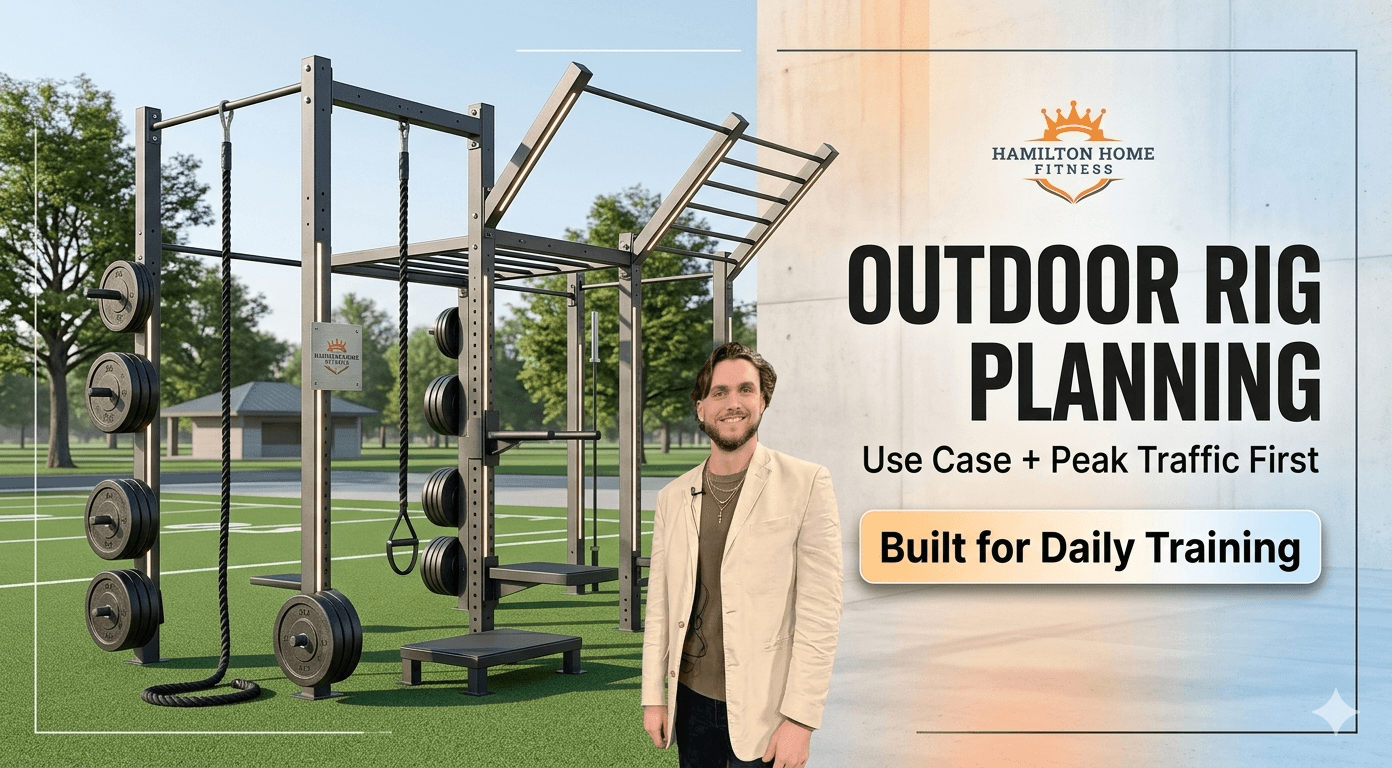
Before you compare rigs, answer one question: who trains here, and how hard? Use case and peak-hour traffic decide footprint, station count, structure, and finish—every other choice follows from those two.
Match the Rig to Your Users
The right outdoor rig depends on your users. Tactical and military builds prioritize throughput and ruggedness, CrossFit builds prioritize barbell and gymnastics work, and park or multifamily builds prioritize safety, access, and low maintenance.
Build type | Top priority | Key stations | Finish & security | Supervision |
Tactical & military (MWR, first responder) | Throughput for large groups, ruggedness | Dense pull-up bars, rope climbs, peg boards, monkey bars, dips | Heaviest finish; vandal-resistant hardware | Instructor-led group PT; high simultaneous use |
CrossFit & athletic | Barbell + gymnastics versatility | Kipping bars, rings, dips, integrated squat/barbell stations | Durable coated steel: appearance matters | Coached classes; moderate-to-high use |
Park, school, & multifamily | Safety, ADA access, low maintenance | Multi-grip bars at varied heights, dips, accessible bodyweight stations | Corrosion- and vandal-resistant for unsupervised use | Often unsupervised; mixed ages and abilities |
Park, school, and multifamily builds often round out the rig with park and recreation fitness hardware from Bison, because these sites serve mixed ages and abilities rather than one training style.
Size Footprint, Height, and Capacity
Outdoor rigs commonly stand 8 to 12 feet tall, and footprint scales with how many people must train at once during peak hour.
Work backward from your peak-hour headcount: count how many people must train at the same time; plan a station or bay for each; then size the pad for the rig plus clear movement space around every station. Taller uprights (10–12 feet) open room for rope climbs and pegboards, while 8- to 9-foot rigs handle pull-ups, dips, and barbell work. A rig that's full at 6 p.m. frustrates users; one built for a crowd you don't have wastes pad and budget.
Pick the Right Rig Frame and Steel Gauge
What rig structure holds up outdoors? A multi-post steel frame, sized to your load and traffic and finished for weather, is set up either free-standing or anchored to a pad.
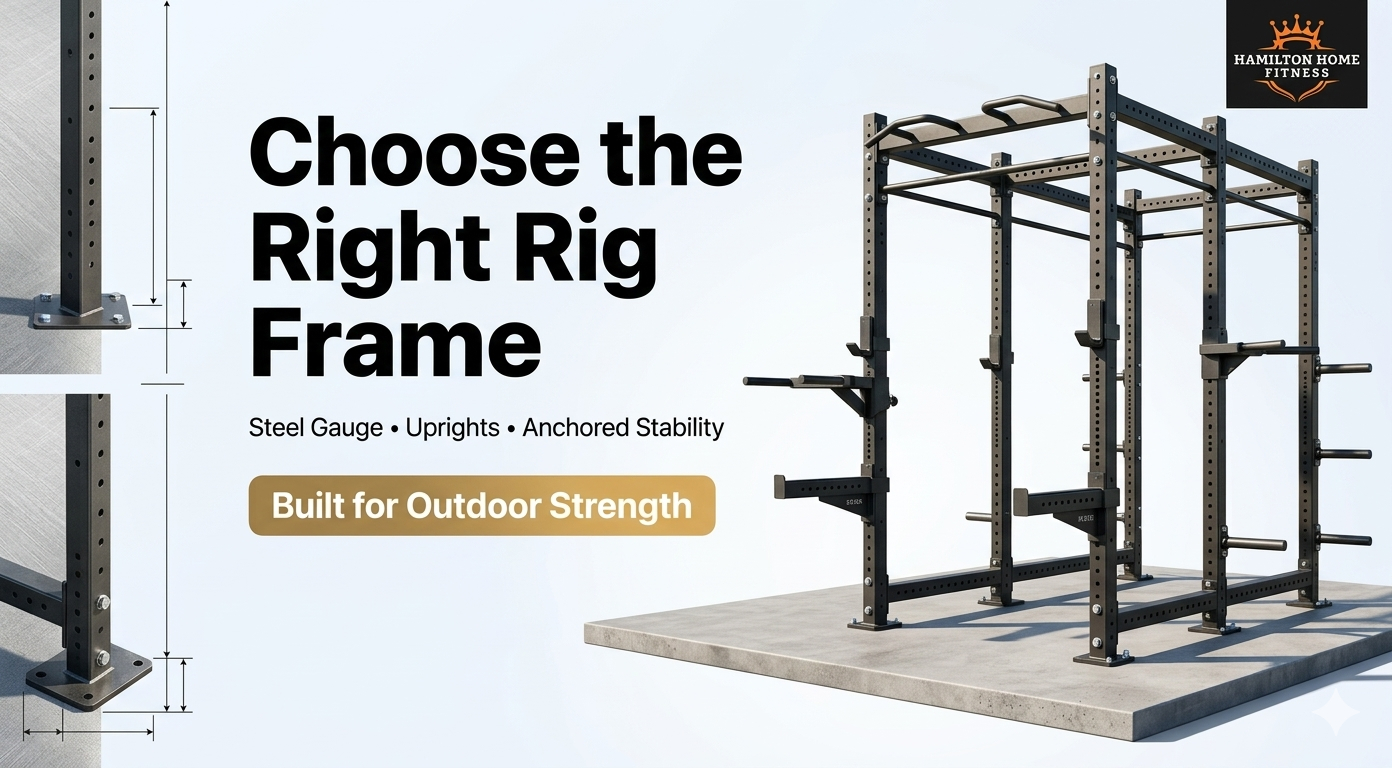
Free-Standing vs. Anchored Rigs
Free-standing rigs suit temporary or no-pour sites, while anchored rigs are the standard for permanent, high-traffic outdoor installations.
A self-stabilizing base lets a free-standing rig sit on the surface and move later, which helps when you can't pour concrete or expect to relocate it. The tradeoff is stability: anchored rigs bolt to a pad and hold firm under heavy group use and kipping loads, where a free-standing unit has less margin. Match the choice to your site's permanence and budget, not the other way around.
Posts, Bays, and Steel Gauge
Heavier steel and larger uprights add stiffness and lifespan; many commercial outdoor rigs use thicker-gauge tube and 3x3 uprights for high-traffic durability.
Four-post, six-post, and multi-bay layouts scale capacity as your headcount grows. A lighter 11-gauge tube and 2x3 uprights cost less but flex more under load than a 7-gauge tube and 3x3 uprights. When you compare quotes, ask every manufacturer the same three questions: wall thickness, upright size, and the rated load per station.
Tactical and military builds align with military-grade systems engineered for high-volume, FOB-style use—for example, BeaverFit's tactical and military rig systems, which pair external pull-up stations, climbing wings, and dip and squat attachments.
Integrate Squat and Power Racks
If barbell work matters, plan integrated squat or power-rack stations into the rig from the start rather than bolting them on later.
Building J-cups and spotter arms into a dedicated bay keeps barbell posts and bumper-plate work from crowding your pull-up and ring stations. Use weather-rated hardware throughout. If your program leans on loaded strength, outdoor squat and power rack options can be specified in the layout instead of added as an afterthought.
Finishes That Stop Rust Outdoors
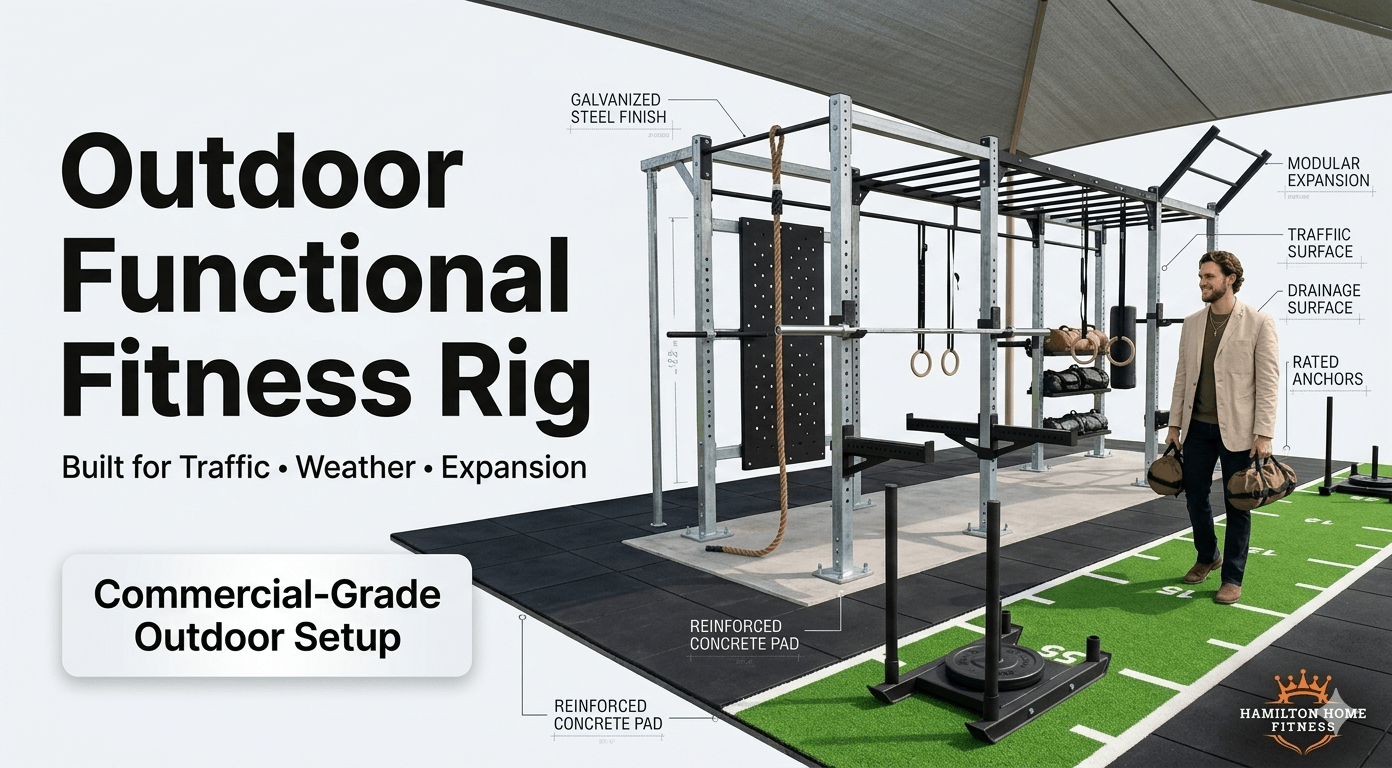
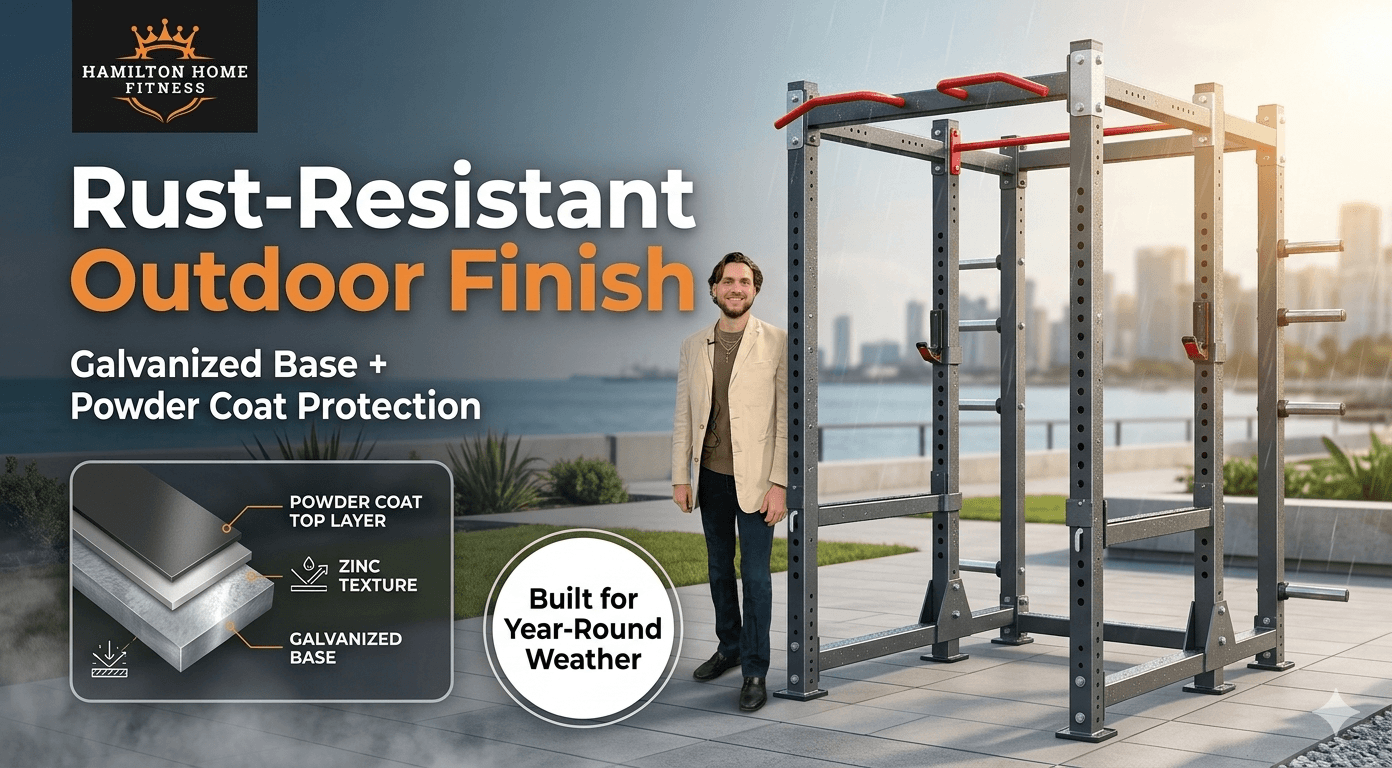
What finish protects an outdoor rig from rust? A galvanized base under a durable powder-coat top layer is the outdoor standard — and for military and tactical rigs that see hard, year-round use, the most robust version of that system (or a marine-grade coating) is the safe default.
Galvanizing, Primer, and Powder Coat
Galvanized steel resists outdoor rust because its zinc coating shields the steel from moisture and weather; a powder-coat top layer then adds UV and abrasion protection.
The galvanized base does the heavy lifting against corrosion, while the primer and top coat add adhesion, color, and weather resistance. "Galvanized" alone tells you little, so ask each manufacturer to confirm the full system in writing:
Hot-dip galvanizing — ask whether it meets ASTM A123
A zinc-rich primer over the steel
A two-coat or marine-grade powder coat as the top layer, with a polyurethane top coat where specified
Documented salt-spray testing (ASTM B117) for corrosion resistance
Those details separate a rig that lasts a decade from one that streaks rust in two winters.
Stainless, Aluminum, and UV Limits
For coastal or high-salt sites, stainless or aluminum components can outlast coated carbon steel at a higher cost.
The rule is simple: match the material to the environment. Inland sites are well served by galvanized-and-coated steel, while salt air, pool decks, and marine climates justify stainless or aluminum upgrades. Expect some UV color fade on any finish over the years — that's cosmetic, not structural. Spend the upgrade money only where your climate earns it.
Concrete Pad and Anchoring Specs
What pads and anchors does an outdoor rig need? Most permanent rigs sit on a steel-reinforced concrete pad with rated anchors—but the slab thickness, concrete strength, rebar, and anchor type all depend on your rig's load and site, so treat the figures below as a starting point and confirm the final spec with an engineer and the manufacturer.
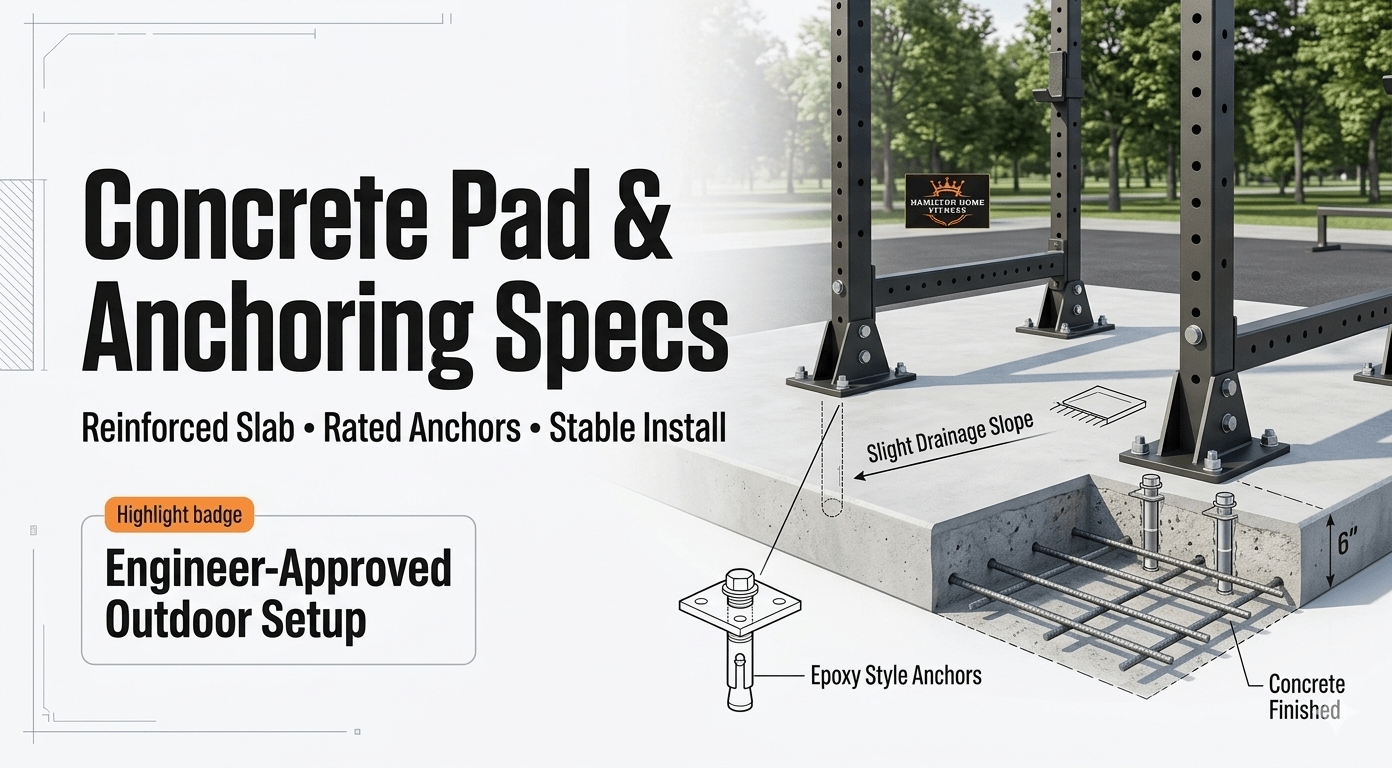
Slab Thickness, Rebar, and PSI
Permanent outdoor rigs typically sit on a reinforced concrete pad — often around 6 inches thick at 3,000 PSI or more with a steel rebar grid — but thickness, PSI, and rebar size depend on the rig's load and your site.
As a planning reference, commonly cited specs land near a 6-inch slab, 3,000 PSI concrete, and a #4 rebar grid at roughly 16 inches on center, with adequate cover over the steel. Heavier rigs and weak soil push those numbers up. None of it replaces a stamped design — your engineer sizes the slab to the actual rig and ground conditions.
Anchor Types and Embedment
Most rigs anchor with wedge (expansion) or epoxy (chemical) anchors; the right type and embedment depend on the rig's base plates, the slab, and the manufacturer's drawings.
Wedge anchors expand against the concrete and install fast, while epoxy anchors bond into a drilled hole and can hold harder in some conditions. Either way, embedment depth drives pull-out resistance—which matters under the dynamic, kipping loads a busy rig sees. Use the anchor and depth the rig maker specifies, not a generic hardware-store substitute.
Asphalt, Drainage, and Frost
Anchor permanent rigs into engineered concrete, not asphalt—asphalt flexes and won't reliably hold structural anchors. Also slope the pad so water runs off rather than pools.
A thin asphalt overlay or a pad that holds water invites two failures: loosening anchors and a slick surface. Add drainage where water collects, and account for frost depth and freeze-thaw in cold regions so the slab doesn't heave.
When to Bring in a Pro
Because a rig is a weight-bearing structure, confirm pad and anchor specs with a licensed structural engineer, your local building authority, and the rig maker's stamped drawings before you pour.
When the rig is permanent, anchored, and on public or shared property, a stamped design and the right permit aren't optional — they protect users and limit liability. A consultation can fold this into the project so the pad, anchoring, and equipment plan arrive as one package: you can book an outdoor gym design consultation that includes pad and anchoring guidance.
Attachments for Each Training Style
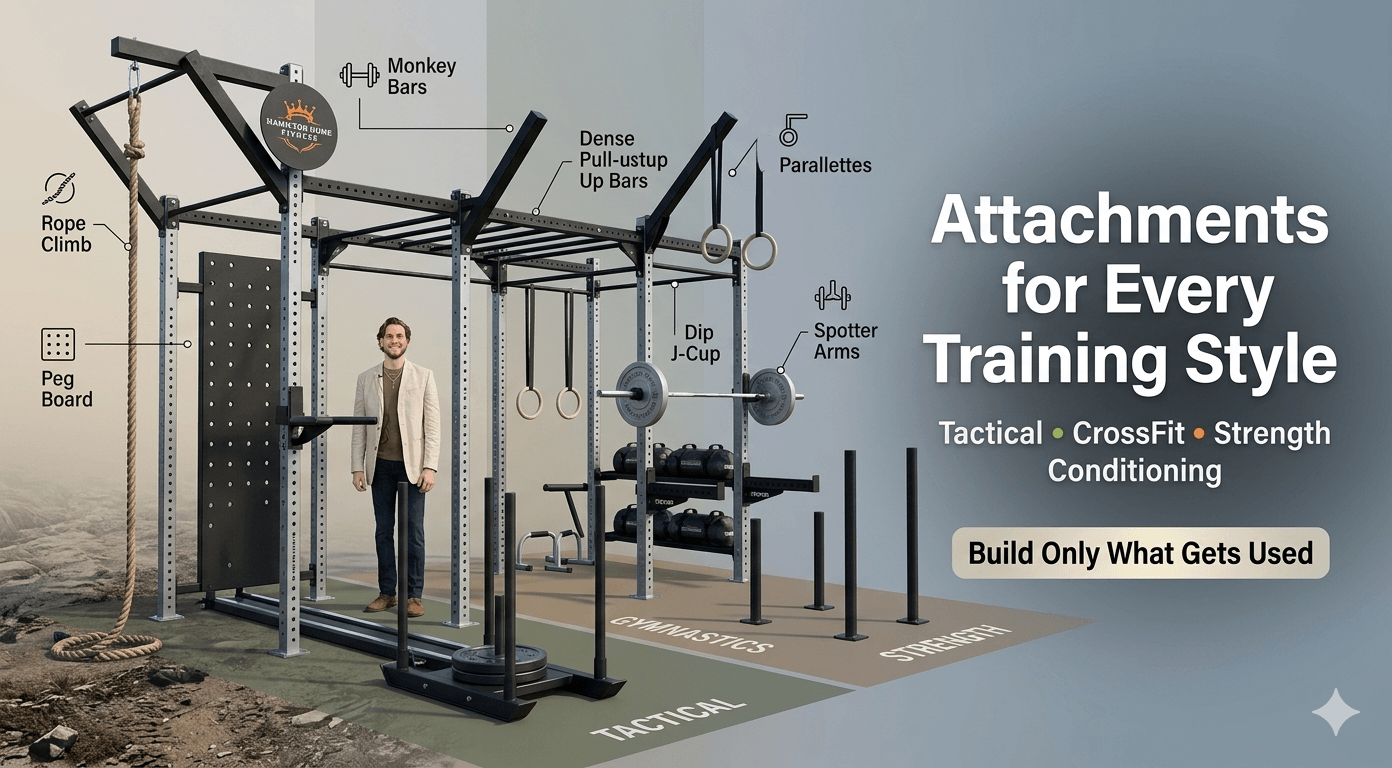
Which attachments matter most? It depends on how your population trains — so prioritize the few stations that drive the most use, and skip the ones that just look good in a catalog.
Tactical and Obstacle Attachments
Tactical and military builds lean on rope climbs, peg boards, monkey bars, and dense pull-up stations that move large groups through hard work fast.
These stations build grip, climbing, and upper-body endurance — and they keep a big PT group productive because several people work at once. A typical tactical circuit chains a rope climb, a set of monkey bars, and a pegboard into pull-up and dip stations so throughput stays high. Rope climbs in particular depend on the rope itself: rated climbing ropes from Pacific Fibre are built for that repeated, loaded use.
CrossFit and Gymnastics Stations
CrossFit and athletic builds prioritize kipping-rated pull-up bars, gymnastic rings, dip stations, and parallettes for varied daily programming.
That core set covers the movement library affiliates actually program—pull-ups and muscle-ups, ring work, dips, and floor skills—within one footprint. Plan adjustable ring heights and confirm the pull-up bar is rated for kipping since dynamic loads are harder on hardware than static hangs. To round out the functional set, cross-training rig attachments and accessories fill in plyo targets and the smaller pieces a class rotates through.
Barbell, Sled, and Sandbag Add-Ons
Add barbell stations, a sled track, and sandbag storage when your program includes loaded strength and conditioning, not just bodyweight work.
Picture a mixed session: athletes cycle from barbell posts with J-cups and spotter arms to a sled track, then to sandbags pulled from a rack. Building those in means loaded work and storage live in the same footprint instead of spilling into your bodyweight lanes. Skip them if your population trains bodyweight only—they're a capacity you'd pay for and not use.
Flooring, Access, Shade, and Permits
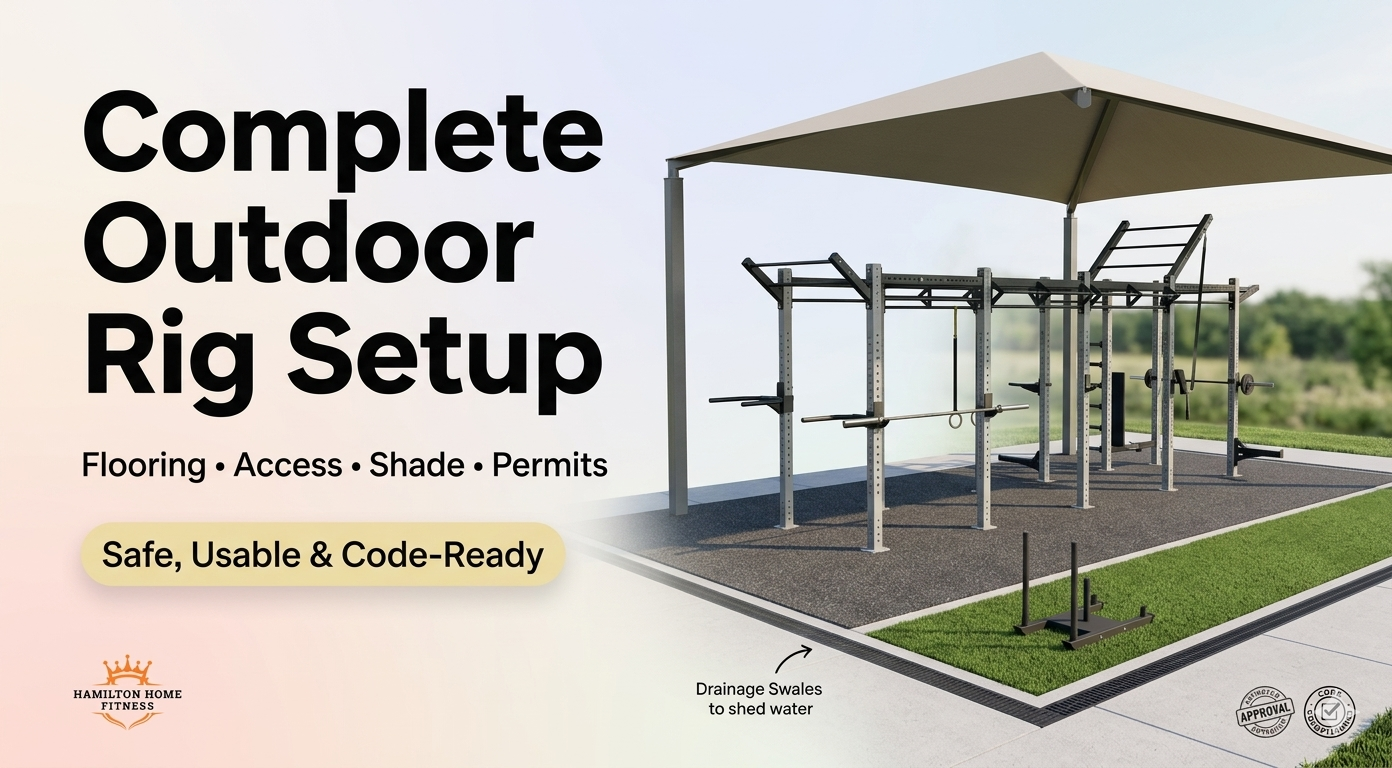
What goes around the rig? Four things decide whether the finished space is safe, usable, and legal: protective surfacing, an accessible route, climate-appropriate shade, and the right permits.
Flooring and Drainage Surfaces
Choose surfacing for impact protection and drainage. Poured-in-place rubber and rubber tile cushion falls and shed water well, while turf suits sled and movement lanes.
Surface | Cushion | Drainage | Maintenance | Best for |
Poured-in-place rubber | High, seamless | Good (permeable options) | Low | Primary rig zone, fall areas |
Rubber tile | Good | Good | Low: tiles swap individually | Modular layouts, phased builds |
Turf strip | Low | Moderate | Periodic grooming | Sled tracks, movement and drag lanes |
Slip resistance matters most right under pull-up and ring stations, where users land and where rain collects—so prioritize a cushioned, draining surface there.
ADA Access and Clear Flow
Plan an accessible route to and around the rig with firm, stable, slip-resistant surfacing and clear approach space—then confirm requirements against the ADA Standards and your local code.
Access isn't a late patch; it shapes where the pad sits, how wide the paths run, and how much clear space sits at each station. Keep circulation lanes open so a crowd at one station doesn't block the route past it. For parks and multifamily sites especially, this overlaps with broader layout planning—how to plan peak-hour flow and zoning walks through that in more depth.
Shade and Shelter for Hot, Humid Climates
In Tennessee's hot, humid summers, plan for shade—a canopy, shade sail, or pergola—to extend usable hours and protect users and equipment, and design for severe-storm winds.
Without shade, a metal rig and its surfacing get punishing by midday, and usage drops in peak summer. With it, the space stays usable morning through evening. Whatever cover you choose, account for wind load: Tennessee storms turn an underbuilt canopy into a liability.
Permits and Code Approvals
Permanent, anchored outdoor rigs often require a building or zoning permit, but requirements vary by jurisdiction — confirm with your local authority before installing.
The trigger is usually the combination of permanent, anchored, and public or shared property. Check permitting early, because discovering it after the pad is poured means stop-work orders, failed inspections, and lost time. A quick call to your local building department at the planning stage is the cheapest insurance for the project.
Budget Per Station and Plan to Expand
How much does an outdoor rig cost, and how do you budget it? Think per station and per project, not just per rig, and know that exact numbers come from a quote built around your site.
Per-Station and Project Costs
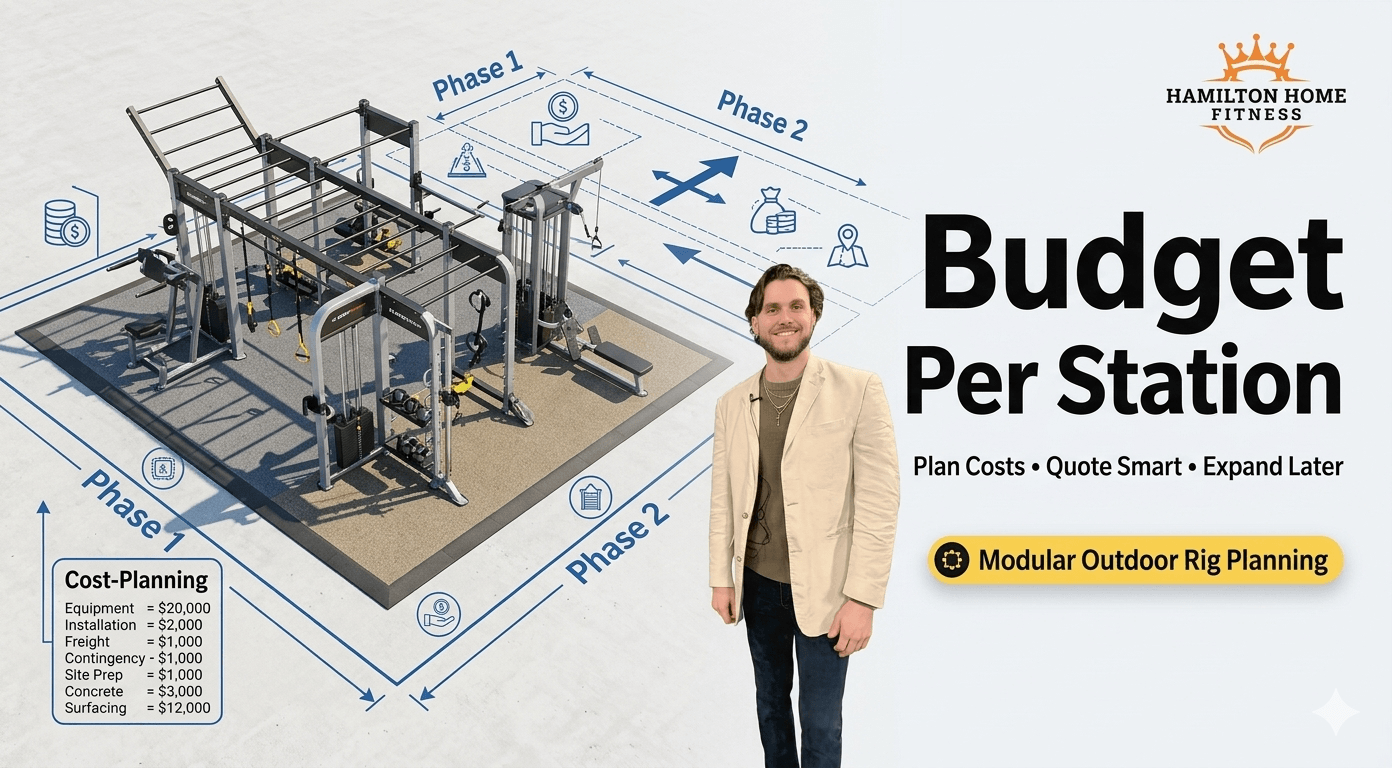
Budget per station, not just for the rig. Commercial outdoor packages commonly run about $10,000 to $35,000 for equipment, and a realistic project adds roughly 30% for installation, freight, and contingency on top of equipment, plus site prep and surfacing.
A workable planning formula is equipment plus about 30%, then site prep and surfacing on top. Two line items buyers underestimate: the concrete pad and the protective surface—a basic pad often runs around $6 to $9 per square foot and poured-in-place rubber around $12 to $18 per square foot. One lever works in your favor: ordering six or more stations can trim roughly 8% to 15% off the per-unit cost. (Ranges are 2024–2026 vendor and cost-guide figures; treat them as planning estimates, not quotes.)
Plan a Modular Expansion
A modular rig lets you start with core stations and add bays or attachments as budget and demand grow.
Phase one might be a core rig—pull-up, dip, and ring stations on a pad sized for more. Phase two adds a bay, a rope climb, or barbell stations in the next budget cycle. Specifying a modular system up front and pouring a pad with room to grow protects the build from single-cycle budget limits.
Sourcing and Requesting a Quote
When you're ready, compare commercial-grade rigs and request a quote with your footprint, use case, and site details so the numbers reflect reality.
A good RFQ includes your footprint and pad status, peak-hour headcount, training style, finish needs, site location for freight, and any install support you'll want. Sending those details up front gets you accurate pricing and lead times faster — start from the commercial fitness equipment catalog to compare options and request commercial pricing.
FAQ
Are outdoor pull-up bars safe in the rain?
Yes — when the rig uses a galvanized-plus-powder-coat finish and slip-resistant surfacing underneath. The coating keeps rain from rusting the steel, and a cushioned, draining surface protects landings. Just dry the bar and skip kipping on a slick grip until it's dry.
How long do outdoor fitness rigs last?
Well-finished commercial rigs commonly carry structural warranties of about 10 to 15 years, and good corrosion protection plus routine inspection can extend real service life further. Finish quality and upkeep, more than the steel itself, decide how long a rig stays safe outdoors.
What maintenance keeps an outdoor rig safe?
Inspect anchors, bolts, welds, and the coating periodically; touch up any chips before they spread; and clear debris and standing water from the pad. Wear items like ropes and rings get replaced as needed. Light, regular maintenance prevents the two failures that matter most—corrosion and loose anchors.
How long does installation take?
It depends on size and pad work. Once a cured pad is ready, assembling and anchoring the rig is often a one- to multi-day job for a crew — but pad curing adds days up front, so build that into your timeline.
Final Thought
A strong outdoor functional fitness rig isn't one decision—it's a sequence that holds together. Match the rig to your users and peak-hour traffic, choose durable steel with a verified corrosion finish, anchor it to an engineered pad, equip it for the way your people actually train, and plan the surfacing, access, shade, permits, and budget around it. Get that order right and you end up with a rig that survives the weather, passes inspection, and still feels solid years into heavy daily use.
When your spec is ready, the next step is simple: bring it to Hamilton Home Fitness for a design consultation or a commercial quote, so the pad and anchoring guidance, the equipment plan, and the install timeline come together as one project instead of a stack of separate problems. That's the difference between a rig you hope works and one that's built to.