Introduction
If you’ve ever wondered how adjustable dumbbells work, you’re not alone. Home gym owners, trainers, and small studios often want one set of adjustable-weight dumbbells that can replace a whole rack—without guessing whether the lock is really secure. This guide is for U.S. lifters (from Tennessee to any state) who want a clear, simple explanation of how one handles “selects” plates and leaves the rest behind in the tray.
Here’s the problem this article solves: adjustable systems can feel confusing at first—dial clicks, selector pins, trays, and plates that “stay behind.” If you don’t understand the locking mechanism and plate retention, you can end up with annoying rattles, slow weight changes, or unsafe lifts. I’ve seen this in real setups where people rush a weight change between sets, lift slightly off-center, and then realize the dumbbell wasn’t fully seated in the cradle.
By the end, you’ll know the main types (dial, pin, and plate-loaded), how the selector mechanism engages selected plates, what safety checks take 10–20 seconds, and how to compare speed and durability before you buy—especially if you’re considering quick-change dumbbells from Hamilton Home Fitness.
Adjustable vs fixed dumbbells
Fixed vs adjustable: what changes
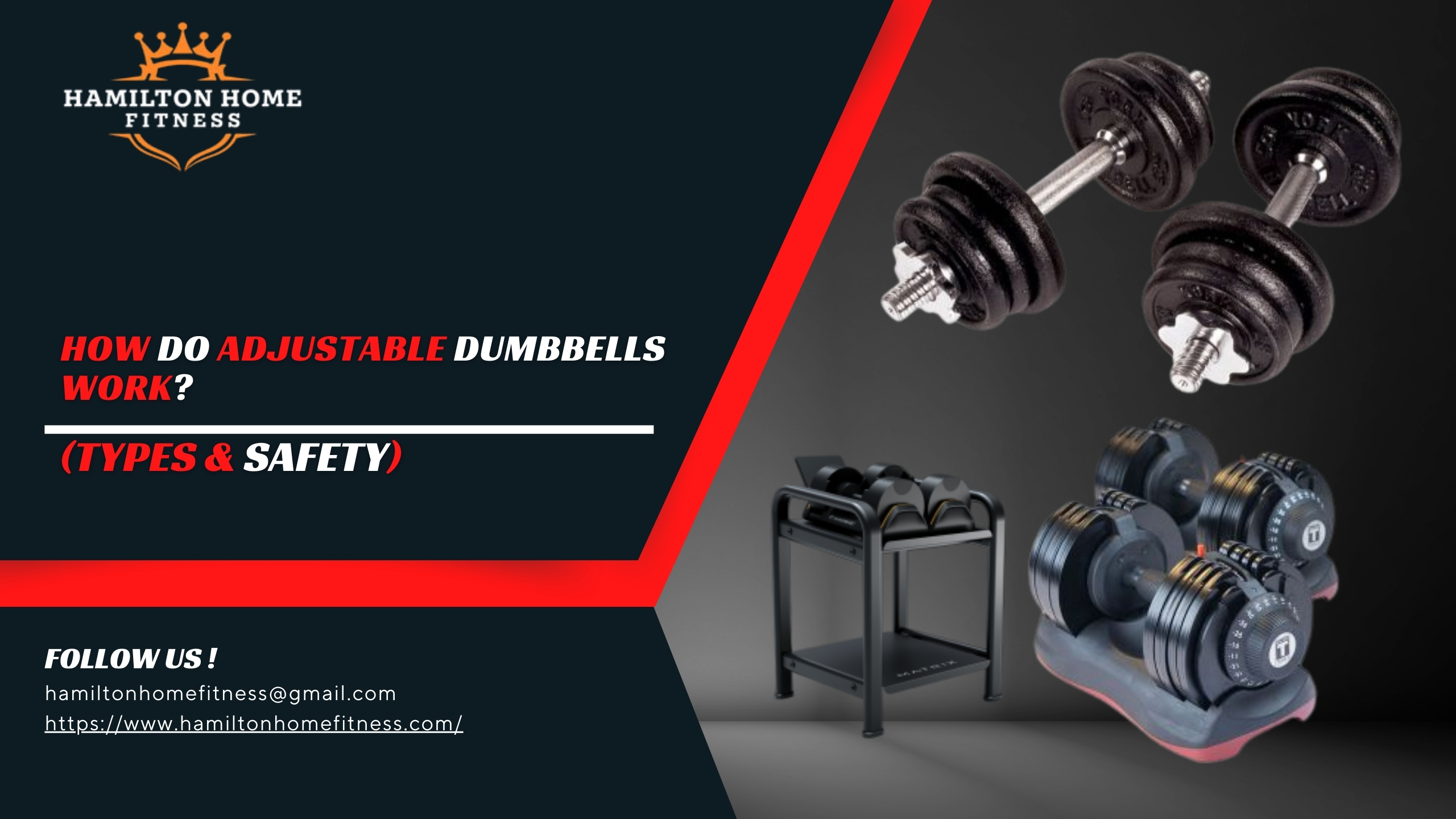
Fixed dumbbells are one solid piece, while adjustable dumbbells use a handle plus a selector mechanism to engage certain weight plates and leave the rest in the cradle/base/tray. The tradeoff is simple: fixed feels “rock solid,” adjustable saves space but adds moving parts like rails/rods, tabs, or a click-lock.
A quick real-world check: set up a 3-set workout (press, row, curl). With fixed dumbbells, you walk to the rack. With quick-change dumbbells, you stay put and change weight in the tray—faster flow, less clutter, more focus.
Worth it for home gyms?
Adjustable dumbbells are usually worth it if you need many weights in a small footprint, especially for families or shared spaces. The best choice depends on how often you change weight between sets and how “solid” you want the feel.
Simple decision rule:
- If you change weight every set, choose faster systems (dial/pin).
- If you change weight sometimes, plate-loaded can be fine.
- If space is tight, adjustable wins almost every time.
Who should avoid which system
Different users fit different designs, based on speed, durability, and safety checks.
- Dial selector dumbbells: great for fast swaps; avoid if you often rush and don’t fully seat the handle in the tray (misalignment risk).
- Selector pin dumbbells: often feel solid; avoid if you dislike checking pin seating every time.
- Plate-loaded/spinlock: simple and durable; avoid if you hate slow changes or loose collars.
If you’re shopping for a home setup, Hamilton Home Fitness options are best evaluated by matching your routine to the system—not just the max weight.
How do adjustable dumbbells work?
“Selected plates attach,” explained
At the core, adjustable (often selectorized) dumbbells work because the handle only connects to the weight you choose, using a locking mechanism that grabs specific plates. When you set a number, the selector mechanism lines up tabs/pins/hooks so the selected plates attach to the handle, creating one usable dumbbell.
A simple example: you dial or pin “25 lb,” then lift. Inside the handle or ends, a plate engagement part (like a latch or bar) locks into the 25 lb set. If you’ve ever felt a clean “click-lock,” that’s the system telling you the plate retention is engaged—assuming it’s seated correctly.
Why unselected plates stay behind
Unselected plates stay in the cradle/base/tray because the tray physically supports them and the handle never “grabs” them in the first place. Many designs use rails/rods or guide tracks so plates sit in fixed slots, and only the chosen slots line up with the handle’s engagement points.
In real use, the most common mistake I see is lifting while the dumbbell is slightly off-center in the tray. The handle can catch only one side, which feels “weird” right away—your cue to set it back down and reseat.
Parts you can actually check
You don’t need to open the dumbbell to do a smart safety check. Look at the handle alignment in the tray, the selector/dial position, and any visible latch points. If the system uses internal gears, you’ll often hear/feel consistent clicks; if it feels gritty, uneven, or won’t seat, don’t force it.
Quick check before a set: seat flat in the tray, select weight, lift 1–2 inches, and gently “test” for wobble—then start your reps.
Dial, pin, and plate-loaded types
Dial systems: gears + click-lock
Dial selector dumbbells (often called quick-change dumbbells) let you turn a dial to choose weight in seconds. Inside, the dial moves a selector along rails/rods or through internal gears, so only the chosen plates line up for plate engagement. When you lift, the selected plates attach to the handle, and the rest stay parked in the base/tray.
Real-life example: in a drop-set (heavy to light with short rest), dial systems can feel “smooth” because you can change weight between sets without walking anywhere. The key habit is always reseating the handle fully—most “it won’t pick up the right plates” moments come from a rushed, crooked dock in the tray.
Selector-pin systems: pin + cage
Selector pin dumbbells use a pin you slide into a numbered slot to choose a weight block. The pin becomes the locking mechanism, connecting the handle to that block while unselected blocks stay behind. Many people like the “solid” feel because the design is simple—fewer moving parts compared to complex dials.
A practical proof check: after inserting the pin, tug it slightly to confirm it’s fully seated, then lift 1–2 inches and listen. If you hear a clunk or feel an uneven load, set it down and reseat it—this is where safety comes from, not speed.
Plate-loaded: spinlock basics
Plate-loaded adjustable dumbbells (like spinlock dumbbells or loadable dumbbell handles) work by manually sliding plates on and tightening collars. They’re slower but straightforward and often easier to maintain because the “selector mechanism” is basically your hands plus the collar.
If you’re choosing a system to buy, Hamilton Home Fitness models are easiest to pick when you match them to your routine: dial/pin for frequent weight changes, plate-loaded for simple, budget-friendly loading. Use the Hamilton Home Fitness product to choose the style that fits your space, pace, and comfort.
Safety, drops, rattles, upkeep
Safety checks before every set
Adjustable dumbbells are safe when the locking mechanism is fully engaged and the handle is seated correctly in the cradle/base/tray before you lift. My go-to habit is a quick “seat–select–test” routine that takes about 10–20 seconds and prevents 90% of problems.
Quick checklist (do this every time):
- Seat flat: make sure both ends sit fully in the tray, not tilted.
- Select cleanly: set the dial or pin to the exact number on both sides.
- Test lift: lift 1–2 inches, pause, and feel for uneven pull or wobble.
If anything feels off, set it down and reseat—don’t “muscle through” the first rep.
Can you drop them? What breaks
In general, you should assume you shouldn’t drop adjustable dumbbells unless your specific model is designed for it. Dropping can stress wear parts like selector tabs, pins, or internal gears, and it can affect plate retention so the plates don’t lock as cleanly later.
A safer pattern: place them down under control, especially after heavy presses. If you train hard and tend to bail reps, choose a sturdier style and use flooring protection so the tray stays aligned.
Why they rattle + how to fix
Some rattling is normal because plates need tiny gaps (tolerances) to slide and lock. But loud rattles often mean the dumbbell wasn’t fully seated or the plate engagement points aren’t lined up.
Troubleshooting steps:
- Reseat the handle in the tray and reselect the weight.
- Check for dirt/grit in the tray slots and wipe it clean.
- If plate-loaded, retighten collars; if dial/pin, inspect for bent guides or a sticky selector feel.
Basic upkeep is simple: keep the base clean, don’t force the selector, and recheck fit if the dumbbell starts feeling “loose” compared to day one.
People Also Ask
How do adjustable dumbbells work compared to fixed dumbbells?
Adjustable dumbbells use a handle with a selector that locks onto chosen plates, while fixed dumbbells are one solid piece. Example: one adjustable set can replace multiple pairs, but you must confirm the lock is fully engaged before lifting.
How do dial-adjustable dumbbells work (e.g., SelectTech-style)?
Dial systems turn a selector that lines up internal latches so only the chosen plates attach to the handle. Condition: they work best when the dumbbell is fully seated in the tray—if it’s tilted, the selector can misalign.
How do selector-pin adjustable dumbbells work (PowerBlock-style)?
Selector-pin systems use a pin that slides into a numbered slot to pick a weight block, and that block lifts as one unit. Example: after inserting the pin, lift 1–2 inches to confirm it’s seated and stable.
What are the main types of adjustable dumbbells (dial, pin, plate-loaded, etc.)?
The main types are dial selector, selector-pin/block style, and plate-loaded (spinlock/loadable handles). Condition: dial and pin are usually faster between sets, while plate-loaded is simpler but slower.
Do unselected plates stay in the tray/base—how does that happen?
Yes—unselected plates stay in the tray because the handle only engages the selected plates, and the base supports the rest. Example: when you lift “25 lb,” the plates not chosen remain slotted on the tray rails.
Are adjustable dumbbells safe—what should I check before lifting?
They’re safe when the selector is fully locked and both ends are seated flat in the tray. Condition: do a quick test lift (about 1–2 inches) and set it back down if you feel wobble.
Can you drop adjustable dumbbells, or will the mechanism break?
You should assume “don’t drop” unless your specific model explicitly allows it. Condition: drops can damage selector tabs, pins, or internal gears—especially on hard floors.
Why do some adjustable dumbbells rattle or feel less solid?
Some rattle is normal because plates need small gaps to slide and lock into place. Example: if the rattle suddenly gets louder than usual, reseat the dumbbell and reselect the weight.
Are adjustable dumbbells worth it for a home gym (space/cost tradeoffs)?
They’re often worth it if you want many weight options without a full rack taking up space. Example: if you train 3–4 days a week in a small room, one adjustable set can be a practical upgrade.
How quickly can you change weight between sets with each system?
Dial and pin systems are usually the fastest because you can select weight in the tray without handling loose plates. Condition: plate-loaded setups take longer because you must add/remove plates and tighten collars.
What weight ranges and increments are typical (2.5 lb vs 5 lb steps)?
Many adjustable systems use fixed steps like 2.5 lb or 5 lb increments, but it depends on the model. Example: some include micro-adders for smaller jumps when you’re progressing slowly.
How do you maintain adjustable dumbbells (cleaning, tightening, wear parts)?
Basic maintenance is keeping the tray clean and checking that the selector moves smoothly and locks firmly. Condition: if the selector feels gritty or sticks, stop using it until it’s cleaned and inspected.
Final Thought
Now you know how do adjustable dumbbells work: the handle uses a selector mechanism to create plate engagement, so the selected plates lock on and the unselected plates stay in the cradle/base/tray. Once you understand the locking mechanism and plate retention, dial, pin, and plate-loaded systems stop feeling “mysterious” and start feeling predictable.
If you only remember one habit, make it this: seat–select–test. Take 10–20 seconds to seat the dumbbell flat, select the weight, then do a 1–2 inch test lift before your first rep. In real setups, that tiny check prevents most rattling, mis-selections, and safety scares.
Your next step is simple: choose the system that matches your routine. If you change weight often, look at quick-change dumbbells (dial or pin). If you prefer simple hardware, consider plate-loaded. When you’re ready to buy, explore Hamilton Home Fitness adjustable weight dumbbells built for real home training—space-smart, practical, and designed for consistent workouts.