Introduction
If you want stronger legs without feeling unstable under a bar, the Front Squat Machine can be a smart place to start. It gives you a more guided squat pattern, which helps many people train with better control, cleaner form, and more confidence. That matters whether you are building a home gym, coaching clients, or simply trying to make leg day feel safer and more productive.
A lot of people like the idea of front squats but struggle with balance, wrist position, or staying upright through the full rep. That is where a machine version often feels more approachable. When you explore options from Shop Quality Fitness Gear and Equipment - Hamilton Home Fitness, you are looking at equipment that can make lower-body training feel less intimidating and more repeatable, especially for beginners, busy adults, and anyone who wants a practical leg press alternative without giving up squat-focused strength work.
This guide is for readers who want straight answers before they train or buy. You will learn what muscles the machine targets, how to use it safely, how it compares with barbell and hack squat variations, and whether it fits your goals. By the end, you should feel clear, confident, and much closer to making the right choice.
Front Squat Machine Benefits
Muscles worked and movement
The Front Squat Machine mainly targets the quadriceps, while the glutes and core help support the movement. For many people, that makes it a strong quadriceps workout machine when the goal is leg strength with a more guided path.
What I like about this setup is how easy it is to feel where the work is going. Instead of fighting to keep the bar balanced, you can focus on driving through your feet, staying tall, and getting a cleaner rep. That often helps people notice their form faster, especially if free-weight front squats have felt awkward.
Posture, control, and comfort
One of the biggest front squat machine benefits is control. The machine supports a more upright position, which can make the movement feel smoother and more repeatable for lifters who struggle with wrist strain, upper-back fatigue, or balance.
That does not mean it is “easy.” Your legs still have to work hard. But the guided track can reduce the noise in the movement. For someone coming back from a long break, or for a busy parent squeezing in a quick workout, that extra control can make training feel doable instead of frustrating.
Can beginners start here?
Yes, beginners can absolutely start here. A machine front squat often feels less intimidating because it removes some of the coordination demands that make barbell squats harder to learn.
The key is to begin light, move slowly, and treat the machine like a teaching tool, not a shortcut. A simple first session might be 2 to 3 sets of controlled reps just to learn foot placement, depth, and posture. That kind of steady start usually builds confidence much faster than loading too much too soon.
How to Use It Safely
Setup, stance, foot placement
Use the machine safely by setting your feet evenly, keeping your chest up, and choosing a stance that feels strong and natural. For most people, shoulder-width placement is the best starting point because it gives a stable base without forcing the knees inward or outward.
A good setup makes a huge difference. If your feet are too narrow, the rep can feel cramped. Too wide, and you may lose power at the bottom. A lot of beginners improve quickly just by slowing down, planting the whole foot, and checking that both knees track in line with the toes.
Bracing, depth, and tempo
Safe reps come from control, not speed. Brace your core before each rep, lower yourself with control, and only squat as deep as you can without losing posture or shifting pressure into your toes.
This is where many people either feel strong or feel exposed. When the brace is solid, the Front Squat Machine feels smooth and repeatable. When it is loose, the movement gets sloppy fast. A simple rule helps: lower in about two seconds, pause briefly if needed, then drive up with steady force. That tempo gives you better awareness and usually leads to cleaner reps.
Mistakes and safety catches
The biggest mistakes are going too heavy too soon, rushing the bottom position, and ignoring the machine’s safety features. If the machine has safety catches, set them before the first rep so you are not guessing when fatigue hits.
This matters more than people think. Many lifters do fine on the first few reps, then lose position near the end of the set. Safety settings, a non-slip platform, and controlled loading turn a risky set into a smart one. Strong training should feel challenging, not careless.
Machine vs Barbell vs Hack
Machine vs barbell: who wins?
Neither option is better for everyone. A Front Squat Machine usually works best for people who want more control, a simpler setup, and a more repeatable lower-body pattern, while a barbell front squat is often better for lifters who want to build free-weight skill, balance, and full-body coordination.
In real life, this choice often comes down to what feels sustainable. If someone dreads wrist strain, losing posture, or fighting the bar every rep, the machine can make training feel more productive and less frustrating. But if the goal is athletic carryover and barbell confidence, free weights still matter.
Front squat vs hack squat feel
The biggest difference is how the movement feels through your body. A machine front squat usually keeps you in a more upright pattern, while a hack squat machine often shifts the feel more through the lower body with a different torso angle and foot position.
That is why some people use one as a leg press alternative, while others want both patterns available. The right choice depends on whether you care more about front-loaded squat mechanics, pure leg drive, or having more than one way to train quads and glutes without wasting space.
Hamilton combo buying angle
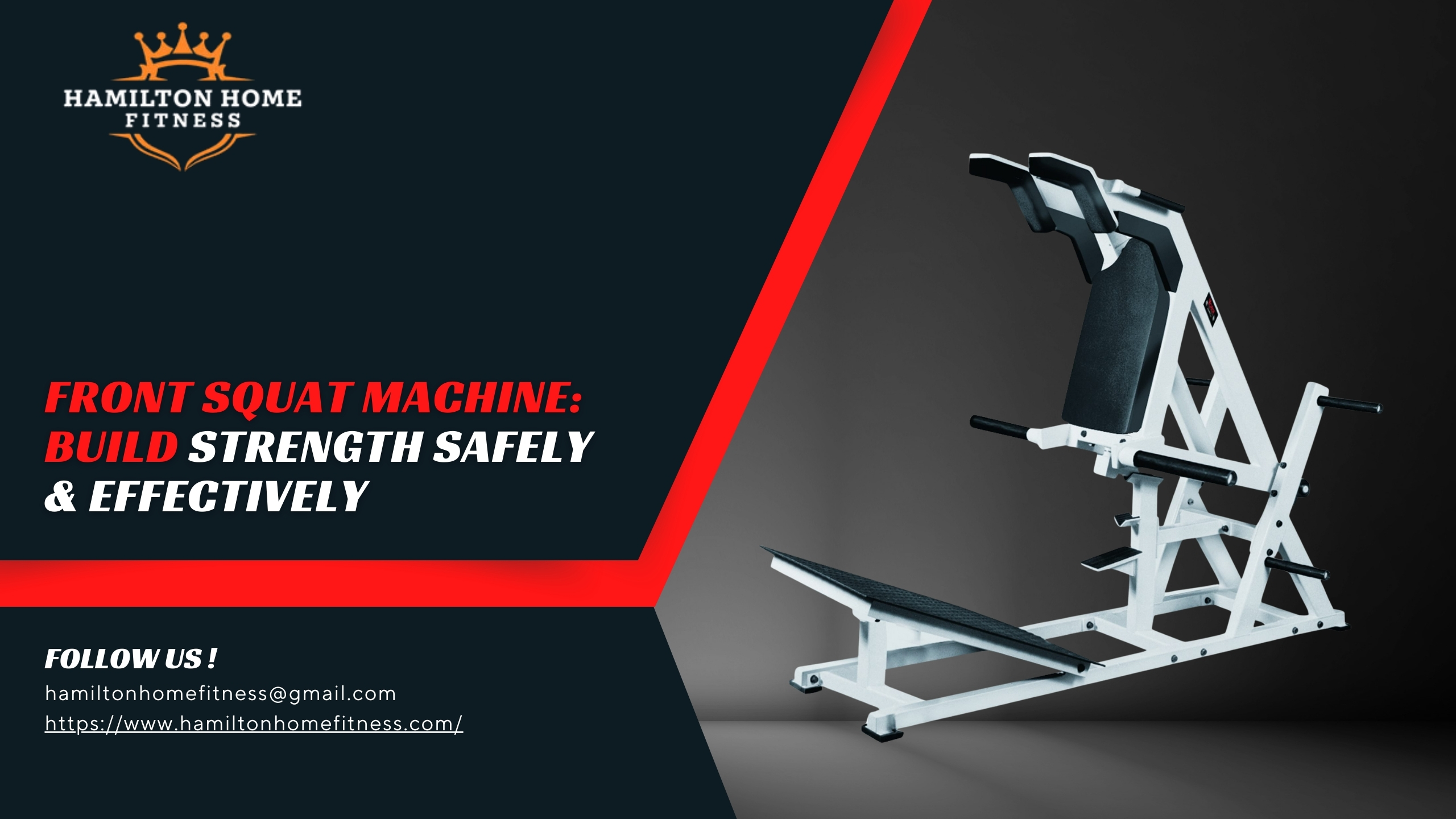
If you want both options in one unit, the Buy Front Squat Machine approach makes a lot of sense because Hamilton Home Fitness offers a York ST Power combo that supports both front squat and hack squat training in the same machine.
What makes that appealing is not just convenience. The product page highlights a large adjustable non-slip footplate, a two-tier safety catch system, extra-long 14-inch loading pegs, built-in storage pegs, and a listed max capacity of over 800 pounds, which gives serious home gyms and commercial spaces a stronger value case. Price and availability may vary.
Results, Knees, and Best Fit
How often to train on it
Most people do well using the Front Squat Machine one to three times per week, depending on their goal, total leg volume, and recovery. If you are a beginner, one or two quality sessions is usually enough to build skill and see progress without beating up your legs.
A simple example is adding it to one main leg day and one lighter strength day. That gives your quads, glutes, and core enough work to improve while still leaving room for walking, upper-body training, or other lower-body movements. The biggest mistake is chasing soreness instead of steady progress.
Knees, pain, and red flags
For some people, the machine feels more comfortable than free weights because the path is more controlled and the setup is easier to repeat. But that does not mean it is automatically good for every knee. Comfort depends on your stance, depth, load, and training history.
A helpful rule is this: muscle effort is fine, sharp joint pain is not. If your knees hurt during the rep, shorten the range, reduce the load, and check foot position before forcing more volume. If pain keeps showing up, it is smarter to stop and get qualified guidance than to push through and hope for the best.
Home or facility: best fit
This kind of strength training equipment fits well in both home and commercial spaces. Home users often like it because it feels more approachable than a barbell setup, while trainers and gym owners like it because clients can learn it faster and use it more consistently.
If you want guided lower-body work with front squat and hack squat versatility, Hamilton Home Fitness is a strong option to consider. It suits beginners, busy adults, small studios, and serious home gym buyers who want safer, repeatable leg training without unnecessary complexity.
People Also Ask
What muscles does the front squat machine target?
The front squat machine mainly targets the quadriceps. It also works the glutes and core, especially when you stay upright and control the full rep.
For example, if you use a shoulder-width stance and lower with control, you will usually feel the most tension in the front of the thighs. That is why many people treat it as a strong quad-focused leg exercise.
How do you use a front squat machine safely?
Use it safely by setting your feet evenly, bracing your core, and moving with control from top to bottom. The safest reps usually come from a moderate load, not from rushing into heavy weight.
A simple starting point is 2 to 3 light sets to learn your stance and depth. If your heels lift, knees cave in, or you lose posture, the weight is too heavy or your setup needs work.
Front squat machine vs barbell front squat – which is better?
Neither is better for everyone. A front squat machine is often better for stability and repeatable form, while a barbell front squat is better for building free-weight skill and balance.
For example, a beginner who struggles with wrist pain or staying upright may feel much more confident on the machine. A more experienced lifter may still prefer the barbell for athletic carryover and total-body coordination.
Can beginners use the front squat machine?
Yes, beginners can use the front squat machine, and many actually learn faster on it. The guided path removes some of the balance and mobility stress that makes barbell squats feel intimidating at first.
A smart beginner setup is 2 or 3 sets of controlled reps with light weight. That gives enough practice to learn foot placement, depth, and posture without turning the session into a grind.
What is the difference between a front squat machine and a hack squat machine?
The main difference is body position and movement feel. A front squat machine usually keeps you more upright, while a hack squat machine often shifts your body angle and changes how the load feels through the legs.
That is why some people prefer one over the other, and others want both in one setup. A combo unit from Hamilton Home Fitness, for example, can make sense if you want front squat and hack squat training without buying two separate machines.
How often should I use the front squat machine for results?
Most people get good results by using the front squat machine 1 to 3 times per week. The right number depends on your recovery, total leg training, and whether you are a beginner or more advanced.
For example, a beginner may grow well with 1 or 2 sessions each week, while a more experienced lifter may use it 3 times across different leg days. More is not always better if your knees, hips, or recovery start to suffer.
Are front squat machines good for knee health?
They can feel better on the knees for some people because the path is more controlled and easier to repeat. But they are not automatically good for every knee, and comfort depends on stance, depth, load, and injury history.
A useful rule is this: muscle burn is normal, sharp knee pain is not. If pain shows up during the rep, reduce the load, shorten the depth, and stop pushing through discomfort just to finish the set.
Final Thought
The Front Squat Machine is a smart choice for people who want stronger legs, better control, and a more confident squat pattern without the learning curve that often comes with free weights. For many home gym owners, trainers, and facility buyers, that mix of stability and performance is exactly what makes consistent lower-body training easier to stick with.
The biggest takeaway is simple: the best machine is not the one that looks impressive, but the one you will actually use well, safely, and often. If your goal is to build quad strength, train with better posture, and add a practical piece of strength training equipment that supports real progress, this style of machine can be a very strong fit.
A good next step is to compare your space, budget, and training needs with what Hamilton Home Fitness offers. If you want a guided setup that supports both front squat and hack squat training, Hamilton Home Fitness is worth serious attention for anyone building a smarter leg-training setup.