Introduction
Commercial fitness equipment is heavy, technical, and built for repeated daily use, so correct setup matters from the moment it arrives. Whether you manage a gym, apartment fitness room, school weight room, hotel gym, studio, rehab clinic, or corporate wellness space, professional fitness equipment installation helps your facility move from delivery to safe, ready-to-use equipment with less guesswork.
Hamilton Home Fitness helps buyers plan the next step after purchase, from equipment selection to commercial fitness facility setup and installation support. If you need equipment before scheduling service, you can Shop Quality Fitness Gear and Equipment - Hamilton Home Fitness and plan installation around your facility layout, delivery window, and launch timeline.
What Fitness Equipment Installation Includes
Fitness equipment installation includes more than putting parts together. For commercial spaces, it often involves delivery coordination, equipment placement, assembly, leveling, safety checks, operational testing, and a final walkthrough before the equipment is ready for use.
A professional installation service helps make sure each machine fits the room, follows the planned layout, and is set up for daily use by members, tenants, students, patients, employees, or clients. This is especially important for commercial gyms, apartment fitness rooms, hotel gyms, school weight rooms, rehab clinics, and wellness facilities where equipment may be used by many people throughout the day.
Installation may include:
- Confirming the equipment list and delivery window
- Reviewing room measurements and access points
- Moving equipment into the installation zone
- Assembling frames, consoles, cables, racks, and attachments
- Tightening bolts and hardware according to the equipment design
- Leveling machines for stable use
- Checking belt movement, cable tension, pulleys, guide rods, or weight stacks where needed
- Testing basic equipment function after setup
- Completing a final walkthrough with the facility contact
For buyers who are still choosing equipment, it can be helpful to plan purchase and installation together. You can Shop Quality Fitness Gear and Equipment - Hamilton Home Fitness while also thinking through your layout, delivery path, installation timeline, and facility launch needs.
Commercial vs. Basic Assembly
Commercial gym equipment installation is different from basic home assembly because the equipment is heavier, more complex, and built for repeated use in shared spaces. A single home bench or bike may need simple assembly, but a commercial facility may need treadmills, selectorized strength machines, functional trainers, squat racks, dumbbell storage, flooring coordination, and full layout planning.
Commercial installation often requires more attention to:
- Equipment footprint and safety clearance
- Traffic flow between cardio, strength, and free weight zones
- Doorway, hallway, stair, elevator, or loading dock access
- Floor protection during moving and setup
- Leveling feet and stable placement
- Cable routing and cable tensioning
- Power connection and outlet planning for cardio machines
- Final testing before users access the equipment
This is why a property manager, gym owner, school administrator, or facility manager may choose a specialized installation team instead of relying on general labor or movers. The goal is not just to assemble the equipment. The goal is to set up the space so users can move safely, equipment can operate correctly, and the facility can open with fewer delays.
If your project includes larger commercial machines, racks, or full fitness zones, review Commercial Gym Equipment for Facilities & Gyms to connect equipment selection with installation planning.
What Installers Handle On-Site
A professional installation technician or assembly technician may handle several on-site tasks depending on the equipment type, facility access, and project scope.
For cardio equipment, this may include treadmill installation, elliptical installation, exercise bike setup, rower assembly, stair climber placement, console setup, leveling, belt checks, and basic operational testing.
For strength equipment, this may include frame assembly, bolt tightening, pulley alignment, cable routing, guide rod setup, weight stack checks, selector pin review, rack placement, bench assembly, and dumbbell rack setup.
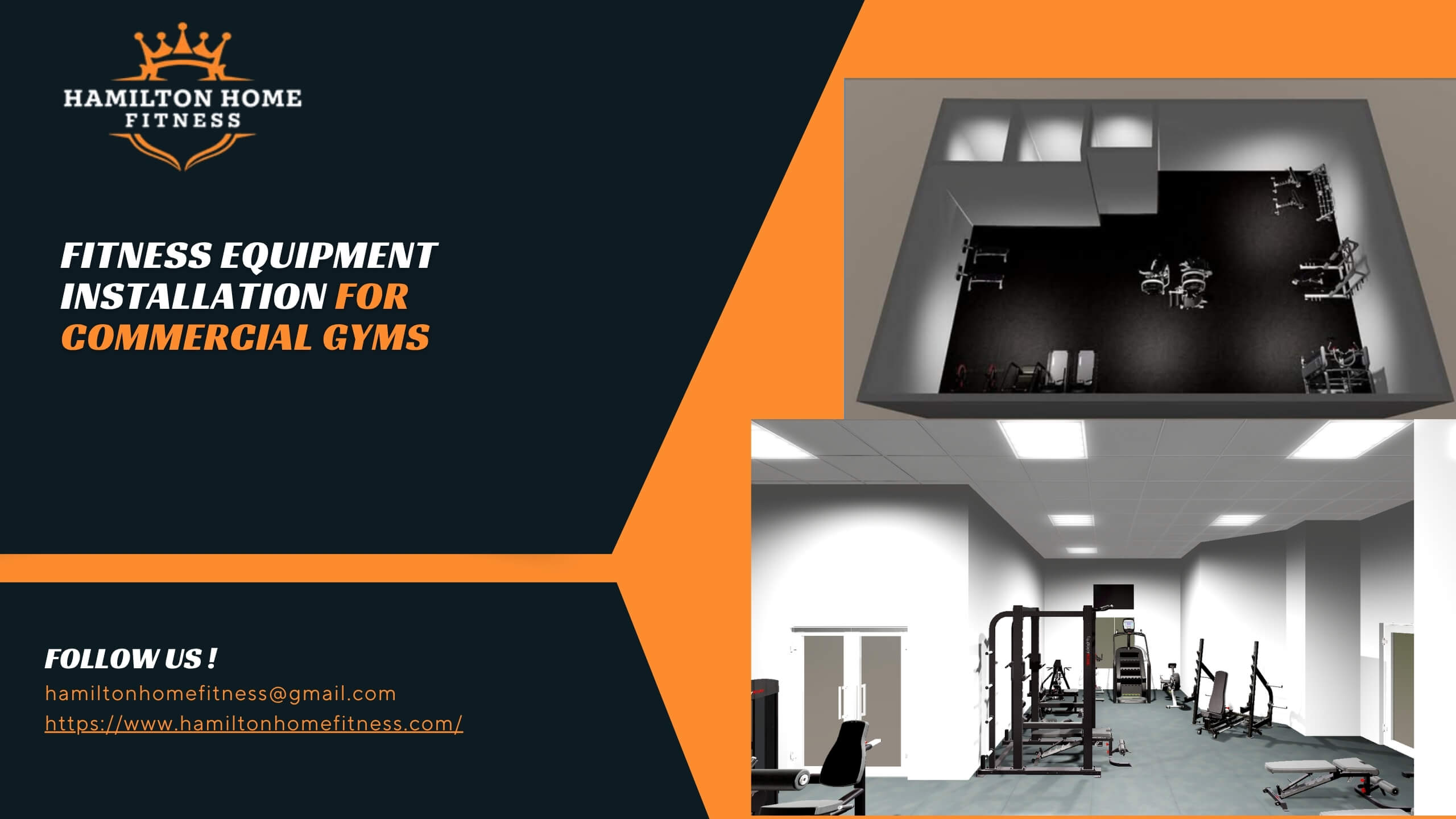
For full facility setup, the work may also include equipment placement by zone, coordination with the facility floor plan, delivery path planning, room measurement checks, and final walkthrough support.
The exact service scope should always be confirmed before the appointment. A clear quote should identify what is being installed, where it is going, what access conditions exist, and whether the project includes new equipment setup, equipment relocation, reinstallation, or a larger commercial fitness facility build-out.
Commercial Equipment We Install
Commercial fitness facilities often need more than one type of equipment installed at the same time. A complete fitness equipment installation project may include cardio machines, strength machines, racks, benches, storage systems, and full fitness facility setup.
Hamilton Home Fitness can support buyers who need help choosing equipment before installation, especially when planning a new gym opening, apartment fitness room, school weight room, corporate wellness space, or facility upgrade. If your project is still in the equipment selection stage, you can choose the best commercial gym equipment before scheduling installation.
Cardio Equipment Installation
Cardio equipment installation may include treadmills, ellipticals, exercise bikes, rowers, stair climbers, and other commercial cardio machines. These machines often require careful placement, leveling, console setup, power access checks, and basic operational testing after assembly.
For commercial facilities, cardio setup should also consider spacing and traffic flow. A treadmill zone, elliptical row, or bike area needs enough clearance for safe access, cleaning, maintenance, and daily use.
Common cardio equipment installation may include:
- Treadmill installation
- Elliptical installation
- Exercise bike installation
- Rower installation
- Stair climber installation
- Console setup
- Power cord and outlet planning
- Belt movement checks
- Equipment leveling
- Final operation review
Treadmills may need extra attention because they include moving belts, motors, decks, consoles, and power connections. A professional setup helps confirm that the treadmill is placed correctly, sits level, and operates as expected before users begin using it.
If your facility needs cardio machines before installation, you can Choose the best commercial cardio equipment based on your space, users, and facility goals.
Strength Equipment Installation
Strength equipment installation may include selectorized machines, plate-loaded machines, functional trainers, cable machines, Smith machines, squat racks, power racks, benches, dumbbell racks, and storage systems.
Strength machines can be more complex than they look. Some include cables, pulleys, guide rods, weight stacks, selector pins, moving arms, frames, bolts, washers, and leveling feet. These parts need to be assembled in the correct order and checked before regular use.
Common strength equipment installation may include:
- Selectorized machine setup
- Plate-loaded machine setup
- Functional trainer installation
- Cable machine installation
- Smith machine assembly
- Squat rack assembly
- Power rack assembly
- Bench assembly
- Dumbbell rack assembly
- Storage rack setup
- Cable tension checks
- Weight stack movement checks
- Bolt and frame inspection
Correct strength equipment setup is especially important in high-use environments such as commercial gyms, school weight rooms, training studios, recreation centers, and corporate fitness facilities. The goal is to create a stable, usable strength zone that supports safe movement and a better user experience.
For facilities planning a full strength area or mixed cardio and strength layout, review Commercial Gym Equipment for Facilities & Gyms to connect equipment selection with installation needs.
Facility Types Served
Fitness equipment installation can support many types of spaces, from single-room apartment gyms to larger commercial fitness facilities. Each facility has different needs based on room size, user type, equipment mix, access path, flooring, and launch timeline.
Common facility types may include:
- Commercial gyms
- Apartment fitness rooms
- Hotel gyms
- Corporate wellness centers
- School weight rooms
- Athletic training spaces
- Fitness studios
- Personal training studios
- Rehab clinics
- Physical therapy spaces
- Recreation centers
- Luxury residential gyms
- Garage gyms and home gyms
An apartment gym may need durable cardio machines, compact strength equipment, and careful traffic flow. A school weight room may need racks, benches, storage, and open training space. A rehab clinic may need accessible placement, clear walking paths, and equipment suited to supervised movement.
Because each facility is different, installation should be planned around the room layout, delivery path, equipment footprint, safety clearance, and daily user experience. This helps the space feel organized, practical, and ready for use after the final walkthrough.
Installation Process From Delivery to Testing
A professional gym installation service should follow a clear process from the first project review to the final equipment check. This helps the installation team understand what is arriving, where each machine will go, how the equipment will enter the building, and what needs to be tested before the facility opens for users.
For commercial fitness spaces, the process usually includes site review, delivery coordination, equipment placement, assembly, leveling, basic testing, and a final walkthrough with the facility contact.
Site Review and Delivery Planning
Site review helps prevent delays by confirming that equipment can reach the installation zone safely. Before installation day, the team should understand the facility layout, equipment list, delivery window, and any access challenges.
Important planning details may include:
- Room measurements
- Equipment footprint
- Doorway clearance
- Hallway width
- Stair access
- Elevator access
- Loading dock access
- Delivery path from entry point to installation zone
- Floor protection needs
- Wall protection needs
- Power outlet location for cardio equipment
- Final equipment placement plan
This step is especially important for heavy commercial machines, treadmills, strength machines, racks, and full facility setup projects. A treadmill, functional trainer, or selectorized machine may require more planning than a small bench or storage rack.
For cardio-heavy facilities, planning should also include traffic flow, spacing, outlet access, and user clearance. If your project includes treadmills, ellipticals, bikes, rowers, or stair climbers, review Commercial Cardio Equipment Fitness Facilities to connect cardio equipment selection with facility-ready setup.
Placement, Assembly, and Leveling
Placement and leveling are important because equipment must sit correctly, leave safe clearance, and support smooth daily use. In a commercial facility, equipment should not be placed randomly. Each machine should fit the room layout, support the intended traffic path, and match the planned cardio, strength, free weight, or functional training zone.
During placement and assembly, technicians may handle:
- Moving equipment into the correct installation zone
- Positioning machines according to the floor plan
- Checking spacing between machines
- Assembling frames, consoles, racks, benches, and attachments
- Installing bolts, washers, hardware, and moving parts
- Routing cables and pulleys where needed
- Setting up weight stacks and selector pins
- Adjusting leveling feet
- Checking that machines sit stable on the floor
Leveling is especially important for treadmills, ellipticals, strength machines, racks, and benches. Uneven placement can affect comfort, movement, noise, stability, and user experience.
For commercial spaces, placement should also consider maintenance access. Equipment should be arranged so staff can clean around machines, inspect parts, and reach power connections where needed.
Calibration and Final Walkthrough
Final testing confirms that installed equipment powers on, moves correctly, sits level, and is ready for normal use. The exact testing process depends on the equipment type, but the goal is to catch obvious setup issues before users start training.
Final checks may include:
- Treadmill belt movement review
- Console power check
- Basic incline or resistance function check where applicable
- Cable tension review on strength equipment
- Pulley movement check
- Weight stack movement check
- Selector pin review
- Rack and frame stability check
- Bench placement check
- Leveling review
- Final visual inspection
After testing, the installer should complete a final walkthrough with the facility manager, gym owner, property manager, school administrator, or project contact. This walkthrough should confirm what was installed, where each item was placed, and whether any follow-up service, maintenance planning, or repair referral is needed.
For larger projects, the final walkthrough also helps support gym launch planning. It gives the facility contact a clear handoff before opening the space to members, tenants, students, employees, patients, or guests.
Safety Checks Before Your Gym Opens
Safety checks help confirm that your fitness equipment is assembled, stable, level, adjusted, and ready for intended use before members, tenants, students, employees, patients, or guests begin using it. For commercial facilities, this step is important because equipment is often used by many people throughout the day.
A professional fitness equipment installation should not end when the last bolt is tightened. The final setup should include a practical inspection of each machine based on the equipment type, manufacturer instructions, placement, and expected use.
Common safety checks may include:
- Confirming equipment is level
- Checking frame stability
- Reviewing bolt and hardware tightness
- Checking cable movement where applicable
- Reviewing belt alignment on treadmills
- Confirming console power where needed
- Checking weight stack movement
- Reviewing selector pins and guide rods
- Confirming safe spacing between machines
- Completing basic operational testing
- Reviewing the setup with the facility contact
These checks help reduce avoidable setup issues and give the facility manager or gym owner more confidence before opening the space.
Cardio Safety Checks
Cardio safety checks focus on power, belt movement, leveling, console function, and smooth operation. Treadmills, ellipticals, exercise bikes, rowers, and stair climbers all need to be placed correctly and reviewed before regular use.
For treadmill installation, the installer may check that the machine sits level, the belt moves properly, the deck is stable, the console powers on, and the power cord is positioned safely. Treadmills may also need attention to belt alignment, basic incline function, and outlet access.
For ellipticals, bikes, rowers, and stair climbers, safety checks may include reviewing frame stability, pedal or handle movement, console response, resistance function where applicable, and the clearance around the machine.
Cardio equipment should also be placed with enough space for users to enter, exit, and move safely around the machine. This is especially important in apartment gyms, hotel gyms, corporate wellness centers, and commercial cardio zones where several machines may be lined up together.
If your facility has cardio equipment arriving soon, use this stage to confirm the equipment list, room layout, outlet access, and installation timing before opening the space to users.
Strength Equipment Safety Checks
Strength equipment safety checks focus on stable frames, secure hardware, smooth cable movement, correct weight-stack operation, and safe rack placement. These checks are especially important for commercial gyms, school weight rooms, training studios, and rehab clinics.
For selectorized machines, the installer may review the frame, guide rods, selector pin, cable tension, pulley movement, and weight stack travel. The machine should move smoothly without obvious sticking, rubbing, or loose components.
For plate-loaded machines, racks, benches, and storage systems, checks may include reviewing bolt tightness, frame stability, equipment placement, leveling feet, and usable space around the equipment.
For functional trainers, cable machines, Smith machines, squat racks, and power racks, the setup should be reviewed carefully because users may load weight, pull cables, rerack bars, or train with repeated movement patterns.
Strength equipment safety checks may include:
- Cable tension review
- Pulley movement check
- Weight stack movement check
- Selector pin review
- Guide rod inspection
- Rack stability check
- Bench placement check
- Bolt and frame review
- Anchor review where applicable
- Final visual inspection
The goal is to help the facility avoid obvious setup problems before equipment enters daily use.
Common DIY Installation Risks
DIY installation can create avoidable problems when equipment is heavy, technical, electrical, cable-based, or designed for commercial use. Some equipment may look simple in photos but require careful assembly, leveling, spacing, and testing once it arrives.
Common DIY risks include:
- Loose bolts or missing hardware
- Uneven equipment placement
- Poor treadmill belt alignment
- Incorrect cable routing
- Improper weight-stack setup
- Limited safety clearance
- Blocked walking paths
- Floor or wall damage during moving
- Power cords placed in unsafe areas
- Equipment placed too close together
- Missed final testing before use
General movers may help transport heavy items, but they may not be the right fit for commercial gym equipment assembly, cable tensioning, treadmill belt adjustment, manufacturer-guided setup, or operational testing.
Professional installation is worth considering when your facility needs a reliable setup, a clear process, and fewer delays before opening. For large projects, school weight rooms, apartment gyms, commercial strength zones, or equipment replacement projects, booking a consultation can help confirm what level of service your space needs.
Cost, Timeline, and Access Factors
Fitness equipment installation cost and timeline depend on the equipment type, number of machines, site access, delivery coordination, facility readiness, and whether the project includes relocation or reinstallation. A single treadmill installation is usually much simpler than a full commercial gym setup with cardio machines, strength equipment, racks, flooring coordination, and multiple installation zones.
Because every facility is different, the best way to get accurate pricing is to request a quote with clear project details. This helps the installation team understand what equipment is arriving, where it needs to go, and what access conditions may affect the work.
If you are still purchasing equipment, it can be helpful to plan the equipment order, delivery window, and installation service together. You can Shop Quality Fitness Gear and Equipment - Hamilton Home Fitness while preparing your equipment list and installation details.
What Affects Installation Cost
Installation pricing usually changes based on the size, weight, complexity, access path, and number of machines being installed. A clear installation quote should account for the equipment itself and the conditions at the facility.
Cost Factor | Why It Matters |
Equipment type | Treadmills, selectorized machines, racks, and functional trainers require different levels of setup. |
Number of units | More machines usually require more time, labor, planning, and final testing. |
Equipment size and weight | Heavy commercial equipment may need special handling, more space, and careful access planning. |
Assembly complexity | Cable machines, weight stacks, consoles, pulleys, and racks may take more time than simple benches. |
Delivery path | Long hallways, narrow doors, stairs, elevators, or tight corners can affect the installation plan. |
Floor level | Upstairs installation may require extra planning for stairs, elevators, clearance, and floor protection. |
Site readiness | A cleared room, available power, and confirmed layout can help reduce delays. |
Relocation needs | Moving existing equipment, disassembly, reassembly, and reinstallation can change the scope. |
Add-on setup | Flooring, mirrors, storage, anchoring, or layout changes may affect the project timeline. |
Project size | A full fitness facility setup may require more coordination than one or two machines. |
To get a better quote, prepare your equipment list, delivery date, facility address, installation room, access details, and photos or measurements of the space. This gives the installation team enough information to estimate the work more accurately.
Timeline Factors
Gym equipment installation time depends on the number of machines, equipment complexity, access conditions, and whether the site is ready when the crew arrives. A small installation may involve only a few items, while a larger commercial facility setup may require phased delivery, zone planning, assembly, leveling, testing, and a final walkthrough.
Timeline can be affected by:
- Delivery window accuracy
- Equipment count and machine type
- Packaging and pallet condition
- Room readiness
- Doorway and hallway clearance
- Stair or elevator access
- Power outlet availability
- Layout changes on installation day
- Need for equipment relocation
- Final testing and walkthrough requirements
For a new gym opening, apartment fitness room, hotel gym, school weight room, or corporate wellness center, installation should be scheduled around the full project timeline. This includes equipment delivery, flooring readiness, electrical access, room clearance, and the date when users are expected to access the space.
Planning early can help reduce downtime and avoid last-minute delays before launch.
Upstairs and Tight-Access Installations
Gym equipment can sometimes be installed upstairs, but the access path, equipment size, floor surface, clearance, and handling plan must be reviewed first. Heavy commercial machines may need careful movement through doorways, hallways, stairways, elevators, loading docks, or narrow turns.
Before scheduling upstairs or tight-access installation, confirm:
- Doorway width and height
- Hallway width
- Stairway clearance
- Elevator size and weight limits
- Loading dock access
- Floor protection needs
- Wall protection needs
- Equipment dimensions
- Packaging size
- Final room measurements
Heavy equipment handling may require tools such as dollies, pallet jacks, lift gates, moving blankets, and proper lifting support. Some machines may also need partial disassembly or careful reassembly after being moved into the installation zone.
If your facility has stairs, tight corners, narrow doors, or limited elevator access, share those details before installation day. This helps the team decide whether the equipment can be moved safely and what preparation is needed before the appointment.
Tennessee and Nationwide Service Fit
Hamilton Home Fitness is based in Tennessee and supports fitness buyers who need equipment, planning guidance, and professional setup for commercial fitness spaces. For local facilities, that means you can plan your equipment purchase, delivery coordination, room layout, and installation needs with a team that understands commercial fitness projects.
For buyers outside Tennessee, the right next step is to confirm equipment availability, shipping details, delivery coordination, and installation options during the quote or consultation process. This helps avoid ordering equipment that does not fit the room, delivery path, power setup, or facility timeline.
If your project is still in the planning stage, you can choose the best commercial gym equipment before finalizing your installation schedule.
Tennessee Commercial Facilities
Tennessee fitness facilities can benefit from a local partner who understands equipment planning, facility layout, delivery access, and commercial gym setup needs. This is especially useful for gyms, apartments, hotels, schools, training studios, wellness spaces, rehab clinics, and corporate fitness rooms in Chattanooga and the surrounding region.
Local installation planning may include:
- Equipment selection support
- Room measurement review
- Facility layout coordination
- Delivery path planning
- Cardio zone setup
- Strength zone setup
- Free weight zone setup
- Access review for stairs, elevators, and loading areas
- Installation timeline planning
- Final testing and walkthrough support
For a Chattanooga gym equipment installation project, the goal is not only to get machines assembled. The goal is to make sure the equipment fits the room, supports the user flow, and is ready for daily use.
A property manager may need an apartment gym installed before residents get access. A school administrator may need racks, benches, and weight machines placed correctly before the season starts. A gym owner may need cardio machines, strength equipment, mirrors, flooring coordination, and final setup before opening day.
In each case, local planning helps reduce delays and gives the facility a clearer path from equipment purchase to finished setup.
Nationwide Shipping and Coordination
For projects outside Tennessee, Hamilton Home Fitness can still be part of the planning conversation when buyers need equipment, commercial fitness facility guidance, and shipping coordination across the USA. The safest approach is to confirm the project scope before purchase, especially if the facility needs large commercial machines, multiple equipment zones, or a full fitness facility setup.
Nationwide project planning may include:
- Equipment selection
- Product availability review
- Shipping coordination
- Delivery window planning
- Facility access questions
- Room and doorway measurement review
- Equipment footprint planning
- Commercial layout guidance
- Installation coordination discussion
- Private invoice or quote support
This is especially helpful for buyers ordering commercial treadmills, ellipticals, bikes, strength machines, racks, benches, and storage systems for apartments, hotels, schools, corporate wellness spaces, training studios, and commercial gyms.
Before ordering equipment for an out-of-state project, confirm the delivery path, installation room, access points, power needs, and project timeline. This helps reduce surprises when the equipment arrives and gives your facility a better chance of moving smoothly from delivery to setup.
Request a Quote and Next Steps
To request a fitness equipment installation quote, prepare your equipment list, delivery status, facility address, room measurements, access details, and preferred installation window. The more complete your project details are, the easier it is to plan the right installation scope and avoid delays.
This step is especially important for commercial gyms, apartment fitness rooms, hotel gyms, school weight rooms, studios, rehab clinics, and corporate wellness facilities where timing, safety, layout, and user access all matter.
Use one of these next steps based on where you are in the project:
- Request Installation Quote if your equipment has already been purchased or is arriving soon.
- Call for Installation if delivery is urgent or access conditions are complex.
- Book a Consultation if you need help planning layout, equipment selection, or project scope.
- Bundle Equipment + Installation if you still need to purchase equipment and want setup planning included early.
Installation Quote Checklist
A clear installation quote starts with the equipment list, location, access path, delivery date, and photos or measurements of the installation area. This helps the installation team understand what needs to be assembled, where it needs to go, and whether any special handling may be needed.
Before requesting a quote, gather:
- Facility name and address
- Main contact name and phone number
- Equipment brand, model, and quantity
- Delivery date or expected delivery window
- Installation room or floor level
- Doorway, hallway, stair, or elevator details
- Loading dock or parking access information
- Photos of the delivery path and installation area
- Room measurements and ceiling height if available
- Power outlet locations for cardio equipment
- Existing equipment that needs relocation or removal
- Preferred installation date or project deadline
For larger projects, also share whether the installation is part of a new gym opening, gym renovation, equipment replacement project, apartment amenity upgrade, school weight room setup, or corporate wellness build-out.
The goal is to make the quote specific, not generic. A treadmill installation, a cable machine installation, and a full commercial gym setup all require different planning.
Bundle Equipment and Installation
Bundling equipment and installation planning can help facility owners coordinate product selection, delivery timing, placement, and final setup more smoothly. This is useful when you are still deciding what machines to buy or how to organize your cardio, strength, free weight, and functional training zones.
When equipment and installation are planned together, the project can account for:
- Equipment footprint
- User traffic flow
- Safety clearance
- Delivery access
- Power needs
- Room layout
- Flooring readiness
- Launch timeline
- Future maintenance access
This is especially helpful for commercial fitness facilities ordering treadmills, ellipticals, bikes, rowers, stair climbers, strength machines, racks, benches, and storage systems. If your facility is building or upgrading a cardio area, review Commercial Cardio Equipment Fitness Facilities while planning your equipment package and installation needs.
A bundled approach may be a strong fit for apartment gyms, hotels, schools, studios, rehab clinics, corporate wellness rooms, and commercial gyms that want fewer disconnects between buying equipment and getting it ready for use.
Repair and Maintenance Handoff
After installation, facilities should keep records, inspect equipment regularly, and plan maintenance to reduce downtime. Installation gets the equipment assembled and ready for use, but long-term performance depends on ongoing care, basic inspections, and quick response when something needs attention.
A helpful post-installation handoff may include:
- Confirming what equipment was installed
- Reviewing any visible setup notes
- Keeping manuals, invoices, and warranty documents organized
- Tracking serial numbers where available
- Scheduling routine equipment checks
- Watching for belt movement, cable tension, unusual noise, or unstable frames
- Planning repair support before equipment downtime becomes a larger issue
For commercial facilities, this handoff matters because equipment is used repeatedly by members, tenants, students, employees, patients, or guests. A clear maintenance plan helps protect the user experience and keeps the facility better prepared after opening.
The next step is simple: Request Installation Quote, Call for Installation, or Book a Consultation based on your project stage.
People Also Ask
Do you install commercial gym equipment?
Yes, commercial gym equipment installation can include cardio machines, strength machines, racks, benches, storage systems, and full fitness facility setup. This service is useful for gyms, apartments, hotels, schools, studios, rehab clinics, corporate wellness spaces, and other commercial fitness facilities.
Installation may include equipment placement, assembly, leveling, basic safety checks, operational testing, and a final walkthrough before the equipment is ready for use. If your facility has equipment arriving soon, the best next step is to Request Installation Quote with your equipment list, delivery date, room details, and access information.
What types of fitness equipment can be installed?
Common fitness equipment installation projects include treadmills, ellipticals, exercise bikes, rowers, stair climbers, selectorized machines, plate-loaded machines, functional trainers, cable machines, Smith machines, squat racks, power racks, benches, dumbbell racks, and storage racks.
Some projects may also include facility setup support for cardio zones, strength zones, free weight areas, and functional training spaces. If you are still choosing equipment for a commercial facility, review Commercial Gym Equipment for Facilities & Gyms to plan the right equipment mix before installation.
Is professional installation required for gym equipment?
Professional installation is worth considering when the equipment is heavy, complex, electrical, cable-based, upstairs, or intended for commercial use. Not every small fitness item needs a professional installer, but commercial machines often require more planning than basic home assembly.
A professional gym installation service can help with placement, hardware checks, leveling, cable routing, treadmill belt review, console setup, and final testing. This is especially important when the equipment will be used by members, tenants, students, patients, employees, or guests.
Can you install treadmills and cardio machines?
Yes, cardio equipment installation may include treadmills, ellipticals, exercise bikes, rowers, stair climbers, and other commercial cardio machines. Installation can involve assembly, placement, leveling, console setup, power access checks, and basic operational testing.
Treadmills often need extra attention because they include a belt, deck, motor, console, power cord, and moving parts. A proper setup helps confirm that the treadmill is level, placed correctly, and operating as expected before users step on it.
If your facility needs cardio machines before installation, you can Choose the best commercial cardio equipment based on your room size, users, and facility goals.
Can you assemble strength machines and racks?
Yes, strength equipment assembly may include selectorized machines, plate-loaded machines, functional trainers, cable machines, Smith machines, squat racks, power racks, benches, dumbbell racks, and storage systems.
Strength equipment setup may involve frame assembly, bolt tightening, pulley routing, cable tension checks, guide rod setup, weight stack review, rack placement, bench setup, and final inspection. This helps the facility prepare the equipment for regular use in commercial gyms, school weight rooms, training studios, and wellness spaces.
Do you relocate existing gym equipment?
Yes, gym equipment relocation may include disassembly, protected moving, reassembly, reinstallation, leveling, and testing at the new location. This is useful for gym renovations, equipment replacement projects, facility expansions, apartment amenity upgrades, and school weight room changes.
Relocation planning should include the equipment list, current location, new location, access path, stairs, elevators, doorways, and any tight turns. Heavy machines may require careful handling with dollies, pallet jacks, lift gates, moving blankets, or partial disassembly.
How do I prepare for gym equipment installation?
Prepare for gym equipment installation by confirming the delivery window, clearing the installation path, measuring doorways and hallways, checking stair or elevator access, protecting floors, and making sure power outlets are ready for cardio machines.
Before the appointment, gather:
- Equipment brand, model, and quantity
- Facility address and main contact
- Delivery date or expected delivery window
- Room measurements and floor level
- Doorway, hallway, stair, and elevator details
- Photos of the delivery path and installation room
- Power outlet locations for treadmills and cardio machines
- Preferred installation date or launch deadline
These details help the installation team understand the project scope and prepare for the space before arrival.
Do you test equipment after installation?
Yes, professional installation should include basic post-installation checks to confirm that the equipment is assembled, level, powered where needed, and operating as expected. The exact checks depend on the equipment type.
For cardio equipment, testing may include console power, belt movement, resistance or incline function, leveling, and safe placement. For strength equipment, testing may include cable tension, pulley movement, weight stack travel, selector pin function, rack stability, bolt review, and final visual inspection.
Testing helps the facility contact understand what was installed and whether any follow-up service, maintenance planning, or repair support may be needed.
How much does fitness equipment installation cost?
Fitness equipment installation cost depends on the equipment type, number of machines, access difficulty, floor level, delivery coordination, relocation needs, and total project scope. A single treadmill installation will usually be different from a full commercial gym setup with multiple cardio machines, strength machines, racks, benches, and storage systems.
To get a clearer quote, share your equipment list, facility address, delivery date, room measurements, access details, and photos of the installation area. This helps avoid a generic estimate and gives the installation team better information before scheduling.
Who installs commercial gym equipment?
Commercial gym equipment is typically installed by trained installation technicians, assembly technicians, or commercial equipment assembly teams familiar with heavy fitness machines, manufacturer instructions, leveling, hardware checks, and safety review.
A general delivery crew or mover may help transport equipment, but a commercial gym installation service is usually better suited for setup tasks such as cable routing, treadmill belt checks, weight stack review, console setup, and final walkthrough.
Can movers assemble gym equipment?
Movers may help transport gym equipment, but specialized fitness equipment installers are usually a better fit for assembly, leveling, cable setup, calibration checks, and basic safety testing. Moving and installing are related, but they are not the same service.
This matters most for treadmills, functional trainers, cable machines, selectorized strength machines, racks, and other heavy commercial equipment. If your project involves both moving and setup, ask whether the service includes disassembly, transport, reassembly, leveling, and testing.
How long does gym equipment installation take?
Gym equipment installation time depends on the number of machines, equipment complexity, access conditions, room readiness, and whether the project includes relocation or full facility setup. A small installation may be completed more quickly than a multi-zone commercial gym build-out.
Timeline can change based on delivery delays, packaging, upstairs access, narrow doorways, missing hardware, layout changes, power access, or added equipment. For new gym openings, apartment fitness rooms, school weight rooms, and corporate wellness projects, installation should be scheduled around the full project timeline.
Do treadmills need professional installation?
Treadmills may need professional installation when they are commercial-grade, heavy, electrical, upstairs, or part of a larger facility setup. A treadmill includes moving parts, a belt, deck, motor, console, power cord, and leveling points, so careful setup matters.
Professional treadmill installation can help with placement, leveling, console setup, belt movement review, outlet access, and basic operation checks. This is especially useful in commercial gyms, apartment fitness rooms, hotels, schools, and corporate wellness spaces where treadmills are used often.
How do you move heavy gym equipment?
Heavy gym equipment is usually moved by planning the access path, protecting floors and walls, using proper handling tools, and disassembling equipment when needed. The process should account for equipment weight, doorway clearance, stair access, elevator size, hallway width, and the final installation zone.
Common handling tools may include dollies, pallet jacks, lift gates, moving blankets, and equipment-specific hardware tools. For large machines, relocation may also require disassembly, careful transport, reassembly, leveling, and testing at the new location.
What tools are needed to assemble gym equipment?
Gym equipment assembly may require socket wrenches, torque tools, screwdrivers, leveling tools, manufacturer hardware, dollies, and equipment-specific adjustment tools. Strength machines may also require cable, pulley, guide rod, and weight stack checks.
Commercial installation is not just about having tools. The installer also needs to understand the equipment manual, assembly order, safe placement, leveling, cable tension, treadmill belt movement, and final inspection requirements.
Can gym equipment be installed upstairs?
Gym equipment can sometimes be installed upstairs if the access path, floor structure, equipment size, and handling plan are suitable. Before scheduling upstairs installation, confirm doorway clearance, hallway width, stair access, elevator size, ceiling height, and the weight or dimensions of the equipment.
Large treadmills, strength machines, functional trainers, and racks may require special planning before they can be moved upstairs. If your facility has stairs, tight turns, narrow doors, or limited elevator access, share those details before the installation appointment so the project can be reviewed properly.
Final Thoughts
Professional fitness equipment installation helps your facility move from delivery to a safer, cleaner, ready-to-use setup with fewer delays and less guesswork. Whether you are opening a commercial gym, upgrading an apartment fitness room, planning a school weight room, or building a wellness space, the right installation process should include planning, placement, assembly, leveling, testing, and a clear final walkthrough.
Hamilton Home Fitness can support your project from equipment selection to installation planning, helping you choose the right machines and prepare your space before setup begins. If you need commercial fitness equipment, delivery coordination, or installation support in Tennessee or for a broader USA project, the next step is simple: Request Installation Quote, Call for Installation, or Book a Consultation with Hamilton Home Fitness.