
Introduction
You priced the full fixed set, added a rack, and saw the total. Then you measured the corner it has to live in. The two numbers don't fit.
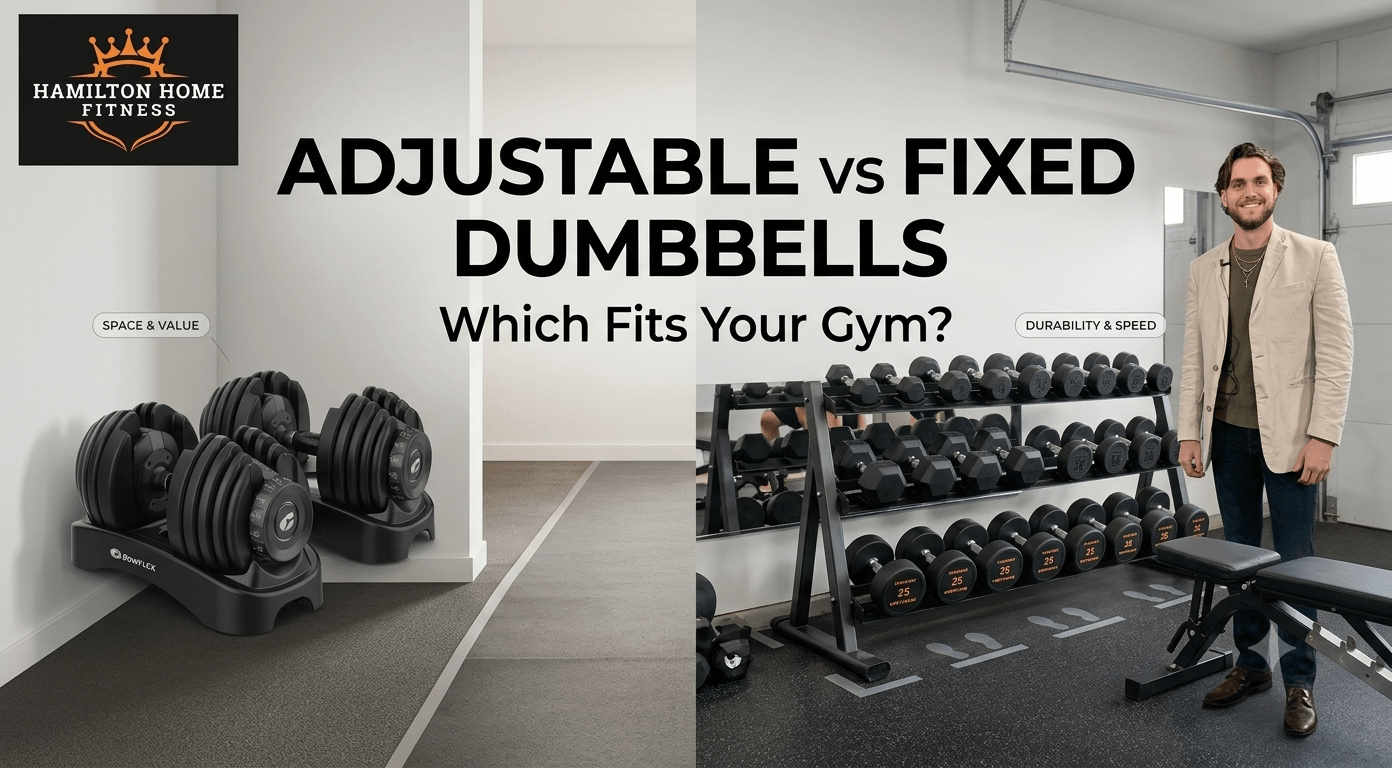
That's the adjustable vs. fixed dumbbells problem—in a spare bedroom, garage, or commercial floor. Space and budget pull one way. Durability, speed, and shared use pull the other.
Here's the footprint in square feet, the cost math, the material that decides lifespan, and a verdict split by how you train—not by what someone's selling.
Adjustable vs Fixed: The Short Answer
Pick adjustable when floor space and upfront budget are the constraints that actually bind you. Pick fixed when the weight changes every set, when more than one person trains, or when the equipment has to survive years of being dropped.
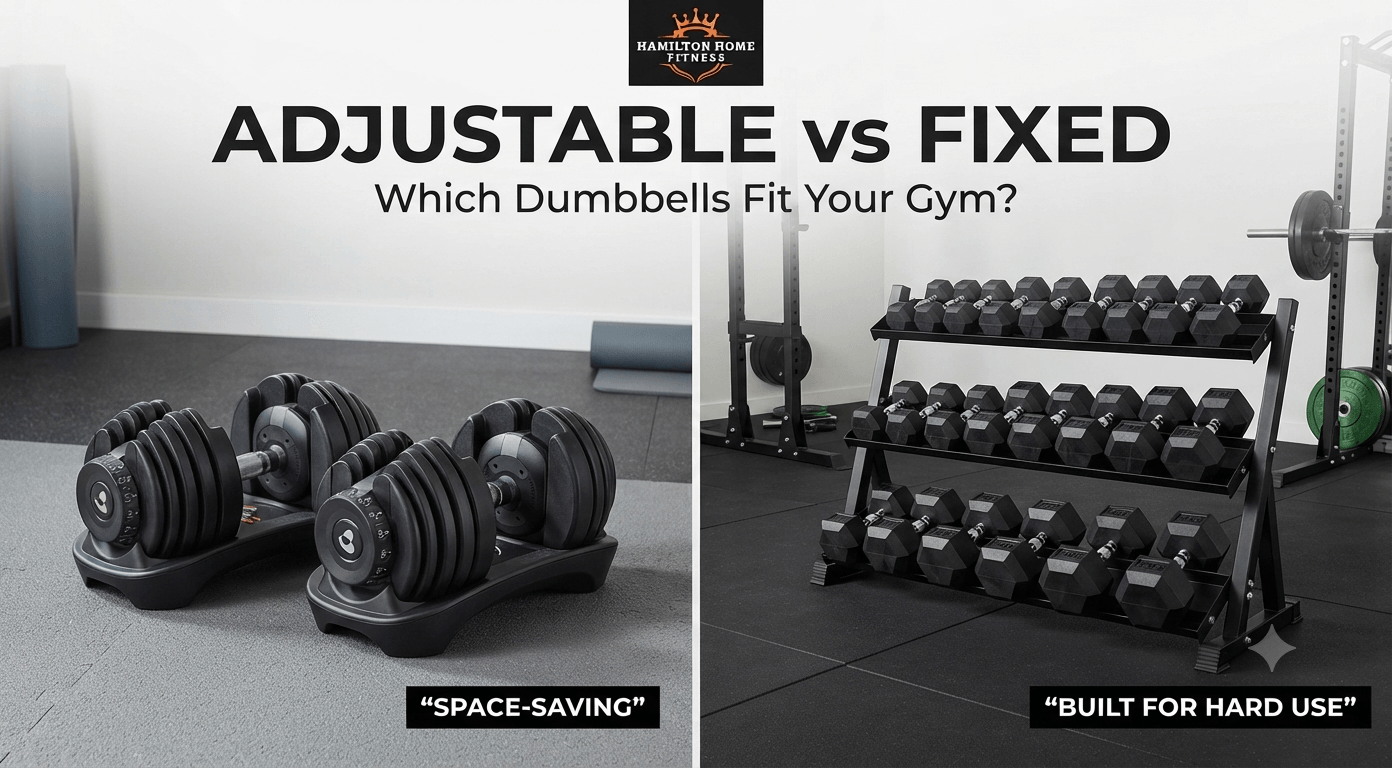
There's an honest third answer, and most serious home gyms land on it eventually. Start with one adjustable pair. Add heavy fixed pairs later, once you know which weights you reach for four days a week.
What you're weighing | Adjustable pair | Fixed set | Who it suits |
Footprint | One cradle | Rack plus a grab zone | Adjustable: apartments, spare bedrooms, shared rooms |
Upfront cost | Lower—one purchase | Higher—priced by the pound | Adjustable: first build, tight budget |
Cost as range grows | Flat to the set's ceiling | Climbs with every pair | Adjustable: anyone still progressing |
Durability | The mechanism is the weak point | One solid piece, nothing to fail | Fixed: garages, studios, hard use |
Speed between sets | Seconds to change | Grab and go | Fixed: supersets, drop sets, circuits |
Shared use | One person at a time | Two or three lift at once | Fixed: families, partners, facilities |
Top weight | Capped by the model | Goes as high as you buy | Fixed: heavy pressing and rowing |
Neither format is better. The room decides, and so does the way you actually train. To see both sides against real weight ranges and prices, compare adjustable and fixed dumbbell sets side by side.
Footprint: One Cradle vs a Loaded Rack
Measure it before you believe it. A three-tier rack holding ten pairs from 5 to 50 lb runs roughly 58 inches wide and 31 inches deep—about 12.5 square feet of floor, and that's before anyone stands in front of it to lift them.
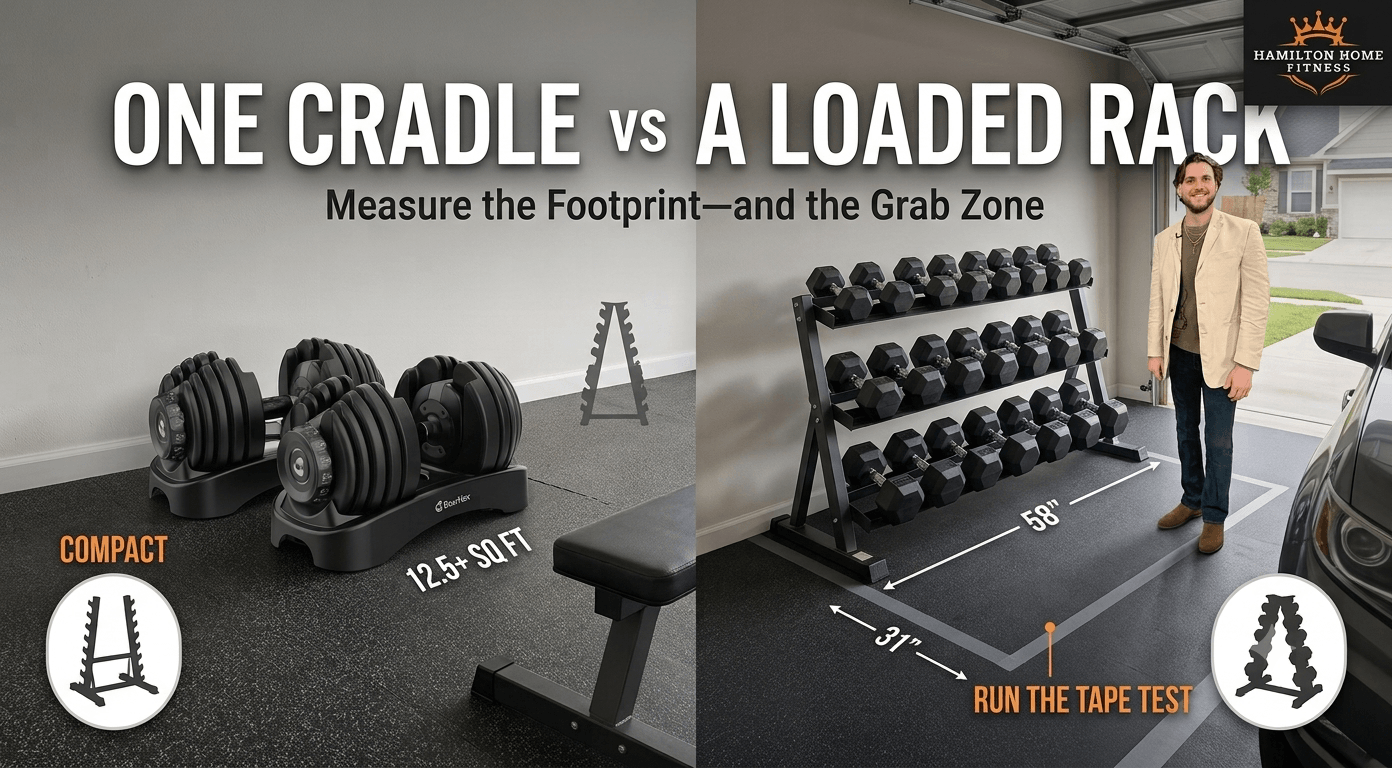
Add the grab zone. You need two to three feet of clear floor to pull a pair off the rack and step back safely, which pushes the real allocation well past the rack's own dimensions. In a single garage bay with a car still parked in it, that's the difference between a gym and a walkway.
An adjustable pair on its cradle takes a fraction of that.
Before you order anything, run the painter's tape test. Mark the rack footprint on your floor, then mark the grab zone in front of it, and walk the space. Most people find out something they'd rather learn now than on delivery day.
Which Rack Fits Your Room
The rack is not an accessory — it is the other half of the footprint, and the wrong style makes a good set unusable.
Vertical and A-frame racks suit tight corners and lighter ranges. Two-tier racks trade floor width for easier access to every pair. Three-tier racks pack more dumbbells into a shorter wall run but ask for more of your hand clearance when you re-rack a heavy pair. Saddle racks exist for round-head dumbbells that would otherwise roll off a flat shelf.
One mistake to avoid: buying the rack before measuring the dumbbells. Head shape and handle length decide whether a set seats properly, and hex, round, and pro-style heads don't share a rack. If you're planning a fixed set, specify the dumbbell storage racks at the same time—not after.
What Each Option Actually Costs
Comparing one adjustable pair to one fixed pair is the wrong comparison, and it makes adjustables look expensive. Compare the pair against the total poundage it replaces. Adjustable dumbbells here run from roughly $220 to about $899 depending on top weight; a fixed set is priced by the pound, so the cost climbs with every pair you add.
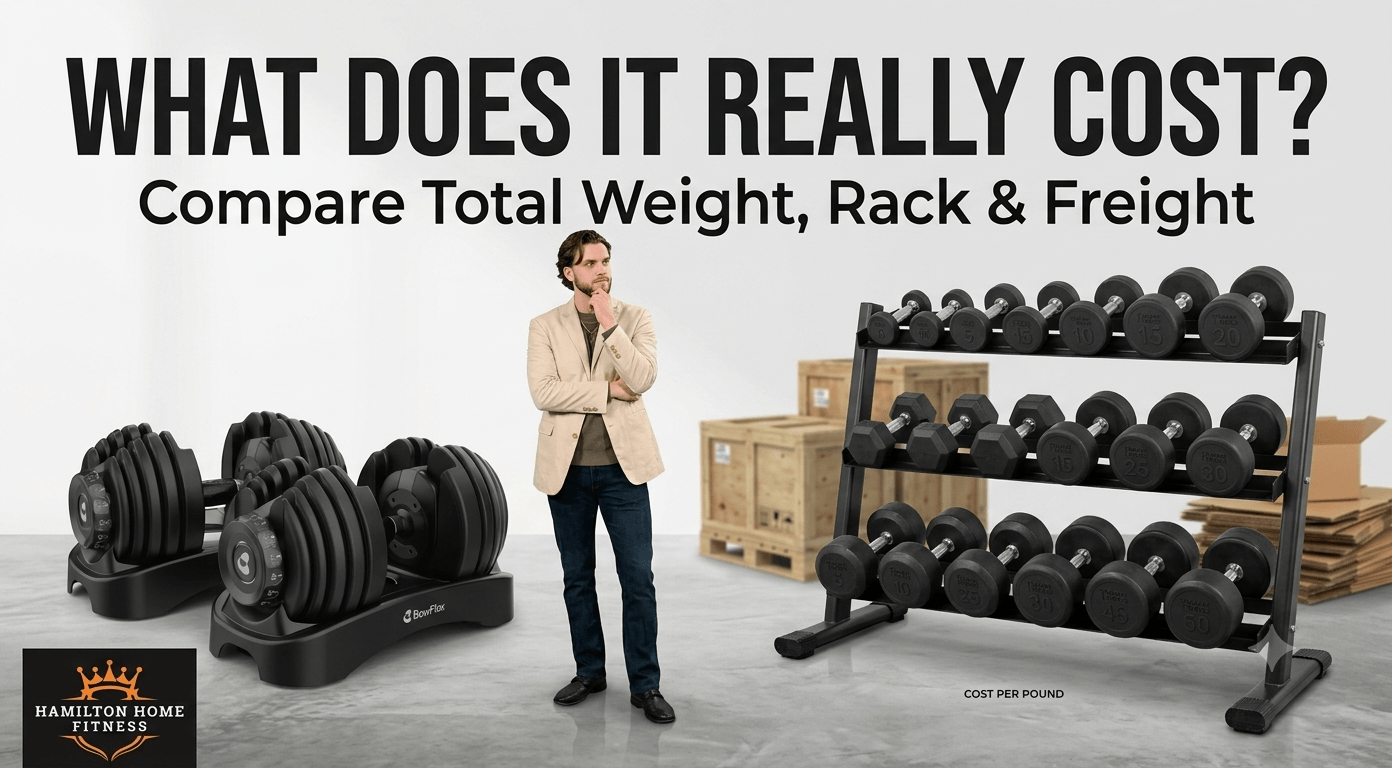
Two costs never make it into the comparison. The rack is one. Freight is the other: a full fixed set is several hundred pounds and ships as freight, while a single adjustable pair ships as a package. That gap is real money, and it belongs in your total—check the shipping and returns details before you commit.
Run the Cost-Per-Pound Check
Cost per pound is simple—total price divided by total pounds—but it only works if you check one thing first.
Confirm whether the listing is priced per single dumbbell or per pair. Some are one, some are the other, and getting it backwards doubles or halves your answer. Then add the rack and the freight line before you compare. Sticker price alone has never decided this correctly.
Where Adjustable Dumbbells Fall Short
Four limits are real, and none of them is a dealbreaker on its own. You cannot drop them. The mechanism is a failure point a solid dumbbell doesn't have. The handle stays long even at light weights. And only one person can use the pair at a time.
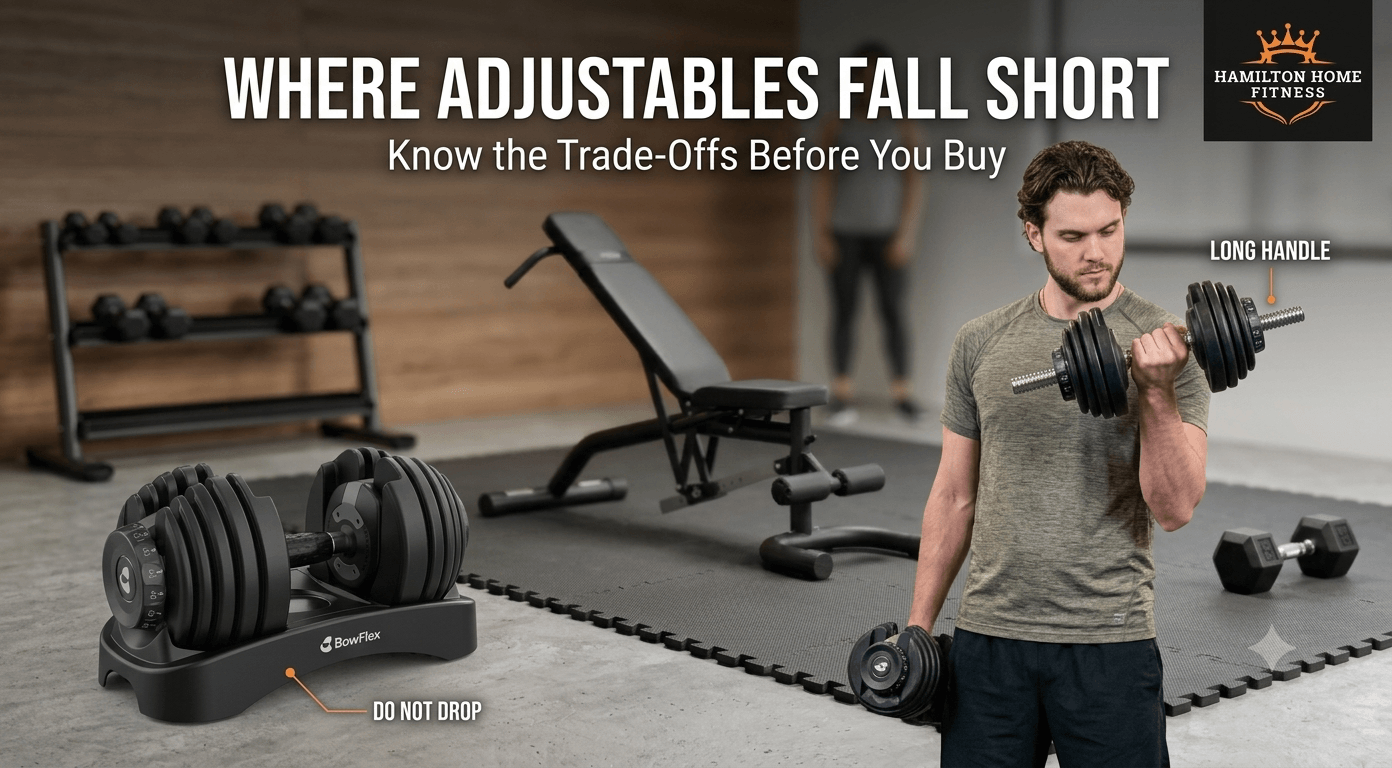
Drop tolerance isn't a line on a spec sheet. It's what happens when you fail the last rep of a heavy row and the dumbbell hits concrete. A rubber hex pair shrugs that off. A cradle-and-rail system doesn't.
The mechanism is the trade for everything else the format gives you. Rails, locks, and collars can loosen or bind—usually from grit in the cradle or careless handling, rarely from a manufacturing fault.
Length is the one buyers never anticipate. The handle assembly stays the same length whether you've dialed in 10 lb or 50 lb, so curls and lateral raises get a long bell at a light weight, and your arc fouls on your own forearms.
The adjustment pause is nothing on straight sets and genuinely disruptive on drop sets and supersets. And when two of you want to train on a Saturday morning, one pair means one lifter.
Material Decides How Long a Set Lasts
For a fixed set, "how long will it last" is a material question. Urethane is the most durable coating and the most expensive. Rubber hex is the value pick for a home gym. Cast iron and chrome are compact and traditional, with the least floor protection of the three.
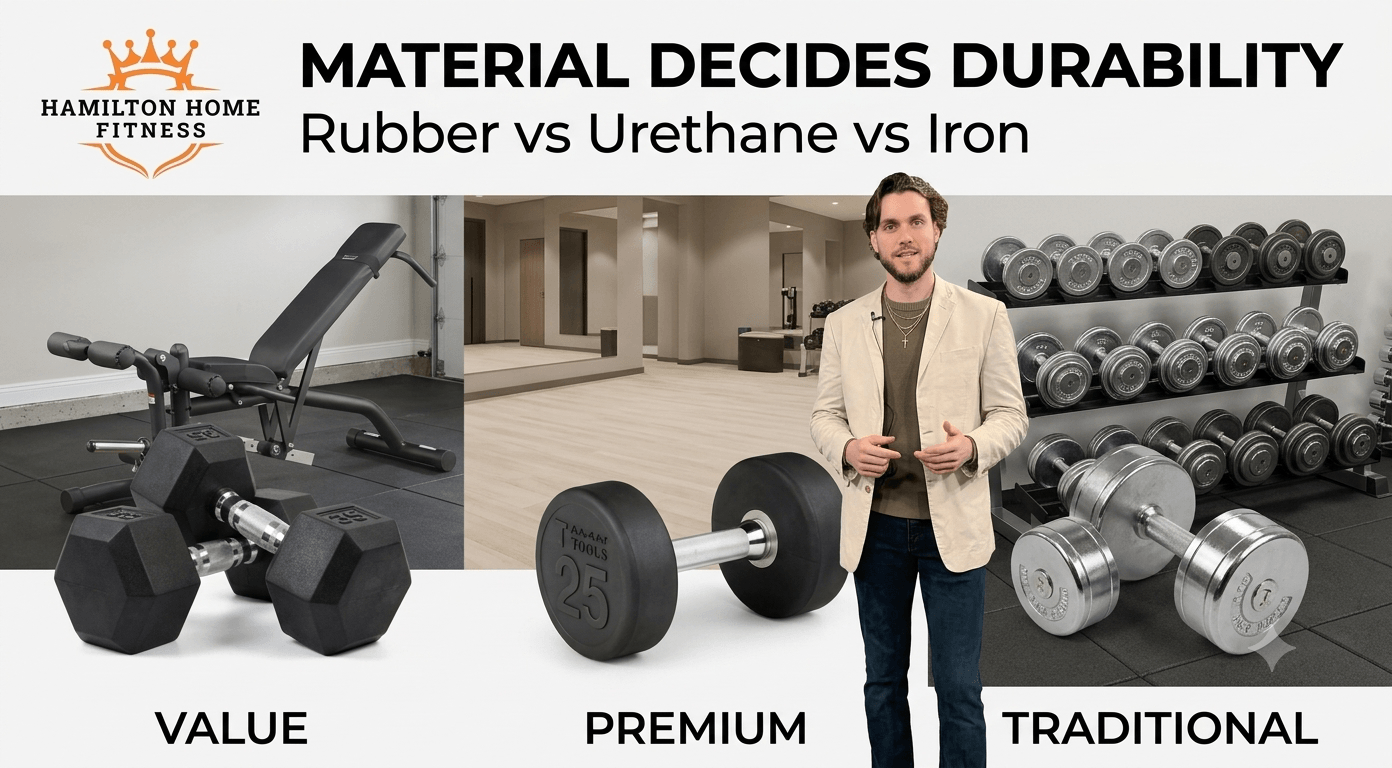
Material | Durability | Floor & noise | Odor | Cost position | Best fit |
Rubber hex | Strong under home and light-studio use | Protects floors, dampens noise | Noticeable when new, fades | Value | Home gyms, garages, family setups |
Urethane | Hardest finish; resists chipping, scuffing, fading | Non-marking, slightly louder | None | Premium | Studios, hotel gyms, commercial floors |
Cast iron / chrome | Very durable metal, but no coating to protect | Least floor protection, loudest | None | Low to mid | Traditional pressing, gyms with rubber flooring |
The urethane premium is easy to see. Take one brand, one head shape, and one weight: the urethane version carries a visible price step over the rubber. Whether that step earns its money depends on traffic, not budget.
Here's the rule. Urethane pays for itself where the floor is busy and the equipment is on display—clients notice cracked heads. Rubber wins on value for a single-household gym, where a good set will outlast the training habit.
Once you've picked the coating, browse fixed-weight dumbbell sets in rubber and urethane.
Weight Range and How Many Pairs
Do the arithmetic before you shop. A 5–50 lb fixed set in 5 lb increments is 10 pairs—20 dumbbells, 550 lb in total. Extend the top end to 75 lb and it becomes 15 pairs, 30 dumbbells, 1,200 lb. That last number is what your rack has to hold and what the freight quote is built around.
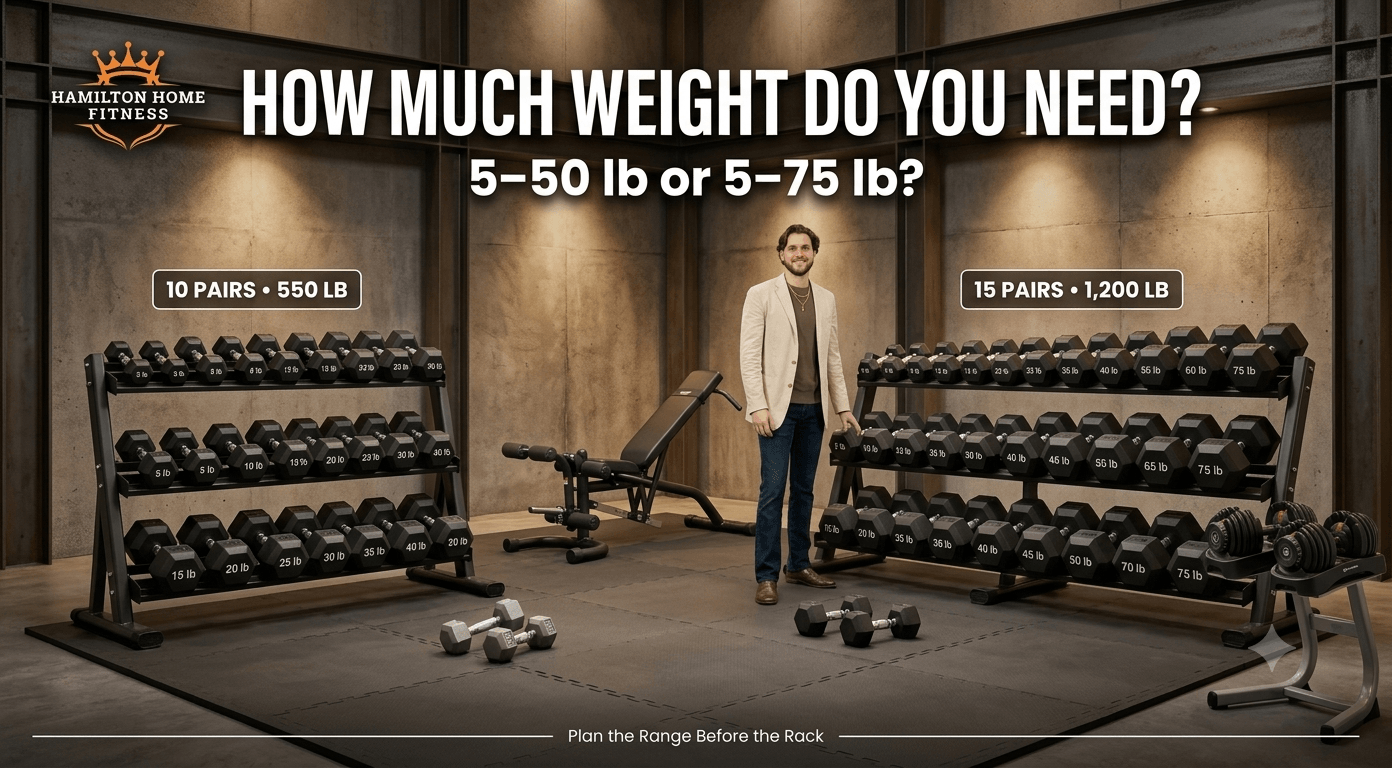
Let the lifts set the range. Pressing and rowing drive the top end, and both need a stable weight bench to be worth loading. Curls, lateral raises, and rear-delt work drive the light end and the small jumps.
That's why increment size matters more than most buyers expect. A 5 lb jump is nothing on a roll. On a lateral raise, it's a wall you'll stall against for months.
For most home gyms, 5 to 50 lb covers general strength work. Go 5–75 lb if two people train, if you already press and row heavy, or if you want years of headroom.
Shared, Studio, and Commercial Floors
Most commercial floors run fixed sets, and the reasons are operational rather than snobbery. One adjustable pair serves one member at a time. Removable parts go missing or get mishandled in shared use. A loosened mechanism is a safety exposure a solid dumbbell simply doesn't carry.
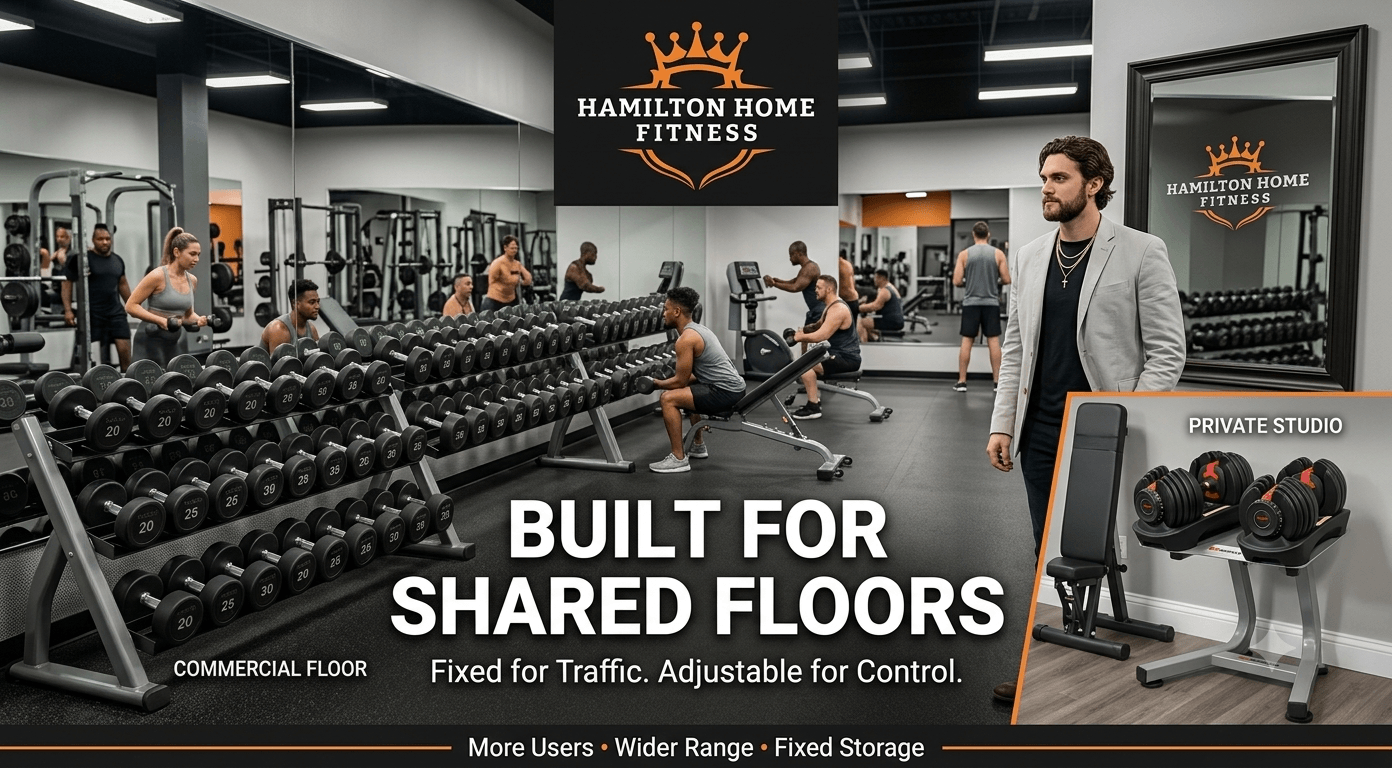
The exception is real, though. Small private studios, hotel fitness rooms, and personal training spaces with low simultaneous demand run adjustables successfully—and trainers who travel to clients often have no other option.
If you're specifying a floor rather than a corner, the shortlist is short: urethane, wider weight coverage, doubled pairs on the weights everyone reaches for, and fixed storage. Our commercial fitness equipment range is built around exactly that.
FAQ
Are adjustable dumbbells as durable as fixed dumbbells?
No—and it's the mechanism, not the metal. A fixed dumbbell is one welded or molded piece with nothing to wear out. Adjustable sets carry rails, locks, or collars that can loosen. Treated as a precision tool, a quality set still lasts years of home use.
How much space and money do I save with adjustable dumbbells?
The space saving is large and measurable—one cradle instead of a rack running roughly 58 by 31 inches. The money saving depends on the range you'd otherwise buy. Against a full 5–50 lb set of 20 dumbbells, an adjustable pair is usually cheaper.
What dumbbell material is best — rubber hex, urethane, or cast iron?
Urethane is the most durable and the most expensive. Rubber hex is the value choice for a home gym and protects floors well. Cast iron and chrome are compact and traditional but offer the least floor protection. Match the material to traffic, not to budget alone.
What weight range should a home dumbbell set cover?
For most home gyms, 5 to 50 lb covers general strength work. Move to a 5–75 lb weight if two people train, if you press and row heavily, or if you want years of head room. Small increments matter most on shoulders and arms.
Do I need a dumbbell rack, and which one?
A fixed set needs one; loose dumbbells on the floor are a trip hazard and wear faster. Vertical and A-frame racks suit tight corners and lighter ranges. Two- and three-tier racks handle full sets and heavier pairs. Measure your dumbbells before you buy the rack.
Are adjustable dumbbells suitable for a commercial gym?
Usually not on a busy floor. One pair serves one member at a time, removable parts go missing in shared use, and mechanisms loosen under high traffic. Small studios, hotel rooms, and traveling trainers are the reasonable exceptions.
Final Thought
Neither format wins on paper. The room decides along with how many people train in it and how often the weight changes. Match the set to that, then add it to the cart. Still solving the layout? Hamilton Home Fitness runs free gym design consultations, from home to commercial ones.