Authorized:











Batting Cages

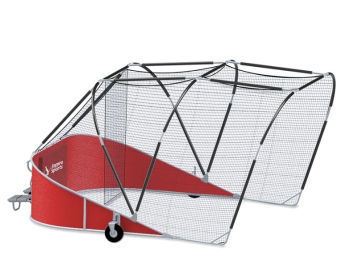
Outdoor Batting Cages for Sale
Outdoor batting cages for sale at Hamilton Home Fitness are commercial-grade hitting systems engineered to deliver clean, repeatable reps in your backyard, on the field, or across a full training facility—season after season. Every cage in this category is chosen for weather-ready durability, true ball flight, and safe practice, so hitters improve faster and programs scale with confidence.
Whether you want a compact backyard setup or a full-length tunnel built for live pitching, this collection brings together the frames, nets, and complete packages that hold up to real outdoor use. Below you'll find clear guidance on cage types, sizing, netting, and value—so you buy the right system the first time and skip costly mistakes.
Why outdoor-rated cages matter
Outdoor cages have to survive what indoor nets never face: direct sun, wind, rain, and temperature swings. The gap between a cage that lasts many seasons and one that frays in a single summer comes down to three things—UV-treated netting, corrosion-resistant steel, and proper anchoring.
That's why we focus on systems built specifically for exterior conditions, not light indoor nets pushed outside. Reinforced frames resist wind load, weather-grade finishes fight rust, and UV-stabilized netting holds its strength under harsh sun—protecting both your investment and the hitters who use it every day.
Types of outdoor cages
The right cage type depends on your space, budget, and how often you'll hit. Most buyers choose from three clear paths, and you can also explore the full Jaypro Sports range for related field systems and configurations.
- Portable backyard cages — Free-standing, lighter frames that set up fast and suit families, youth players, and multi-use yards. Best for light-to-moderate use.
- Permanent in-ground cages — Heavy-duty steel systems anchored with ground sleeves for stable, daily-use training at homes, schools, and academies.
- Complete cage packages — Frame, net, and hardware bundled together so your setup arrives ready to install and use, with no guesswork on fit.
Is a portable or permanent batting cage better? Portable cages win on price and flexibility; permanent in-ground cages win on durability and stability for heavy use. Choose portable for casual family practice and permanent for teams, academies, or anyone hitting several times a week.
Can one cage be used for both baseball and softball? Yes. Most full-size outdoor cages handle baseball and fastpitch softball, especially when paired with a machine offering selectable speeds and both ball heads.
How to choose your cage
Match your cage to your goals using three criteria: size, netting, and frame build. Get these right and everything else—machines, turf, screens—falls neatly into place.
Size and run-out space
Pick length by skill level, then add clearance on every side. Longer cages give advanced hitters realistic distance, while shorter cages fit tight yards and younger players.
| Length | Best for | Typical use |
|---|---|---|
| 35 ft | Youth hitters, small yards | Tee work, soft toss, short front toss |
| 55 ft | Most backyards | Everyday hitting with room for a machine |
| 70 ft | Advanced & live pitching | Full-distance reps and team training |
A 12–14 ft width gives batters realistic, safe swing space, and most setups want 2–3 feet of clearance around the frame. What length batting cage do I need? For mixed family use, 55 ft is the sweet spot; serious players working on live pitching should size up to 70 ft.
Netting and frame build
For outdoor use, prioritize UV-treated polyethylene netting on a corrosion-resistant steel frame. These two choices drive how long your cage survives the elements.
What is the best netting for an outdoor batting cage? Twisted, UV-stabilized polyethylene (HDPE) is the proven outdoor choice—strong, weather-resistant, and far better at resisting sag and sun damage than untreated nylon. Do outdoor batting cages need concrete? Most backyard cages don't; ground sleeves or post anchors keep them stable on a level surface, though open, windy sites may call for added anchoring. In most residential areas no permit is required, but a quick check with your local code office is wise before any permanent build.
Key selection criteria
Use this checklist to compare any outdoor cage before you buy:
✅ UV-treated, weather-ready netting
✅ Corrosion-resistant steel frame
✅ Length matched to skill level
✅ 12–14 ft width for real swings
✅ Secure ground-sleeve anchoring
✅ Pitching-machine compatibility
✅ Baseball & fastpitch support
✅ Complete-package availability
✅ Clear safety and run-out space
✅ Professional install option
✅ Warranty and parts support
✅ Nationwide shipping coverage
Who these cages fit
These outdoor cages serve every level of hitter and buyer, so each user finds a system matched to their space, budget, and goals:
- Families & home athletes — Safe, on-demand practice with no commute and faster progress.
- Schools & teams — Reliable outdoor training that holds up to daily, multi-player use.
- Academies & facilities — Durable, high-throughput tunnels that protect uptime; pair them with commercial-grade equipment for facilities to complete the space.
- Budget-conscious buyers — Scalable portable options and financing that keep quality within reach.
- Return-to-play athletes — Controlled, low-variability reps for steady, measured practice; pair sessions with rehab and recovery equipment, and always follow your coach or medical professional's guidance.
Pricing and value
Outdoor batting cage pricing scales with size, materials, and features—so you only pay for what your training actually needs. As a general guide, compact portable cages start in the low hundreds, mid-range permanent backyard systems run into the low thousands, and commercial-grade tunnels reach the higher end.
How much does an outdoor batting cage cost? Most buyers land between a few hundred dollars for a portable backyard net and several thousand for a heavy-duty, in-ground commercial system; netting quality, frame gauge, and length are the biggest cost drivers. For a turnkey, field-ready build, the Jaypro Bomber Elite batting cage is a standout commercial-grade option, and our team can help you weigh configurations with itemized quotes, financing, and certified installation.
Order your outdoor cage today
Ready to build better hitters and protect your investment for years? Hamilton Home Fitness sources, customizes, and ships premium outdoor batting cages for sale nationwide from our Tennessee base—backed by certified installation and clear, total-cost guidance.
Browse the cages above, compare configurations, and order with confidence. Need help sizing your space or planning an exterior build? Book an outdoor site assessment and our team will map your layout, anchoring, and clearance—then deliver a cage built to win. Start your build today.
Secure Payments