Authorized:











Pilates
Pilates Equipment for Sale from Flo Pilates
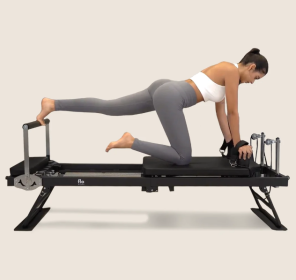
Pilates equipment for sale at Hamilton Home Fitness means Flo Pilates reformers in portable, home, and studio builds. Each carries its own application rating, so buyers can match the machine to private practice, a shared household, or a boutique studio running paid classes.
- Sub-type stocked—Pilates reformers only
- Brand carried—Flo Pilates
- Application ratings — residential and commercial
- Entry format—folding portable platform
- Studio build—premium wood
- Ships to all 50 US states
- Best fit—home practice to boutique studios
What This Category Actually Stocks
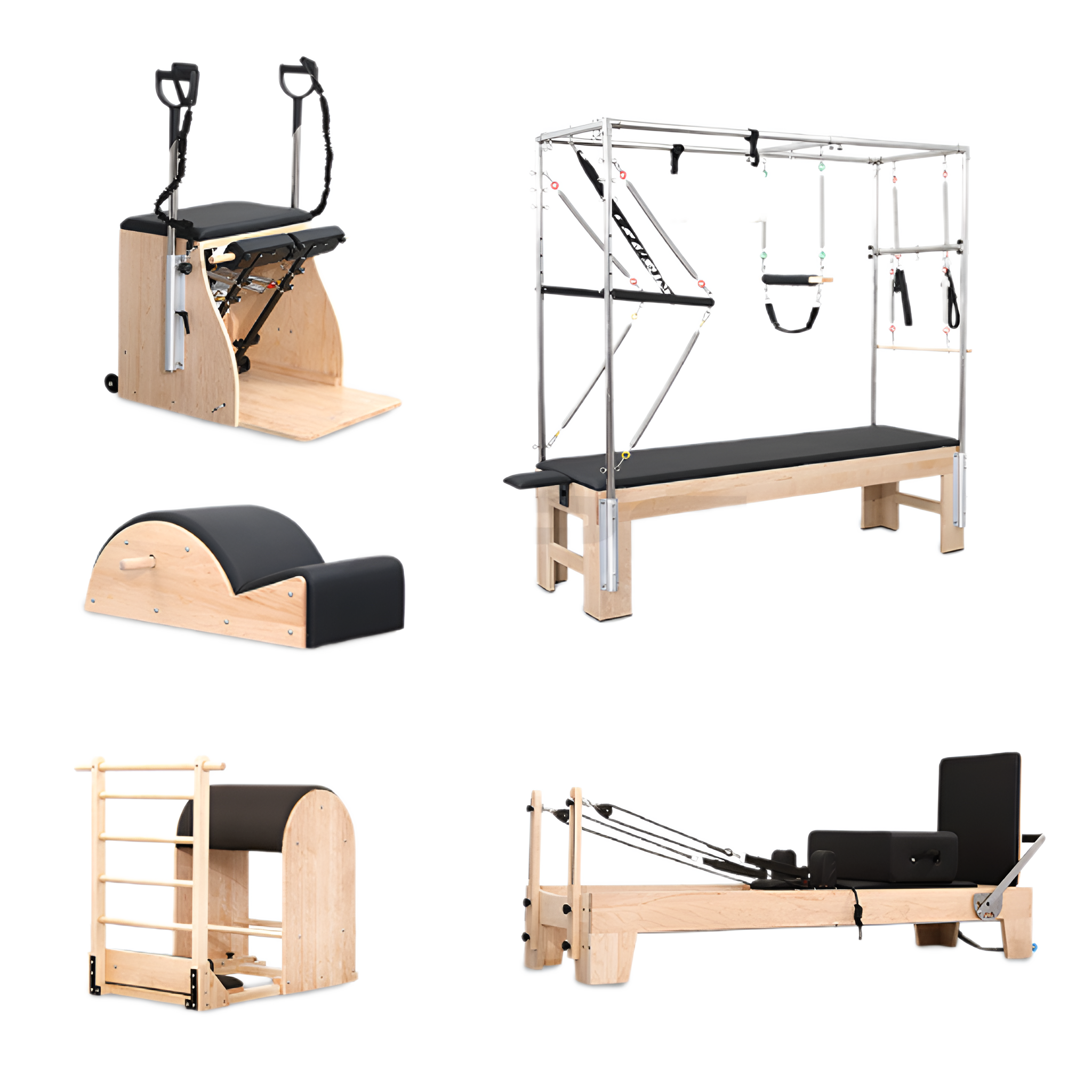
Every machine on this page is a reformer. There are no chairs, Cadillacs, towers, barrels, or spine correctors here, and saying so early saves you a scroll.
What you get instead is a reformer range that runs from a folding portable platform up to a wood-framed machine rated for paid class use. You can see the full Flo Pilates line-up on the brand page, or go straight to the reformers subcategory if you already know the format you want.
Is a reformer enough on its own? For most buyers, yes. One machine covers supine, seated, kneeling, standing, and side-lying work in a single footprint, which is why studios build timetables around it and why home buyers rarely regret starting there.
Compare the Three Flo Reformers.
Three machines, three different jobs. The same five labels run under each so you can read straight down the page.
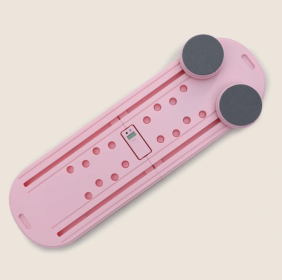
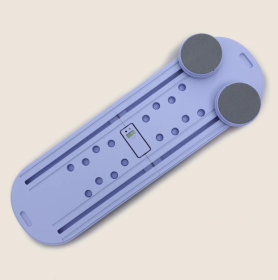
Portable Pilates Reformer Pro
- Price—$199.99
- SKU—RefPL
- Application tag—none published
- Included—cords, footbar, handles, standing pad
- Best for small rooms and travel
Pilates Home Reformer
- Price—$1,795.00
- SKU — HomeRB
- Application tag—Residential Only
- Included—grip socks, Flo app access
- Best for one household, regular private practice
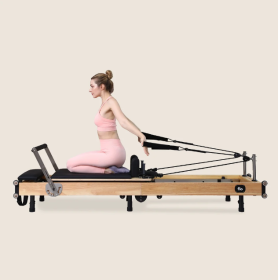
Pilates Studio Reformer
- Price—$2,249.00
- SKU — WoodenRB2.0
- Application tag—Commercial Workout Machines
- Included—socks, app, Pilates ball, fitness ring
- Best for studios, clinics, and paid client sessions
The Rating That Decides Your Choice
The product tag matters more than the price gap. That one line tells you whether a machine was built for a single household or for back-to-back sessions with paying clients, and it is printed on the product page before you add anything to a cart.
Most reformer buying guides teach this as a price ladder and place commercial-grade machines several thousand dollars above home ones. That is the general market pattern, but it is not the gap here. The Pilates Home Reformer and the commercial-tagged Pilates Studio Reformer sit a few hundred dollars apart.
Choose the Studio Reformer if anyone will ever pay to train on it. Choose the Home Reformer if the machine serves your household and no clients.
That rule protects you in both directions. It keeps a machine inside the use it was designed for, and it stops you paying for a commercial build that will only ever live in a spare bedroom.
How to Fit a Reformer to Your Room
Measure the movement lane, not the machine. You need the frame plus room to step around both long sides and at least one end, because a reformer that blocks a door stops getting used by week three.
Only the Portable Pro publishes its dimensions, so those are the figures below. Ask before ordering either wood-framed model rather than guessing.
- Unfolded size—38.2 x 13.8 x 5.1 in
- Folded & packed—14.76 x 6.69 x 21.06 in
- Weight—8.82 lb
- Colors—Pink and Purple
- Grip socks—stated $42 value
- App trial — 14 days
- Gift card—$25 Flo credit
- Shipping—priority dispatch included
Can a portable reformer live in a shared room? Yes, and the Portable Pilates Reformer Pro is the reason this category starts under two hundred dollars. It folds to roughly the size of a cabin bag and weighs less than a loaded backpack. Pair it with a mat from the yoga and floor training range if you train on a hard surface.
Key Selection Criteria
Run any reformer through this list before you buy, whatever the badge on the frame says. Banded work and warm-ups are covered separately in the resistance training collection.
✅ Application rating that matches your use
✅ Resistance you can adjust as you progress
✅ A frame that stays quiet under load
✅ Footprint that fits your real floor space
✅ Folding design if the room does double duty
✅ Handles and footbar within easy reach
✅ Non-slip contact surfaces for standing work
✅ Published specs, not vague marketing claims
✅ A named brand with a live product page
✅ Bundled guidance to start training properly
✅ Clear delivery terms before you order
✅ A dealer you can call with questions
Who This Suits, and Who It Doesn't
A good fit:
- Home practitioners training solo
- Trainers running one-to-one sessions
- Boutique studios adding reformer classes
- Buyers who want prices published, not quoted
Look elsewhere if:
- You need a chair, barrel, or Cadillac
- You want published warranty terms before ordering
- You are comparing several manufacturers side by side
That second point is worth stating plainly. Warranty terms are not published for these models, so if coverage is the deciding factor, ask for it in writing first. Buyers working around an injury or a recovery plan should also speak to a physiotherapist or physician before choosing resistance and can browse the rehab and recovery equipment range alongside this one.
Buying, Shipping, and Support
Orders leave our Tennessee base, and freight, delivery access, and return conditions are set out on the shipping and returns page. Read it before a large machine arrives rather than after, particularly if your entrance involves stairs or a tight turn.
Hamilton Home Fitness sells equipment across residential and commercial builds, so the same team that quotes a single home reformer can plan a room full of them. Add your machine to the cart when the rating and the footprint both check out.
Pilates Equipment Questions
Do portable reformers work as well as full-size machines?
They do a different job. Cord resistance and a compact platform give you real reformer patterns in a room that has another purpose, while a full frame gives longer carriage travel and a heavier, quieter feel. Buy the portable for consistency and storage, not to replicate a studio machine.
Should beginners start on a reformer or a mat?
Either works, and cost usually decides. Mat practice builds the breathing and control that reformer work rewards later, so a mat-first month is never wasted. Beginners who already know they will train several times a week tend to progress faster on a machine.
Do I need an instructor to use a reformer at home?
Not permanently, but early sessions with a qualified teacher are worth the money. Spring or cord tension, spinal position, and shoulder placement are hard to self-correct, and habits formed in the first months are the ones that stick.
Is Pilates equipment safe to use after an injury?
That depends entirely on the injury, and it is a question for a clinician rather than a retailer. Flo describes low-impact rehab-style movement as one use for its reformers, which is a manufacturer statement and not a medical recommendation. Get clearance first, then choose resistance conservatively.
How do I compare models when specs aren't published?
Ask directly, and put the answer in writing. Frame dimensions, user weight limit, and warranty scope are the three that matter most, and any dealer worth buying from will supply them on request.
Can I order several reformers for a studio?
Yes. Multi-unit orders and mixed builds across a facility are handled as a planning conversation rather than a single checkout, and the wider commercial equipment range covers the rest of the floor.
Pick the rating first, the footprint second, and the price last—in that order, the right machine usually picks itself. Call 423-458-2453 to confirm dimensions and delivery access, or book a gym design consultation if you are laying out a studio floor rather than a spare room.
Secure Payments