
Authorized:












CrossFit Rig Design
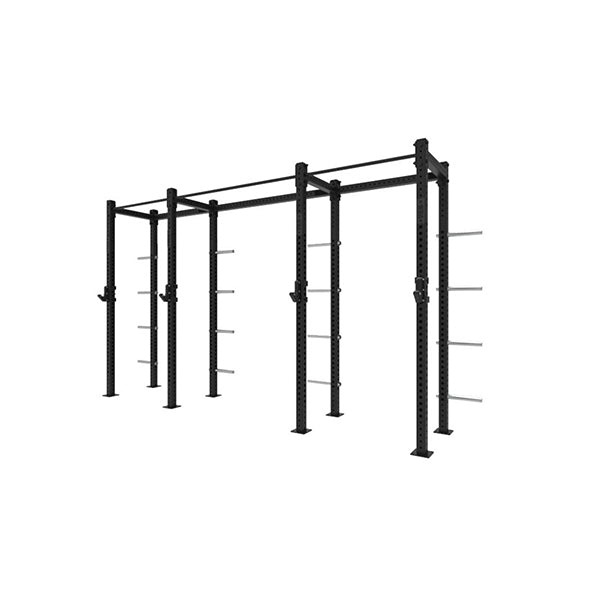
Custom CrossFit Rig Design, Built to Fit Your Space
Hamilton Home Fitness builds custom CrossFit rig designs to match your space, training style, and budget. Choose a compact wall-mounted unit for a home gym or a multi-station rig for a commercial box. Each rig ships nationwide from Tennessee, and expert install is available when you want it.
The right rig is the backbone of any training space. It holds your pull-up work, squats, dips, rings, and rope climbs in one footprint. We design yours around the room you actually have, the athletes who will use it, and the way you want to train, then build it from steel that lasts.
What a CrossFit rig is
A CrossFit rig is a steel framework that anchors multiple training stations in one structure. It replaces several separate machines and consolidates them into a single, space-efficient footprint.
One rig can support pull-ups, muscle-ups, toes-to-bar, dips, squats, and ring work. Add a few attachments, and the same frame covers far more movement than a stand-alone bar or bench. That versatility is why coaches, box owners, and serious home lifters build their space around a rig first.
Rig vs power rack
A rig and a power rack solve different problems, so this choice comes first. Pick a rig for varied bodyweight and gymnastics work across multiple stations. Pick a rack for heavy barbell lifting in one controlled station.
A power rack uses four uprights to enclose a single lifting area, ideal for squats and presses with safety arms. A rig extends outward with bays, pull-up bars, and attachment points to serve more athletes and more movements at once. Many gyms use both. If your priority is barbell strength in a tight space, our power racks and cages may suit you better than a full rig.
Do I need a rig or a power rack? Choose a rig when several people train at once or you want gymnastics movements like muscle-ups and rope climbs. Choose a rack when one lifter needs a safe, enclosed barbell station.
How to choose your rig design
Start with three things: your floor space, your ceiling height, and how many people train at once. Those three answers shape almost every other decision.
Measure your usable floor area first, then plan attachments around it. How much space do I need for a CrossFit rig? A single wall-mounted station fits a corner of most garages, while a multi-bay commercial rig needs an open floor and clear walkways on each side. Tall movements like rope climbs and muscle-ups also need extra overhead clearance, often more than a standard 8-foot ceiling allows.
Anchoring matters as much as size. A rig has to be bolted to a solid floor, a stud wall, or both, so it stays rigid under dynamic load. We confirm your floor and wall type before we finalize a design, which avoids stability problems later.
Here is how the main rig types compare, so you can match one to your space before you commit.
| Rig type | Best for | Footprint | Good to know |
|---|---|---|---|
| Wall-mounted | Home and garage gyms | Smallest, mounts to the wall | Needs a solid, anchored wall |
| Free-standing | Studios or rooms with no mount wall | Moderate, no wall required | Weighted or bolted base for stability |
| Full commercial rig | Boxes, schools, facilities | Largest, multi-station | High ceiling and floor anchoring |
| Outdoor / rooftop | Parks, rooftops, container gyms | Varies by layout | Weather-rated coating and corrosion defense |
For a compact home setup, our wall-mount rigs save floor space while still giving you a pull-up bar and squat station. For a box or facility, a full modular rig serves many athletes in the same square footage.
Why design your rig with us
Every rig from Hamilton Home Fitness is built around your space and goals, not pulled off a generic shelf. You tell us the room, the training, and the budget, and we spec the frame, stations, and attachments to fit.
Our rigs are made from heavy 7-gauge American steel through our BEAVER FIT line, so the frame takes daily commercial load and stays rigid for years. Thick steel cuts replacements and keeps your cost of ownership clear, which protects the investment for a homeowner and a facility manager alike.
The design is modular by intent. Can I start small and add to my rig later? Yes. Buy a core rig now, then add stations and swap attachments as your program grows, often without tearing into walls or floors. This lets small gyms and home buyers phase spending instead of paying for everything at once.
We also build for outdoor and mobile use. Can a CrossFit rig be used outdoors? Yes, with the right protection. Outdoor, rooftop, and container builds use coated steel and weather-rated parts, with extra corrosion defense for coastal or park sites. That range lets you train almost anywhere with the same build standard.
Support runs from first sketch to first workout. We ship nationwide from Tennessee, offer install for larger jobs, and back the core structure and welds, so you are not left guessing after delivery. To round out the space, pair your rig with bumper plates and bars from our free weights range.
Key Selection Criteria
✅ Match the rig to your real floor space
✅ Confirm ceiling height for tall moves
✅ Pick wall-mounted or free-standing
✅ Plan only the attachments you'll use
✅ Check anchoring for your floor type
✅ Choose indoor or weather-rated outdoor
✅ Size station count to your traffic
✅ Build modular so you can expand later
✅ Verify steel gauge and load rating
✅ Plan delivery and install up front
✅ Set a budget and phase the build
✅ Add storage to keep plates organized
Ready to map it out? Book a gym design and we'll spec a rig around your exact room and training style.
How much does a custom CrossFit rig cost? Price depends on size, station count, steel, attachments, and install, so there is no single figure. Send us your space and goals, and we'll quote a rig built to match, with no pressure to buy more than you need.
CrossFit rig design FAQ
What movements can I do on a rig?
A rig supports pull-ups, muscle-ups, toes-to-bar, dips, and ring work out of the box. Add J-hooks and safety arms, and you can also squat and press. With the right attachments, one rig covers most of a CrossFit programming cycle.
Wall-mounted or free-standing, which is better?
It depends on your room. A wall-mounted rig saves the most floor space but needs a solid, anchored wall. A free-standing rig needs no wall but takes more floor space and a weighted or bolted base for stability.
How is a CrossFit rig installed?
A rig is anchored to the floor, a stud wall, or both, so it holds firm during dynamic movements. For larger commercial builds, we coordinate install so the frame is set and torqued correctly. Clear torque specs and common-tool fasteners keep future swaps simple.
Will a rig work in a home garage?
Yes. A compact wall-mounted or free-standing rig fits most garages and gives you a real training station at home. Just confirm your ceiling height for overhead work and a solid surface for anchoring.
Do you ship CrossFit rigs nationwide?
Yes. We ship from Tennessee to all US states for home, commercial, and outdoor projects. Larger orders can include installation and a build plan for your space.
What attachments can I add later?
You can add pull-up bars, dip stations, safety spotter arms, gymnastic rings, landmine units, and plate storage over time. The modular frame is designed to grow with your training. That means you can phase purchases rather than buy everything at once.
Do outdoor rigs need special finishes?
Yes. Outdoor and rooftop rigs use coated steel and weather-rated hardware to handle sun and rain. Coastal and park installs get extra corrosion defense so the frame holds up in tougher conditions.
Build a rig that fits your space and lasts for years. Book a gym design today, and we'll turn your room and training goals into a real plan, shipped nationwide from Tennessee with installation available on larger projects.
Secure Payments